Eu

How can we reassure other countries that Brexit isn’t a victory for ‘Little Britain’? Howard Drake has the answer

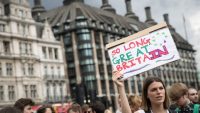
Reassuring other countries that Brexit doesn’t mean Britain is hauling up the drawbridge is vital for ensuring the UK continues to succeed. So far, much of the foreign coverage of the outcome in the EU referendum has certainly painted the decision as an isolationist move. The German newspaper Taz.am wochenen summed up that sentiment with its front page at the weekend, which said simply: ‘Well done, little Britain’. So what is being done to offer assurances to other countries that Britain is, in the words of George Osborne this morning, still ‘open for business’? Not a lot if the Foreign Secretary’s appearance on TV at the weekend was anything to

Brexiteers need to act now, or become the most hated people in history

The British constitution is built on compromise and moderation; it’s one of the main reasons why this country enjoyed a period of relative domination in the 19th century while our neighbours tore themselves apart. Referendums do not encourage compromise, which makes them such bitter devices, and why the last few weeks have been so painful. But now that the British people have made their choice – and I have no idea if it was the right one – we have the opportunity to make a compromise that will cause the least amount of pain. I’m talking about the Norway option, which an increasing number of Conservative MPs are coming around to. This

Brexit lies are opening up a terrifying new opportunity for the far-right in Britain

The Tory leaders of Vote Leave, those supposedly civilised and intelligent men, are creating the conditions for a mass far-right movement in England. They have lined up the ingredients like a poisoner mixing a potion, and I can almost feel the convulsion that will follow. They have treated the electorate like children. They pretended that they could cut or even stop immigration from the EU and have a growing economy too. No hard choices, they said. No costs or trade-offs. Now the Tory wing of the Brexit campaign, the friends of the City and big business, insists that we should remain part of the single market. So should you, if

Coffee House shots: Tory turmoil, Jexit and Boris’ bid for No.10

As the spate of resignations from the Labour shadow cabinet continues this morning and the rival candidates in the race to replace David Cameron as Prime Minister step up their campaigns, politics shows no signs of slowing down today. Boris Johnson and Theresa May are the front runners in the upcoming Conservative leadership contest – but who will emerge on top? And amidst Tory turmoil, the crisis at the top of the Labour party continues this morning. On today’s edition of our Coffee House shots podcast, James Forsyth tells Isabel Hardman that: ‘One of the rules for politics at the moment is that however bad things are for the Conservatives

No, Brexit wasn’t a defeat for humanist values – or for love

Perhaps the most important pundit to have emerged from the earthquake is Giles Fraser. As a left-wing vicar and longstanding anti-racism campaigner, he makes it harder for people to depict the Brexiters as closet racists. He disrupts the defeated Remainers’ assumption that they represent progressive values, humanism. The same applies to the handful of pro-Brexit Labour MPs, but MPs can be assumed to have murky motivations. On last night’s Question Time, Fraser quoted Galatians (one of the readings in churches yesterday): Love your neighbour as yourself. We need to get beyond our current divisions, and trust in this supra-political principle, he said. Contrast this with today’s offering from Zoe Willams,

George Osborne ditches ‘Project Fear’ as he breaks his Brexit silence

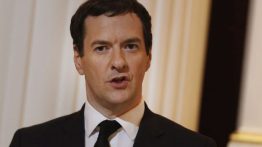
George Osborne has turned his back on ‘Project Fear’ after finally breaking his Brexit silence. The aim of his speech this morning was all about reassuring the financial markets before they opened. To help him do that he reeled off a couple of sound bites about how Britain was open for business, how it ‘will not be plain sailing’ but that it was a good job we’d ‘fixed the roof’. The Chancellor also said that whilst this ‘is not the outcome I wanted or that I threw everything into campaigning for’, ‘the people have spoken’ and we must all accept that result. But what was more interesting was what wasn’t

That Cameron is out while Juncker has stayed shows us just what’s wrong with the EU

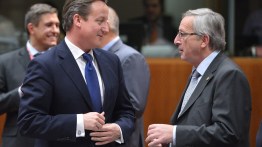
According to Jean-Claude Juncker, the President of the European Commission, the Brexit vote was David Cameron’s fault: ‘If someone complains about Europe from Monday to Saturday then nobody is going to believe him on Sunday when he says he is a convinced European’, Juncker told the German newspaper Bild. Thursday’s vote brought with it the inevitable pressure on the leaders of the campaign for Britain to remain in the EU to resign: Cameron will be gone by October, as might Corbyn if the no confidence motion brought by two of his MPs succeeds. But there was also a sense of inevitability about three notable non-resignations: Juncker is remaining firmly in

Sam Cam’s sister switches sides over Brexit – ‘how quickly can I join the Labour party?’

Ahead of the EU referendum, David Cameron’s sister-in-law declared that she would never vote Conservative again if Leave won. Now that Brexit is firmly on the agenda — and her brother-in-law set to stand down — Emily Sheffield is preparing to join the Labour party. Samantha Cameron’s sister has taken to Twitter to ask how quickly she can join, adding that she only ever voted Conservative for David: While this news doesn’t come as a huge surprise — given that she tweeted a Sadiq Khan campaign messages during the London mayoral election — it does beg the question of her sister’s voting preference. After all, back in 2010 Ed Vaizey claimed that Samantha ‘may have

Reminder: the referendum was about leaving the EU, not blueprints for the future

It does seem to me that there’s been a misunderstanding about what, exactly, a referendum is about. It’s not a general election. It’s not about electing a party with a manifesto. It’s simply getting an answer to a specific question, in this case, whether to stay in or leave the EU. So when disgruntled Remainers complain that there is no blueprint for the future, no grand plan for the way ahead, no specifics about immigration reduction, no answers about getting access to the free trade area, all you can say is, that’s not what it was about, people. There was a coalition of disparate interests behind the Brexit side, from

Set out your Brexit model, Foreign Secretary tells Tory leadership contenders

This morning, Philip Hammond has insisted that those running for the Tory leadership explicitly set out how they intend to leave the EU. The Foreign Secretary told Robert Peston that he wanted to know how they would manage the trade-off between single market access and free movement. Hammond himself appears to favour a version of the Norwegian model; in the single market and accepting free movement. Now, I think we can take this as meaning that Hammond won’t back Boris Johnson. Hammond accused Boris and other Leavers of making ‘contradictory promises’ in the referendum campaign. Though, it is worth remembering that Boris Johnson and Michael Gove were both explicit that

Jonathan Hill’s resignation is an act of gross irresponsibility

The UK’s EU Commissioner, Jonathan Hill, has resigned today saying that he couldn’t carry on as ‘though nothing had happened.’ This strikes me as an act of gross irresponsibility. Britain has not yet invoked Article 50, the two-year process for leaving the EU, and Hill staying on would have provided some continuity at a time of uncertainty. Supporters of his argue that his resignation was the honourable thing to do as Britain is no longer part of the team in Europe. It might have been right that Hill should have volunteered to move to another portfolio. But an outright resignation seems excessive and an over-reaction. Even Jean-Claude Juncker tried to persuade Hill to

Watch: Jeremy Corbyn heckled over Europe at London Pride – ‘it’s your fault!’

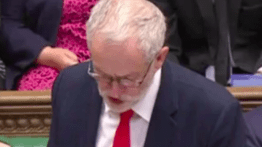
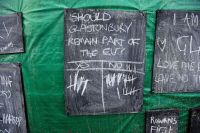
It’s not turning out to be a great weekend for Jeremy Corbyn. First he had to pull out of a planned appearance at Glastonbury on Sunday to focus on Brexit, now his visit to London Pride has, too, been ruined by the referendum result. On meeting with members of Labour’s LGBT community at Pride, Corbyn was repeatedly heckled over Remain losing the EU referendum. In a video shared on Twitter, Labour members repeatedly shout at the party leader: ‘It’s your fault Jeremy! It’s your fault! When are you resigning? I had a Polish friend in tears because you couldn’t get out the vote in Wales, the North and the Midlands.’ I get so

Will Boris, Gove and the Brexit band of brothers run for No 10 together?

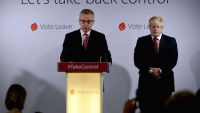
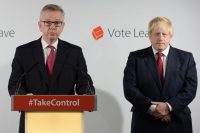
Westminster is still digesting what happened on Thursday night. But before Britain can turn itself to the big question of how to leave the EU, a new Prime Minister has to be chosen by the Tory party. Nearly every Tory MP I’ve spoken to since Friday morning is of the view that the new PM will have to be an Outer. They argue that the public would find it find odd to vote for Britain to leave, and then have a new PM chosen who was on the losing side in the referendum. There are, as I report in The Sun this morning, Cabinet Ministers who want Michael Gove to

What are the European – and world – papers saying about Brexit?

Brexit is, unsurprisingly, continuing to dominate the front pages of the newspapers overseas for a second day in a row. Whereas many of yesterday’s European paper splashes focused on Britain’s decision to vote ‘Out’, though, the big question now is: what does this mean for us? Several front pages across the continent ask this question this morning, with others trying to address the issue of whether their own countries might follow suit with their own brand of Brexit. It’s clear that whilst Britain is now at a crossroads, so, too, is the rest of Europe. And many across the continent are waking up to that realisation today. Here’s how the

It is best not just for Britain but for the EU that we part ways

A few thoughts on today’s events. First – it wasn’t working. With each year it was becoming more and more obvious that Britain and the EU wanted different things. Many (though not all) continental countries seem happy with a political union which pools their national sovereignty. There may be virtues in that, problems in it or both.  But it was never a desire of the British people. Last night demonstrated that. So it is best not just for Britain but for the EU that we part ways. If we had not then we would have continued to be a hindrance and drag on our partners during the next stages of

Why Brexit is worse for Europe’s economy than it is for ours

Share prices in freefall. Pension funds obliterated. A sea of red ink across trading screens. Billions wiped off the value of leading companies. And brokers, or at least the automated trading algorithms that have replaced them, contemplating throwing themselves out of the window, or whatever exactly it is that an algorithm does when it has a really bad day at the office. That is surely an accurate description of the City of London this morning. Except, er, is isn’t really. In fact, as the financial markets wake up to an outcome they had planned for but never really expected, something far more interesting is happening. True, the FTSE-100 has taken

David Cameron’s resignation speech in full

David Cameron has announced his decision to step down as Prime Minister following the vote to leave the European Union. Here’s what he said on the steps of No.10 Downing Street this morning: The country has just taken part in a giant democratic exercise – perhaps the biggest in our history. Over 33 million people – from England, Scotland, Wales, Northern Ireland and Gibraltar – have all had their say. We should be proud of the fact that in these islands we trust the people with these big decisions. We not only have a parliamentary democracy, but on questions about the arrangements for how we are governed, there are times

A sadder, wiser referendum

In June 1975, I was given the heavy responsibility of writing the Telegraph’s ‘light’ op-ed on the conduct of the first Euro-referendum campaign, which duly appeared on the day of the vote. My theme was that it had been the nicest possible stitch-up. ‘From the establishment and the respectable anti-establishment, from the Economist and the New Statesman, from the Lord Feather [of the TUC] and Mr Campbell Adamson [of the CBI], from Mr Wilson and Mr Heath, from the Royal Commission Volunteers to “Actors and Actresses for Europe”, the same advice, the same dire predictions of life outside the Market…’ It rings loud bells today. ‘Mr Barrie Heath told the