Energy

Is fracking the answer to the energy crisis?

I’ll approach the hot topic of a ban on Russian oil by way of personal anecdote: I’ve never been a soldier or a spook but I have twice found myself ensconced in secure Nato conference rooms. The first occasion was a group visit to the military alliance’s Brussels headquarters 42 years ago, when an unsmiling American defence expert introduced us to the concept of ‘Mutually Assured Destruction’ – whose acronym was the key to the tense but relatively stable Cold War stand-off. In simple terms, it would have been utter madness for either side to fire the first nuclear missile. The odds on that happening by Kremlin order or error
Which European countries are most reliant on Russian gas?

High commodity Nickel trading was suspended this week after prices rose to over $100,000 per tonne – double its previous peak of $50,000. How do other commodity prices compare with their peaks since the 2008 financial crisis? Previous peak Silver $43 Brent crude $140 Gold $1,853 Aluminium $3,124 Tin $33,015 This week Silver $26 Brent crude $139 Gold $2,050 Aluminium $3,849 Tin $50,025 Short squeeze The extraordinary rise in nickel prices was partly caused by a ‘short squeeze’, where investors try to exploit bets by other traders that prices would decrease. What notable stocks have experienced squeezes – and how much did their prices increase? Year Rise 1923 Piggly Wiggly

Letters: Britain must offer immediate sanctuary to Ukrainians

Unintended consequences Sir: The West has got it wrong when it comes to putting a stranglehold on Vladimir Putin (‘Putin’s rage’, 5 March). Harsh economic sanctions will ultimately punish millions of ordinary Russians, many of whom are poor and probably against the invasion of Ukraine. If the products Russian workers produce do not sell then those workers become unemployed and forced into poverty. That could quickly turn more Russian citizens against the West, strengthening support for Putin rather than weakening it, thus prolonging the occupation and hostilities. So far, the West hasn’t done a great deal regarding this invasion, other than turn the wheels of Putin’s propaganda machine for him.

Why would the Saudis bail out Biden?

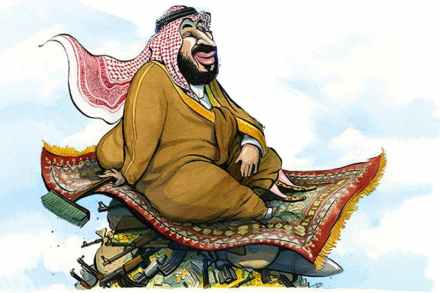
Is Saudi Arabia shunning Washington? Mohammed bin Salman has reportedly been refusing to phone Joe Biden, who wants the kingdom to turn on its oil taps as the West desperately seeks alternatives to the Russian energy market.  Riyadh – the world’s largest oil exporter – has so far failed to accommodate Washington’s pleas. Ahead of the Russian invasion in mid-February, the US asked the Opec+ cartel – of which Saudi Arabia is the most important member – to produce more oil to slow the already rising prices. Opec+ stood firm, and said they would increase production by 400,000 barrels a day in April, a rise agreed before the threat of a

Britain is paying the price for its fracking panic

Between 1980 and 2005, the UK produced more energy than it needed. Today, we import more than a third of our energy and over half of our natural gas. Households are facing an increase in their annual tax bills from £1,500 to an eye-watering £3,000. While the Business Secretary may have tweeted this week that the current situation is a matter of high prices rather than security of supply, families already struggling to heat their homes are unlikely to tell the difference as they decide whether to heat their homes or pay for food. This was never a foregone conclusion. A decade ago, the US shale gas revolution was well

Pipeline politics: what happens if Putin cuts off Europe’s gas?

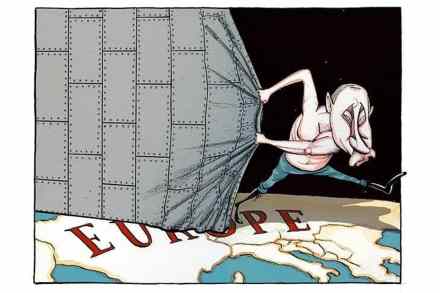
The price of Brent Crude oil was hovering at $100 a barrel as Germany halted approval of the controversial Nord Stream 2 gas pipeline from Russia in response to Putin’s latest aggression. The oil price is five times its low point in 2020 — and the name itself, from the now-defunct Brent field in the North Sea, is a reminder of the UK’s energy vulnerability. ‘But only 3 per cent of our gas comes from Russia’ is irrelevant because we pay world prices for oil and gas from Norway, the US and the Gulf — prices driven both by physical constraints and global market sentiment. A cut-off of Russian gas

Sanctions on Putin will hit Britain’s cost of living. Are we ready?

No British soldiers will go to fight in Ukraine. The UK’s military involvement will be limited to weapons shipments and more forces to Nato’s eastern flank to try to deter further Russian revanchism. Despite this, domestic opinion in Britain — and other western countries — will be hugely significant in this conflict. The West is trying to use sanctions to influence Vladimir Putin’s behaviour. However, there are clear limits to deterrence through economic measures, as Niall Ferguson writes in his article. The threat of sanctions was not enough to stop Putin unilaterally recognising the two breakaway republics in the Donbas, Donetsk and Luhansk, and agreeing to send troops there. At

Are the lights about to go out across Europe?

Impact-Site-Verification: de2f122d-4b66-49e8-911d-d4d5628b0063 Today’s snap decision by German Chancellor Olaf Scholz to halt Nord Stream 2 — the new pipeline intended to export vast amounts of Russian gas into the EU — will make precisely no difference to European energy security, at least in the short to medium term. It could force a rethink of Berlin’s longer-term energy strategy, but the bigger question facing energy markets is whether Russia will curtail existing gas flows into Europe. Scholz on Tuesday instructed Germany’s Federal Ministry for Economic Affairs and Climate Action not to allow the Baltic Sea pipeline to start pumping gas ‘for now’. Halting the certification process puts the project on hold

It's too late to break Europe's gas reliance on Russia

So, Nord Stream 2 will not be plugged into Germany’s gas grid. A little surprisingly, Chancellor Olaf Scholz has been first out of the blocks this morning in the western economic response to Putin’s recognition of breakaway states in eastern Ukraine. The block is not total: what Scholz says is that the certification process for the pipeline will be halted — leaving open the possibility that it might, after all, be connected if Putin starts to behave himself, or Germany becomes especially desperate for gas. Nevertheless, it is a significant move which will have an economic impact on Russia. But it is astonishing that the project was ever allowed to come

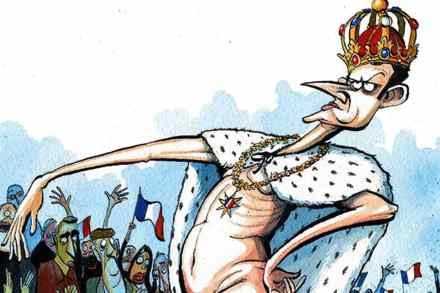
Macron’s energy intervention has seriously backfired

He intervened decisively. He showed the ability of the state to make a difference. And he demonstrated that greedy, self-interested corporations should not be allowed to exploit ordinary consumers. Only a few weeks ago, the French President Emmanuel Macron was being celebrated by left-leaning economists and pundits for forcing the French energy giant EDF to slash the cost of power. But hold on. Now, the government has had to bail-out the company from the inevitable financial hit. It turns out that the government can’t dictate the price of energy after all – and it just creates a bigger mess when it tries to. Even by the standards of French industrial

What really happens if Russia invades Ukraine?

Russia will pay an enormous price if it invades Ukraine, whether it goes for the whole country or only the eastern region around Donbas. Vladimir Putin has already assembled well over 100,000 troops near Ukraine’s borders, moved in tanks, heavy artillery and aircraft, and brought in the medics and blood supplies needed to deal with casualties. Western governments have evacuated all but essential diplomatic personnel and told their citizens to get out now. Still, no one knows what Putin has decided, or even if he has decided. Visits to Moscow by senior western politicians have yielded little information and no diplomatic solution. The message seems to be that Putin remains

Why windfall taxes are a rotten idea

Annual profits of £9.5 billion at BP this week followed a £20 billion jackpot at Shell last week, thanks to soaring global wholesale energy prices that BP boss Bernard Looney recently said had turned his company into a ‘cash machine’. For the very same reason, Ofgem has announced a 54 per cent (roughly £700) increase in the energy price cap for 22 million UK customers, while the Chancellor is scrabbling to keep at least some of those households out of ‘fuel poverty’ by offsetting half the rise with a £200 energy discount, to be recouped over five years, plus a £150 council tax rebate. As investors in the oil giants

Has Macron shot France's energy industry in the foot?

Gas prices are soaring. Europe could be about to witness electricity shortages. Power companies are collapsing by the day, and, on top of all that, the government is set to phase out traditional energy to meet its net zero target.  So might think that a cable to ship in cheap, greener electricity from the other side of the Channel is something of a knight in shining armour. Yet the government blocked the proposal today, and it was absolutely right to do so. Britain may need all the electricity it can get its hands on right now — but the last thing it should do is increase its dependence on Macron and Putin. Britain

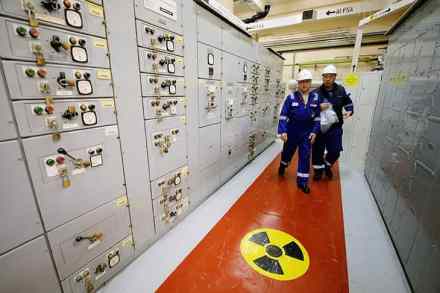
Hunterston’s closure is the nuclear accident no one noticed

So farewell, Hunterston B, the nuclear power plant on the Firth of Clyde that shut last week after 46 years’ service. It will be followed this summer by Hinkley Point B in Somerset and in 2024 by Hartlepool and Heysham, leaving the UK with just four nuclear stations boasting five gigawatts of generating capacity between them — when they’re not suffering extended ‘outages’ for maintenance and repair. That compares with 15 stations and 13 gigawatts, meeting a quarter of UK electricity demand, at the UK’s mid-1990s nuclear peak. Meanwhile, the 3.2 gigawatt Hinkley Point C, developed by EDF of France and due on stream in 2026, ‘may be delayed after

My new nickname for Putin

According to the new Chief of the Defence Staff, Admiral Sir Tony Radakin, the Russians wish to ‘put at risk and potentially exploit the world’s real information system, which is undersea cables that go all around the world’. Apparently, these carry 99 per cent of international communications. The cables which serve Britain are in the Atlantic, where Russian submarines are increasingly probing. This revelation resembles the plot of a book I loved as a child, The Pirates in the Deep Green Sea, by Eric Linklater, published in 1959. Timothy and Hew are two boys living, temporarily without their parents, on Popinsay, a Scottish island. Through the good offices of Gunner

When did the anti-vaxx movement begin?

No vax There is nothing new about the anti-vax crowds supporting Novak Djokovic. Organised protest in Britain began with the formation of the Leicester Anti-Vaccination League in 1869. Vaccination of children against smallpox had been compulsory since 1853, but faith in the vaccine plummeted with an epidemic which erupted in the city in spite of vaccination — 314 died from the disease in 1871/72. There was also increasing anger at the jailing of vaccine refuseniks, 61 of whom were imprisoned between 1869 and 1884. Thousands gathered on 23 March 1885 for an anti-vaccination march from the Temperance Hall to the Market Place. In 1898 the law was revised to allow

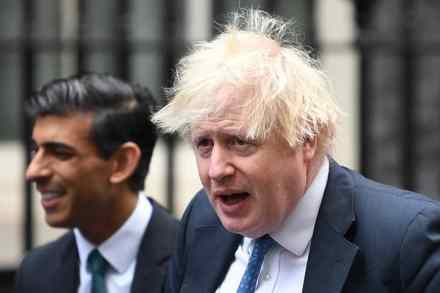
The cost of living – not Covid – could bring Boris down

Two and a half years into his premiership, Boris Johnson has enjoyed no more than a month of that time unencumbered either by Brexit negotiations or the public health emergency. Once Britain is through the worst of the Omicron wave, it would be understandable if the Prime Minister wanted to pursue some kind of political vision. The danger is that, as normality returns, his premiership will be further imperilled by the cost of living. An economic crisis is expected to hit households in April. In that month, National Insurance contributions (NICs) will go up by 1.25 per cent, a direct violation of Johnson’s manifesto pledge to protect voters from tax

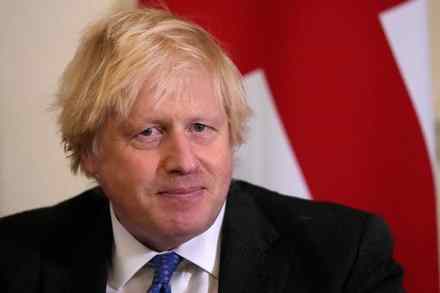
Will the energy price spike bring down Boris?

What does the new year have in store for consumers — and families trying to make ends meet? A stumbling recovery at best, with a continuing tide of inflation that I predict will swiftly pass the Bank of England’s current forecast of ‘around 6 per cent by spring 2022’ and take much longer to turn than the Bank’s Cnut-like posturing seeks to suggest. And driving that surge will be the energy price spike, which could be the factor — far more potent than endemic sleaze and proven incompetence — that topples the Johnson regime. Fact: wholesale natural gas prices have quadrupled in the past year. They may drop again in

Boris and Keir have the energy crisis all wrong

Because of soaring gas and oil prices, and the regulations that determine the energy price cap, it is almost inevitable most of us will face a rise in energy bills of between 40 per cent and 50 per cent from April. For a typical household, that’s an increase in bills of around £600 a year — which would be a painful increase in the cost of living even for those on median (middling) earnings. It would leave the average household spending 6.5 per cent of all their disposable income, after tax and benefits, on heating and power — based on official Office for National Statistics figures. That’s one in every

How to cure what ails the NHS

Wrong cure Sir: In referring to the UK as the highest-spending European nation in healthcare proportionate to GDP (‘Hospital pass’, 4 December), Kate Andrews paints an exaggerated picture which is based upon additional expenditure in the NHS during the Covid pandemic, partly accounted for by £38 billion spent on test and trace. The figures are further inflated by the UK suffering a relatively greater fall in GDP. In reality, the NHS has been woefully under-resourced compared to its European counterparts over the past decade, leaving it with approximately 50,000 fewer doctors compared to OECD averages, the second-lowest numbers of hospital beds per capita, and the lowest numbers of MRI scanners.