Energy

Solar panels in, swimming pools out: 2023’s property trends

From our UK edition

Inflation has finally dipped a little but is still riding high, and mortgage rates may still rise further: Britain’s households are suffering a pay squeeze. But what are home-owners still spending their money on – and what has fallen out of favour? Here is Spectator Life's guide to the winners and losers in the property market this year so far... The winners... Solar panels High energy bills have kickstarted British householders into going green. During the first half of this year, sales of solar panels were up 82 per cent on the same period last year, according to MCS, the standards body. The hot spots of solar installations? Cornwall, Wiltshire and Aberdeenshire. Home-buyers are also keen on them, says Surrey buying agent Richard Winter.

ESG is a surprise boon for fossil fuel giants

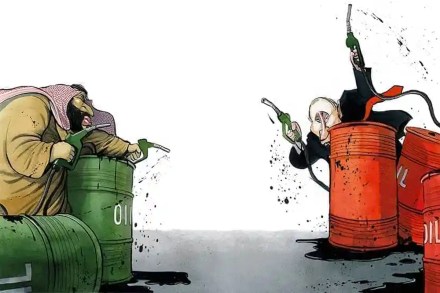
ESG, or environmental, social and corporate governance, has taken the financial world by storm. It first hit the scene in a 2004 United Nations report that argued the financial sector could rack up more profits if it focused on carbon dioxide reduction and UN-approved progressive causes and has ballooned into a big, green financial juggernaut. In 2021, ESG assets under management hit an estimated $35 trillion. Bloomberg projects that by 2025 $53 trillion will be invested in ESG vehicles — that’s over one third of global assets under management and over five times 2007’s total of $10 trillion of ESG assets.  The main thrust is to hasten the renewable energy transition to solve climate change by diverting capital from fossil projects to various green projects.

opec aramco esg
simple pleasures

The war on life’s simple pleasures

There are few things better in life than taking a hot shower at the end of a long day, crawling into a freshly made bed and passing out into the deepest sleep ever. There are also few things that ruin this uniquely cozy experience more quickly than stepping into a shower with dinky water pressure. Luckily, I’ve rarely dealt had to deal with that issue because I grew up with a plumber for a dad. We eschewed so-called “water-saving” shower heads in our home in favor of ones with such high water pressure that showers felt like a deep-tissue massage. When I moved out after college, my dad would drop by my various apartments to drill a hole in the non-removable flow restrictors put in shower heads by management.

Should crypto be regulated like shares – or more like a casino?

From our UK edition

‘Crypto assets are commodities,’ said my neighbour at dinner. No they’re not, I replied, commodities are natural raw materials that have ultimate real-world uses. Crypto is merely a collection of blips in cyberspace to which adherents choose to attribute value. ‘Just like fiat currencies,’ my neighbour shot back. ‘What’s real about them? Aren’t they just an idea in the mind of central bankers?’ And off we went on a ding-dong debate.

If inheritance tax can’t be scrapped let’s change it for the better

From our UK edition

I’d happily jump on the Telegraph bandwagon for the abolition of inheritance tax, even in the company of Liz Truss and Nigel Farage. The urge to provide a cushion of capital for children and grandchildren is an honourable one. Recipients of already-taxed cash from deceased relatives are arguably less likely to be burdens on the state in their own later lives, just as the state is unlikely to spend the same money, if confiscated, in efficient ways for the greater good. And to argue against inheritance is to put socialist hostility to wealth ahead of the worthy aim of family betterment. Enough said. The trouble with this campaign, however, is that it’s also a call for a £7 billion tax cut for the better-off, which simply isn’t going to happen.

Who was the original Terf?

From our UK edition

Terf wars Who was the original Terf (trans-exclusionary radical feminist)? – The practice of some women’s groups in excluding trans women began almost with the advent of trans women themselves. In 1978, the Lesbian Organisation of Toronto refused membership to a trans woman who identified as a lesbian – saying it would only accept ‘womyn born womyn’. – The term ‘Terf’, however, dates only from 2008, when it was used in a blog post by feminist writer Viv Smythe in response to a ban on trans women attending the Michigan Womyn’s Music Festival (a ban which had been in place since 1991). – The festival, which had been going since 1976, was boycotted by some and was last held in 2015.

The inconvenient truth about heat pumps

From our UK edition

In Britain’s battle to cut carbon emissions, the government sees heat pumps as a key weapon. Unveiling the latest energy efficiency plan in March, energy secretary Grant Shapps doubled down on Boris Johnson’s offer of a £5,000 grant for anyone willing to install one. These smart bits of home technology work by transferring thermal energy from the air, ground or water. They are powered by electricity, which can be generated from solar or wind power, providing cheap and fossil fuel-free heating and hot water. So what's not to like? The concept is nothing new.

The EPA’s death warrant for fossil fuel plants

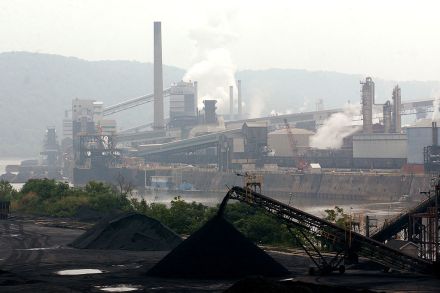
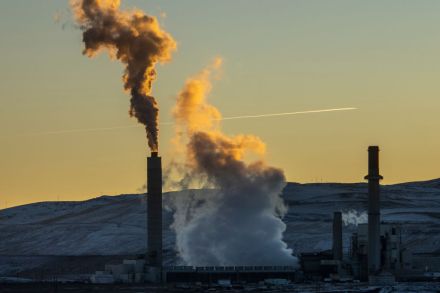
The Environmental Protection Agency has just released its most aggressive emissions rules to date. The rules demand that coal and gas plants capture almost all of their emissions. In essence, fossil fuel plants will have to cut their emissions by 90 percent between 2035 and 2040 or shut down. Unless, of course, they can afford to run carbon capture systems or swap out natural gas for hydrogen. But is that even realistic? “By requiring carbon capture or hydrogen burning, two technologies that haven’t even had multiple successful demonstration projects, let alone mature supply chains, the Biden administration is essentially signing a death warrant for fossil fuel plants,” Isaac Orr, an energy analyst at the Center for the American Experiment, said in an email.

epa fossil fuels

The Biden admin’s favorite electric battery company is in crisis

A politically-connected electric battery company with deep ties to the Biden administration is in trouble. Proterra could be staring down financial ruin, even though everyone from the president to his cabinet have worked overtime to boost the bus company. The Biden administration was supposed to be a ticket to ride for California-based Proterra. In 2021, it told shareholders that it was ready to “ride the wave” of taxpayer-funded incentives for vehicle electrification. It had all the right friends in all the right places. It hired a lobbying firm with extensive ties to Democratic politics weeks before Biden toured its facility.

proterra

Do you have ‘smart meter stress’?

From our UK edition

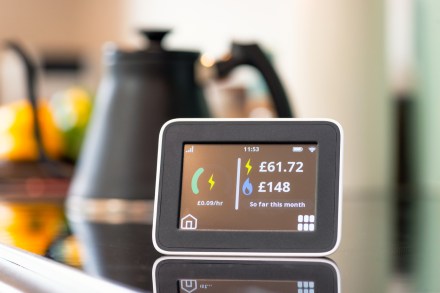
Are you suffering from SMS? Smart meter stress, that is. When we decided recently to accept our energy provider's offer to install a smart meter, I had no clue how anxiety-inducing the digital display on the little black monitor could be. Smart meters tell us (and our suppliers) how much energy we’re using, minute by minute. In theory they make life easier, helping us identify where we can reduce consumption and sending automatic readings so that we’re less likely to underpay or overpay on our bills. There are already 29.5 million smart meters installed across the UK, and by the end of 2025 every home and office in Britain will have been offered one.

A daily shower is money down the drain

From our UK edition

When did it become an inalienable human right to have a shower every day? I ask the question because pretty clearly it wasn’t always so. Yes, the Romans had showers – of course they did (they probably had the internet, too, but archaeologists can’t see it). A potter about online will tell you that we got the first mechanical shower here (hand pumped) thanks to the ingenuity of a plumber from Ludgate Hill named William Feetham. That was in 1767, which means that by the time Jane Austen was getting ink on her fingers a shower was an option for some. So the answer to my question is somewhere between 1767, when I expect a monthly bath was de rigueur for most of us, and around 1990, by which point it become common for Britons to take a daily shower and regard it as essential.

Which appliances are pushing up your energy bills?

From our UK edition

With the Chancellor confirming that the energy price cap will rise in April, it seems we won’t be taking our eye off our electricity usage any time soon. But while energy saving tips have become a staple of breakfast television shows and small talk, how many of them really add up in practice? The Spectator’s data team has crunched the numbers to see what typical household devices actually cost to run. And the answers are quite surprising. Perhaps you’ve heard the warnings over the past weeks of so-called ‘vampire devices’ – those pesky contraptions which carry on costing you money when you’re not actually using them. You may even be among the almost half Britons who say they’re already making an effort to switch off their gadgets at the plug for that reason.

Manchin’s rebuke shows how toxic Biden’s energy views are

It’s not often that a senator launches a brutal, frontal assault on a president from his own party. It’s even rarer when he does it just before a national election. But that is exactly what West Virginia Democrat Joe Manchin just did to Joe Biden. At issue was Biden’s recent speech attacking coal, a bedrock of the West Virginia economy. Manchin was furious over Biden's promise to shut down all of America’s coal-fired power plants. That view might be red meat for Biden’s audience of green-power advocates and rich California donors, but it is poison in West Virginia. And it is those West Virginians who elected Manchin, the only Democrat still standing in a state that is now deep red. Manchin didn’t just criticize Biden.

The lesson of 2022: energy is our lifeblood

This has, so far, been a year of hard lessons. Spiraling inflation has given households an expensive economic refresher course. A land war in Europe has offered an unwelcome reminder of old geopolitical and military truths. But arguably the most important lesson of 2022 concerns the point at which these economic, military and geopolitical considerations converge: energy. On this vital issue, the West has suffered from an epidemic of amnesia in recent years. Too often energy security has either been taken for granted by policymakers and voters, for whom the last energy crisis had become a distant memory, or actively disparaged by an environmental movement whose hardline hostility to fossil fuels has become received wisdom in polite circles.

thunberg

Where in the world is Greta Thunberg?

When the United Nations General Assembly convened in New York in September, climate-watchers may have noticed a pesky, pigtailed vacuum. Greta Thunberg, who spent the summer of 2019 stalking the East Coast after taking a prince of Monaco’s yacht across the Atlantic, reached her zenith that September — the last time this body met in person — at the Climate Action Summit where she delivered her creepy, memed-into-oblivion “how dare you” speech. But the chilling little entity straight out of Kubrick was notably absent at this year’s assembly, at a time when the Biden administration is pushing climate hysteria more fervently than ever.

The inevitable Boris Johnson

London, England When I checked the date that Boris Johnson resigned as prime minister, I thought it must have been wrong. July? The psychodrama that ensued felt as if it had been going on for years. If Boris’s tenure was the main show, Liz Truss’s stint as Britain's shortest-serving PM was the slapdash encore that no one asked for. You know, when the music restarts as you’re eyeing up a taxi home and secretly thinking the act needn’t have bothered. Boris’s downfall, the real one — not the multiple wobbles — began with Partygate. A steady drip of salacious stories for months, each one getting slightly more unforgivable, recounting incidences of Boris and members of his government breaching the strict lockdown rules he himself had set in place.

boris johnson right neoliberalism

Nuclear power is the answer to our energy woes

America is about to spend $126.9 billion on renewable energy thanks to the Inflation Reduction Act. When this is added to the already existing production tax credits, the total is $240 billion. Greens everywhere are rejoicing. Paul Krugman took to the New York Times to wonder if the Democrats had just saved the world from climate change. And why not? America has seen emissions drop to 4.8 trillion tons a year since 2000. That’s a one-trillion ton decrease. In fact, since America has embarked on building out wind and solar, the country has returned to 1949 levels of emissions. But are renewables really to thank? After all, wind and solar only accounted for about 12 percent of our electricity supply in 2021.

nuclear

A house-price crash won’t be the only effect of the Kwarteng calamity

From our UK edition

Where next for house prices? Clearly, they’re going down as mortgage rates go up – and my forecast in May that they would shed ‘recent froth’ and then stagnate rather than plunge, has been entirely overtaken by events, or at least by Kwasi Kwarteng’s calamitous ‘fiscal event’ last month. Reverberations from the Chancellor’s debut continue apace, with more emergency bond-buying by the Bank of England despite news that the OBR-assessed forecast missing from his September speech will now be unveiled on 31 October instead of on 23 November.

The tricky debate over fossil fuels on Native American land

The Biden administration has found itself between a rock and a hard seam of coal. A cohort of Native American tribes have realized just how sacred — and lucrative — their lands really are, and they’re not trusting the promises of an old white man this time. “When the administration says, ‘We're going to create all these millions of jobs if we just switched over [to renewable energy] today,’ they haven't shown us the fine print that says where those jobs are coming, which region, doing what,” Daniel Cardenas, chairman of the National Tribal Energy Association and member of the Pit River Tribe, told Fox News Digital in an interview. "When you start questioning them there, then they start getting defensive.

Portrait of the week: Tory party conference, gas supply warning and Denmark’s royals stripped of titles

From our UK edition

Home Liz Truss, the Prime Minister, came up with a message for the Conservative party conference: ‘Whenever there is change, there is disruption… Everyone will benefit from the result.’ Her words followed a decision not to abolish, after all, the 45p rate of tax, paid by people who earn more than £150,000 a year. Backbench Conservative MPs had let it be known they would not vote for it. ‘The difference this makes really is trivial,’ said Paul Johnson, director of the Institute for Fiscal Studies thinktank. But the pound rose and the government was able to borrow a little more cheaply. Kwasi Kwarteng, the Chancellor of the Exchequer, told the conference: ‘I know the plan put forward only ten days ago has caused a little turbulence. I get it.