Employment

Letters: How to revive Britain’s orchestras

From our UK edition

Good conductors Sir: Yes, it is sad to see talents like Sir Simon Rattle and Mirga Gražinyte-Tyla leaving our shores (‘Rattled’, 30 January) and yes, the Brexit complications faced by British musicians are ludicrous. But both might be bearable if there were sufficient investment in grass-roots music here. At least then we could hope that the gap left by departing maestri would be quickly filled by homegrown talent. Unfortunately, the government continues to turn a blind eye to musical education, despite the many studies evidencing its benefits.

Reforming workers’ rights is an upside of Brexit

From our UK edition

Of all the arguments put out against Brexit during the bitter referendum debate, one of the least convincing was that it would give a UK government the opportunity to repeal employment law, thereby impoverishing Britain and its people. Jeremy Corbyn once asserted that a Conservative government would turn the country into a 'low-wage tax haven'. That is an interesting concept, which like the chemical element Seaborgium might theoretically exist but which has yet to be discovered in the real world – most tax havens seem to be pretty wealthy, at least compared with similar countries which haven’t set the fiscal and regulatory conditions to attract businesses and wealthy individuals.

The real problem with the Fatima advert

From our UK edition

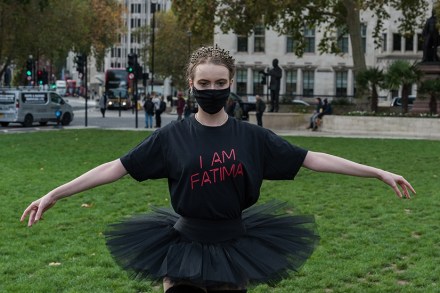
An advertisement from GCHQ provoked angry comment because it seemed to suggest that some ballet dancers would be better working with computers, or as it put it: ‘Fatima’s next job could be in cyber.’ The angry brigade said that ballet dancers should not have to give up their art. I suspect too an element of hatred of the state’s security apparatus. No doubt the advert gave the dancer the name ‘Fatima’ hoping to attract people of a Muslim background (Fatima being Mohammed’s daughter). The man who took the original photograph expressed outrage. The woman depicted, from Atlanta, Georgia, is called Desire’e Kelley, who apparently uses an apostrophe in her first name rather than the conventional acute accent.

How Thérèse Coffey plans to help millions back to work

From our UK edition

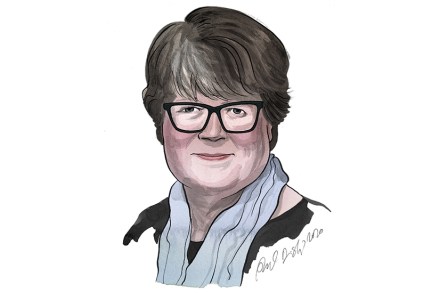
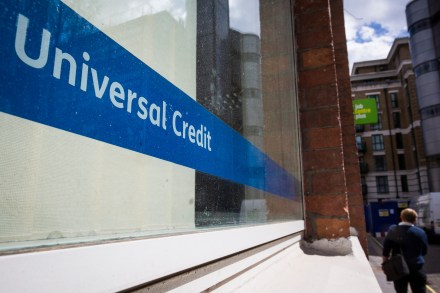
If you haven’t heard of Thérèse Coffey, then this will be — to her — a sign that she has been doing something right.  As Work and Pensions Secretary she has had to sign people on to benefits faster than anyone who has held the position before. If this had gone wrong during lockdown, she would be as infamous as Gavin Williamson. But the system, Universal Credit, managed 1.5 million claims in four weeks. Many things have gone wrong for the government over the past few months, but the welfare system has (so far) held up. Coffey has kept her anonymity.  ‘My main task has been making sure that DWP runs effectively. Being in the news would probably be a sign that it wasn’t,’ she says over lunch in The Spectator’s boardroom.

The creep of internet censorship

From our UK edition

Kristie Higgs, a 44-year-old school assistant, didn’t realise that criticising the sex education curriculum at her son’s school on Facebook would get her fired. For one thing, her account was set to ‘private’, so only her family and friends could read it. For another, she was posting under her maiden name, so no one could connect her with her employer. Finally, the school that sacked her for expressing these views wasn’t actually her son’s, but another one altogether. This seems a pretty clear case of a person losing her livelihood for dissenting from progressive orthodoxy. Kristie’s case is being heard at an employment tribunal in Bristol this week. The dispute relates to two Facebook posts from two years ago.

A murderer among us: I was Dennis Nilsen’s boss

From our UK edition

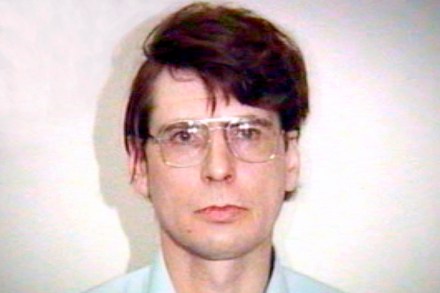
How would you know if one of your colleagues was a murderer? When police announced the man they’d arrested for multiple horrific murders was Dennis Nilsen, many of his former colleagues — including me — were amazed, but perhaps not completely incredulous. Des worked with me at the Hotel and Catering Jobcentre in 1980 and he was unquestionably odd. My wife recalled him saying in the office one day: ‘You know it would be really easy to pick up some rootless young man in a bar and knock them off. Who’d notice? Who’d care?’ For his colleagues it was just another rant, a weird take on his continuing critique of Thatcher’s Britain. ‘Oh shut up, Des!’, they no doubt thought.

Is unemployment about to surge?

From our UK edition

Despite experiencing the largest economic contraction in over 300 years, UK unemployment figures haven’t budged for months. The furlough scheme seems to have proved successful in shielding many jobs from getting the immediate axe, while those who were made redundant often didn’t appear in the official figures as they were not immediately looking for work. But today’s labour market overview from the ONS shows they have started to tick upward: unemployment is now at 4.1 per cent, 0.3 percentage points up from last year and 0.2 points up from the last quarter.  Breaking down the rate by age, it’s clear the young have suffered the most so far: unemployment for 16 to 24-year-olds is up 76,000 this year, now totalling over half a million.

Remote workers of the world, unite!

From our UK edition

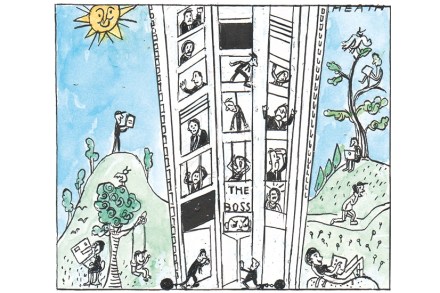
A few nights ago on Twitter, I quipped that I was planning to launch a trade union for remote workers. With dues of £10 a year, but membership of 200 million worldwide, I planned to become the Jimmy Hoffa of Zoom (my colleague Jamie McClellan, clearly a Microsoft fan, suggested we call ourselves the Teamsters). If our demands for swivel chairs were not met, we would threaten to homework-to-rule — sitting with our backs to brightly lit windows, perhaps, or running vacuum cleaners in mid-presentation. But in a way, a million or so Londoners are already doing something similar by refusing to travel to work. This is a white-collar strike — or more accurately a strike by people who normally wear collars demanding the right to work dressed like Dominic Cummings.

Letters: Will office workers ever want to return?

From our UK edition

The future of offices Sir: I agree with much of Gerard Lyons’s article about the future of the capital (‘London in limbo’, 8 August), but there is more to consider. Before the virus, many organisations considered having staff working from home. However, there were always objections: people needed to be at meetings; the technology wasn’t good enough; questions over whether workers would work their contracted hours. With the onset of the virus, working from home was forced upon many, and has proved to work better than could ever have been expected. Will these workers ever want to come back to the office?

In the race to recovery, Britain is losing

From our UK edition

At the start of lockdown, the government was obsessed with how other countries were dealing with the Covid crisis. In No. 10 press conferences, Britain’s daily death toll was shown next to numbers from the rest of the world, putting our handling of the virus into perspective. But when our death toll jumped, the government claimed the calculations were too different to compare and dropped the graph. A few weeks ago, the Office for National Statistics picked up where the government had left off, revealing that England had the highest number of excess deaths in Europe, while Scotland, Wales and Northern Ireland were in the top eight. The UK had lost the first leg of the Covid race. Now it looks set to lose the second: the race to recovery.

Boomer and bust: Covid is fast-forwarding us into retirement

From our UK edition

It was on a foggy walk to Hell’s Mouth that the sea fret lifted and I looked down, down, down at sea smashing against rocks and yes, it felt like a sign. I was on a socially distanced hols — if we define ‘socially distanced’ as ‘a bunch of mainly metropolitan friends romping in north Cornwall’ — for my summer of 2020 epiphany, which was this. Of the dozen or so happy, shiny, busy fiftysomethings bodyboarding, yakking and stuffing down Kettle Chips in their wetsuits, only one had what a retired major in Tunbridge Wells might call a job — and that was the books editor of the Oldie.

Why would anyone want to work from home?

From our UK edition

I’ve been having an office romance. Not with anyone in the office — but with the office itself. I’ve been going into the office every day during lockdown and I love everything about it: the bike ride from my Camden flat to work in Fitzrovia; the professional feeling that comes from being in a place dedicated to work; a chance to see more life than the limited activities that go on in your sitting room. I even like office furniture, the soft hum of the photocopier and the stationery box, with its neat cellophane packs of Post-it notes and extensive range of envelopes. But sadly, as an office-lover, I’m in a minority. The office, which has existed since the days of ancient Rome, is under threat. The Home Office has told its staff not to come back for a year.

Finally, we’re unboxing the teleporter

From our UK edition

This week’s Wiki Man may read a bit oddly. You see, I haven’t ‘written’ it at all; I’ve dictated it into a kind of dictaphone (an Olympus LS-P4, at £130, needlessly expensive for the purpose, but that’s how I roll) and then uploaded the audio file to an online transcription service called otter.ai. The reason I’m doing this is to find out how long it takes to write a Spectator article when you dictate it and get it transcribed online, compared with writing it on a keyboard like it’s 1940 or something. I’ll let you know the result at the end of this article. But I’m doing this because I don’t know the answer. It’s a worthwhile experiment — in an area where very little experimentation takes place.

What if Oxford PPE graduates on TV were made to wear pink conical hats?

From our UK edition

You can’t discuss racial inequality without using the N-word. And you can’t debate social justice without adding the C-word and the F-word as well. In this case the N-word is Nepotism, the C-word is Credentialism and the F-word is Favouritism. What is often overlooked in the debate about social justice is that inequality of opportunity need not arise from the exercise of negative preferences but from a mildly positive, unintended bias operating in reverse. Inequality of opportunity need not arise from the exercise of negative preferences Q. What is, at birth, the best predictor that you will become a doctor? A. Having a parent who is a doctor. Hence there are very many doctors from BAME backgrounds, but not in the expected ratio of B, A and ME.

Letters: Churches have risen to the challenge of lockdown

From our UK edition

Back to schools Sir: I share Lucy Kellaway’s enthusiasm for seeing school-life return and inequality gaps closed (‘A class apart’, 20 June). I was also glad that she debunked the myth that teachers have been on holiday during lockdown. It doesn’t feel like a holiday to me, as I sit contemplating a set of essays, the second set of predicted grades of the year and my annual Ucas references, not to mention daily work postings, live sessions on Microsoft Teams, Zoom staff meetings and a long list of emails. Where we depart is at Lucy’s call for a return to school at all costs, rather than the ‘blended learning’ approach she decries.

Will Covid kill off the office?

From our UK edition

The most useless technology is the one you invent but fail to exploit. The Incas invented the wheel, but seem only to have used it on toys. Hero of Alexandria designed the first steam engine in the 1st century ad, but it was seen as a gimmick. The technological opportunity to escape from city-centre offices has been stuck in a similar limbo between invention and implementation. In the 1970s, Nasa engineer Jack Nilles envisaged ‘teleworking’ from local work centres. In 1984, the Times reported that tele-commuting was the ‘magical buzzword’ on the US microcomputing scene. In the 1990s, the UK had 200 ‘telecottages’: rural workspaces with computers, communications and social support.

Are Britain’s employment figures too good to be true?

From our UK edition

Lining up graphs of the UK’s growth figures last week and its employment figures this week, you would struggle to believe the data was from the same decade, let alone the same month. Despite the economy contracting by a quarter in March and April, unemployment figures haven’t budged: 3.9 per cent ending the month of April, unmoved from the quarter before, and more remarkably only up 0.1 per cent from the previous year.  The employment rate remains surprisingly high too: 76.4 per cent, down 0.1 per cent on the previous quarter. Despite the shuttering of the economy, employment and unemployment continue to hover at record highs and lows, like they did before the crisis began.

Can America’s 2.5 million jobs miracle be replicated in Britain?

From our UK edition

The US economy created 2.5 million jobs last month – the biggest monthly jobs gain since records began a century ago, albeit only a partial recovery from the 22 million jobs lost during lockdown. These figures have blown expectations out of the water. Economists were predicting yet more unemployment: the consensus was unemployment reaching 8.3 million, or 20 per cent in May, up from 14.7 per cent in April. Defying the odds, unemployment actually fell to 13 per cent, signalling an unexpectedly early start in the rebounding of the American economy. The biggest winners were workers in hospitality, who made up almost half of the new jobs, followed by construction.

It’s hell when your whole neighbourhood is working from home

From our UK edition

Every morning, like sun-seekers stampeding to get their towels on the sunbeds at a cheap Spanish hotel, it’s a race to the patio for my neighbours and me. Each of us in the line of terraced houses on the village green must try to be the first to get into their garden, because the first one out there reserves the air space. If it’s the neighbour who works in telecoms then we’re in for merger talks all day. Her firm is in the middle of a big deal, the negotiations for which she’s carrying out on her patio via laptop conference calling. Working from home. Oh dear. This is going to be trouble. Our homes are no longer our homes. Every home in the country, since lockdown, has become the outer office of some company or other.

Did the behavioural scientists have a point?

From our UK edition

For all the abuse heaped on the Behavioural Insights Team early in the crisis, let’s not forget that the only three immediate solutions proposed by the combined ranks of the scientific establishment were, um, behavioural. People were encouraged to wash their hands with soap for 20 seconds, to stay home where possible and to keep two metres away from those outside their household. And we adopted this advice in our millions, long before any mandate had been issued. It would be wrong, when modelling the spread of this disease, to overlook the effect of voluntary preemptive action. My last visit to London was on 12 March, 11 days before we were made to stay indoors. It was already a ghost town. Some elderly relatives had been self-isolating from the beginning of the month.