Employment

Sunak’s coronavirus rescue package looks increasingly unsustainable

From our UK edition

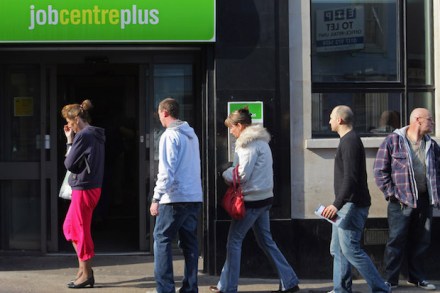
The number of people claiming unemployment benefits in Britain rose by over 856,000 to 2.1 million in April, the first full month of the lockdown. Figures from the Office for National Statistics reveal that the number claiming benefits due to unemployment has increased by nearly 70 per cent. This marks an unbelievable u-turn from the start of the year, when UK employment figures were hovering at record highs. These figures do not include ‘the furlough effect’: those who are still counted as employed, paid by the Government to stay home and wait for the green light to return to work.

Have you caught the remote-working bug?

From our UK edition

One of the few benefits to emerge from this pandemic is that the world’s population has been given a crash course in complexity. If nothing else, many people may have learned why it makes sense to plot infection rates on a logarithmic scale, and a few may even have learned to use the word ‘exponentially’ in its true sense, rather than as a synonym for ‘a lot’. I hope this proves an enduring lesson. Because, in truth, very little in life can be understood properly without first understanding such concepts, since barely anything involving humanity changes in a linear way.

How will Rishi Sunak roll back the furlough scheme?

From our UK edition

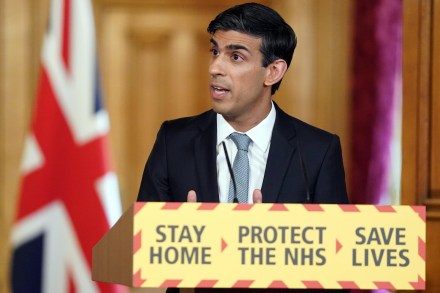
Just weeks ago, Chancellor Rishi Sunak claimed that widespread use of the furloughing scheme was proof of its success. But it appears the government has over-achieved. The Treasury’s original prediction was that 10 per cent of businesses would use the salary safety net; the figure has turned out to be closer to 70 per cent. The cost for just one month of the scheme is estimated to be £8 billion, only £3 billion less than the NHS’s monthly budget. ‘We’re not talking about a cliff-edge but we have to get people back to work.’ says Matt Hancock, the health secretary. ‘We’ve got to wean off it.’ After telling ITV early this week that the scheme was ‘unsustainable’ for the long-haul, Sunak is changing tack.

How ‘furlough’ became mainstream

From our UK edition

In July, in its ‘Guess the definition’ slot, next to the day’s birthdays, the Daily Mail asked its readers to plump for the correct meaning of furlough. Was it a) a second swarm of bees in a season; b) a pole across a stream to stop cattle; c) a soldier’s leave of absence? I think the second swarm is called an after-swarm or piper. The government has published a whole document on water-gates to stop cattle. (You can get a £240 grant if the wood used is peeled and tanalised.) These are backwaters of life, but furloughing has become mainstream. Furlough was used before the present emergency. I remember in August that poor Nazanin Zaghari-Ratcliffe was let out of jail for a few days on ‘furlough’, but then taken back in.

The unforeseen costs of Covid-19

From our UK edition

Assumptions made about the UK’s Covid-19 support packages are starting to unravel. When the Chancellor announced unprecedented spending to tackle the virus, he aimed to keep people in their jobs and mitigate an inevitable economic crash. But unemployment is soaring and the economy is contracting at a rapid pace, with growth figures set to plummet further than they did during the financial crash, and possibly even below that of the Great Depression. Despite the government's measures, the economic effects are being acutely felt – and the Treasury’s coronavirus policies may have spurred on some unwanted activity of another sort.

Coronomics: Ordinary remedies won’t be enough for a surreal crash

From our UK edition

We have seen crashes before, recessions and depressions, but nothing like this. Our fear of coronavirus has hindered and halted every aspect of daily life. We look out of our windows and barely recognise the country we’re in: police film dog-walkers and pour black dye into lagoons to deter swimmers. We wait in queues for empty-shelved supermarkets. The stock market collapses, surges, then collapses again. None of the old rules make sense. Welcome to the world of Coronomics. If this were a normal recession, the remedy would be simple: encourage people to go out, spend money and boost the economy. But today’s public health concerns require the government to repress the economy, while trying to keep it afloat at the same time.

How much food have we really been stockpiling?

From our UK edition

Time out When did British workers start being ‘furloughed’? The word furlough is first recorded in the English language in 1625, believed to be derived from the Dutch verloffe, meaning a leave of absence of a sailor from the navy. It seems to have come back into parlance in Britain thanks to it being used in the US prison system to describe temporary leave for an inmate. It was the title of a 2018 American film in which a female prisoner is allowed out of jail for the weekend to visit her dying mother. The film was later renamed Time Out, perhaps because not everyone knew what ‘furlough’ meant. But to no avail — the film, which is reported to have cost $3 million to make, grossed just $8,472 at the US box office.

The post-Brexit bounce seems to have stuck, for now

From our UK edition

The post-election economic bounce appears to be more than a fluke. Positive news came in waves this week, as data for employment figures, weekly wages and economic activity painted a good picture for newly-Brexited Britain. People are in work and wages are finally back on track. Employment has hit a new record high (76.5 per cent) while unemployment has dropped to a new 44-year low, at 3.8 per cent. Most notably, weekly wages are (finally) back to their pre-financial crash levels ie, the highest since March 2008. And yes, it has taken a very long time get here – it has been the slowest wages recovery in economic history – but the pre-crisis target has been surpassed years before forecasters like the Institute for Fiscal Studies predicted.