Elections

Inside the 2024 campaign consultant calamity

From our US edition

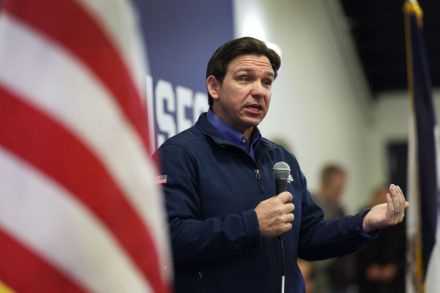
In the salad days of early 2023, when Ron DeSantis was the clear insurgent candidate to wrest the GOP nomination from Donald Trump, the Florida governor boasted of his ability to rise above the chaos and office politics that had derailed the populist agenda under Trump’s watch. “In terms of my approach to leadership, I get personnel in the government who have the agenda of the people and share our agenda. You bring your own agenda in, you’re gone,” DeSantis said. “The way we run the government, I think, is no daily drama, focus on the big picture and put points on the board.” He has since dropped that line; it’s been too obviously overtaken by actual events.

consultant

Zucked up: private election funding’s new form

From our US edition

Greenwich, Connecticut, is a town of 63,000 people just twenty-eight miles away from New York City. It’s a wealthy community with a median household income of $127,123 and the average home value over $1.2 million.Greenwich, Connecticut, is a town of 63,000 people just twenty-eight miles away from New York City. It’s a wealthy community with a median house- hold income of $127,123 and the average home value over $1.2 million. The well-manicured lawns and eight-car garages may be caricatures of country club Republicanism, but don’t be fooled. Democratic financier Ned Lamont launched his political career here en route to becoming governor. In 2020, Joe Biden received 61 percent of the vote — the formerly reliable GOP town has gone fully blue in the past two presidential cycles.

The Youngkin blueprint

From our US edition

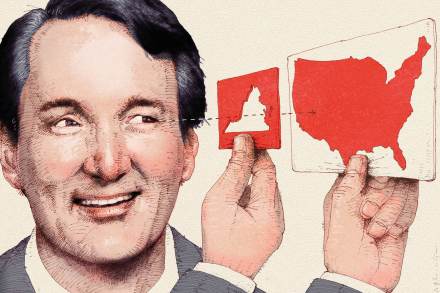
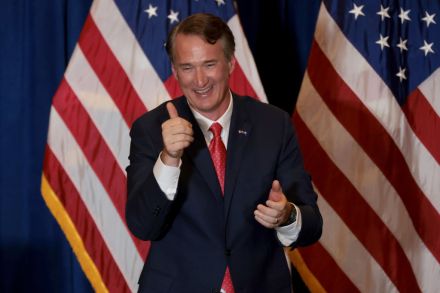
Virginia Beach, Virginia “Please run. We need you to save our country. Please.” A man pleads with Virginia governor Glenn Youngkin, referring to speculation that Youngkin may jump into the 2024 GOP presidential primary — and that Republican donors are encouraging him to do so. Youngkin responds, with a laugh: “I’m busy.” The governor is, indeed, quite busy. It is late August and he has just finished up one of his “Parents Matter” listening sessions, this one in Virginia Beach. Youngkin has been traveling the Commonwealth and hearing directly from parents to fulfill one of his biggest 2021 campaign promises: protecting the rights of parents from government overreach in matters concerning their children.

Youngkin

Francis Suarez’s Messi debate stage ploy

From our US edition

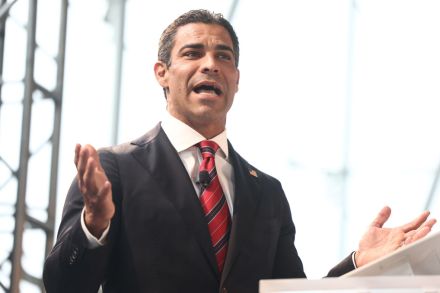
As Miami mayor Francis X. Suarez looks to dribble onto the presidential debate stage in Milwaukee, he’s raffling off front-row tickets to soccer superstar Lionel Messi’s American debut to anyone who Venmo's his campaign a single dollar — but campaign finance experts warn that the gimmick could pave the way for an influx of illegal foreign cash. Suarez is shooting his shot, banking on Messi’s star power more than his own to vault him past the required 40,000 donors the Republican National Committee is requiring in order to debate.  https://twitter.

francis suarez messi venmo

How will the decline of cable news affect politics?

From our US edition

The internet has transformed presidential campaigns. Barack Obama micro-targeted his way to victory in 2008. Donald Trump tweeted his way into the conversation in 2016. In 2020, Joe Biden Zoomed his way to the White House. And yet, for all the ways in which communications technology has upended how we do politics, some things haven’t changed all that much. The race for the White House remains a made-for-TV affair: from debates to campaign stops, events are planned with the television viewer in mind. Even in the digital age, the power of television has endured. But as the country gears up for 2024, could that be about to change? News channel ratings have plummeted, households are ditching cable packages and viewers’ trust in the networks is at rock bottom.

news

The GOP ballot harvesting bonanza has begun

From our US edition

A year after getting its clock cleaned thanks in large part due to abdicating mail-in ballots, everyone in the Republican Party is getting in on the ballot harvesting action. One of the latest entrants is Turning Point USA, which, through its Turning Point Action 501c4 plans to build the “first ever conservative ballot-chasing army,” according to plans obtained by The Spectator — and it won’t come cheap; Turning Point Action estimates that the total cost of its operation will be $108.6 million.

maricopa county ballot harvesting

Turkey is at an existential crossroads

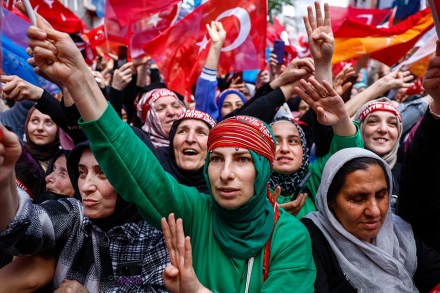
The wonderful Barbara Kingsolver wrote that hope is something you should not admire from a distance, but rather live inside of, ‘under its roof’. Last week I lived under the roof of hope as the campaigns for the first round of the Turkish presidential elections drew to a close. This is an existential crossroads for Turkey, my motherland. The AKP under Recep Tayyip Erdogan have been in power for two decades. Although they started off on their journey with promises of liberal reforms, a democratic constitution, and plenty of rhetoric about joining the EU, they have become increasingly nationalist, Islamist, patriarchal and authoritarian with each passing year.

How to fake it till you make it

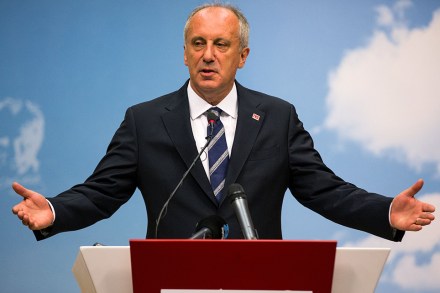
Not to sound too much like Kamala Harris during one of her peregrinations on the nature of time, but the thing about the future is that it catches up with you awfully fast. For a while we have been warned about the dangers of artificial intelligence and the special hazards of ‘deepfakes’. It seemed so futuristic when we saw a deepfake of Barack Obama some years ago, which demonstrated how easy it was to put words into someone’s mouth that they did not say. Well, now we have had an example in real time. Or at least the electorate in Turkey have. Personally I am not persuaded that Turkey’s election was ever likely to be entirely fair and free.

The inevitable return of Bibi Netanyahu

From our US edition

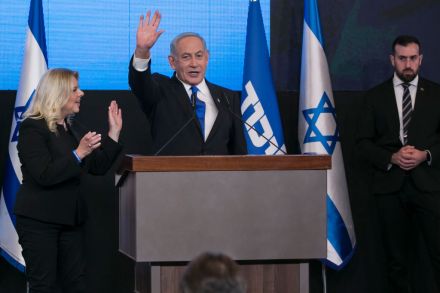
With about 90 percent of the vote counted as of this morning, former Israeli prime minister Benjamin "Bibi" Netanyahu appears set to return to power in a stunning comeback. Having lost power in May 2021, and facing mounting legal challenges, his political career seemed over. Now, with his right-wing alliance set to secure a majority — likely between 61 and 65 seats in the 120-seat Knesset — his return to the premiership seems almost inevitable. The party he leads, Likud, is likely to receive around 32 seats. While Bibi may once again lead his country, his coalition will be different this time around. The far-right Religious Zionist Party (RZP), led by firebrands Betzalel Smoltrich and Itamar Ben Gvir, will have around 14 seats, up from seven before the election.

Life after liberalism

From our US edition

Liberalism is dying, and the American right is ascendant. That’s the lesson of the last six or eight years of national politics. Barack Obama should have been the beginning of a generational renewal for the Democratic Party. Instead the Democrats have been prisoners of their past. They looked backward in 2016 and nominated Hillary Clinton. After she failed, they reached even further back to nominate Joe Biden, a man born during the Franklin D. Roosevelt administration. Biden is not simply old; he’s nostalgia personified. He’s a throwback to a time when Democrats were less radical, when the party of FDR and JFK, and even of Bill Clinton, could lay claim to being an everyman’s party.

Why tactical voting is so dangerous for the Tories

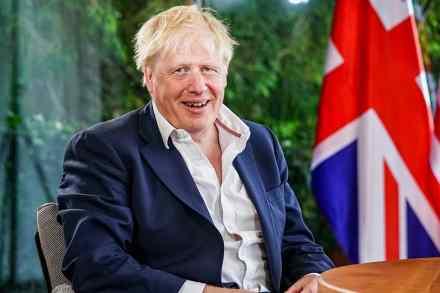
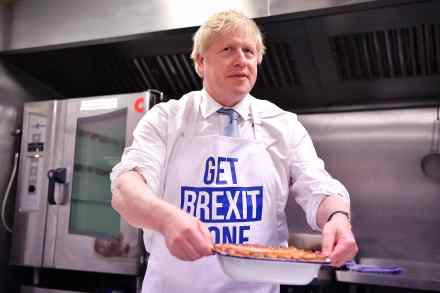
Boris Johnson has always been a celebrity politician. It is one of the reasons why the normal rules of politics have so often not applied to him. This status has given him political reach and put him on first-name terms with the public. It makes it easier for him to command media attention than other politicians: a fact that he turned to his advantage in 2016 and 2019. But this strength is now becoming a weakness. Johnson’s ability to dominate politics means that the country is now polarising into pro- and anti-Boris camps. The worry for him is that he has more opponents than supporters. Last week’s by-elections suggest people are prepared to vote tactically to give him a kicking. ‘His celebrity is working against him,’ laments one secretary of state.

Chesa Boudin’s soft-on-crime policies will doom him

From our US edition

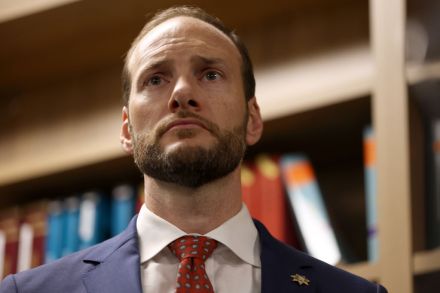
California’s ballots went out early this month, and the drawn-out mail-in primary election ends on June 7. Turnout looks to be low, as there are no competitive statewide races, and November elections are a lock for the Democratic incumbents. Governor Gavin Newsom has one eye on the camera and the other on the White House. Senator Alex Padilla — appointed last year by Newsom to fill Kamala Harris’s seat — is a reliable placeman for the ruling Democratic junta. The contest that politicos will be watching is an up-or-down recall vote for San Francisco’s district attorney Chesa Boudin. It would be a major upset if he kept his job. He might be deposed in a landslide, as was San Francisco’s zany school board, or lose more narrowly.

chesa boudin

How to lose elections XXXX

I have remarked here before about our era’s tendency to accept election results if your side wins but to reject them if they lose. Happily in the UK there is no significant body of opinion which believes that Jeremy Corbyn won the 2019 election. True, there are a few Momentum loons who still think that Corbyn would have won had the Tories not somehow got more votes. But even among the most diehard Momentum-ites few actually come up with stories of ballot rigging, high-level corruption and more. Still, our country is not immune to the ‘I only accept the results if my side wins’ tendency. After all, we had Carole Cadwalladr and others insisting for years that the Kremlin had somehow mysteriously manipulated the 2016 Brexit vote.

How conservatives concede the culture

From our US edition

Conservatives suffer from a short attention span, and it largely explains their defeats in the culture war. They fight every battle as if it’s the only one they will ever have to fight. And so, win or lose, they are unprepared for what happens next. If they lose, they forget how all-important the last battle was, learning no lessons from defeat, nor about what’s vital and what isn’t. Twenty-five years ago, conservatives were adamantly opposed to putting women in combat or admitting them to institutions like the Virginia Military Institute and the Citadel. In recent years, conservative Republicans have celebrated the aspirations to office of female fighter pilots like Arizona’s Martha McSally and female graduates from Virginia Military Institute and the Citadel.

conservatives

Welcome to body-camera democracy

From our US edition

The introduction of body cameras as a staple of the police uniform has been a transformative piece of tech. After just eight years of their use, it’s hard to argue against the impact of body cams in stemming police misconduct. According to a recent study by the University of Chicago’s Crime Lab and the Council on Criminal Justice’s Task Force on Policing, civilian complaints about police misconduct are down 17 percent since the introduction of body cams. Physical encounters, whether fatal or non-fatal, are down 10 percent. It was a struggle to get here. Many cops said that complaint statistics did not justify the indignity of policing the police taping every interaction they have with the public. A vocal minority countered: “If everything is so cool, we will see it.

body cam

The multinational that ate Virginia

From our US edition

This time next year, Republicans expect to be back in control of Congress. They are already celebrating, as 2022 sees Glenn Youngkin newly sworn in as governor of Virginia. For a wide swath of GOP activists and consultants (and not a few voters, too), Youngkin is the face of a Republican Party that can win — with or without Donald Trump. Youngkin had Trump’s endorsement last November. Youngkin was as eager to promote this as his Democratic opponent was, but the endorsement helped rather than hurt him. Trump voters’ residual skepticism toward a nominee who had recently been head of the Carlyle Group — a private equity firm long synonymous with insiderdom and globalism — was overcome by the rise of Critical Race Theory as a pivotal campaign issue.

Youngkin

Boris Johnson is preparing to fight the wrong election

The next election won’t be like the 2019 campaign. It will be far tougher for the Tories. Ministers were struck by a recent presentation by the Tory strategist Isaac Levido to the cabinet a fortnight ago, in which he stressed that the next election would be much more like 2015 than 2019. Levido’s argument was that the three key factors which led to the Conservative victory two years ago were Brexit, Jeremy Corbyn and Boris Johnson — but the next election campaign would be a far more traditional affair. To win, as I write in the magazine this week, the Tories will have to show that they have delivered on their promises and emphasise what MPs have done for their constituencies.

Welcome to the age of entropy

From our US edition

Americans and other westerners have long been accustomed to thinking that history has a clear direction. Sometimes the direction is contested, as it was during the Cold War. The future could have been capitalist or communist, or perhaps a blend of both systems — ‘convergence’ was a trendy notion for a time — but one way or another the alternatives were clear. After the Cold War, there were no alternatives. Capitalism, democracy and liberalism were here to stay, and soon they would be everywhere else too. All the Islamic world needed if it was to join us at the end of history was a nudge: regime change would speedily bring about social and economic change.

liberalism

Greta Thunberg didn’t win the German elections

From our US edition

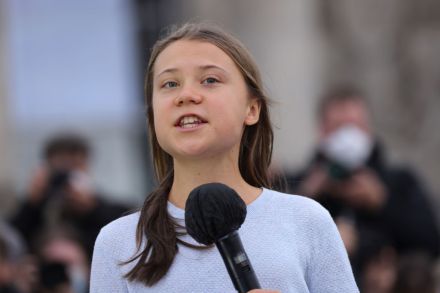
Greta Thunberg is back in business. Previously slowed down by European pandemic restrictions, the Fridays For Future movement has now hit the streets, starting in Berlin. 'We must not give up, there is no going back now,' Thunberg told thousands of local protesters. The appeals and influence of her movement have translated, at least somewhat, into a stronger climate-focused youth vote in last month's German elections. The Green party has made significant advances in Parliament, becoming one of the kingmakers in upcoming coalition talks. Yet Germany’s environmentalists aren’t the only ones who outperformed their previous results. The liberal-democrat FDP scored 23 percent of Germany’s first-time voters, the same amount as the Greens.

greta

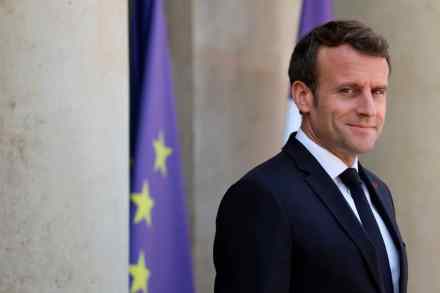
The German elections are good news for Macron

The German election result means that a three party coalition will almost certainly be needed to form a government. Olaf Scholz, the SPD leader, has made clear just now that he is going to try and form a coalition with the Greens and the Free Democrats. Whoever succeeds her will take time to build up the authority that Merkel had in these meetings Scholz has a strong claim on the chancellery. The SPD came first in the election and polls consistently showed that he was Germans’ preferred choice for candidate. Despite being from a different party, Scholz successfully positioned himself as the Merkel continuity candidate. The results might suggest a shift to the left among the German electorate. But German voters clearly want more Merkelism.