Education

Why we need more universities

From our UK edition

In 1961, shortly after getting a job as a lecturer at Cambridge, my father had an idea. The faculty buildings, he discovered, were largely unused for six months of the year. The colleges, too, were empty. Why not create two Cambridges, one for term time and one for the holidays? Unlike the Cambridge of dreaming spires and glittering prizes, the second would be for ordinary people who’d missed out on the chance of a university education — labourers, tradesmen, clerks, housewives. It wouldn’t be a place of privilege and over-indulgence, but of hard-working people eager to soak up knowledge. And instead of propping up the English class system, it would turn it on its head. When he presented this proposal to the university authorities he was met with near universal derision.


Taught to be stupid

From our UK edition

Enough! Enough! For months, the so-called liberal elite has been writing articles, having radio and TV discussions, giving sermons (literally) and making speeches in which it has struggled to understand those strange creatures: ordinary people. The elite is bemused by what drives these people to make perverse decisions about Brexit and Trump. Are they racist, narrow-minded or just stupid? Whatever the reason, ordinary people have frankly been a disappointment. Time, ladies and gentlemen, please! Instead, let’s do the opposite. Let’s try to explain to ordinary people what drives the liberal elite. The elite persists with some very strange and disturbing views. Are its members brainwashed, snobbish or just so remote from real life that they do not understand how things work?

The SNP is failing Scottish pupils by blocking free schools

From our UK edition

The SNP is consistently criticised for failing to close the achievement gap between the best and worst Scottish state schools. After nine years in control of education, the latest statistics from the Programme for International Student Assessment (PISA) underline just what a failure the SNP has been when it comes to education; this year, Scottish schoolchildren recorded their worst ever performance in the international survey. While policy-makers in England are looking at the next wave of reforms to follow the ongoing free schools revolution, things north of the border are rather different. In Scotland, the new Cabinet Secretary for Education, John Swinney, has ruled out any change which would involve removing schools from the control of local councils. This is a mistake.

We must empower teachers to deliver financial education

From our UK edition

Last week the Joseph Rowntree Foundation released a report, Monitoring Poverty and Social Exclusion 2016, which revealed that more than seven million people in the UK are living in poverty, despite being part of a working family. Among the identifiable factors behind these figures were the rising costs of private renting, stagnating wages and cuts to benefits, with Helen Barnard, head of analysis at the foundation saying that 'the economy is not working for low-income families'. As a financial education charity, we would offer another important factor – stubbornly low levels of financial literacy, which affect families from across every social stratum. The effects of this are all around us, from spiralling personal debt to falling savings levels.

From goth to Chancellor

From our UK edition

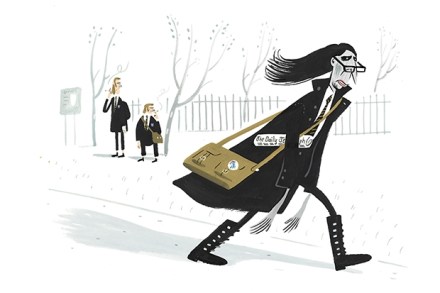
If only I’d known. If only I’d foreseen that the teenage classmate who strode through our school gates every morning, rolled-up Daily Telegraph tucked incongruously (and insouciantly) under one arm, dark leather trench-coat flapping rhythmically in sympathy with the long, swaying black crows-wings of shoulder-length hair, square-heeled boots clicking and clacking their way into morning assembly… if I’d somehow intuited, as I say, that this lanky 15-year-old with the questing, beaky nose and rimless glasses, this proto-goth, would one day be Chancellor of the Exchequer… Well, actually, I wouldn’t have been remotely surprised. I don’t think any of us who knew Philip Hammond back in 1971 at Shenfield School in Essex would’ve been.

What the papers say: Brexit, political pygmies and repentant Remainers

From our UK edition

MPs will vote for the first time today on the Government’s Article 50 timeline. While Labour have said the decision to spell out the plan for Brexit is a ‘welcome climbdown’ by ministers, is this afternoon’s debate merely delaying the actual process of Britain leaving the EU? That’s the Sun’s verdict on today’s proceedings, with the paper saying a ‘coalition of political pygmies’ are ‘stringing out the process in Parliament’. It goes on to say that Theresa May’s opponents ‘should stop pretending’ they are worried about democracy and Parliamentary sovereignty and instead own up to ‘their true aim’ - ‘reversing the referendum result’.

A new path to the top of the teaching tree

From our UK edition

A few months ago I joined forces with Sir Anthony Seldon, the vice-chancellor of Buckingham University, to run an idea up the flagpole. Why not make it possible for senior managers from outside the teaching profession to retrain as heads? Anthony, who was a successful head himself, is in the process of setting up the Buckingham Institute of School Leadership to train the heads of the future. He proposed creating a mid-career and late-career entry track into this programme so successful managers in their thirties, forties and fifties can retrain as school leaders. This idea was met with some scepticism by teachers and I can’t say I blame them.

We must improve financial education in schools

From our UK edition

When I was at school in the, er, 1980s, there was no such thing as financial education. Yes, we had maths lessons but they focused on the hypotenuse and mastering scientific calculators. I still break out in a sweat at the thought of trigonometry. Since my day (when all this was fields etc etc), the curriculum has changed significantly. No more Home Economics - I think it's called Domestic Science now - and I'm guessing that ballroom dancing has been replaced by something altogether more modern. I also suspect that the fledgling word processing lab at my high school has morphed into a 21st century cutting-edge centre where coding lessons are commonplace. Given the pace of change over recent decades, I'm wondering why finance is still so neglected in the classroom?

Hope, fights and grammar schools

From our UK edition

A typical Kentish town, with its grammar school at one end and its secondary school at the other, is a throwback to the Bad Old Days, or the Good Old Days, depending on what your views are on academically selective state education. If Theresa May’s plans go ahead, the whole country might look something like this. In my childhood home town of Sandwich, Kent, the two schools, Sir Roger Manwood’s grammar school and the Sandwich Technology School, have staggered going-home times to avoid the fights on the station platform that used to happen every afternoon. Their uniforms are tellingly different: the Manwood’s students wear smart blazers and ties, the Tech ones wear casual black polo shirts and black jerseys. There’s a slight shiftiness in the afternoon atmosphere.

The most persecuted minority at universities

From our UK edition

A few columns ago, I told the mortifying story of how I totally died at the Oxford Union. Today I’m going to tell you how I managed to avoid the same fate on a more recent trip to the Cambridge Union, where I spoke in a debate and opposed the motion: ‘This house would open its doors to refugees.’ Partly, I was just better prepared. One of the benefits of a public-speaking disaster is that it makes you particularly loath ever to repeat the horror. I can’t say I spent any longer on my speech. What I did do, though, was co-ordinate much more with the rest of my team beforehand (ex-MEP Godfrey Bloom, current MEP Roger Helmer, economist Alasdair Macleod) so that we knew what we were all going to say and didn’t repeat one another’s arguments.

Sorry, Shami, but you’re wasting your money

From our UK edition

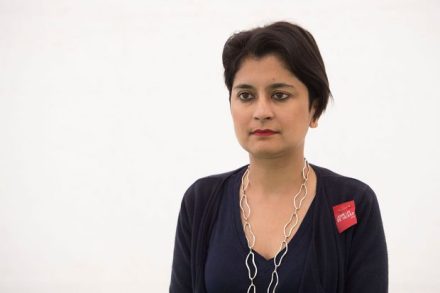
I’ve been thinking about poor Shami Chakrabarti and the drubbing she’s suffered since it was revealed she’s sending her son to Dulwich College. She joins a long line of Labour hypocrites who are opposed to grammar schools but choose to send their own children to selective schools. The list includes Harold Wilson, James Callaghan, Tony Crosland, Polly Toynbee, Diane Abbott, Harriet Harman and Seumus Milne. My issue with these Labour grandees is not so much the double standards, although that does stick in the craw, obviously, but the stupidity. Why risk their political credibility and, for those that go private, beggar themselves, when there’s little reason to suppose that their children will do better at selective schools than they will at good comprehensives?

Universities challenged

From our UK edition

On the face of it, this year’s Nobel Prize awards have been a triumph for British scientists. No fewer than five laureates come from these shores: three physicists, one chemist and an economist. But before anyone starts praising our higher education system, there is one small snag: all five are currently working at US universities. David Thouless, who was awarded half the Physics prize, has followed a typical career path. After taking a degree at Cambridge, he took a PhD at Cornell University and a postdoc at the University of California before heading back to Britain, where he worked for 13 years at the University of Birmingham. There, he started the work that would eventually win him his Nobel prize.

Why I don’t buy the argument that History of Art A-level was axed for being ‘soft’

From our UK edition

Can I tell you about one of the best weekends of my life? It involved no foreign travel, no booze, no party, no love affair, no sun, sea, shopping or beach. It was the second weekend of my A-level year and I had been set the first History of Art essay of term: on early Florentine sculpture. My teacher had lent a book from his shelves, I’d borrowed another from the library and half-a-dozen more from my mother. I sat all weekend, rapt at the kitchen table with Andrea Pisano, Lorenzo Ghiberti and Filippo Brunelleschi spread around me. I wrote a seven-page essay in my tiny monk’s handwriting and could have gone on for pages more. In a way I have. I went on to study History of Art at university and now write about art – among other things – for a living.

Shami Chakrabarti joins the ranks of lefty hypocrites

From our UK edition

Congratulations to Shami – sorry Baroness! – Chakrabarti for joining the exciting, ever-growing pantheon of ultra-left wing metropolitan Labour hypocrites. Her dameship was appearing on the Godawful Peston on Sunday show. Asked why she opposed selection and grammar schools while at the same time sending her brat to the selective, £18,000 per year, Dulwich College, she said: 'I live in a nice big house, and eat nice food, and my neighbours are homeless, and go to food banks. Des that make me a hypocrite, or does it make me someone who is trying to do best, not just for my own family, but for other people's families too?' Yes, of course it makes you a hypocrite, you hypocrite. And your comparison is absurd.

Shami Chakrabarti isn’t alone in her selective stance on schooling

From our UK edition

The only thing to be said for Shami Chakrabarti’s stance on selective education - she’s against the reintroduction of grammar schools because it’s tantamount to 'segregation in schooling' but her own son is going to Dulwich College - is that she’s not alone. Emily Thornberry, shadow foreign secretary, sent two children way outside her constituency to a selective school; Harriet Harman ditto; Diane Abbott’s son went to private school. Yet they’re all against grammars. Frankly it would take less time to point out the Labour bigwig who isn’t hypocritical on this one, viz, Jeremy Corbyn, whose first marriage is said to have foundered, inter alia, on the grammar school question, which makes him seem less, not more, human.

Labour’s frontbench hypocrisy on grammar schools

From our UK edition

On Sunday, Shami Chakrabarti was forced to use an appearance on Peston on Sunday to claim that she was not a hypocrite after the topic of grammar schools was raised. The issue? Although the shadow attorney general is vocal in her opposition to selective education in the state, she sent her own son to a selective fee-paying school. https://twitter.com/pestononsunday/status/785053732497006593 While Chakrabarti insists that buying choice for herself while denying people without money the same option does not make her a hypocrite -- explaining that as she is rich she is able to live a ‘charmed and privileged life’ -- she is just one of a number of shadow cabinet members who complicate Labour's opposition to grammar schools.

Full text: Education secretary Justine Greening’s conference speech

From our UK edition

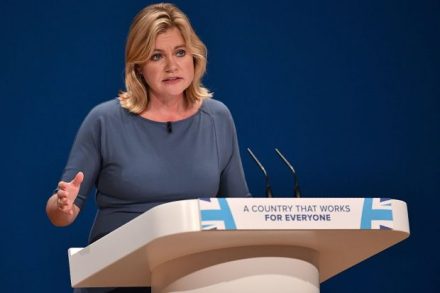
As a Conservative, when I look at where we’ve had the biggest impact in government, there's one area that really stands out. And that’s education. Through a lot of hard work, not least from teachers... ....we have come a very, very long way. Thanks to the reforms carried out by Michael Gove and Nicky Morgan... ... we've seen standards raised and 1.4m more children in good or outstanding schools. In higher education, the global rankings now show our universities right at the very top... ....with record numbers of our young people applying. Crucially, over the last six and a half years we've also seen a renaissance in apprenticeships.... ... well over two and a half million of them (since 2010). We've much to be proud of.

Justine Greening goes on the offensive over grammar schools

From our UK edition

Although Nicky Morgan suggested yesterday that the government could be about to water down its grammar school proposals, Justine Greening showed no such signs in her conference speech. The Education Secretary received a standing ovation as she went on the offensive in defending Theresa May's plans for a return to selective education. In a sea change from her claim this summer that she was simply 'open minded' to the idea, Greening put in a fiery defence of the proposal to lift the grammar school ban. After paying tribute to her own comprehensive roots – as the first ever Education Secretary to attend a non-selective state -- Greening explained that education was at the heart of the government's plan to create a meritocracy.

Letters | 22 September 2016

From our UK edition

Remote control Sir: Rachel Wolf argues that in education policy ‘the trend, from Kenneth Baker onwards, has been towards giving schools autonomy and promoting a system where parents choose schools’ (‘Bad grammar’, 17 September). Unfortunately, freedom from local authority control has been replaced with unprecedented central interference and control. For teachers, the burdens created by Ofsted inspections far outweigh those imposed by councils. In real terms, education spending has doubled since the introduction of the national curriculum in 1988, yet academic standards have at best stayed still. Wolf cites the success of a few academy chains, ignoring the indifferent performance of most.

What’s right about Momentum Kids

From our UK edition

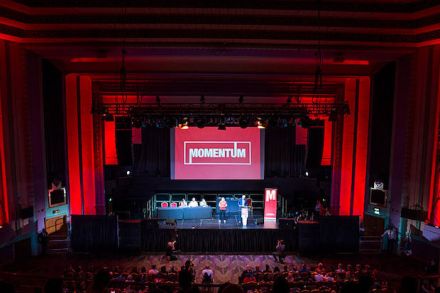
Forgive me if I don’t get too worked up about Momentum Kids. For those who haven’t been following Labour’s internal politics too closely, Momentum is a Trotskyist faction within the party that was instrumental in getting Jeremy Corbyn elected last year and, barring an upset, re-elected this weekend. Momentum claims the main purpose of its new kiddie wing, will cater to three-year-olds and upwards, is to offer childcare facilities to women so they can get more involved in campaigning. But it also acknowledges that Momentum Kids will play an ‘educational’ role. ‘Let’s create a space for questioning, curious children where we can listen to them and give them a voice,’ says one of the group’s founders.