Education

Learning? It’s a walk in the park

From our UK edition

A hot, still day in Middlesbrough in early July 1970, the junior school summer term running down like an unplugged fan. Coming up soon would be the 11-plus, although we didn’t know it then and wouldn’t know it until the morning before the exam. All we knew or cared that fragrant, baking month was that soon we’d be free for six weeks. I think the teachers felt the same way. They were dilatory and listless, indulgent of our misbehaviour, the usual insistence upon discipline melting away in the heat. Why bother? That’s what the teachers must have thought. Why cram anything more into them with the holidays coming up? That month we’d already been let loose to play football at times when we were meant to be doing other stuff.
As easy as 1, 2, 3…

From our UK edition

The amount of nonsense being talked about the new GCSEs in English and maths, whereby exams have been graded 9-1 rather than A*-G, is astonishing. The new grading system is ‘gibberish’ and will cost young people jobs, according to the Institute of Directors. The NSPCC thinks greater differentiation at the top end, with 9 being worth more than A*, will take a terrible toll on children’s mental health, while Mary Bousted, the General Secretary of the Association of Teachers and Lecturers, says the new system is ‘inherently ridiculous’. ‘To put 1 at the lowest and 9 at the top when the grades go alphabetically in a different order from A* to G just seems to put the icing on the cake,’ she says. Let us take these points in reverse order.

Hard lessons

From our UK edition

George Tomlinson, the post-war education secretary, declared that politicians should leave exams to the teachers because ‘the minister knows nowt about curriculum’. Today, however, the curriculum seems to be in a state of permanent revolution. The new GCSEs, for example, are marked on a nine-point scale: a grade of 7 or above indicates what used to be an ‘A’. For every five students who hit the 7 threshold, only one will get 9, the top mark. How employers are meant to understand this is another question. The GCSE overhaul is the latest of a series of reforms, started by Michael Gove seven years ago, which are intended to ‘restore confidence’ after years of grade inflation. During the Labour years, ministers denied that exams were getting easier.

The new GCSEs are a vital reform to challenge a failing system

From our UK edition

‘If you’ve got English, maths and science that’s fantastic, but does every single plumber, every single car mechanic, every single doctor, solicitor, barrister need to have history, geography or a modern language? I would probably say not.’ These words, from a headteacher in Liverpool, cut to the heart of England’s ongoing battle over education, and lie behind the changes to GCSEs - the first results of which we will see today. Parents and students may be confused by some of the changes, but they should not doubt that they are part of an ongoing project to confront the soft bigotry of low expectations embodied in that headteacher’s quote. The new GCSEs are a vital reform to challenge a failing system.

Letters | 17 August 2017

From our UK edition

The education gap Sir: It is disappointing that Toby Young (‘Parents, not schools, are key to the knowledge gap’, 5 August) conforms to the ‘Close the gap’ mentality that obsesses Ofsted and leftish thinking in state schools. Young deplores ‘the attainment gap between disadvantaged and non-disadvantaged 16-year-olds in England’. I prefer to get away from the tendentious terms ‘disadvantaged’ and ‘non-disadvantaged’ pupils and stick to the idea of high- and low-attaining pupils. Left-inclined schools have various ways of closing this gap in attainment. One is to impose limits on how abler pupils can be challenged.

London calling | 10 August 2017

From our UK edition

What is the Edinburgh Fringe? It’s a sabbatical, a pit stop, a pause-and-check-the-map opportunity for actors who don’t quite know where to go next. Alison Skilbeck has written a ‘serio-comic celebration’ of Shakespeare and her performance attracts a decent crowd for a show that starts at noon. She plays a fruity-voiced thesp, Artemis Turret, who delivers lectures about the Bard’s older females to groups of layabout pensioners gathered in a scout hut. It’s pure Joyce Grenfell. Good fun, too, but without much potential beyond the fringe. Dominic Holland’s show, Eclipsed, is about his life as a fallen comedy god. In the 1990s he was on telly all the time and he accepted the royal command to perform at Prince Charles’s 50th birthday party.

The knives are out for Christian faith schools

From our UK edition

Today's Holy Smoke podcast responds to rumours that the Government is planning to betray parents who want to send their children to faith schools. As The Sunday Times reported: Ministers are expected to drop plans to allow Christian, Jewish and Muslim state schools to admit all their pupils from one faith after warnings that the move could heighten community divisions in Britain. A U-turn would jeopardise dozens of new free schools planned by faith groups, some to cope with the influx of Catholic families from Poland and other east European countries. Catholics said this weekend they would not open new state schools if they had to reserve half their places for children of other faiths, raising new school funding problems for the government.

Letters | 13 July 2017

From our UK edition

Technical education Sir: I am grateful to Robert Tombs for highlighting the baleful use of ‘declinism’ as part of the anti-Brexit campaign and the persistent underestimation of the United Kingdom’s strengths (‘Down with declinism’, 8 July). It is ironic that the heirs of the old 19th-century Liberal party, the Liberal Democrats, are among its principal proponents, for declinism goes back even further than the 1880s cited in his article. Fearful of the advances demonstrated at the Paris International Exposition of 1867 by continental countries in engineering (e.g.

The government should think again before scrapping its free schools plan

From our UK edition

On the front page of today's Times it says ministers are thinking of scrapping the free schools policy in order to give more money to schools. I hope it’s not true. Not only would it constitute a terrible loss of self-confidence on the Government’s part and confirm the narrative that the Conservatives are enacting Labour’s manifesto rather than their own. It would also be a betrayal of the thousands of people who’ve set up free schools and are in the process of setting them up. We have taken on the educational establishment and put our necks on the line at the behest of successive Conservative Education Secretaries. Are they really going to abandon us now?

Letters | 15 June 2017

From our UK edition

Divining Rod Sir: Please congratulate Rod Liddle on being the only commentator who accurately forecast the uncertain general election result (‘This is the worst Tory campaign ever’, 27 May). His prediction of the ‘stickiness’ of the Labour vote and the likelihood that Ukippers would return to the Conservatives in the south, where they mostly were not needed, were especially prescient. Mr Liddle goes to show that instinct, common sense and a sceptical nous are worth more than all the pseudoscience of polling. Well done him. Poor old us! Dr Barry Moyse North Petherton, Somerset Our lefty deplorables Sir: An astonishing 41 per cent of the British electorate voted for Jeremy Corbyn to become prime minister.

Universities should offer one-year courses

From our UK edition

In every respect bar one, those bloody Corbyn-supporting students have a much tougher time of it than I did, what with my full grant and my tuition fees paid. But by God, learning stuff is easy nowadays. The young of today just cannot conceive what a chore it was to eke out enough material for an essay in 1984. To find out anything took hours of mostly wasted effort in a library. If you imagine a world where every page of Wikipedia took half an hour to load, it should give you some idea of what it took to educate yourself back then. That’s why we were all drunk and on drugs: we needed to recover from a tiring week finding out the significant dates of the Delian Confederacy. So why, pray, do university courses still last three years? Can people not learn any faster now?

Sink or swim | 15 June 2017

From our UK edition

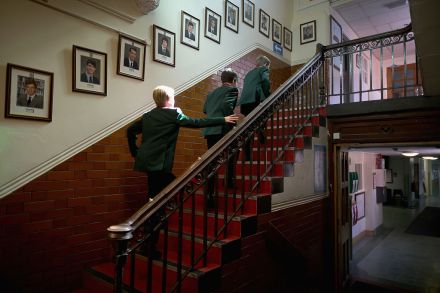
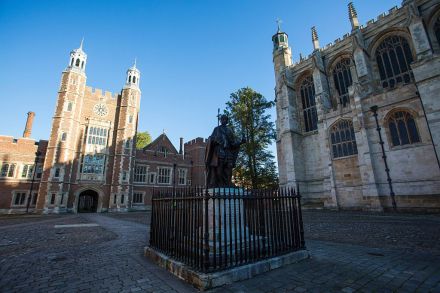
I used to worry that I would never be a good writer because my childhood wasn’t interesting enough. I now think there must be some other explanation. Because the truth is that, when I was still pretty young, my parents banished me to an isolated community where for years on end I was compelled to dress in heritage costume, endure the uncanny absence of women and participate in ritualistic group activities, often of a physical or religious nature. That’s right. I am an Old Harrovian. On the face of it, this seems like an odd choice for my parents to have made for me — although it isn’t as bat-cave crazy as Alex Renton tries to suggest in Stiff Upper Lip, his rich, righteous diatribe against the public school system.

Mad matrons and horrid housemistresses

From our UK edition

It’s not often that books make me laugh aloud. Even books I’m officially finding funny often do no more than make me smile, or emit a sharp soundless puff of breath from the nostrils. But this book made me guffaw. Normally, only P. G. Wodehouse has that effect. It’s tragicomedy, really.

Letters | 1 June 2017

From our UK edition

Ignoring the hadith Sir: Douglas Murray and Jenny McCartney (‘The known wolf’ and ‘A war on joy’, 27 May) are correct to cite hatred of women and young girls and fear of their independence as a trigger for terrorist violence — witness Malala Yousafzai. But it is of course not the only trigger since, denial notwithstanding, it is against the generic and non-gender-specific ‘infidel’ that the Koran fulminates. The prohibition said to exist against killing women and children in war is not found in the Koran (of divine infallibility) but in the hadith (of debatable provenance on a case-by-case basis).

First class

From our UK edition

On the Today programme a month ago, Education Secretary Justine Greening was asked whether she could name any ‘respected figure or institution’ in favour of more grammar schools. She declined to answer, which was taken to mean that she couldn’t, and that there wasn’t. I’ve been travelling a lot this year, so wasn’t around to offer my support. I’m back now. Assuming that a professor of education at a Russell Group university is respectable enough, let me wade into the debate: yes, I’m in favour of more grammar schools. Educational experts against more grammar schools — of which there are plenty — point to the current evidence from England and international evidence in their support. They’re wrong to do so on both counts.

The SNP’s muddled education policy is failing Scottish kids

From our UK edition

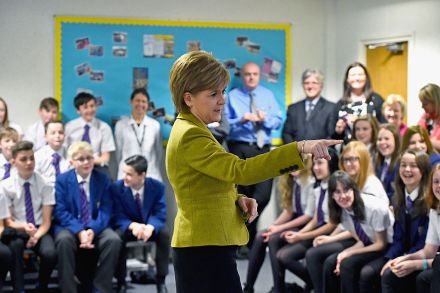
I am afraid that whenever a politician asks to be judged on their record, it is sensible to assume this reflects a confidence they won’t be. At the very least such promises are hostages to future headlines. Take, for instance, Nicola Sturgeon’s boast that education  - and specifically closing the gap between the best and worst schools in Scotland - is her top priority. Judge me on this, she said. Well, OK.  Today the SNP government published the results of the latest Scottish Survey of Literacy and Numeracy and, as has become annually predictable, they make for depressing reading. While standards of reading have remained relatively constant amongst both primary and secondary pupils, there has been a sharp decline in writing ability.

We should teach infants about the value of money

From our UK edition

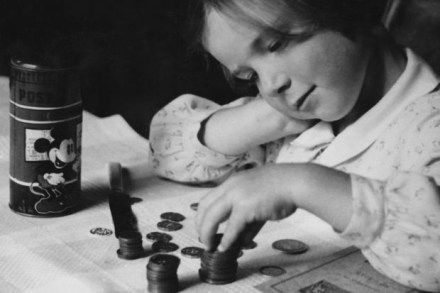
On the one hand, perhaps he should only be thinking about football, Minecraft, his Lego Millennium Falcon and whether he is actually capable of magic. On the other, I can’t let this window of opportunity go by. Being five-years-old is a prime time for learning about the world and how things work. It might seem a bit too young to be dulling his imagination with compound interest, but it’s a lesson he probably won’t get at school (unfortunately) and is one he would do well to get sooner rather than later. That’s why I’ve started giving my five-year-old son £2 pocket money every week for the completion of very minor tasks, such as keeping his room tidy and getting himself dressed.

Like them or not, Theresa May’s grammar school plans will end the postcode lottery of education

From our UK edition

Grammar Schools. Now there’s a potent pair of words. Mention them, and genial conversation will instantly shift into awkward silence or seething torrents of passion. In either case, reasoned argument is in short supply. Yet now that Theresa May seems committed to overturning Labour’s ban on opening new grammar schools, discussion is vital. But instead of rehashing the same arguments in favour of academically selective schools, or raking over the same problems they can cause, it’s important instead to look carefully at the evidence about whether grammar schools really do promote ‘social mobility’. One of the major themes of anti-grammar salvos is that they don't. And to make this point, the crudest approach is typically taken.

Letters | 6 April 2017

From our UK edition

All-round education Sir: While much of Ross Clark’s analysis of the direction that independent education has taken is spot on (‘A hard lesson is coming’, 1 April), he could not be more wrong on one issue. Many (or even most) parents who choose a private education for their children do not do so simply to achieve top academic outcomes: one look at the results league tables would disabuse him of this notion. What the average independent school does deliver is a rounded education (drama, sport, singing, D of E, CCF, debating and so on) with an emphasis on self-reliance, character and values, and competitive reward systems which acknowledge success rather than mediocrity.

VAT on fees? Our greedy private schools have it coming

From our UK edition

The standard conservative response to Jeremy Corbyn’s proposal to impose VAT on private schools would be to attack it as as a policy motivated by class envy and dreamed up to please his party’s levellers -- except that Michael Gove, too, questioned private schools’ charitable status a few weeks ago. Private schools might moan and groan, yet they have invited an attack on their charitable status by shamelessly pitching their product at the children of very wealthy parents – an increasing number of them from abroad.