Ed miliband

A day when politics is not the story

This, it has to be said, is not much of a day for politics. Although the world's laser-like attention will be focussed on Westminster, it will not be on the operations of our Parliament or its actors, but on Westminster Abbey and the marriage, of course, of Prince William and Kate Middleton. The cameras might pass for a moment over David Cameron, or Ed Miliband, or Nick Clegg. But even their best morning suits will not compete, you fancy, with the collected fascinators and finery on display — let alone with the wedding dress itself. We shall be marking proceedings on Coffee House with video, with archive posts and with our general observations.

Cameron’s Rope-A-Dope Strategy

Granted, Dave is no Muhammad Ali* and the idea of comparing Ed Miliband to George Foreman is one of the more preposterous notions ever conceived by man. Nevertheless, I wonder if Cameron, backed by his cornermen George and Nick, are playing rope-a-dope with Labour. This may not have been what they envisaged when they took office last year and it may be a strategy developed in extremis and one forced upon them by a suddenly developed appraisal of their own weakness. Nevertheless, if it is a plan it is one that might work. This thought was sparked by Fraser's excellent post on the signs that the government has taken the first steps towards reframing the argument about cuts. This is the latest move in a long game.

What a carve up | 27 April 2011

Blimey. That was a weird one. PMQs was trundling merrily away when the house was suddenly engulfed in a whirlwind of insults and accusations. Even now the row rumbles on across the blogosphere. Cameron arrived at PMQs looking genial and well-sunned. Quite a contrast with his sallow-faced opponent. Perhaps Ed Miliband’s bookish ways have kept him in the reading-room during the heat-wave while Cameron was roaming his herbaceous borders uprooting dandelions and other troublesome yellow-heads. The session began with the usual blend of opportunism and hypocrisy. Miliband demanded to know why economic growth has flat-lined in the last six months.

PMQs live blog | 27 April 2011

VERDICT: To paraphrase that famous football cliché, this was a session of two halves. Cameron put in a confident performance against what should have been the trickier set of questions: on the economy. But when it came to Ed Miliband's second topic of choice, the NHS, it all went suddenly awry. The PM's arguments were unusually messy and convoluted, lost in themselves. And he only made matters worse with his Winner-esque exhortation at a Labour frontbencher, "Calm down, dear!" You can argue whether it was sexist of the PM, or not, particularly as it's not clear whom the remark was aimed at (although the smart money's on Angela Eagle). But it was, at least, a moment of frustration that played up to the worst Flashman caricatures of the PM.

Balls and Miliband to rescue Labour’s Scottish campaign…

Can Ed Miliband and Ed Balls save Labour in Scotland? The two Labour heavyweights have decided to move in to rescue their party's disastrous campaign in Scotland — with Balls being sent up north to sharpen his party's teeth. A desperate measure for a desperate situation: Labour has not only blown a 10-15 point lead over the SNP in just a few weeks, but now languishes some 10-13 percentage points behind. A mammoth, humiliating defeat looms. Until now, Labour has liked to portray its campaign for the Holyrood elections as a totally Scottish affair: run in Scotland, organised in Scotland and led by Scottish politicians. Not any more.

Miliband’s pre-election surgery

Miliband-o-rama on this Good Friday, with the Labour leader spread all across the papers. The Mirror reports that he is to have an operation to have his adenoids removed this summer, in a rather extreme bid to "improve his voice". The Guardian says that he's to deliver a speech next week — presumably with adenoids still intact — that will engage with the "Blue Labour" thinking of Maurice Glasman. And, if that's not enough, there's a curious interview with Miliband in the Sun. I say "curious," because there aren't too many interviews where a party leader goes through the (less than flattering) nicknames that have been bestowed upon him — and offers comments. On Wallace, from Wallace and Gromit, he says, "I don't see the resemblance, but it is not bad.

A question of leadership

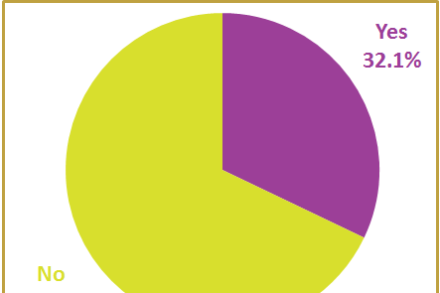
This morning’s speech on AV by Nick Clegg has prompted another round of Lib-Lab backbiting over whom is to blame for the troubles of the Yes campaign. In its leader column today, The Times (£) joins in on the Lib-Dem side, criticising Miliband for not having done more for AV. It even suggests that he’d be prepared to vote down a Yes vote in the Commons, something he specifically rules out in his interview with the paper today (£).   Unlike Clegg, Miliband can be relaxed about the result of the AV referendum. If AV is defeated, few in the Labour party will mind and the blame won’t attach to him. If the polls are right, David Cameron will be the only leader strengthened by the result of the referendum.

Clegg reaffirms the coalition’s wedding vows

It's a funny thing, reading the speech on AV that Nick Clegg delivered to the IPPR this morning. It starts off as you might expect: putting some distance between his party and the Tories. Everything is Liberal-this and Liberal-that, while "conservatives" are cited as the opponents of change and choice. But then, from nowhere, comes one of the most brutal attacks on Labour that Clegg has delivered in some time. "For every £8 we are cutting they would cut £7," he quivers. "To deny that reality is to treat the British people like fools." The New Statesman's George Eaton has sifted through the numbers here, but the main point is simply the sheer force of Clegg's words.

Ed Miliband will hire tails for the Royal Wedding

If you’re fed up with stories about what politicians will wear to the Royal nuptials, look away now — for I can confirm that Ed Miliband will wear a morning suit on the 29th of April. Miliband takes the view that a Royal Wedding is no time for gesture politics.   A Labour spokesman told me this morning that, "This wedding should be all about William and Kate. This is their big day. It is now clear that the appropriate thing is to wear a morning suit and that is what Ed will do."   But Miliband doesn’t actually own a morning suit. He will now be heading down to Moss Bros to rent one.    I hear that we’ll find out that Nick Clegg is deciding what he’ll be wearing today.

Ed Miliband by numbers, April edition

It's just a single poll, sure — but Ipsos MORI's latest is still fairly eye-catching stuff. And this is why: it has the Tories level with Labour for the first time since October. Anthony Wells serves up a pinch of salt over at UK Polling Report, saying that this "unusual" result is most likely down to the weightings that are used. But, technicalities aside, any poll that puts the Tories close to Labour, at this stage in the political cycle, is going to be greeted cheerily by Cameron & Co. – and less so by Team Miliband. It's not all bad news for Ed Miliband, though. His personal ratings have improved since last month; a fact which deepens one of the conundrums of his reign.

The Odd Couples

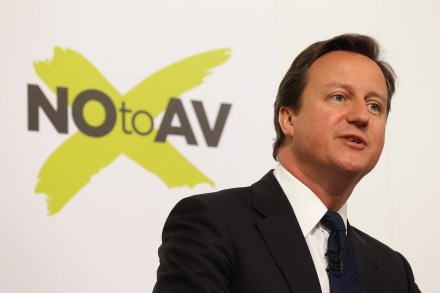
It must be Jack Lemmon and Walter Matthau season at the Commons' film club. A string of odd political couples has stalked stages across the land this morning, supposedly pronouncing the merits or demerits of the alternative vote. David Cameron and John Reid were the oddest: the Prime Minister’s well-heeled insouciance contrasting with his lordship’s winking Glaswegian charm. It’s good fun, without being hugely constructive. Cameron and Reid joked that they agreed on nothing beyond FPTP, before embarking on a distended muse about party politics and that old canard 'Britishness'. Things were little better for Ed Miliband, who spent a large portion of his conference listening to Vince Cable explain why he wasn’t resigning from the government.

Why Vince Cable can’t keep his peace on immigration

The row sparked by Vince Cable’s attack on David Cameron’s speech on immigration is still rumbling on. The Sunday Times reports that Cable’s opposition to the coalition’s immigration policies has even extended to advising a college to take out an injunction against the government’s policies limiting non-EU student numbers. Cable’s actions are undoubtedly straining the coalition; Nick Clegg was visibly uncomfortable on the politics show as he attempted to square Cable’s actions with Cabinet collective responsibility. So, why is Cable doing this? I don’t think the reasons are particularly Machiavellian.

Charting Labour’s future

The Labour Party is still ambling in the wilderness – sure of its destination, but uncertain of the route. Its response to last year’s general election defeat has been silence, publicly at least. In the privacy of debating chambers however, the party is charting its potential renewal. These circles murmur that ‘the state has reached its limits’; or, in other words, that Fabianism, the dominant force in the post-war Labour movement, has been tested to destruction.

The Tories’ middle-class problem?

Back in July 2003, Bruce Anderson wrote a piece on David Cameron for The Spectator. Its tone was summed up by its headline — "My hero" — and that tone has suffused through much of Bruce's writing about the Tory leader since. Which is why his piece for the FT today is striking by virtue of its differentness. Its headline is that, "Cameron is losing touch with core Tories." Its argument is that the Tory party is ignoring the hopes, fears and aspirations of the white middle classes. Admittedly, Bruce doesn't put all this down to Cameron. On his account, there are demographic factors at play — not least that the growth of the middle classes, who are now "more numerous and more prosperous than ever before," has also made them more insecure.

The battle over universal benefits continues on the local front

Here's a question for you: should free school meals (FSM) be given to all pupils, regardless of their parents' income? I ask because this is precisely what the Labour-led council of Southwark is proposing for its primary schools. As the Evening Standard reports, the councilmen’s thinking is that by giving "healthy" FSMs to every pupil, every day, they might help "reduce childhood obesity." Oh, and the measure will cost some £4 million a year. Even if we put aside the question of whether the local praetorians should — or even could — tackle obesity on behalf of middle-class parents, this is still needling stuff.

Lansley and Cameron in the firing line

The coalition’s decision to ‘pause’ its NHS reforms has left an open goal for its opponents, and they’ve been busy tapping the ball into this empty net this morning. At its conference up in Liverpool, the Royal College of Nursing has, predictably but embarrassingly, declared that it has no confidence in the health secretary. Back in London, Ed Miliband has been making hay while the sun shines attacking both the bill and the pause. His refrain at his press conference this morning was ‘the answer to a bad bill is not to slow it down but to junk it.’ Miliband’s performance this morning was striking for him speaking at a level of policy detail that party leaders normally eschew.

Unite chief blames MI5 for protest violence

Sometimes, just when you think that the craziest left-wing ideologues have gone off to tend to their gardens, up one pops. Meet Len McCluskey, the head of Unite, who tells The Times's Rachel Sylvester (£) that Fidel Castro has been a "heroic" leader of his people. That would be the same Cuban dictator who jails journalists and trade unionists. Odd choice of hero. But it gets better. McCluskey seems to think that MI5 encouraged violence at the last anti-cuts protest. I kid you not: "Mr McCluskey believes that the secret services, in particular MI5, may have been working under cover to encourage the violence as part of a conspiracy to undermine the peaceful message of the march.

Miliband may be punished for his contempt for Clegg

Ed Miliband's hand of friendship has to be one of the shakiest body parts in British politics. Sometimes it's extended to the Lib Dems, sometimes it's not. Sometimes it's extended to Nick Clegg, sometimes it's not. Sure, the Labour leader does appear to have finally settled on a position: that he will only shake the hands of a Cleggless Liberal party. But that has come after constant wavering on his part, and could well be subject to change. I mention this now because of a claim in Rachel Sylvester's column (£) today. I'm not sure whether it has been made before — but it neatly encapsulates how Miliband has lurched one way and then t'other, and deserves pasting into the scrapbook.

Hardly a model of good government

What is going on with the government’s health reforms is highly unusual. Normally, once a bill has gone through second reading and committee stage in the Commons there are very few changes made to it. But the coalition is considering some fairly significant changes to the Health and Social Care Bill in a bid to make it more politically palatable. It is hardly a model of good government.   This state of affairs provides ample opportunity for Ed Miliband to land some blows on the coalition, as he did in this morning’s speech delivered — symbolically — at the RSA, the new home of Blair’s former policy chief Matthew Taylor. In a sign of where Labour intends to go on the issue, Miliband said that delay would not be enough.

Rescuing Lansley’s reforms

The fate of Andrew Lansley's NHS reforms is attracting apocalyptic headlines. A report in the Times (£) declares that a ‘last-ditch’ salvage is underway; the FT carries an editorial in similar tone, and the Guardian devotes its front page to David Cameron’s attempt to save face. Over at Conservative Home, Jonathan Isaby relates how the strategy will unfold. The principles of the bill will remain intact, but it will be delayed using the ‘natural pause’ in parliamentary procedure. During this time, the details of the bill be scrutinised and the government will also use this time to reiterate its view that these reforms are necessary for the NHS to manage an ageing population and rising costs.