Ed miliband

Balls’ bloodlust gets the better of him

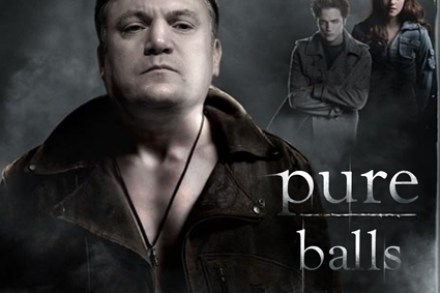
Ed Balls’ problem is his killer instinct. If he were a Twilight vampire, he’d be a Tracker: someone whose uncontrollable bloodlust takes him to places he should avoid. His position on the deficit is so extreme — more debt, more spending — that he’s pretty much isolated now. People are mocking him. John Lipsky, the acting IMF chief came two weeks ago and rubbished Balls’ alternative (as Tony Blair did) — so Balls, ever the fighter, has today given a long speech where he sinks his fangs into Lipsky and says (in effect) “I’ll take on the lot of you!” But Balls is brilliant. Often George Osborne seems not to

Ed Miliband volunteers for a kicking, gets kicked

“First he denies his own policy, then he tries insults.” So said Ed Miliband of David Cameron’s performance in PMQs today. But I wonder what he’d say of the hundreds of Twitter users who went straight for the insults in a special Q&A with the Labour leader earlier. Urged on by Guido, plenty deployed the #AskEdM hash-tag to be rather unkind to MiliMinor. Here’s a selection of some of the crueller, funnier and less comradely tweets: @MTPT: If a train leaves Paddington at 1136, carrying 200 commuters, what time will the RMT bring it to a standstill? @FelicityParkes: Where did Ed Balls touch you? Show us on the doll. @MShapland:

Miliband relieves the pressure

After last week’s performance and this weekend’s headlines, Ed Miliband needed a win at PMQs — and he got one. Knowing that David Cameron would attack him over the fact Labour will vote against the welfare reform bill this week, Miliband had a string of questions for the Prime Minister on the detail of the bill and whether people recovering from cancer would lose the contributory element of their benefits. The issue was both wonky and emotive. The fact the questions were about cancer meant that Cameron couldn’t deliver his usual string of put downs to Miliband. Indeed, when one Tory backbencher heckled him, the Labour leader shot back that

Miliband and the past

Labour’s simmering resentments and self-doubts have been boiling over recently — and today is no different. Compare and contrast The Sun’s interview with Tony Blair with Andrew Grice’s article on Ed Balls in the Independent. For Blair, Labour ought to be claiming more credit for their preparatory role in some of the coalition’s reforms, such as the Academies programme. For Balls, they ought instead to be dodging blame for the state of the public finances. As Grice reports, “Ed Balls has rejected demands from allies of Ed Miliband that he admit Labour spent too much when they were in power.” From the rest of the piece, the shadow chancellor’s position

PMQs live blog | 15 June 2011

VERDICT: The specifics of today’s exchange between David Cameron and Ed Miliband may have everyone rushing for this Macmillan press release, but the rhetorical positions were clear enough. There was the Labour leader, angrier and more indignant than usual, painting the government’s welfare reforms as cruel and insufficiently thought-through. And there was the PM, painting his opponent as yet another roadblock to reform. Neither really triumphed, although their battle will most likely set a template for in future. The coalition has extensive public backing for its changes to the welfare system. So, Miliband’s challenge is to attack certain aspects of them, without making Labour appear to be — as he

Bring on the strikes

An old boss of mine once said to me: when you start a new assignment, seek out a fight — and win it. The same advice should be given to incoming Prime Ministers. U-turns, as Mrs Thatcher knew, just create demand for more U-turns. If the government is willing to revise its NHS plans, then why not reopen the Defence Review, or alter the pledge to spend 0.7 of our national income on overseas aid (or at least abandon the questionable idea of legislating for it)? But seeking out and winning battles, while avoiding too many retreats, is not enough. To be great, a Prime Minister needs good enemies. Mrs

More than a soap opera

David Miliband is considering a return to frontline British politics. At least that is what Andrew Grice has heard. He reports: ‘David Miliband is considering a surprise comeback to frontline politics in an attempt to end speculation about a continuing rift with his brother Ed. Friends of the former Foreign Secretary said yesterday that his joining the Shadow Cabinet was a “live issue” in his circle of political allies. “There is a debate going on. Some people are arguing that it would be better to be a team player than look as though he is sulking on the sidelines,” said one source.’ Better for whom, I wonder? The fear that

Miliband borrows from the Cameroons for his most substantial speech so far

Thematically speaking, there wasn’t too much in Ed Miliband’s speech that we haven’t heard before. The middle is still squeezed, the Tories are still undermining the “Promise of Britain”, the bankers are still taking us for fools, and communities still need to be rebuilt. Even his remarks about benefit dependency bear comparion to those he made in February. But there was a difference here, and that was his punchiness. The Labour leader may not be the most freewheelin’ orator in town, but the text he delivered was less wonky than usual, more coherent and spikier. It was even — in parts — memorable. You do wonder whether Miliband has learnt

Balls bites back (with mixed success)

You certainly can’t fault Ed Balls for chutzpah. After the weekend he has just experienced, the shadow chancellor has an article in today’s Mirror accusing George Osborne of “spinning out of control”. It is pure, triple-distilled Balls: a fiery attack on both his political opponents and their policies. So let’s sup deep and read the whole thing, alongside my comments: THIS is the most exciting Formula 1 season for decades. Because it is not just about who has got the fastest car – it’s about race strategy, overtaking and adapting to the changing conditions. You can be the fastest driver on the track for 40 laps – but that’s no

David Miliband should join the shadow Cabinet or quit British politics

David Miliband’s statement today declares that he ‘wants no part’ of the ‘soap opera’ of leadership drama. But as long as David Miliband remains outside the shadow Cabinet and, therefore by definition, not doing everything he can to support his brother it will be easy for people to say that he is just waiting for Ed to fail. If David Miliband does not wish to be a focus for discontent with his brother but cannot bring himself to join the shadow Cabinet, then he should resign his seat. Only by leaving the Commons will he persuade some of his supporters that he is not the man who can — and

A poll to compound Miliband’s woes

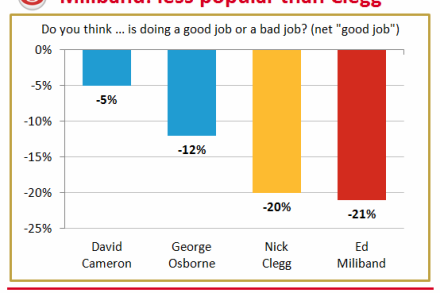
A YouGov poll for this morning’s Sunday Times provides proof of mounting disgruntlement with the Labour leader. And not just among the public as a whole, but also among Labour supporters. Asked whether Ed Miliband is doing well or badly as leader, just 30 per cent say “well” (including a tiny 3 per cent who say “very well”), while 53 per cent say “badly” (including 21 percent “very badly”). The bad news for Ed is that the “well” figure has barely moved since just after he was elected, when almost half said they didn’t know how well he was doing. Now an extra 31 per cent have formed an opinion

Labour’s blunt knives

According to the Observer, and a slew of other papers, “senior Labour figures are believed to have put their leader on a timer to ‘up his game’ in the next few months if he is to avoid a full-blown leadership crisis later this year.” Which reminded me of all this: 20 April, 2008 “The Prime Minister, who is battling a growing rebellion over his abolition of the 10p tax rate, has been given until the end of the summer to turn things round by backbenchers angry at a string of image and policy failures.” (here) 24 May, 2008 “It is that Mr Brown be given until the end of July

Labour is working towards a decade of Opposition

Is Ed Miliband finished? That’s the implication of many of the papers today — and David is portrayed as waiting in the wings, ready to claim his rightful inheritance. Dream on. Ed Miliband’s leadership of the Labour Party is hardly in crisis. If there was an election today, he’d win a Labour majority of 34. Dull men can win surprising victories, as John Major demonstrated in 1992. The Times’ notion that he has until party conference to save his leadership is just as fanciful. Labour Party Conferences are neverscenes of grassroots rebellion. The Tories are the ones who lay on fights, and some just turn up to Tory conference for

The Milidrama

No paper has been more critical of Ed Miliband than The Times. So it is in some ways not a surprise that the paper’s leader column today declares that he has until Labour conference to save his leadership. But this ultimatum stokes the sense of drama created by the combination of the Balls’ leaks and the publication of the speech that David Miliband would have given if he had won the leadership. Expect to hear David Cameron quoting from both these sets of documents at PMQs regularly over the next few weeks. The challenge now for Ed Miliband is to make lemonade out of these lemons. He needs to seize the attention

What David Miliband would have said if he had become Labour leader

Tonight’s Guardian scoop revealing that the speech that David Miliband would have given if he had been elected leader makes this one of the most difficult—and leaky—weeks for Labour since its election defeat. The line in the speech that will cause the most trouble for Ed Miliband is that David Miliband intended to create a commission on the deficit chaired by Alistair Darling and charged with creating a new set of fiscal rules, an admission that Labour got it wrong on the deficit which Ed Miliband has refused to give. This speech emerging just a day after Ed Ball’s private papers about the plot to force Tony Blair to stand

Balls in the limelight

The most important political consequence of the leak of the Project Volvo documents is that it reminds everyone in the Labour party of what a divisive figure Ed Balls is. Ever since the leadership contest, where his reputation as a plotter crippled his candidacy, Balls has been trying to soften his image. He has sought to present himself as a more collegiate figure. But this leak is a reminder of how Balls used to operate and why some people in the Labour party will do everything they can to prevent him from becoming leader. We now wait to see what emerges about how these documents made their way into the

Your five-point guide to the Ed Balls files

Intrigue, hilarious intrigue this morning, as the Telegraph releases a bunch of documents that clarify just how far the Brownites went to oust Tony Blair. They are, it is said, from the personal files of Ed Balls, and they are copious in both quantity and variety. From straightforward poll results to 31-page reports on how Brown is a Volvo not a BMW, this is a real insight into the numerous pathologies of party and government. Here’s my five-point overview: i) The leadership coup in waiting. It starts only two months after the 2005 general election, and Balls’ own ascent to Parliament, with a memo setting out the structure of Brown’s

The Plot Against Tony

That Gordon Brown loathed Tony Blair is hardly news. Nevertheless the details and depth of that hatred, revealed in the Daily Telegraph’s scoop today*, remain hilarious. Poor Gordon. His people seem to believe – or have been told – that being compared by focus groups to a Volvo or a British Rover was a good thing. Ed Miliband’s role in all this plotting and absurdity is also worth contemplating. It provides yet another opportunity for the coalition to press home the point that Little Ed’s judgement ain’t up to being Prime Minister. So, Mr Miliband, tell us why you plotted to remove Labour’s most successful Prime Minister and replace him