Ed miliband

The runners and riders in the Corby by-election

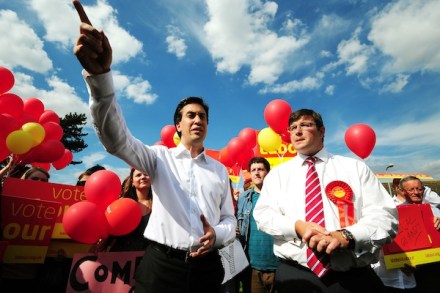
Ed Miliband knows that the Corby by-election is going to be a crucial test for his leadership. If he wins, it will be his first constituency gain since he became leader and serve a nicely timed blow to David Cameron’s autumn relaunch. Expectations are high: Bradford West aside, Miliband has managed to increase Labour’s share of the vote in every by-election held in this parliament so far. If he loses, it will be seen as a bitter blow: voters normally punish the party that caused an unnecessary by-election. With a slim majority of 1,895, the Tory candidate faces an uphill battle to hold the seat.
Miliband wins the boundaries battle

The biggest winner of the coalition spat over Lords reform and boundaries is, undoubtedly, Ed Miliband. The electoral hill he has to climb to be Prime Minister has just been reduced in size significantly by the fact that the next election is likely to be fought on the existing boundaries. A lead over the Tories of just three per cent would deliver him a majority. In quite a turn-around from last year, Miliband will go to his party conference as the most secure of the three leaders. But Miliband will soon face a problem, albeit a high quality one. At some point in the not too distant future, the media will start to treat him as a likely Prime Minister. This means that his policy positions will be examined with a far greater level of scrutiny than they currently are.

France shows up Labour’s economic plan

Yesterday’s economic news reminds us of the need for the Government to continue to focus relentlessly on getting our economy moving – dealing with the debt crisis, boosting bank lending to the real economy, and ensuring sustainable long-term prosperity through radical economic reform. One of the key planks of the Government’s reforms is to make Britain’s tax system more competitive, ensuring that Britain is open for business, that we are a dynamic and an attractive place to invest in and to work in. Cutting corporation tax to the lowest rate in the G7 is one element of this plan. Cutting the top rate of income tax to level the playing field with our main competitors like New York is another. These market dynamics are lost on Labour.

Why Miliband doesn’t need to agree with Nick

Ed Miliband's comments in the Independent today were clearly based on the assumption that Nick Clegg will not be around if and when it comes to negotiating a possible Lib-Lab coalition in 2015. Vince Cable has already thrown his fedora into the ring to be the next Liberal Democrat leader, and Miliband backed the calls for a change of chief in his interview today. 'I would find it difficult to work with him,' he said, when asked about Clegg. Clegg cannot go from being Deputy Prime Minister in one government to Deputy Prime Minister in the next: it would look ridiculous. A coalition with Labour would also not suit Clegg's own political leanings, which makes Cable's not-so-covert bid all the more plausible.

Warne caught for one

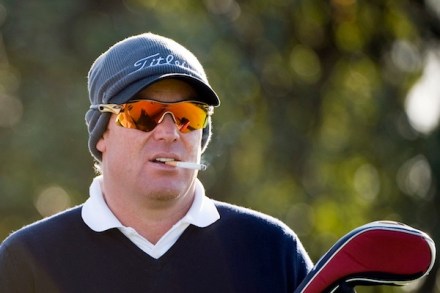
With the South Africans slaughtering England at the Oval this weekend, Mr Steerpike was more intrigued by the goings-on off the pitch. Catching up with a super-skinny and immaculately preened Shane Warne, it would seem that the former Aussie spin-king is still very paranoid about being photographed smoking in public. Every time a small child came up demanding a photo, Warne risked setting fire to his tight Armani number by hiding his cigarette behind his back. Still, it’s an improvement on the ‘altercation’ he had in 2000 with some Kiwi lads who snapped him smoking whilst being sponsored by a nicotine patch company. No smashed cameras this time. Ed Miliband continued his normalisation process by appearing on Test Match Special.

No red for Ed

If the new Labour HQ was meant to reflect a reinvigorated party then the blank white walls made for an obvious joke. With hacks and hackettes assembling for Ed Miliband’s summer drinks Labour command and control was going strong - red wine was banned, lest some spill it on the pristine new grey carpet. Expertly manoeuvred around the room by his spinners ex-Mirror man Bob Roberts and part-time standup comic Ayesha Hazarika, Ed looked like a man who knows he’s had a good few months. He’s got a long way to go to achieve the potential PM aura though. Sneaking out at the end unaccompanied does not really fit the look. There were a few notable absences.

Miliband and monopolies

Ed Miliband used his speech this morning on policing to attack the shambles on Olympic security staffing created by G4S. That was a sensible thing for an opposition leader to do, and he managed to give quite a sensible speech, all in all. He did not fall into the trap of saying that all outsourcing is bad - which would have been a strange thing for the Labour leader to say, anyway, given it was under his party in government that firms like G4S flourished. But he did point to what many across the political spectrum agree is a problem: that G4S effectively holds a monopoly on security and policing functions.

Cheer up, it’s only a party

What’s the best way to deal with a full onslaught against your industry? A damn good party of course. ‘Despite the dismal financial outlook, Square Mile magazine held their annual Summer Party on Friday 13th for 1,000 City bankers,’ proclaims one of the most gloriously offensive press releases that Mr Steerpike has seen in long time. There were apparently ‘no signs of the dismal economy’ as bankers ‘quaffed free Iceberg Vodka and Louis Roederer champagne and were entertained by fire-breathing strippers and snake charmers’.

What Labour did next on banking

When Ed Miliband gave his speech to Labour's autumn conference last year, he rather tied himself in knots about how to end predatory capitalism. The Labour leader was trying to make it clear that he would stand up to vested interests, but the message was lost under a row about whether he was pro- or anti-business. Today Miliband managed to put that speech into context a little more, by announcing Labour's plans to change the culture of banking in this country. Instead of predator banks, he wants 'stewardship banking', which builds 'a long-term, trusted relationship with their customer' and serves the real economy as well as the industry itself.

Westminster’s hollow men

In my Observer column today I say that a judicial review into the banking scandal would have achieved little unless the judge could have persuaded the politicians to change the law. As if on cue, Ed Miliband and Ed Balls popped up to demonstrate that they have no desire to change banking law in any way that might make a difference. Their proposals to expand the number of banks and make it easier for customers to switch accounts, amount to more of the same. Instead of five big banks running on taxpayer guarantees, we will have seven big banks running on taxpayer guarantees. Neither Labour nor the Tories is willing to accept that the deregulation of finance from the 1980s on allowed bankers to take insane risks.

Ed’s ahead with banking inquiry

Low party interest parading as high political principle. That was the theme of today’s PMQs as the party leaders clashed over the scope and nature of the inquiry into the Libor scandal. David Cameron’s pungent language was intended to reflect public anger at the banks. He spoke of ‘spivvy and illegal activity’ in the City, and he promised that crime in financial centres would be pursued as rigorously as crime on the streets. One of the grandest of Tory grandees, Nicholas Soames, warned him that new regulatory mechanisms mustn’t be allowed to damage the City, ‘which remains a vital asset for our country.’   And he was followed by the very grandest of all the Tory grandees, Sir Peter Tapsell himself.

More remorse and apology from Diamond?

It's hard to believe that executives at Barclays had much confidence that the resignation of Marcus Agius as the bank's chair would place a stopper on the Libor scandal. Ed Miliband drove those doubts home this morning when, appearing on Daybreak, the Labour leader reiterated calls for Bob Diamond to resign. He said: 'I don't think that he can carry Barclays forward, Bob Diamond, because he was there, he was actually in charge of the part of Barclays where some of these scandals took place years back and we will obviously hear what he has to say at the Select Committee on Wednesday but I really don't believe that the leadership and restoring trust in Britain's banking can be done by Bob Diamond.

Miliband calls for a banking inquiry

The momentum for a public inquiry into banking is growing. The Daily Mail front page demands ‘Put Bankers In the Dock’. While Ed Miliband has given an interview (£) to The Times in which he calls for an inquiry into the ‘institutional corruption in the City’. Miliband thinks that this inquiry should be tasked with drawing up a code of conduct for investment bankers equivalent to the one governing solicitors. Bankers who breached this code would be struck off.   Now, many will say that Labour have a cheek lecturing on banking regulation given the total failure of the new system they introduced.

Miliband speaks to the common people

Ed Miliband stands accused of many faults, but he rarely slips an opportunity to be opportunistic. James has said that the error and arrogance of the banking establishment, epitomised by the LIBOR and mis-selling scandals, allows Miliband to pose as a ‘tribune of the people’. And so it has come to pass. Miliband has today addressed the Fabian Society – a generous audience for him to be sure, but a suitably humble platform for him nonetheless.  He received a sort of reverse show trial: a lot of predictable questions to which he gave answers of breath-taking predictability. But that is their strength. Tony Parsons has a piece in today’s Mirror in which he argues that Miliband is beginning to sound prime ministerial.

Libor is an opportunity for Miliband

The Libor scandal is both a threat and an opportunity for Labour. The threat is that the abuses took place under a regulatory system that was devised by the last Labour government and by a Chancellor who both Eds worked for. As I said yesterday, the Tories are determined to hammer Balls — a former City minister — on this. But the opportunity is that it offers Ed Miliband a chance to act as if he is the tribune of the people, the leader brave enough to take on the powerful. So as with News International and phone hacking, we’ve seen Miliband getting out in front in terms of calling for the top people at Barclays to go and Labour is also backing an independent inquiry into the banks, something the government is currently opposed to.

Miliband’s notes still lack gusto

Ed Miliband was spoilt for choice at today’s PMQs. Scarcely a week goes by without the government reneging on some budget promise, so Labour’s  leader had a whole fistful of blunders to consider. Wisely, he took the simplest option and quoted an apologia made by David Cameron on April 11th. ‘I will defend every part of the budget,’ the prime minister told some interviewer somewhere. ‘I worked on it very closely with the Chancellor. Line by line.’ That was pure gold for Miliband. And pure poison for the prime minister. ‘What went wrong?’ asked the Labour leader casually.   Cameron flipped into full denial mode. ‘I cannot be a U-turn!’ he shouted fierily.

Miliband grows to relish PMQs

Ed Miliband had a bit of swagger about him at PMQs today. In a sign of how the two leaders fortunes have reversed, it is now Miliband who appears to be relishing their exchanges.  From the off, Cameron was in a peevish mood. Miliband secured a fairly comfortable points victory. His ‘Cabinet of comedians’ line was a definite hit and Nadine Dorries keeps presenting him with new material. But Cameron will be relieved that Miliband is landing any knock-out blow on him; there was nothing said today that will stick long in the memory. Interestingly, the Tory whips had planted a question which allowed Cameron to open the session by saying how keen he was to get Lords reform through. The intended message to the Lib Dems was: look, we really are trying on this.

Miliband’s gutless speech

Here we go again. Ed Miliband gave another speech about immigration this morning proving yet again that this is a subject about which no-one is ever permitted to talk. Any time a Labour politicians talks about immigration and the party's record in government I am reminded of Evelyn Waugh's acid observation on hearing the news that Randolph Churchill had successfully endured an operation to remove a benign tumour. This, Waugh wrote in his diary, represented  "A typical triumph of modern science to find the only part of Randolph that was not malignant and remove it." Comparably, it seems a typical triumph of modern politics that Labour should disown one of the more reputable parts of its record in office.

Miliband’s misdiagnosis

Ed Miliband will give a speech on immigration later today, marking out the territory on which he plans to engage those voters who feel that their communities and livelihoods are under threat from migrant workers. Yvette Cooper, the shadow home secretary, prepared the ground for Miliband earlier this week by echoing her husband’s sentiments about the need for greater control of economic migration from eastern Europe. The Labour leadership insists that the Blair government was wrong to waive transition controls in 2004, when many former Soviet republics acceded to the EU. Labour stress that this is not a 'British jobs for British workers' speech, but, rather, it aims to start a discussion about how the playing field might be levelled for British workers.

Miliband’s union problems deepen

Ed Miliband must be livid. He has a sizeable lead in the polls, has taken ground on the economy and watches the government lurch from one self-authored disaster to the next. And then, and then, the trade unions engineer a very public row with the centrist think-tank Progress (which is funded by former Labour donor Lord Sainsbury) over the ‘soul’ of the Labour Party. Jackie Ashley observes in today’s Guardian that this silly spat has grown out of all proportion. Lord Mandelson was asked about it on the Andrew Marr Show yesterday, and he reiterated many of the points made by Denis MacShane in this Coffee House post of the previous day.