Ed miliband

Ed Miliband is better placed than the Tories to follow Roosevelt

On Friday, Ed Miliband pledged to introduce greater competition in our banking market. Last September, he pledged to freeze energy prices for 20 months while our broken energy market is reset to expand competition and consumer choice. Reforming broken markets to increase competition and address the long-term sources of our cost-of-living crisis might seem an unusual theme for Labour to champion. In fact it is an approach that has learnt from a progressive conservative tradition, one that understands the importance of reform to ensure that markets remain open and competitive. Noone understood this idea better than the American President Theodore Roosevelt – a passionate believer in free enterprise, and a tenacious advocate of market reform.

Coming soon – the Bank of Miliband. Be very afraid.

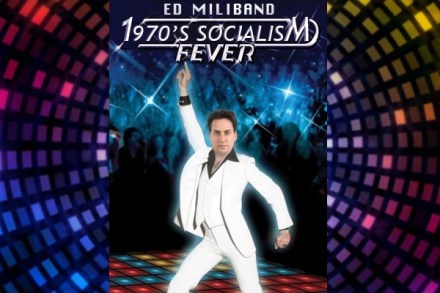
If you think bankers do a bad job of banking, just wait until government tries its hand. This seems to be what Ed Miliband is proposing today: a Labour government would set up two new banks, to challenge the existing five big ones. And so his 1970s revival continues. There’s no evidence that new banks would help much, as the Bank of England Governor has already indicated. But as I say in my Telegraph column today, Ed Miliband isn't too worried about lack of evidence. He's proposing to be a different kind of political leader. His list of ‘predators’ – ie, nasty businesses to whom he promises to give six of the best - grows longer all the time.

Ed Miliband’s tricky second album

Ed Miliband has spent the past few months celebrating the success of his conference pledge to freeze energy prices. He was so pleased with the disruption that this caused that he referenced it in his speech on banking reform today. He is right to be pleased with that pledge. It was a hit. It's just that today's speech, built up by the Miliband camp as the sequel to the price freeze, was the political equivalent of a difficult second album. You could see what he was trying to do. Sections of the speech were straight from the Obama playbook, just as his conference speech was, with appeals such as 'Britain can do better than this' and lines such as 'we believe we can tip the balance away from struggle and towards hope'. But the playbook lines weren't played very well.

Ed Miliband’s ‘One Nation Economy’ speech: full text and audio

listen to ‘Ed Miliband's ‘One Nation Economy’ banking reform speech’ on Audioboo Today I want to tell you what the next election is about for Labour. It is about those families who work all the hours that God sends and don’t feel they get anything back. It is about the people who go to bed anxious about how they’re going to pay their bills. It is about the parents who turn to each other each night and ask what life their sons and daughters are going to have in the future. It is about those just starting out who can’t imagine they will ever afford a home of their own. It is about the most vulnerable in our country who feel they are just being tossed aside.

Miliband’s big speech challenge isn’t Mark Carney

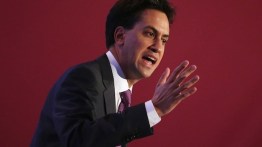
Even though Labour is quite clearly rather peeved by George Osborne's minimum wage announcement, it is, in one way, a compliment to Ed Miliband that the Chancellor felt it strategically important to try to sabotage the Labour leader's speech on banking, which he will deliver shortly. The Conservatives are aware that even if Miliband has a knack of coming up with policies that sound potty, he also has a knack of framing them in a way that disrupts the political debate. Thus a pledge by a party leader in the autumn to control prices in a market where he has no control of worldwide wholesale markets still managed to cause significant trouble.

Ed Miliband’s problems are mounting

Today’s PMQs has left Ed Miliband with a strategic headache. Miliband’s new less-Punch and Judy approach to PMQs isn’t working. In large part, this is because Cameron — who thinks he wins more of these sessions than he loses and that the facts on the ground now favour him — isn’t interested in cooperating. So Miliband is faced with the choice of continuing with this approach and being beaten up every Wednesday or abandoning it after just two sessions. If Miliband does continue with it, expect to see the Tories continue to try to goad Ed Balls, one of the Commons’ most enthusiastic hecklers, into responding to them in kind — note how Cameron took repeated jabs at the ‘newly silent shadow Chancellor’.

Does Ed Miliband feel betrayed by Francois Hollande?

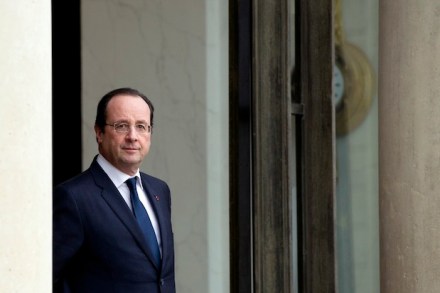
President Hollande’s private life continues to fascinate the whole world (other than the French press pack, obviously); but it is worth noting that the embattled president signalled a major shift in economic policy yesterday. France is a couple of years late to the austerity party; but it will experience €50 billion worth of cuts in 2015 - 2017, on top of the €15bn scheduled for this year. When Hollande won the Élysée, he promised ‘another way’. But he’s been mugged by reality. Austerity est arrivé. All of which is a little embarrassing for Ed Miliband, who told ITV in May 2012: ‘I congratulate Francois Hollande.

Labour’s poll woes as economy grows

Is the improving economy harming Labour’s standing? According to a new Guardian/ICM survey out today, Labour is still ahead of the Conservatives by three points — but the gap is slowly shrinking. Since the last ICM poll in December, Labour’s lead has dropped to just three points, down from an eight point lead in November: Today’s poll also looks at how assured people are feeling about their own financial position and their ‘ability to keep up with the cost of living’. 52 per cent now feel confident about the state of their personal finances — the highest level since October 2010.

Miliband returns to the ‘promise of Britain’ with pitch to middle class

Ed Miliband's cost of living crisis campaign has, so far, tended to focus more on those who are seriously struggling and turning to food banks or turning off their heating in cold weather. But today the Labour leader turns to the middle classes in a Telegraph op ed. His assessment is downbeat as you would expect: Miliband needs pessimism in order to succeed in 2015, while the Tories need an upbeat vision (but not, as most senior party figures accept, so upbeat an economy that voters think it safe to back Labour). It is interesting that Miliband sees the middle class as a group worth bidding for: he clearly feels there has been a sufficient gap left by the other parties for Labour to sneak into.

Why should Nigel Farage have to fight the ghost of Enoch Powell?

One of the genuine seasonal pleasures to be enjoyed as 2013 slipped around the U-bend was Enoch Powell making his familiar comeback as the Evil Ghost of Christmases Past. Enoch was disinterred by the producers of the hitherto un-noticed Murnaghan Show — presumably in order to frighten the viewers and put a spanner in the wheel of the programme’s principal guest interviewee, the Ukip leader Nigel Farage. Dermot Murnaghan tripped up Mr Farage by the devilishly clever tactic of reading him some anodyne quotes from Powell’s exciting and controversial ‘Rivers of Blood’ speech and asking Farage if he agreed with them. But only later did he reveal that they were the words of the sulphurous Antichrist Powell! Brilliant.

Podcast: the fantasy Pope Francis, Labour’s immigration nightmares and the Profumo affair

Is our perception of Pope Francis simply an invention of the liberal media? On this week’s View from 22 podcast, The Catholic Herald’s Luke Coppen and Freddy Gray discuss how the world has fallen in love with this ‘Fantasy Francis’, what might happen if the real Francis (whoever he may be') is discovered and why he’s replaced Obama as a leftie pinup. Demos’ David Goodhart, The Spectator's Isabel Hardman and Tim Finch from the IPPR also discuss Labour’s immigration nightmares. Is the party in a more difficult position than the Conservatives? And has Ed Miliband apologised enough for the mistakes they made?

PMQs sketch: a subdued week, but the bear-pit will be back

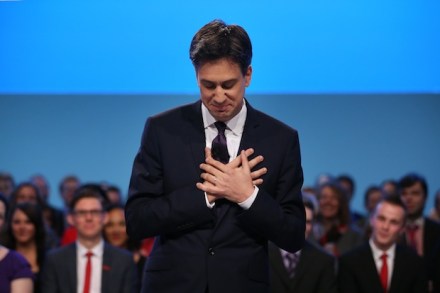
It’s a whole new kind of politics. The subdued atmosphere at PMQs had two possible causes. First, the tragic death of Paul Goggins had stunned the House into near silence. Ed Miliband seemed close to tears as he paid his tribute. ‘Labour has lost one of its own, and one of its best.’ Moving to more substantial issues, Miliband chose the neutral topics of monsoons and roulette machines. He saluted the work of the flood-wardens and the efforts of courageous citizens who had leapt to each others’ aid during the storms. Cameron replied by vowing that river defences would be reinforced with huge sandbags stuffed with cash. Then Miliband moved to fixed-odds betting machines.

Sombre PMQs sees David Cameron test his new line on welfare

PMQs was a rightly sombre affair, coming as it did only a few hours after the death of Labour MP Paul Goggins was announced. It has been striking to hear many MPs of all political persuasions pay tribute to Goggins as a 'decent' and 'kind' man, and those tributes were echoed in the Chamber. These two qualities are rarely trumpeted in politics and yet when someone does possess them, they have a profound impact on those around them. Ed Miliband split his questions between flooding and fixed-odds betting terminals (FOBTs). His first tranche, on flooding, was still rather sombre and the Labour leader and the Prime Minister both sought consensus.

Rushing to judgement on the ‘crack cocaine of gambling’

Ed Miliband’s pledge to crack down on the ‘crack cocaine of gambling’  is a significant moment in the extraordinary moral panic over fixed-odds betting terminals (FOBTs). Earlier this year, the Department for Culture, Media and Sport found that there was very little data to back up the anecdotal evidence of the anti-FOBT brigade and so decided to commission some research. This process will take 18 months and a decision about stakes and prizes will be made once there is some evidence to study. This eminently reasonable, evidence-based approach has naturally been howled down by the anti-gambling lobby whose campaign has thus far relied on anecdotes and, at best, half-truths.

The so-called “crack cocaine of gambling” is a myth. Trust Ed Miliband to believe in it.

The puritan, as devotees of Baltimore's finest know, is greatly exercised by the fear that someone, somewhere, might be enjoying themselves. Ed Miliband is a puritan. And a hopeless, nagging, fish-faced puritan at that. A ninny, in other words. The Labour leader has a rare gift. He knows, you see, how you should spend your money. What's more, if you fail to spend your cash in the proper Miliband-approved manner he thinks he should be - nay is! - entitled to coerce you into changing your miserable behaviour. Of course he is not alone in that. Many politicians are far too free and easy in these matters. But there is a special teeth-grinding awfulness to the way in which Miliband seeks to coerce this fine country's citizens that never fails to annoy me.

Will ignoring FOBTs be enough?

When he spoke to the 1922 Committee on Wednesday, David Cameron told MPs that the Conservative attack on Labour must not involve fighting the party on its own territory. He named payday loans as one of the issues that Ed Miliband and co want to create an 'evil Tories' narrative on. But another one that Miliband is currently focusing on is fixed-odds betting terminals, or FOBTs. The Labour leader has announced today that a Labour government would give councils the power to ban or cut the number of FOBTs in their areas. Visiting Kilburn today, Miliband said: 'Currently there is almost nothing that can be done to stop the spread of FOBTs. Laws passed restricting betting shops to a maximum of four of these betting machines has meant more betting shops in clusters, sometimes open from 7.

PMQs sketch: This being Yuletide there were some turkey ticklers

Christmas is excellent news for a Labour opposition. The season of goodwill throws rich and poor into sharp relief. Red-faced aldermen gather at loaded tables to gobble up roast goose and plum-duff. And afterwards they throw sixpences at starving chimney-sweeps who scrabble for crusts of bread in the snow. At least that’s how it should be. But Labour is in trouble this year. A dearth of bad news has gripped the country. There’s a chronic shortage of shortages. And the lack of a serious crisis is reaching crisis proportions. Ed Miliband is suffering. He looked positively nauseous as he stood up at PMQs and applauded the ‘welcome’ fall in joblessness. ‘More!’ shouted the Tories. Miliband’s lips curled queasily.

The Labour split on planning and housebuilding

Ed Miliband's housebuilding announcement today is rather a re-heated announcement of his conference pledges on housing. Eric Pickles has already set out on Coffee House his belief that these new ideas are 'more of the same high-tax and top-down policies that led to their housing boom and bust'. The announcement certainly allows for a bit of a knockabout between the two parties, neither of which has much to boast about when it comes to housing, but there's one point that's worth noting about the Labour leader's announcement today.

Labour denies Heathrow U-turn

Spectator readers won't have been particularly surprised by the FT's story that Ed Miliband is dropping his opposition to a third runway at Heathrow: James reported that the Labour leader was softening his stance on aviation back in November: 'Miliband is also determined to avoid a head-on collision with his shadow chancellor. Having put Balls back in his box over HS2, he now seems to be softening his opposition to a third runway at Heathrow. This extra runway is something which Balls regards as vital to Britain’s economy and which the pair fell out over in government.' But if that softening is continuing apace, Labour isn't ready to go public with it. I've spoken to a party source this morning who said: 'FT suggestion Labour is changing its position on Heathrow is wrong.