Ed miliband

PMQs: Miliband won’t put politics away over the floods

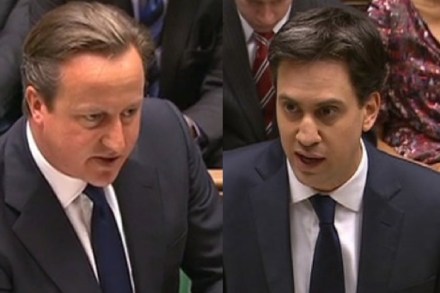
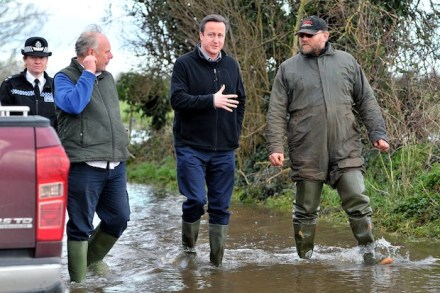
PMQs today started with a more genteel tone in deference to the floods. But Ed Miliband showed that he has no intention of putting politics away entirely, effectively needling David Cameron on cuts at the Environment Agency. Tellingly, at the end of their exchanges, Cameron rebuked Miliband for seeking ‘to divide the House’. When a Prime Minister uses that line, it is a sure bet that they haven’t had the best of the exchanges. listen to ‘PMQs: ‘The government needs to speak with one voice’ on floods – Ed Miliband’ on Audioboo

Ed Miliband tries to answer tricky hospital closure question

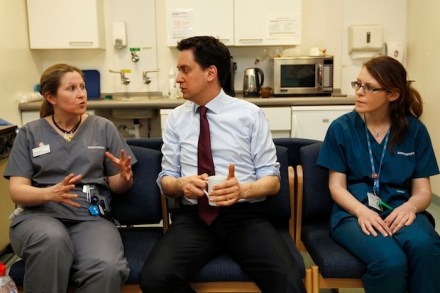
There is one important line in Ed Miliband’s Hugo Young lecture which shows the Labour leader is trying to come to terms with some of the difficult questions that he knows he must answer before 2015. Labour knows that it will have to close hospitals to improve services. But it also doesn’t really want to say that, because it makes people angry. So tonight’s speech, which you can read in full below, includes an announcement that Labour would not close hospitals without involving local people in the decision. Miliband said: ‘I am not going to make promises I can’t keep particularly on this issue. No service can stand still. But

Ed Miliband and the state

Ed Miliband is delivering the Hugo Young lecture tonight, and will focus on ‘people-powered public services’. All the briefing so far sets it out to be one of those ‘intellectual underpinnings’ speeches, rather than something that sets the world on fire (although Miliband does, to his credit, have a habit of pulling impressive speeches out of the bag when we’re not expecting it, or boring us all to tears when we’ve been told to expect something major). The central premise of it is set out in his Guardian article (and for more background, do read Rafael Behr’s piece on this): it’s about people having more power over their lives. He

Chuka Umunna fails to defend the economics of a 52p tax. But voters like it, he says.

How many FTSE 100 chief executives support Labour? How many FTSE 250 chief execs back Ed Miliband? Difficult questions for Chuka Umunna, Labour’s Shadow Business Secretary, in his outing on the BBC’s Sunday Politics today. Labour’s plan to jack up the top rate of income tax to 52 per cent (up from 47 per cent) has sent a fairly clear message about its attitude to business. Digby Jones, an ex-CBI boss who served in Gordon Brown’s government, has summarized Miliband’s position as: ‘if it creates wealth, let’s kick it.’ Stuart Rose, ex-M&S ceo, says the 50p tax borders on ‘predatory taxation.’ The head of the London Stock Exchange says Milband’s 50p

Labour’s internal reforms will have consequences

[audioplayer src=”http://traffic.libsyn.com/spectator/TheViewFrom22_6_February_2014_v4.mp3″ title=”James Forsyth and Marcus Roberts discuss Labour’s election strategy” startat=702] Listen [/audioplayer]At the end of last year, there was an expectation that Labour’s internal reforms would be one of the big themes of the first quarter of the year. But this week, Labour’s National Executive Committee voted through the changes by the comfortable margin of 28 to 2 and with remarkably little dissent. The absence of a public row over the issue makes it tempting to think that the changes don’t amount to much. But this would be wrong. Labour is going to scrap its current electoral-college split between MPs, the Unions and members and replace it with

Where’s Wally?

There were lots of sniggers at the back when Ed Miliband failed to make the list of the Most Connected Men in Britain, drawn up by Editorial Intelligence for GQ. Plenty of Labour stooges did make the list, so we can reject claims of bias. Ed’s grumpy spinmeister Tom Baldwin is on it, as is Shadow Education Secretary the Hon. Tristram Hunt. Even David Miliband, who has left these shores, made the cut. Now, call Mr S an old cynic but it seems that more column inches have been devoted to Ed not being on this list, than would ever be given over had he scraped on. If only Labour were

PMQs sketch: Cameron kick-starts a Miliband recovery

Cunning work from Milband at PMQs. He played Syria like a fixed-odds betting machine and came away with a minor jackpot. Last week he had urged the prime minister to accept a few hundred of the neediest Syrian refugees. Cameron duly said OK. Today Miliband was quick to claim a victory for decency, for humanity, and for Miliband. ‘I welcome this significant change of heart,’ he said. Choice word, heart. He’s got it. And Cameron hasn’t. That’s the implication. Miliband tried the same tactic with the 50p tax rate. When Ed Balls unfurled this this new policy he got a mixed bag of reviews. Economists put their fingers in their

Class war at PMQs leaves Labour in better heart

It was back to business as usual at PMQs today. Gone was Miliband’s effort to raise the tone, which Cameron ruthlessly exploited last week, to be replaced by an old-fashioned, ding-dong with a bit of class war thrown in. The result: Labour MPs leaving the chamber in far better heart than they did last week. listen to ‘PMQs: Cameron and Miliband – Labour is the ‘anti-jobs, anti-business, anti-growth party’’ on Audioboo

BuzzFeed does politics. Watch out, Westminster

It’s startling how few young people feel aligned to a particular newspaper. Gone is the idea of ‘taking a paper’. Today, we are far more likely to use Flipboard to browse stories from hundreds of different newswires, blogs and websites. We turn to Twitter to see what people are saying about the day’s news, before logging into Facebook to share commentary on it. We care about what our friends are reading, and what the people we respect are reading. We couldn’t care less about loyalty to a publication. The explanation for this lack of loyalty is two-fold. There is plenty to suggest that the young feel abandoned by traditional news

As Ed Miliband knows, the 50p tax rate will not fix a broken market

Labour’s confirmation that it would restore the top tax rate to 50p was not that much of a surprise, Ed Miliband has always been clear that was what he wanted. But it does raise an interesting question about Miliband’s attitude to the market. Those close to the Labour leader passionately argue that his agenda is actually pro-competition and pro-market, that it not a throwback to the 1970s. As Stewart Wood wrote in these pages recently, they see him as the heir to Teddy Roosevelt. But the 50p rate will hit any successful business person regardless of how open and competitive the market they operate in is. This isn’t action to

Any other business: How François Hollande let France miss the global recovery train

I’ve always respected stationmasters, but that sentiment is not universally shared. A distinguished friend of mine across the Channel described François Hollande the other day as ‘un chef de gare, sans aucune dignité’ — and it’s not difficult to picture the little president, peaked cap awry, trousers unbuttoned, haplessly waving his whistle as the last train à grande vitesse departs for the Eurotunnel laden with talented compatriots who see no future in France. As modern socialist leaders go, Hollande is beginning to make Gordon Brown look statesmanlike. Nicknamed ‘Flanby’ after a cheap custard pudding, he has left decision-making to his ragbag of ministers and done nothing to steer France towards

Ferdinand Mount’s diary: Supermac was guilty!

You have to hand it to Supermac. Fifty years after the event, he is still running rings round them. The esteemed Vernon Bogdanor (The Spectator, 18 January) tells us that Iain Macleod was wrong in claiming that Sir Alec had been foisted on the Conservative party by a magic circle of Old Etonians. On the contrary, the soundings had ‘revealed a strong consensus for Home. So Macmillan was not slipping in a personal recommendation when he advised the Queen to send for him — he was doing precisely what he was supposed to do.’ This is a deliciously selective account. When Macmillan decided to resign in October 1963, not because

The top level of government isn’t riddled with personal hatred – thanks to Osborne

Now that the economic statistics are looking better, people are beginning to rediscover the once-fashionable thought that George Osborne is a great strategist. Things are coming together before the 2015 election in a way which makes life uncomfortable for Labour. I am not sure that ‘strategist’ is the right word, but I do think Mr Osborne deserves praise for something else. If you compare this government with the last, you will see that it is not dysfunctional in its internal relations. The coalition has constant frictions, but these are, as it were, built into the system. After nearly four years, there is no serious split or even known personal hatred

PMQs sketch: Miliband begins to run out of arguments

Syria overshadowed PMQs today. The chamber was quiet and sombre. And both leaders were clearly about to do their world-statesman bit. Ed Miliband rose to his feet with an air of ineffable goodness. He looked like St Peter on his way to donate the dead Judas’s sandals to a charity shop. He asked about Britain’s readiness to accept Syrian refugees in accordance with a UN directive. Britain, said Cameron, is already the second largest donor to Syria. And the crisis can’t be solved by few hundred refugee placements. Miliband used two more questions to press the case for ‘orphans who had lost both parents.’ Cameron said he was prepared to

Despite Miliband’s best efforts, Cameron still has the upper hand at PMQs

Ed Miliband is still trying to keep his reasonable tone going at PMQs. He led on Syria, pushing David Cameron on the government’s refusal to join in a UN resettlement scheme. Cameron argued that given how many refugees the Syrian conflict had created, a resettlement scheme could only ever deal with a tiny part of the problem. Labour, though, were not happy with Cameron’s answers and will hold a Commons vote on the matter next Wednesday to try and force the government into changing its position. But when Miliband moved onto the economy, he found it far more difficult to keep his tone civil. Tories cheered him saying unemployment had

Ed ‘Teddy’ Miliband: Labour is the party of competition

Ed Miliband tends to enjoy success when he’s either stealing someone else’s clothes or offering a possibly unworkable policy that sounds catchy. This morning on the Andrew Marr Show he tried both tactics. Having nicked One Nation from the Tories and repeated the phrase so often that they probably don’t want it back, Miliband is now trying to ape a Republican president, Theodore Roosevelt. His close colleague Lord Wood sets out why Labour thinks this is a space it can jump into in a piece for Coffee House. listen to ‘Ed Miliband on the Andrew Marr Show’ on Audioboo The catchy line from this Roosevelt-style crusade is that Labour is

Ed Miliband is better placed than the Tories to follow Roosevelt

On Friday, Ed Miliband pledged to introduce greater competition in our banking market. Last September, he pledged to freeze energy prices for 20 months while our broken energy market is reset to expand competition and consumer choice. Reforming broken markets to increase competition and address the long-term sources of our cost-of-living crisis might seem an unusual theme for Labour to champion. In fact it is an approach that has learnt from a progressive conservative tradition, one that understands the importance of reform to ensure that markets remain open and competitive. Noone understood this idea better than the American President Theodore Roosevelt – a passionate believer in free enterprise, and a

Coming soon – the Bank of Miliband. Be very afraid.

If you think bankers do a bad job of banking, just wait until government tries its hand. This seems to be what Ed Miliband is proposing today: a Labour government would set up two new banks, to challenge the existing five big ones. And so his 1970s revival continues. There’s no evidence that new banks would help much, as the Bank of England Governor has already indicated. But as I say in my Telegraph column today, Ed Miliband isn’t too worried about lack of evidence. He’s proposing to be a different kind of political leader. His list of ‘predators’ – ie, nasty businesses to whom he promises to give six

Ed Miliband’s tricky second album

Ed Miliband has spent the past few months celebrating the success of his conference pledge to freeze energy prices. He was so pleased with the disruption that this caused that he referenced it in his speech on banking reform today. He is right to be pleased with that pledge. It was a hit. It’s just that today’s speech, built up by the Miliband camp as the sequel to the price freeze, was the political equivalent of a difficult second album. You could see what he was trying to do. Sections of the speech were straight from the Obama playbook, just as his conference speech was, with appeals such as ‘Britain