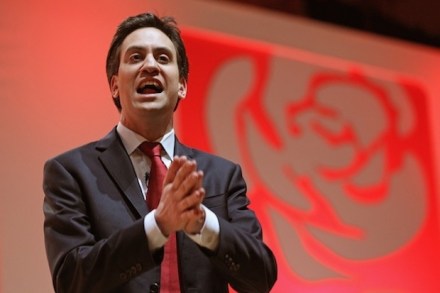
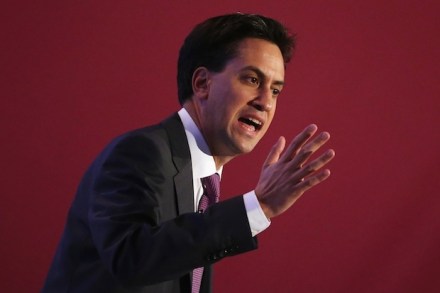
Ed miliband

Ed Miliband adopts a rope-a-dope strategy on Europe

Hopi Sen is not alone. There are many people in this country supremely indifferent to the whole and vexatious question of whether or not there should be a referendum on Britain's continued membership of the European Union. Yes, yes, they will tell pollsters that if they must they suppose they might fancy having a referendum some day. But they don't really care. They mumble about a referendum because that seems the done thing to do and because when a pollster asks you if you'd like to have a say on something it sounds better to say Yes than No thanks, I really can't be bothered. And sure, if pressed, they might grumble and chunter about the European Union too and say that it seems to be an unnecessarily invasive institution - or set of institutions, treaties and agreements.

Ed Miliband’s speech on Europe: full text

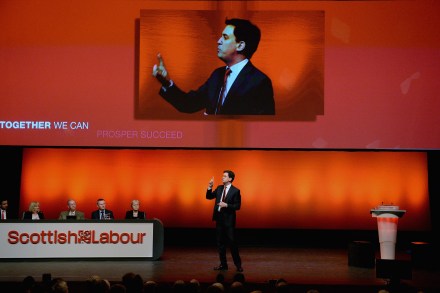
In a speech today at the London Business School, Ed Miliband set out Labour's policy on an EU referendum: unless there are further transfers of powers, there won't be one. Here's what he said: listen to ‘Ed Miliband on an EU referendum’ on Audioboo It is great to be here at the London Business School. For fifty years, in the teaching you provide you have made a major contribution to helping businesses succeed across the world. And today I want to talk about an issue that I know is close to your heart: Britain’s place in the European Union. I want to set out why I believe our country’s future lies in the EU. Why the EU needs to change.

Ed Miliband rules out EU referendum

Why is Ed Miliband going to rule out a referendum on Britain's membership of the EU in a speech tomorrow? The Labour leader has written in the FT that he would legislate for a new referendum lock which would force an In/Out referendum if there was another transfer of British power to Brussels, which essentially means he supports the current situation under the Coalition. And he says in the piece that the transfer is unlikely in the next Parliament. Which means no referendum. He writes that Labour's position on Europe... "… is clear and principled: we strongly believe Britain’s future is in the EU. And my priorities for government after the next election are very different from those of the Conservatives.

Coffee Shots: Labour gets tough

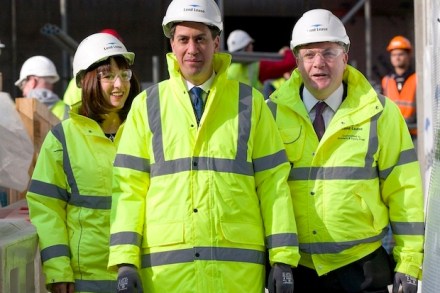
Labour says it is tough on welfare policy. And today, the party launched its tough compulsory jobs guarantee funding pledge by looking tough too. Ed Balls, Ed Miliband and Rachel Reeves would have made a stronger Mr Steerpike quail in these hard-hitting outfits.

The end of High Speed 2?

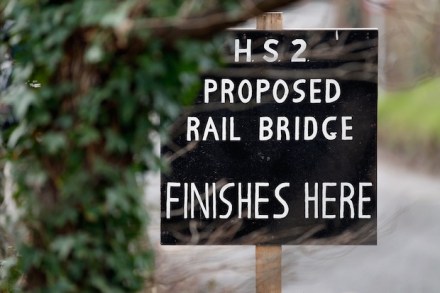
Haters of HS2 rejoice: the project has an even better chance of failing now. Following James’ revelation that the Transport Secretary doesn’t believe the Hybrid Bill will pass through Parliament before the next election, there are several scenarios on how the parties may change their stance on the project. If a cross-party consensus falls apart, HS2 will run into severe difficulties. Nearly all of the possibilities pose a threat to the line actually being built: 1. David Cameron remains Prime Minister James played out this scenario in his blog yesterday, explaining why it matters that HS2 will be a big issue at the next general election.

Will HS2 become an election issue?

In an interview with The Spectator this week, the Transport Secretary Patrick McLoughlin admits that HS2 will not have been approved by parliament before the next election. This invites the question, will HS2 become an election issue? Both Ed Balls and Andy Burnham have made forays against HS2 in recent months. But both have been slapped down by Ed Miliband's office. His allies believe that Labour can't run on a platform of rebuilding Britain while simultaneously promising to put a stop to the biggest infrastructure project in decades. But one wonders if this Labour position will hold. The Tory election campaign will claim repeatedly that Labour's sums don't add up, they'll constantly accuse Labour of planning to raise taxes or borrowing.

The inconvenient truth at the heart of Miliband’s union reforms

At a special Labour conference last week, Ed Miliband pushed through his much-trumpeted reforms to the party’s relationship with the unions. But, much as he is laying claim to be the victor in this battle, in truth the war is still ongoing. The latest friendly fire has come from Lord Cashpoint, Michael Levy – Tony Blair’s chief tapper-upper of the rich – who spoke out on Monday to urge Miliband to seek more private donations from the super-wealthy, just as Blair and Levy did with so much success. The reality, though, is that Miliband has been quietly doing his best to drum up money from private donors, notwithstanding his very public attack on the Tories as the party of hedge fund managers and property developers.

PMQs sketch: Bring back ya-boo politics – at least it’s watchable

We all know what’s wrong with ya-boo politics. Today we saw what’s right with it. Instead of the usual shouting match we had a calm, well-mannered, (and deadly dull,) debate. Miliband devoted all six questions to Ukraine. The party leaders tried to outdo each other in self-importance, bombast and name-dropping. ‘High sentence’ was very much the style. In Miliband’s estimation we face, ‘the biggest crisis on this continent since Kosovo.’ So for him the tangled history of Europe reaches all the way back to the 1990s. His verdict followed. ‘These actions deserve to be condemned unreservedly,’ he said unmelodiously. Cameron blathered about the EU leaders’ summit tomorrow.

Wales is a nightmare vision of Ed Miliband’s Britain

If politics was science, you would call Wales the ‘control’ group, for public service reform. Here is a country where Labour are the only game in town and a socialist philosophy which places a monopolistic state provider at the centre of health care and education reigns supreme – yes, even more supreme than the pupils and patients this system is designed to serve. In fact, in devolved Wales, Labour are running the public services as Ed Milliband would like to see them; a Labourite utopia of State supremacy, with none of the so-called evils of alternative providers getting in the way of the tight grip of the State. So how is this socialist utopia going, then? If a recent Question Time from Newport is anything to go by, not so good.

Conservative ministers link Russian aggression to Miliband’s Syria stance

Sajid Javid isn't the only observer of Russia's behaviour over the situation in Ukraine to link Vladimir Putin's aggression to the situation in Syria. Perhaps the West's decision not to intervene in that conflict has given Putin the sense that he can do what he wants without any response from other countries. But Javid's suggestion in a tweet this afternoon that there is a 'direct link between Miliband's cynical vote against Syria motion and Russia's actions on Ukraine. Completely unfit to lead Britain' goes rather further than that. It also doesn't fit particularly comfortably with the fact that 30 of Javid's own Conservative colleagues rebelled on that motion and many more abstained. His colleague Nick Boles has made a similar point: https://twitter.

Is Labour aiming for victory, or just the largest party, in 2015?

You won't catch Ed Miliband or David Cameron admitting that their best hope of governing after 2015 is in a coalition or a minority government. But what if their party machines have already decided that this is what's going to happen anyway? There are secret discussions within the Labour party about scaling back the number of 'target seats' (the seats that it will pour the most resources into in order to win - full list here) from the official list of 106 to 80, or even just 60, which means that some in Labour think it is better to aim to be the largest party rather than out-and-out victory. I explain why party officials think this is wise and what Ed Miliband could do to stop it in my Telegraph column today.

Welcome to the age of four-party politics

[audioplayer src="http://traffic.libsyn.com/spectator/TheViewFrom22_27_February_2014_v4.mp3" title="James Forsyth and Isabel Hardman on why the two party political system is dying" startat=1207] Listen [/audioplayer]Two things will make the next general election campaign quite unlike any previous election in this country. The first is that we now have four-party politics right across Britain. In Scotland and Wales, the nationalist parties have been a political force for a generation. But the big change is in England, where Ukip is emerging as a fourth force. Second, the campaign will be haunted by the spectre of another hung parliament. The question of what happens if no party wins an overall majority will be asked time and time again by an impatient media.

PMQs sketch: Miliband turned Cameron’s flooding fraud into a faux pas

Earlier this week David Cameron threatened the Lib Dems with divorce. Today, two of their senior figures offered to kiss and make up. Sir Alan Beith and Sir Bob Russell, bearing their knighthoods like dented old battle-shields, made their overtures at PMQs. Each of these leathery old libertarians seems to have discovered his inner Tory. Sir Alan went first. He invited Cameron to slap down rogue Anglicans who dare to criticise welfare reform. ‘There’s nothing moral about pouring more borrowed money into systems that trap people in poverty,’ he said. Cameron accepted Sir Alan’s invitation for a waltz.

Ed Miliband: Children behave better than MPs at PMQs

A rite of passage for any Opposition leader these days is to promise to make politics more decent and connected to people's lives. One recent Opposition leader said this, for example: 'And we need to change, and we will change, the way we behave. I'm fed up with the Punch and Judy politics of Westminster, the name calling, backbiting, point scoring, finger pointing.' David Cameron, who said this in his leadership acceptance speech in 2005, now has a team of MPs who help heckle Labour in the Commons during Prime Minister's Questions. This was mainly in response to Labour being much better at heckling, with Ed Balls gesticulating and sledging away on the front bench, and Michael Dugher and Sadiq Khan doing similar dirty work on the steps on the Labour side of the house.

Who would benefit from a ban on FOBTs?

I wrote a piece about the Fixed Odds Betting Terminals uproar in the magazine this week, and it has prompted some angry responses by email and over social media. I'm told that I didn't treat problem gambling with sufficient seriousness. I'm not sorry about that, I'm afraid: I think it's silly to be too serious about the vices of others. My point was that the political and the media classes are having something of a moral panic about FOBTs  — and as always with moral panics, the political and media classes don't really know what they are talking about. I doubt Ed Miliband or Tom Watson, who both seem dead against FOBTs, have ever spent more than 10 minutes in a bookie.

A FOBT ban could be terminal for high-street bookies – and great for a Labour donor

Hands up: who knows what a FOBT is? It stands for fixed odds betting terminal. No? Well, you should, because they are a serious menace to society. That’s what Ed Miliband says, anyway. FOBTs, you see, are those souped-up slot machines one can find in bookmakers’ shops all over the country, especially in deprived areas, usually next to Poundland. The most popular ones offer casino-type games, such as roulette, and have become notorious because of the speed with which they enable punters to lose large sums of money: up to £100 every 20 seconds, apparently. The Daily Mail likes to call FOBTs the ‘crack cocaine of gambling’, which makes them sound much more fun than they are.

Is Nigel Farage wimping out on scary Nick Clegg’s debate challenge?

Who knew Nick Clegg was so scary? As James revealed this morning, the Lib Dem leader has challenged Nigel Farage, never knowingly silent, to a televised leaders' debate for the European elections. But the Ukip response isn't quite so enthusiastic. The party's director of communications Patrick O'Flynn has said that ‘it would be ridiculous if Nick Clegg were to refuse to extend his invitation to David Cameron and Ed Miliband too’ and that ‘we also want to know from David Cameron and Ed Miliband that they are not running scared and will be happy to present their case on the EU to the British public as well. We can see no reason why they would not wish to take part’. Farage has his own phone-in on LBC tomorrow morning, where he will respond in full.

The Coalition mating game

There are ornately-feathered birds in New Guinea that have less bizarre mating rituals than Labour and the Lib Dems. The two parties need to show that it isn't impossible to work with one another in a future coalition while also keeping their own supporters reassured that they're not desperately keen to jump into a bed with another party that activists find themselves embroiled in dirty by-election and local fights with. Hence the weird back-and-forth dances and plenty of displays of aggression that we've seen over the past couple of months. So Ed Balls in January suggested Nick Clegg's head would not be the price of a Coalition after all with the Lib Dems and was immediately slapped down by Clegg.

Why Nick Clegg is so keen to pick a fight with Nigel Farage

Before the European Elections in May, don’t expect either David Cameron or Ed MIliband to engage with Nigel Farage. Both the Tory and Labour leaders think that the best strategy for dealing with Ukip and its leader is to deny them the oxygen of publicity. Nick Clegg, by contrast, is desperate for a scrap with the Ukip leader. Clegg’s rationale is that the more fights he can pick with Farage, the more he can turn the European Elections into a fight between In—led by Clegg and the Liberal Democrats—and Out, championed by Farage and his party. Clegg hopes that this polarised contest will prevent a total wipeout of Lib Dem MEPs. Being pro-European might, to put it mildly, not be the most popular cause in Britain but it is a lot more popular than the Liberal Democrats.