Ed miliband

Andy Burnham’s centrist act isn’t fooling anyone

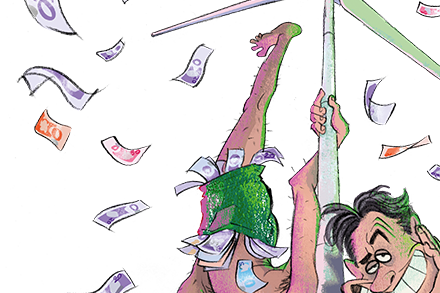
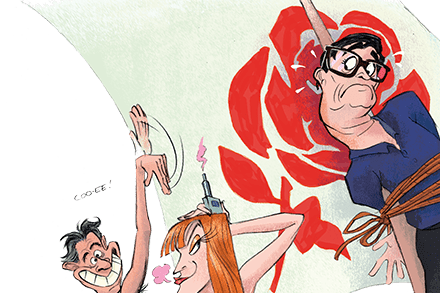
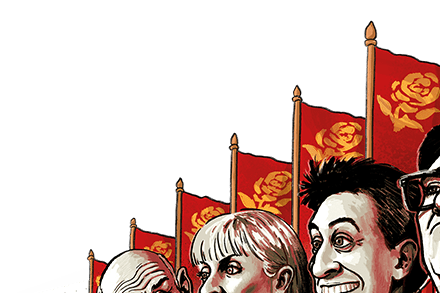
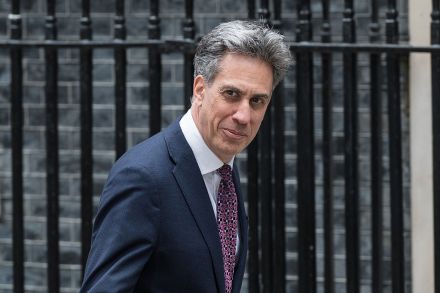
When Ed Miliband and Shabana Mahmood arrived in Downing Street on July 20, the image of political rivals arm in arm symbolized a new government of differing views taking shape. It might have been more awkward. As they neared the door of No. 10 and the waiting television cameras, Miliband turned to Mahmood and asked: “Should we turn around for a photo together?” Mahmood gave the idea short shrift: “We’re not getting married, Ed!” But in a sense, Labour is seeking a new relationship with the British public – and everyone around Andy Burnham is alive to the importance of images, symbols and vibes. As Wes Streeting, the new Defense Secretary, put it in cabinet the next day: “We have a second chance to make a first impression with the voters.
burnham

Is Ed Miliband preparing to take on Donald Trump?

Just one day after Ed Miliband was made UK Foreign Secretary we heard in the Telegraph that the White House is upset about the appointment, and even warned against it. Donald Trump is apparently unimpressed by Miliband’s role in blocking North Sea oil drilling. Miliband has also railed against Trump in the past, calling him a “racist, misogynistic self-confessed groper” on the BBC’s World at One in 2016, as an example – but in fairness his predecessor David Lammy called Trump “beneath contempt” before he became foreign secretary. Trump can forgive and forget – so long as his interlocutor is willing to forget their own pride. Miliband could bend the knee, but there is also some appetite to confront Trump.

ed miliband

Andy Burnham’s centrist act isn’t fooling anyone

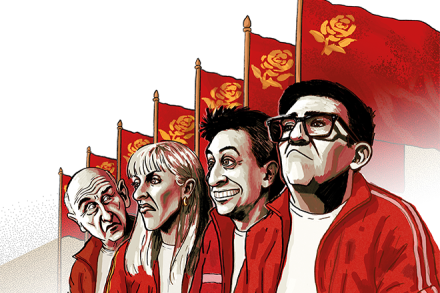
When Ed Miliband and Shabana Mahmood arrived in Downing Street on Monday afternoon, the image of political rivals arm in arm symbolised a new government of differing views taking shape. It might have been more awkward. As they neared the door of No. 10 and the waiting television cameras, Miliband turned to Mahmood and asked: ‘Should we turn around for a photo together?’ Mahmood gave the idea short shrift: ‘We’re not getting married, Ed!’ But in a sense Labour is seeking a new relationship with the British public and everyone around Andy Burnham is alive to the importance of images, symbols and vibes. As Wes Streeting, the new Defence Secretary, put it in cabinet on Tuesday: ‘We have a second chance to make a first impression with the voters.
Revealed: Ed Miliband and the shady funding of net zero

From our UK edition

There is a problem with British politics. Dark money from abroad is being funnelled into our system. A complex web of interlocking charities, thinktanks, advocacy groups and campaign outfits is being bank-rolled to push a policy agenda onto the public that makes us poorer, puts us in hock to hostile powers and undermines working people. According to the left, Kemi Badenoch and Nigel Farage are puppets of such shadowy interests: Tufton Street thinktanks bankrolled by oil companies, Christian fundamentalists and perhaps even Russian money. These allegations are well-ventilated and have been exhaustively investigated. Most lead nowhere. Yet no similar scrutiny is applied to a far bigger lobbying effort – the concerted campaign to push a ruinous net-zero agenda.

Can Burnham resist the siren call of the left?

Power, when it is gained and lost, is transferred in stages: the actual, the visual and the constitutional. The latter took place on Tuesday evening when the prime minister presumptive sent a letter to Antonia Romeo, the Cabinet Secretary, requesting that she commence access talks with his team. Keir Starmer had already given permission for them to proceed, but the propriety and ethics team in the Cabinet Office had told Romeo she could not initiate proceedings. Andy Burnham had to ask first. To all intents and purposes, he is already the vessel from which power flows. At the same time, it became clear that James Purnell, the former Blairite cabinet minister, will lead the transition team and stay on to become chief of staff in 10 Downing Street.

Can I save Britain from war with Russia?

From our UK edition

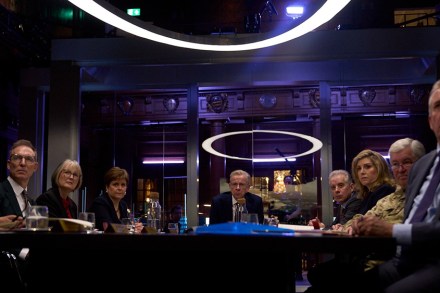
I t won’t be much of a consolation to Keir Starmer but I too was overwhelmed by the responsibilities of being prime minister. Fortunately for the country, I was only playing the role in a fictional coalition cabinet assembled by Sky TV to wargame the consequences of a Russian attack on the UK. My turn as make-believe premier began with unwarranted overconfidence, moved to fumbling crisis after crisis and ended with me almost alone in a bunker wondering how disaster had come so quickly. So very different from the real world. My cabinet colleagues – Nicola Sturgeon, Penny Mordaunt, Harriet Harman, Jim Murphy and Sayeeda Warsi – all gave a good account of themselves.

Don’t avoid the right questions about Preston Davey’s murder

From our UK edition

It is now retrospectively acknowledged that great harm was done by the refusal to investigate serious crimes and dangerous mental illness for fear of being branded racist – the grooming gangs, the Southport and Nottingham killings. No similar acknowledgment has been made about the handling of cases involving homosexuals. This week, Jamie Varley was convicted of murder, sexual assault, child cruelty and making and distributing indecent images. His victim was his own adopted baby son, Preston Davey. Varley’s partner, John McGowan-Fazakerley, was convicted of lesser crimes against the boy. The details of Preston’s short life and bestial death are abominable.

Is Britain ready for Chancellor Ed Miliband?

When Morgan McSweeney concluded his evidence to the Foreign Affairs Select Committee about the Peter Mandelson affair, a senior Labour figure remarked: “What really did we learn from all this? That Keir made a bad decision, wants someone else to blame and didn’t really know what was going on in his own government. Fancy that!” The fact that 14 Labour MPs voted to refer the Prime Minister to the Privileges Committee (the body which forced Boris Johnson from the political stage) – and a total of 53 recorded no vote in his defense – is far from a ringing endorsement of his leadership. But the significance of the Mandelson hearings has been misunderstood.

ed miliband

Is the country ready for Chancellor Ed Miliband?

When Morgan McSweeney concluded his evidence on Tuesday to the Foreign Affairs Select Committee about the Mandelson affair, a senior Labour figure remarked: ‘What really did we learn from all this? That Keir made a bad decision, wants someone else to blame and didn’t really know what was going on in his own government. Fancy that!’ The fact that 14 Labour MPs voted to refer the Prime Minister to the Privileges Committee (the body which forced Boris Johnson from the political stage) – and a total of 53 recorded no vote in his defence – is far from a ringing endorsement of his leadership. But the significance of the Mandelson hearings has been misunderstood.

Why is Britain so exposed to rising energy prices?

From our UK edition

The IMF has warned Britain is particularly vulnerable to another spike in energy prices, and is more exposed than many of its European neighbours. Why is that the case? And does the government have any real plan to shield households and businesses from the fallout? With the Tories and Reform calling for the government to drill baby drill, why is the government avoiding a pretty obvious solution? James Heale speaks to Tim Shipman and Michael Simmons.

Why is Britain so exposed to rising energy prices?

To drill or not to drill, that is the question

From our UK edition

15 min listen

In the final Prime Minister's Questions before Easter recess, Kemi Badenoch pushed Keir Starmer to commit to new oil & gas drilling licences. The Conservatives spot an easy win here – cost of living concerns are rising as America's war with Iran continues. Plus, with a burgeoning welfare bill, the trade-offs are even trickier for Labour to resolve. Who should Labour target? Tim Shipman and Michael Simmons join Patrick Gibbons to discuss. Come for Tim's impression of the Prime Minister, and stay for Michael's very strong response when asked if renewables are the answer. Produced by Patrick Gibbons.

To drill or not to drill, that is the question

What does liberalism mean any more?

From our UK edition

A discussion has broken out about the end of liberalism and emergence of the age of the tyrant. Our political term ‘liberalism’ refers to civil liberties, constitutional government, free trade and so on. It used to mean something very different. ‘Liberalism’ comes from the Latin word līber, ‘free’ (nothing to do with liber, short i, ‘book’). The noun lībertās carried the full range of words relating to the idea of ‘freedom’. But the adjective līberālis referred to the status of a human being in the full meaning of that word, who was not a slave, a non-person, without rights of any sort, but gentlemanly, well educated, noble, magnanimous, munificent, lavish.

Keir Starmer has surrendered to Ed Miliband – and we are all paying the price

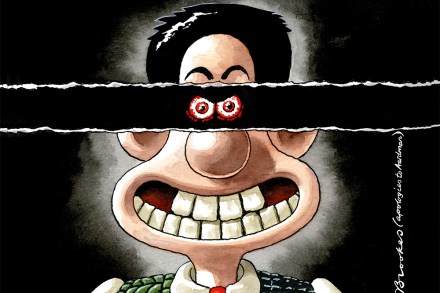
Labour MPs who want Wes Streeting to be their leader have, apparently, one great fear. If their man triggers a contest, they are terrified it will lead to Ed Miliband entering the race to stop the Health Secretary – and coming out top. A Miliband premiership would, they worry, be the death of Labour. I’ve got news for them: we are already governed by Ed Miliband. This is now his administration. And they, and the rest of us, had better get used to it. Keir Starmer is no longer really in charge of this government – if he ever really was. He is Prime Minister in name only. His foreign policy, at this time of war, is Ed Miliband’s. His economic policy, Ed Miliband’s. His Chancellor, his political positioning, his very quest for meaning. All. Ed. Miliband.

Ed Miliband must go

From our UK edition

Economic forecasting was created, J.K. Galbraith said, to make astrology look respectable. It is not difficult to imagine what the great Keynesian economist would have thought of Rachel Reeves’s Spring Statement this week. It was pure -crystal balls. The statement was redundant on delivery – redundancy being one of the few areas of growth in our economy, as the bleak unemployment figures amply attest. The developing conflict in the Middle East, which has unleashed precipitous oil and gas price rises, has rendered the Chancellor’s promises of future growth more unlikely than ever.

Is Keir Starmer prepared for the AI-pocalypse?

From our UK edition

Is there any area of public policy which Keir Starmer’s government has got right? ‘Where very little is working, AI is a bright spot,’ says a former adviser. ‘They’ve started well but they are now in danger of blowing it.’ When Labour came to power they consigned much of the past 14 years of Tory rule to the dustbin. But Starmer poured resources into Rishi Sunak’s AI Security Institute and published an AI Opportunities action plan in January last year, declaring (very un-Starmerishly) that he wanted to ‘mainline AI into the veins’ of the economy. Last week an audit found that 75 per cent of the proposals had already been delivered – a level of success rare in Whitehall.

Britain’s national security must not be sacrificed to net zero

From our UK edition

Those who, like myself, experienced life behind the Iron Curtain understand instinctively that centrally planned economies beholden to an ideology do not bring benefit to the majority of the population on whom they are imposed. A few top-level individuals prosper, but the citizen finds himself and his aspirations crushed by the diktats of central government. The state itself is similarly confined by a set of ideas which are presented as self-evident truths which constrain its policy--making and exclude challenge. That Iron Curtain model describes pretty accurately the UK’s energy policy, driven as it is by the ideological pursuit of net zero and the diktats required to implement it.

Energy is the new political battleground

From our UK edition

With three weeks until the Budget, the main political parties have been setting out their economic thinking. Each faces the same bind: anaemic growth, fiscal constraints and uncomfortable exposure to the bond markets. The upshot is that there is less ‘clear blue water’ on the economy between Labour, the Conservatives and Reform. Even Sir Mel Stride, the shadow chancellor, irritated some colleagues by appearing to suggest he would raise income tax if he were in Rachel Reeves’s shoes at his party’s conference. ‘It’s a good job no one is listening to us,’ jokes a fellow frontbencher. If the economy is less of a dividing line in British politics, what might take its place? Energy is one possibility.

Why I pity the poor eco-zealots

From our UK edition

An email popped into my House of Lords inbox last week from Lt Gen. Richard Nugee with the subject line ‘National Emergency Briefing’. Ooh, I thought. That sounds interesting. Will it be about the pitiful state of our armed forces? The threat of war with Russia? The penetration of Britain’s deep state by the Chinese Communist party? Nothing so sexy, unfortunately. The ‘emergency’ in question is our old friend the climate emergency, with the usual suspects being wheeled out in Westminster Central Hall next month to tell us how little time we have left to avert the looming disaster. This seems a little tin-eared. The past 12 months have witnessed the collapse of the global consensus about climate change.

What is Tony Blair up to?

From our UK edition

15 min listen

Tony Blair is making waves in Westminster today after his institute published a report on net zero that appears to undermine Ed Miliband and Labour’s green agenda. In his foreword – while not directly critical of the UK government – he encouraged governments around the world to reconsider the cost of net zero. Many have compared Blair’s comments to those made by Kemi Badenoch several weeks ago and questioned the timing – just 48 hours before the local elections. What is Blair up to? Should Labour listen to Tony? Also on the podcast, with the local elections tomorrow, we take one final look at the polling. With Labour expecting big losses, how can the party spin the results?

The Miatta Fahnbulleh Edition

From our UK edition

37 min listen

Miatta Fahnbulleh was elected as the Labour MP for Peckham at the 2024 general election.  Born in Liberia, her family fled west Africa as the region descended into civil war, eventually settling in north London when she was just 7 years old. Trained as an economist, having studied at Oxford and the LSE, she went on to work in the civil service and at various think-tanks. After serving as the CEO for the New Economics Foundation, she became a senior economic adviser for Labour working with Ed Miliband during his time as leader of the Labour Party. Ed is now her boss again – at the department for energy.