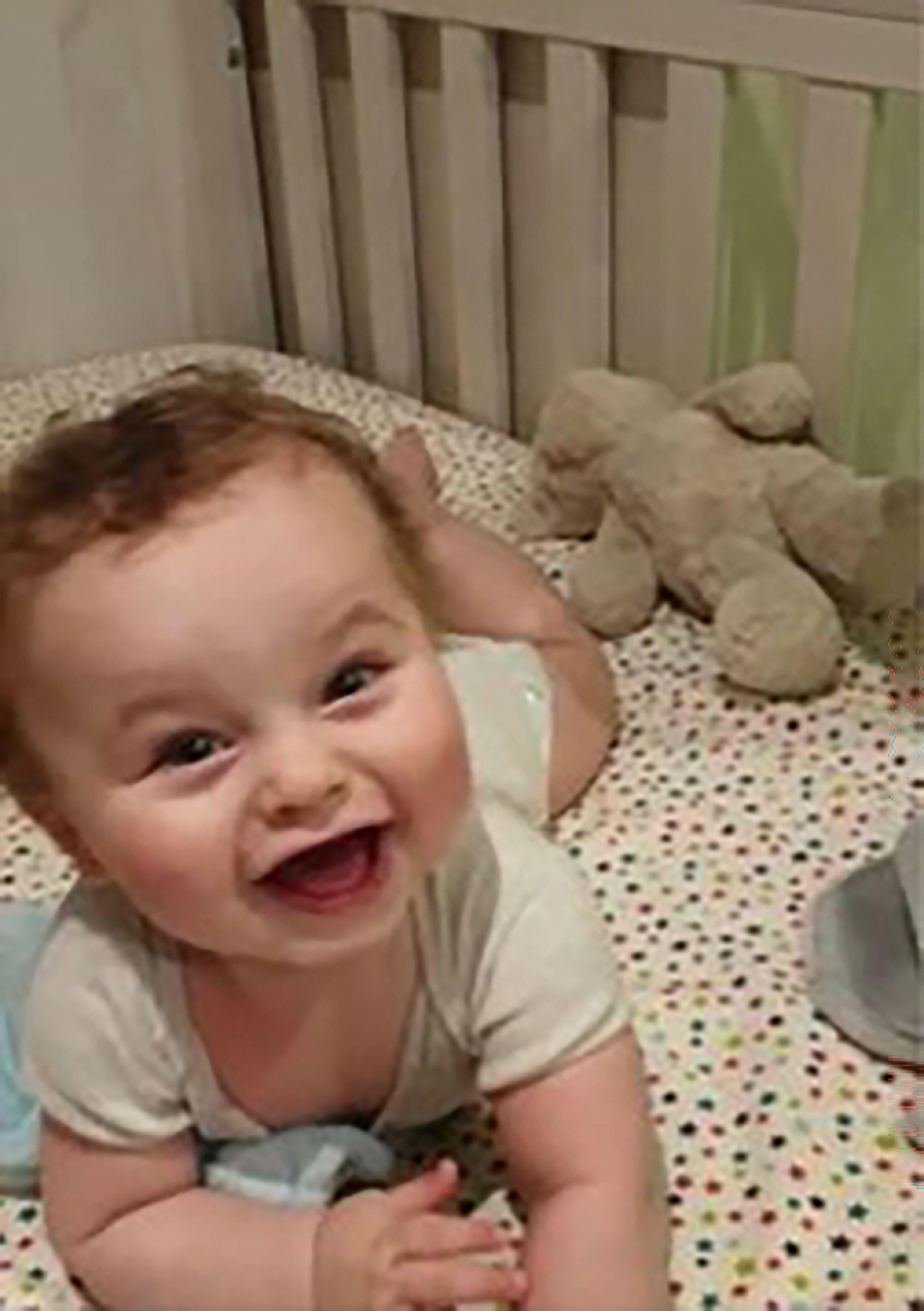
It is now retrospectively acknowledged that great harm was done by the refusal to investigate serious crimes and dangerous mental illness for fear of being branded racist – the grooming gangs, the Southport and Nottingham killings. No similar acknowledgment has been made about the handling of cases involving homosexuals. This week, Jamie Varley was convicted of murder, sexual assault, child cruelty and making and distributing indecent images. His victim was his own adopted baby son, Preston Davey. Varley’s partner, John McGowan-Fazakerley, was convicted of lesser crimes against the boy. The details of Preston’s short life and bestial death are abominable. Preston’s biological grandmother suggested the authorities had been too frightened of being called ‘homophobic’ to challenge Varley when Preston repeatedly had to be treated for injuries. Most media are sidestepping this question. It should be answered and the process by which prospective adopters are approved in the first place should also be investigated. It would be wrong to say that homosexuals are inherently unsuited to adopt, but the risk to a child surely does arise if both adoptive parents are men. The sexual abuse of children by women, though not unknown, is much rarer than by men, because of biology and culture. For the same reasons, many more men than women are sexually predatory and violent. If this opinion is assailed as homophobic, that will only go to show how powerful the taboo against asking the right questions has become. By the way, Varley was, among other things, a ‘safeguarding lead’ at the academy where he taught.
I am nursing a small gash on my forehead after village festivities at the weekend. It is the 650th anniversary of the completion of our parish church (no one knows when it began) and so our annual fête had a slight medieval theme. I was ordered to dress as a knight. A re-enactments expert in the village produced chainmail and helmet. Their weight, which is historically authentic, gave me a new respect for the original combatants. Apparently, it meant their contests lasted for 15 minutes maximum. I could not even don the chainmail unaided and I quickly abandoned the idea of wearing it all afternoon in the June sun. To my shame, our young, fit rector, who is 6ft 7in tall, stepped in and wore it for two hours while barbecuing sausages. I was left with shield and sword, cheap hired tabard and the re-enactment helmet, from whose back depended a heavy curtain of chainmail. Naturally, I was the target of small boys with wooden swords. As I manoeuvred to avoid their blows, the fearsome helm cut into my head. ’Tis but a scratch, as Monty Python’s Black Knight says. The whole occasion was a tremendous success, as was the service the next day graced by a popular bishop (yes, such a phenomenon does exist), the suffragan of Lewes. The age range was six months to 92, and the primary-school children presented a well-stitched banner showing the church with their faces smiling out of it. Only one 21st-century feature clouded our merriment. Towards the end of the afternoon, I noticed something yellow out of the corner of my eye. Over the hedge, I spied two traffic wardens methodically ticketing as many fête-goers’ cars as they could find.
On the BBC on Tuesday, the Social Market Foundation presented, unchallenged, evidence that fake news was flooding social media in the Makerfield constituency to influence the by-election result. One ‘false’ story it cited gave me pause. The alleged fiction was that Ed Miliband is banning tumble-dryers (to save the planet). As far as I can see, this story is essentially true, though the much-loved headline word ‘ban’ might be better replaced by ‘phasing out’. There is now an industry of fake news about fake news.
A long-running television advertisement for Nationwide features Dominic West playing with gusto the one type of human being one is safely allowed to hate – a successful, middle-aged, public-school white male. He is Hugo Platt, the CEO of A.N.Y. Bank, who is arrogantly out-of-touch with the lovable, caring, multiracial customers and staff of Nationwide. The ad’s current boast is that the mutual is paying out £100 to each member (more than four million, including my mother) holding a ‘qualifying account’. That sounds a mutual thing to do, though the sum is small. To its chief executive, Dame Debbie Crosbie, however, Nationwide is handing out £4.67 million this year. That sounds a bit unmutual, and a big sum. Nationwide’s argument is that, to keep Dame Debbie, it must pay money which matches the earnings of bankers like Hugo Platt. If, as is traditional, the moral ethos of a building society is different from that of a big bank, should that not apply to those who run it? At its AGM, Nationwide is using the same ‘Quick Vote’ option which the National Trust management employs to direct members to support whatever it wants without studying the issues or people involved.
As a boy, I had a horror of the dentist. Dentistry hurt a lot, and the evil-smelling gas used to knock one out was genuinely frightening. As a result, I avoided the dentist for most of my adult life. I am blest with strong teeth, so nothing bad happened. Then one broke when I bit a stone concealed in a sandwich on what Andrew Mountbatten-Windsor would call ‘a straightforward shooting weekend’. Friends recommended a dentist called James Dewe-Mathews. They were perfectly right. James has the best possible bedside – or rather, chair-side – manner and no inclination to chisel for more money by over-production. Last week came the news that he is retiring, though a mere 78 years old, passing outside the family the business which began with his father three-quarters of a century ago. I shall miss our annual, almost completely pain-free meetings, James’s unfeigned interest in his patients and his unshowy professional confidence. It is an unmitigatedly good feature of modernity that one’s dentist can be one’s hero.



Comments