Economy

Guess who’s back | 26 July 2010

Oh look, Gordon Brown has continured his return to public life with a sizeable interview in today's Independent.  It's a generous portrait which seems designed to dispel any rumours about the former Prime Minister's wellbeing. Apparently, he "looks healthy and fit … seems quite cheerful." And we're treated to descriptions of his face, "like a map of a man's soul." For those who can read any further, there are accounts of his constituency work and his aspirations to "do more on international development". The world shudders. Despite his claims to the contrary, there are ominous signs that Brown is keen to impact upon our national politics.

Will GDP rise be Osborne’s get out clause?

Alistair Darling has been on Sky News doing a lap of honour for today’s GDP growth figures. “Vindicates everything we did,” he said - his narrative being that the extra debt did indeed boost the economy and produced 1.1 percent growth in this quarter. This chimes with what I wrote in the Daily Telegraph a few weeks ago: that the economy is better, not worse, than the Tories thought. Even if, or should I say when, the ONS say the figure was wrong and needs to be revised downwards it will still mean tax revenue churning in at a far faster rate than thought. This will give Osborne a get-out clause if he wants to go softer on the cuts, or the tax rises (any adjustment would have to be consistent with his 80/20 split between cuts and taxes).

Howard versus Clarke

Michael Howard appeared on today's Daily Politics and laid into Ken Clarke's 'caricature' of a policy to reduce prison places. There is, Howard argues and John Denham supported him, a correlation between increasing the number of those incarcerated and a fall in crime. In other words, prison still works. Howard criticised Clarke's 'rather foolish' denial of that link. Howard echoes the Spectator's editorial line that early release endangers society, and that it costs less in real terms to keep criminals in prison. Howard's off-message critique is the most total I have yet seen, particularly on the statistical case against the government's position.

Osborne keeps it simple

George Osborne has talked of simplifying the tax system for years, and today he launched the OTS, The Office for Tax Simplification. The OTS will be chaired by Michael Jack, s Treasury minister in the Major government, and John Whiting of PWC and Chartered Institute of Taxation. The OTS looks suspiciously like a quango, but some public bodies are necessary and welcome. The tax system is unintelligible, and, needless to say, Gordon Brown complicated it further with morass of stealth taxes, tax credits and new loopholes opened more by chance than design. This has particularly affected small businesses and the OTS will identify salient businesses taxes and recommend their simplification. That can only assist hard-pressed small businesses.

A special relationship in the making?

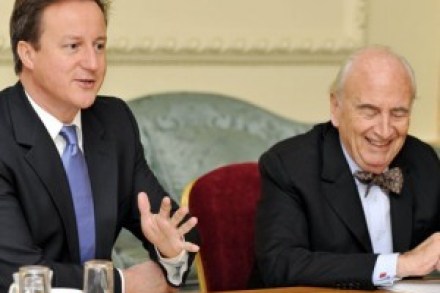
I’ve spent the morning contending with the WSJ’s Heath Robinson-esque subscription service so you don’t have to. Inside the paper, David Cameron explains what the Special Relationship means to him. 1). The Special Relationship is close and robust because British and American values are essentially the same, which explains why our national interests are often aligned: 'The U.S.-U.K. relationship is simple: It's strong because it delivers for both of us. The alliance is not sustained by our historical ties or blind loyalty. This is a partnership of choice that serves our national interests.

Green gold

Most of Tim Yeo’s proselytising on climate change must be resisted. He calls for a dramatic reduction in carbon emissions in the short-term, which would paralyse Britain’s already geriatric economic competitiveness. He also endorses a policy that would push consumer energy prices to punitive levels in the hope that their behaviour is moderated. And he is adamant that David Cameron’s Husky photo-op was the last word in political positioning. But, his central point, one shared with John Redwood and Peter Lilley, is unanswerable: ‘Working towards a low carbon economy is not a “luxury”; it is essential to our future prosperity.

Clueless Chuka

Given that the Labour leadership campaign is so dull, we should thank Chuka Umunna for cheering us up with his comedy economic analysis. Now on the Treasury Select Committee, he has regaled us with an ‘Open letter to George Osborne' where he makes many entertaining points. It’s worth looking at, because it sums up a few errors swirling around the Labour benches.   1)   During our exchange, you insisted your budget was "progressive"… you stood by your decision to apply a 10 percent cut to the housing benefit of those who have been on JSA for more than 12 months. Osborne has to use words like “progressive" to assuage the LibDems, but by their definition he is right.

Making work pay | 16 July 2010

What is the purpose of the welfare state? To protect British people from unemployment, or to protect them from jobs like fruit-picking and working in Pret A Manger? I listened to Farming Today* earlier, in which they interviewed the Eastern Europeans that we import en masse to do jobs that Brits used to do. Having done the job myself in my younger days (I come from a part of the world where the October break is called the 'tattie holidays' so kids can dig potatoes), I can attest that it's bloody hard work for a paltry reward. But it pays no less than the minimum wage. Without immigration, we'd be forced to find a proper solution to this problem: that welfare has priced a lot of British people out of this particular market.

McFadden talks sense

Pat McFadden, the sullen-looking Shadow Business Secretary, has given an important speech to the Fabian Society. He said: ‘Fight the cuts is a tempting slogan in opposition, and there are indeed some that must be fought. But if that is all we are saying the conclusion will be drawn that we are wishing the problem away.' He is the first shadow minister to recognise that Labour’s current approach is counter-productive, and Ed Balls’ philosophy is suicidal. He notes: ‘In fact, that is the position the Tories and the Lib Dems would prefer us to adopt. They want Labour to retreat to its comfort zone and allow them to say that they alone are capable of facing up to Britain's problems.

Are the OBR’s growth forecasts too optimistic?

Much ado about the Office for Budget Responsibility's growth predictions in the Treasury Select Committee earlier, especially as an OBR official admitted that the cuts and tax hikes in the Budget could conceivably tip us into a double-dip recession. So are the OBR's official forecasts too optimistic, as some are now claiming? Only time will tell, but we can get a decent sense of things by comparing them with the independent forecasts that the Treasury collect here. And this is the result: In other words, the OBR growth forecasts stick pretty closely to the average independent forecast, although they are a touch more optimistic. Admittedly, these independent forecasts were collected before the Budget (but after the election), so they may be tweaked in a month or two.

Hard going for the government

A tough morning for the government at the hands of Tyrie, Fallon and rest of the Treasury Select Committee. Sir Alan Budd apologised for his naivety, Robert Chote described the Budget as ‘regressive’ in the main and the banking levy has been criticised on the grounds that is de-stabilising banks’ capital bases, which will affect lending. The government would prefer silence on these issues but the damage was far from total. Budd was an interim figure and the spat that has developed around him is largely political – there is no question that Budd was ‘nobbled’. Robert Chote deserves his reputation but he is not infallible. And Treasury Chief Economic Advisor, Dave Ramsden, put paid to the criticism of the banking levy.

Send for Chote

And so it continues. The FT reports that Sir Alan Budd has denied that George Osborne cooked the OBR’s job loss forecasts. ‘It was genuinely a forecasting correction with no ministerial interference,’ he said, blandly. The correction was the result of the OBR’s use of a narrow definition of public sector workforce than is employed by other statisticians. That is not abnormal: statisticians are a law unto themselves. But, as the saying goes, it doesn’t look good. The OBR’s figures supported the government and the story is beginning to emit of a whiff of mendacity. Once more, George Osborne is in a mess of his own making. His political instincts veer from brilliance to catastrophe with an unpredictable regularity.

Osborne must make the workings of the OBR even more transparent

Forget the hubbub about Gove's schools list, the most damaging story for the government this week could well be on the cover of today's FT.  Alex Barker does a great job of summarising it here. But the central point is that the Office for Budget Responsibility changed its forecasting methods just before the Budget, with the effect of reducing how many public sector jobs would be lost due to the government's measures. This isn't damning on its own: statisticians constantly tweak their forecasting methods. But when you consider that the OBR's new methods incorporated policies which haven't even been announced yet (including one which pre-empts the findings of John Hutton's pensions commission), then it starts to look more dubious.

The briefest of stints

Well, that was quick: after only three months in the role, Alan Budd is to step down as the head of the Office for Budget Responsibility.  A shame, too.  In a quiet sort of way, he had become one of the defining figures in these early days of coalition government – helping to establish the OBR as one of the most significant actors on the political landscape.  It is certainly, now, a more effective body than I previously thought it would be. Although Budd's contract was for three months, there was some idle Westminster speculation that he'd stick around – so the rumour mill is puffing away at his departure today.

About those job losses…

Much ado about the Guardian's scoop this evening: a leaked Treasury document which forecasts that up to 1.3 million jobs could be lost as a result of the spending cuts in the Budget.  Or, to put it in the words of the document itself: "100-120,000 public sector jobs and 120-140,000 private sector jobs assumed to be lost per annum for five years through cuts." You can expect Labour to get stuck into these numbers, and the fact that they were previously hidden from public view, with no uncertain relish.  Ed Balls has already described them as "chilling".  But it's worth making a couple of points, by way of context: i) There's job creation too. The Guardian goes onto report that "The Treasury is assuming that growth in the private sector will create 2.

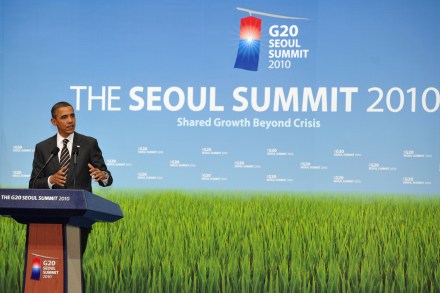
Obama wants ‘global concert’ to delay cuts

G20 summits are usually turgid affairs, but this one has some (limited) potential. Relations between the White House and Britain and the White House and Europe have been frosty of late. Afghanistan, BP, the Falklands, Merkel and Sarkozy’s irritation at Obama’s personal and political aloofness, all of these have been contentious. Diplomatic tension has now developed an economic arm. The broadly centre right governments of Britain, France and Germany are committed to cutting public spending now. Each has introduced an austerity programme, and Cameron has made retrenchment is his international cause. Obama still stands for stimulus.

The true meaning of Osborne’s Budget

To understand the budget properly, read James Forsyth's cover story in The Spectator today. Sure, it was about reducing the deficit - but within it lie several political strategies which explain how George Osborne hopes to win a majority Conservative government. James says that those around Cameron will not entertain this notion - they "have been persuading themselves that coalition government is the best possible result". But Osborne, he says, finds it deeply unsatisfactory and has a twin mission: fix the economy, and win outright next time. "He has been observing recently that Gordon Brown spent 13 years successfully creating Labour voters — mainly through state dependency — and that the Tories need to reverse this process if they are to win.

The road to recovery | 23 June 2010

This is a slow-burning budget. Not because Osborne has concealed, like Gordon Brown did, but because the reverse is true. The budget is, as Osborne says, a third of the size but with three times the amount of information. It has layers: some policies and language are there just to assuage the LibDems. Some are pure Tory. James has a brilliant cover piece in tomorrow’s magazine which spells out the political, rather than economic, forces at work in this budget. Osborne, that great player of three-dimensional chess, sees in this budget plans to restore a Tory majority government. The Red Book itself is, for wonks like myself, a joy to read: straight figures, with nothing concealed.

A credible start

Today’s Emergency Budget announced the most ambitious fiscal consolidation programme in decades.  It sets out a framework returning the government broadly to a state of fiscal solvency by 2014.  To do this, George Osborne announced a deficit reduction programme amounting to just over £100 billion in real terms – entirely in line with our recommendations.  The ratio of spending cuts to tax rises – 74:26 is largely in line with the international best practice model (which we also endorsed) of 80:20.

Why must VAT rise? Because not enough will be cut

There is plenty of very good news in the Budget.  A two year public sector pay freeze, the abolition of the Child Trust Fund and cuts in welfare spending are all longstanding TPA recommendations that will be absolutely key to getting the public finances under control.  As a result of all the measures proposed, annual spending will be £31.9 billion lower than planned by 2014-15.   The Government are also scrapping more organisations.  The Emergency Budget report says (page 31) that "Regional Development Agencies will be abolished through the Public Bodies Bill.