Economy

Yes, Wonga lent at shocking rates – but it was customers who lied

‘Payday Lady is not trading at this time,’ says her website, sounding a little like La Dame aux camélias. Indeed (since I could not find her anywhere) the message may indicate that Payday Lady is not just temporarily indisposed, but has given up the game altogether. I’ll be glad to hear from her if she hasn’t. Meanwhile I can report that her rival Cash Lady (who promises she’ll be ‘here to help you’ within three minutes) was still out there — despite having her television ads banned last year — and so were Purple Payday, Pounds to Pocket, Peachy Loans, PayDay Pig and CashCowNow, all at colossal ‘representative APRs’ that look relatively cheap compared with Wonga’s notorious 5,853 per cent.

Danny Alexander indicates that the Lib Dems wants £5 billion in tax rises

In a sign of his enhanced status in the party, Danny Alexander has been one of the main attractions on the conference fringe this year. This evening, it was standing room only when he was interviewed by The Independent’s Steve Richards. Alexander was on feisty form. He declared that ‘both the other parties are pretty useless’ and that the Liberal Democrats had ‘done a bloody good job for this country’. Marking his own homework, he gave the party 10 out of 10 for being credible and effective. But he said that the Lib Dems had to shout louder to get their share of the credit for the economic recovery.

People trust the Tories with their money – that’s why they can promise unfunded tax cuts

Does it matter that the Tories can't spell out how they'd fund the tax cuts they announced at their party conference this week? Labour has launched a clock which monitors how long it's been since David Cameron promised these cuts without any detail on how they'd pay for them. But last night on BBC This Week, Tom Watson summed up why the Tories feel they can make this attack: 'I don't think we can be more austere than the Tories now: I thought those freezes were cruel last week and will have very bad social consequences and the Labour party doesn't believe in that, and so we've got to make a different play.

Cameron’s speech show us why he is still the Tories’ greatest single asset

David Cameron has yet again delivered a belter of a party conference speech, peppered with announcements. His performance is a reminder of why, even now, he remains the Tory Party’s greatest single asset. His speech was a powerful invocation of the strengths of Conservatism, perhaps the clearest he has given from a conference stage. It was passionate, eloquent and, overall, the speech of a Prime Minister. What a contrast with the Ed Miliband's attempt last week. There were promises galore. The advantage of holding a party conference before the Liberal Democrats is that you can scoop their policies – in his case, announcing another increase to the tax-free income tax threshold from £10,500 to £12,500.

Europe’s leaders worship Mario Draghi. They should listen to him instead

European Central Bank President Mario Draghi secured a place in history by his demonstration, on 26 July 2012, of the power of words in a financial crisis. Not long in office, he had already shown willingness to act firmly, averting a liquidity crunch by providing three-year lending facilities for European banks. That day, he told a conference in London: ‘Within our mandate, the ECB is ready to do whatever it takes to preserve the euro. And believe me, it will be enough.’ While the rest of the speech was an opaque metaphor about the euro as a bumblebee — ‘a mystery of nature because it shouldn’t fly but instead it does’ — ‘whatever it takes’ was clear enough to steady the bond market and ease borrowing costs of eurozone governments.

If you want a lesson in how not to run an economy, take the Eurostar

For the last five years, politicians of all shades have been banging on about how we should adopt this or that aspect of German economic policy. George Osborne argued in 2011: ‘We want to learn the lessons of the successful Mittelstand model, which has operated in Germany for many decades.’ Only a few weeks ago, Vince Cable argued: ‘Britain has not been as good as competitors like Germany in turning ideas into wealth creation.’ The German economy seems to be widely admired, despite lagging behind Britain’s for nearly a generation. It is true that Germany had a better post-crash period than the UK, but its financial sector was smaller and many of its problems were hidden from view.

Up the workers!

Mr S was interested to read that Mark Carney has sounded the alarm on low wage growth. In light of yesterday’s announcements, the Times’s business commentator Andrew Clark calls for bosses to ‘display a modicum of largesse’ to sustain the economic recovery. Mr S hears on the grapevine that business leaders are planning to open their pockets at the end of this year, if only to stop Ed Miliband, who is regarded with a certain amount of distrust. The thinking is that a wage rise will undermine Labour’s (increasingly successful) rhetoric on the cost of living. Mr S wonders: will a prominent Tory use the party conference, the last before the election, to demand that businesses share the proceeds of the recovery? What have they to lose by doing so?

Team Boris vs Team Osborne — the first skirmish

Today was set to be a boring day in Westminster. Sajid Javid, a courtier to George Osborne, was billed to give (yet another) speech about how the economy is going ‘gangbusters’ and why evil Labour would trash the recovery. Dutiful hacks were pottering off to the Centre for Policy Studies, the venue for Javid’s speech, when news broke of Boris Johnson’s ‘off the cuff’ announcement that he might stand in 2015 after all. This political hand grenade blew the government’s media plan completely apart. Javid was spotted calling CCHQ for a line to take on the Boris comeback. He duly took to the podium and prepared for questions that would have nothing to with George Osborne’s ‘long-term economic plan’.

David Cameron’s voteless recovery

The economy has recovered, and is steadily growing. That much is now clear. It has long been assumed that this will help the Conservative Party’s electoral fortunes. The logic goes that, having steered the country through difficult economic times, a grateful public will come out in their droves to thank them for it. But politics is never that simple, and the public are rarely so willing to give credit to politicians. While it may seem perverse to suggest that economic growth is harming the Tories’ electoral chances, continuing good news about the economy is making it less of an electoral issue. Voters are beginning to ask: ‘what next?’ David Cameron and the Conservatives are experiencing a voteless recovery.

Ed Miliband’s union bosses would change Britain for the worse

Trade unions have an important role in any decent society, but their stranglehold on the Labour Party is something we must fight against. I will never forget walking the streets of Poland back in 1981, when martial law was in force, and there were armed soldiers on almost every street corner. There it was a trade union, Solidarity, which brought authoritarian Communism to its knees. In the UK Margaret Thatcher recognised the importance of trade unions in society. Indeed one of her first roles in politics was as chairman of Dartford Conservative Trade Unionists. But the battle in British politics today is nothing to do with the work done by local union officials or workers struggling for political freedom.

These latest sanctions against Putin might just work

‘Sanctions,’ said Kofi Annan, ‘are a necessary middle ground between war and words.’ Neither the EU nor the US will deploy troops or missiles to defend Ukraine against Russian-backed separatists, while Vladimir Putin basks in hostile Western words and turns them to domestic advantage. That leaves sanctions as the only means of seeking to influence him. But do they work? Evidence is not persuasive: in 200 cases studied by academics in Washington, from the League of Nations action against Italy’s aggression in Abyssinia in the mid-1930s to Russia’s assault on Georgia in 2008, sanctions were judged successful in one third of cases; in many of those, success was ‘partial’.

The state should send many more poor children to private schools

Better capital makes us richer. That's uncontroversial when it comes to fixed capital like machine tools and computers, but it's also true of human capital. Better educated workers create more productive jobs, increasing the total amount of wealth in an economy. In a new Adam Smith Institute report released today, Incentive to Invest: How education affects economic growth, we found a very significant relationship between improvements in education and growth. In our model, a 10 per cent increase in TIMSS Advanced test scores generates a long-term 0.85 per cent increase in annual economic growth. We argue that getting more children into independent schools through vouchers may be the easiest way of improving outcomes, and thus growth.

George Osborne’s taxing dilemma

Some of what David Smith, author of the essential Economic Outlook column in the Sunday Times, says today will be salve to George Osborne: ‘…the government intended to spend £722bn in the 2013-14 fiscal year. In fact, it spent £714bn. Spending has been lower each year than set out in 2010. Current spending was originally intended to be £679bn in 2013-14. In fact, it was £668bn. Unusually for any government, spending has come in comfortably within budget. There has been no slippage.’ Other parts will not: ‘Where there has been slippage is in tax receipts, which have been weaker than expected.

Image is the least of Ed’s worries

What were Labour thinking? Against the background of Ukraine and Gaza, the only domestic story likely to cut through is an economic one. The news today is dominated by David Cameron, George Osborne and Nick Clegg wallowing in the success of the British economy. So what did Ed Miliband do? He made a speech about presentation for the Westminster village, of course. The SAS is on standby to land in Ukraine, Gaza crumbles and the IMF gives the UK a gold star for economic performance; but, look over there, Ed's got something to say about the political-media nexus! Miliband's war on photo-ops is utterly laughable given that it came just days after he flew half-way round the world to pose for a picture with President Obama at a pointless meeting.

The economy is above its pre-crisis level – but when will voters feel the benefit?

The economy is now, at last, larger than its pre-recession peak. The coalition parties are keen to claim vindication this morning. Nick Clegg has declared that 'The rescue has worked' and used today's numbers to justify the Liberal Democrat's decision to go into coalition. While George Osborne is celebrating a 'major milestone in our long term economic plan'. But he's also keen to warn that 'there is still a long way to go' and to emphasise that 'the mistakes of the past' must not be repeated. In other words, don't let Labour back in. [datawrapper chart="http://static.spectator.co.uk/okYiQ/index.html"] Political symbolism aside, GDP is still lower in per capita terms today than it was before the recession.

Ed Miliband stakes all on his ‘big choice’

Labour will launch its summer campaign later today. The centre-piece is Ed Miliband’s speech. He will present a ‘big choice’ to the British public, arguing that they cannot afford 5 more years of Conservative rule. Miliband’s argument is simple: the economy is broken, only we can fix it; the NHS is threatened, only we can save it; the Tories represent the few, only we care for the many. You will have heard these mantras many times before; but, this time, the presentation is different. The speech bears the mark of David Axelrod, who is busy ‘reframing’ Ed Miliband as an honest yeoman of the shires rather than a metropolitan oddball. Rafael Behr of the Guardian has an extensive account of this ‘reframing’ effort.

Forecasting is a mug’s game – but I was right about the economic revival

‘Perhaps I should shift my prediction to 23 July 2014,’ I wrote in April 2012. ‘That’s the opening of the Commonwealth Games in Glasgow, and we must all start thinking positively about it.’ I was talking about the moment when the nation would at last shake off its economic gloom, which I had previously pinned to the opening of the London Olympics. But that spring we fell back into negative GDP territory (avoiding a technical two-quarter ‘double dip’ only when the first-quarter result was revised upwards to zero) and I felt obliged to ‘elasticate my timetable’. Since the beginning of last year we have had 18 months of robust growth — but pundits less cheerful than me have continued to report a persistent absence of feelgood.

Why we’ll mostly be supporting Germany on Sunday

If you’re walking through any built-up area in England between 8 and 10pm this Sunday and you hear a cheer you can be pretty sure it means one thing – Germany have scored yet again. One of the great myths we were fed as children in the 1980s and ‘90s was that the English don’t like the Germans, and in particular the living representatives of all things Teutonic on earth, the German national football team. We love ‘em, and I imagine most English people will be supporting Germany on Sunday. I remember being stuck in the countryside in 2006 and watching the Argentina-Germany quarter-final in a pub; the place went wild when Germany equalised and then won.

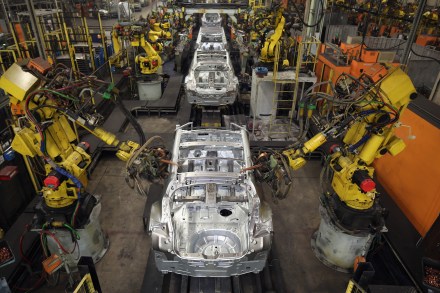
Britain must realise George Osborne’s vision of a northern powerhouse

If you walk around our great northern cities, you’ll see stunning examples of civic pride. Albert Square in Manchester and Leeds Town Hall reflect resurgent local confidence. Old narratives of northern decline are out of date. When Guardian writer Andy Beckett launched a hatchet job on the north-east a few weeks ago, claiming that the region was the ‘next Detroit’, the response was visceral and immediate. Beckett managed to write an entire article about the north-east without mentioning Nissan – the most productive car plant in Europe. The North is home to new tech hubs, advanced manufacturing, superb universities and world-leading culture, from sport to music to art. The north-east was the fastest growing economic region in the Lloyds index last month.