Economy

Is Brexit to blame for Britain’s economic doom loop?

From our UK edition

22 min listen

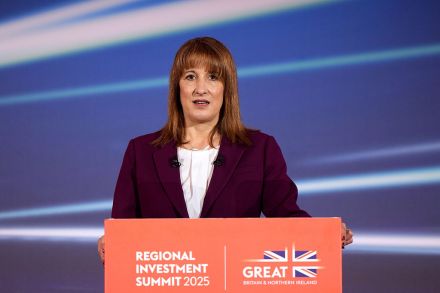
Rachel Reeves is preparing for her first major Budget – but is Brexit really to blame for Britain’s black hole? Host Michael Simmons speaks to independent economist Julian Jessop about the OBR’s productivity downgrade, Labour’s tax plans, and whether Reeves is right to point the finger at Brexit.

Farage: trust me with the economy

From our UK edition

15 min listen

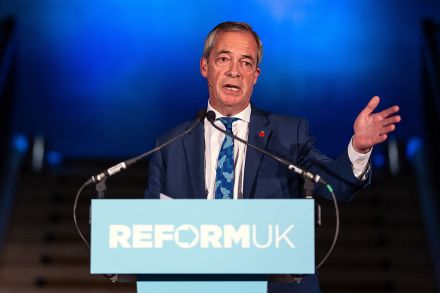
With Reform leading in the polls, Nigel Farage is determined to ensure that nothing can impede its growth. This morning he sought to bolster his credibility on an area that the Tories think could be his Achilles heel: the economy. Reform’s £90 billion programme of tax cuts promised at the last election has been constantly used as a stick with which to beat its leader. So today, Farage took to the stage in the City, to – once again – formally bury ‘Our Contract with You’ – the platform on which he was elected in July last year. This morning’s speech was all about Reform claiming the mantle of fiscal conservatism and claiming that the party can be trusted with the nation’s savings. Who will win the battle to be the party of fiscal credibility?

Who will ‘take back control’ of the economy?

From our UK edition

14 min listen

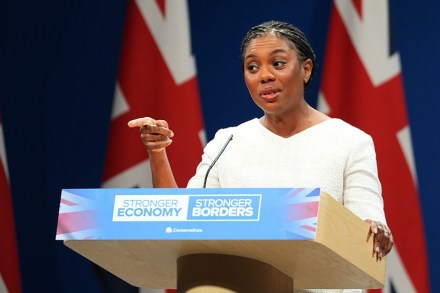
Kemi Badenoch continues to look more confident at PMQs – although there are always going to be some easy goals when you lead on the economy. Today she pressed the Prime Minister on Labour’s manifesto pledge not to raise income tax, VAT or national insurance – which he dodged – as well as repeating her offer to work with Labour towards a cross-party solution to the welfare problem. What do we know about the Budget at the end of next month? And are we any closer to understanding what a ‘working person’ actually is?  Lucy Dunn speaks to Tim Shipman and Michael Simmons. Produced by Oscar Edmondson.

Reeves’s fiscal play-off

From our UK edition

In a week where political attention was on espionage and anti-Semitism, the cri de coeur from one Treasury official was notable. Recalling how Budgets were made during the years of Gordon Brown, before the 2010 coalition created the Office for Budget Responsibility (OBR), the number-cruncher complained: ‘All they had to do was fiddle their own figures. That was a dream compared with this.’ Earlier this month, Rachel Reeves received the OBR’s first estimate of the state of the public finances, showing the depth of the ‘black hole’. She will shortly get another OBR report on how falling productivity is damaging growth. For every 0.

The AI crash is coming

From our UK edition

Who knows what Rachel Reeves reads in bed. Perhaps she dips into her own debut book, The Women Who Made Modern Economics (2023), and dreams of those carefree pre-government days when serious people, Mark Carney for one, thought she might make a decent Chancellor. But if she’s also burning midnight oil over drafts of her Autumn Statement, I hope her boxes are packed with granular data on the state of the UK job market. September normally sees a recruitment surge, but not this year. A summary of recent stats in IFA Magazine shows vacancies down by 119,000 from a year ago and entry-level graduate jobs down by as much as a third, as diminished hiring focuses on ‘skills-based’ selection rather than useless degrees.

Letters: Why shouldn’t we eat swan?

From our UK edition

Zero chance Sir: In Tim Shipman’s wide-ranging article on Kemi Badenoch (‘I have a lot of self-belief’, 4 October), she claims that net zero has become just a slogan and that we can’t tackle climate change alone. In that she is right, but she fails to recognise that unless we can be seen to be world leaders in reducing emissions, then we will never be in a place to lecture other countries – many of whom just want what we have already had. By being the ‘goody-two-shoes’ in the fight against climate change, we will have the very best chance of bringing the rest of the world with us, without exposing ourselves to neo-colonialist aspersions.

Trump’s new pharma tariffs will punish Americans

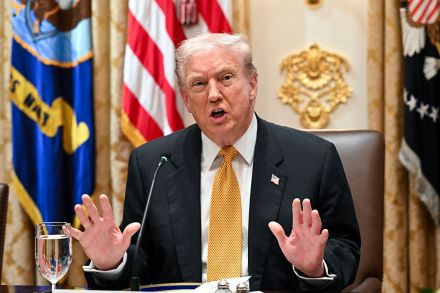
Donald Trump has punished European pharmaceutical companies by imposing 100 percent tariffs on their branded products unless they are prepared to set up a manufacturing plants in the US. That is one way of putting it, but why is the issue of tariffs so often seen from the point of view of the producers and so rarely seen from the position of the consumers? Besides punishing drugs companies, the President has also whacked the American public – or at least that section of the population which relies on patented medicines made outside the US. The cost of treatment for many of these patients will soar as a result. Does Trump think that people will somehow fail to realize this?

The Pret plunge isn’t quite what it seems

From our UK edition

Gold goes on up: having risen by an unprecedented 40 per cent in a year to pass $3,600 (or £2,675) per ounce by the beginning of this week, even its most ardent devotees are wondering how long the surge can last. Much of the rise clearly represents a stampede towards the most traditional of safe havens, in anticipation of market storms ahead as well as fears over inflation and Donald Trump’s threat to the independence of the US Federal Reserve. But it also has to do with a secular shift in the economic world: de-dollarisation, as favoured by the busload of US-hating heads of states who partied with Xi Jinping and Vladimir Putin in Beijing a couple of weeks ago.

Letters: I’ve earned my final salary pension

From our UK edition

Waning interest Sir: Michael Simmons correctly points out that the Treasury’s large-scale issuance of inflation-linked debt is adding heavily to the government’s interest bill at a time of relatively high inflation (‘Borrowed time’, 30 August). What he may not know is how complacent the Treasury has been about this matter. On the day Vladimir Putin invaded Ukraine in February 2022, I was interviewed for the role of chairman of the Debt Management Office. I suggested that a post-Covid inflation surge had started and that additionally oil prices might increase significantly because of the invasion leading to a need for higher interest rates.

Is Angela Rayner pushing up house prices?

From our UK edition

By George There is a popular movement to fly St George’s flags from lampposts. The St George Cross was used as an emblem of Henry II of England and Philip II of France during the Third Crusade in 1189. From 1218 it was used as the flag of Genoa, and in 1348 became a flag used by the English royal family. Some others using it today: — Georgia: national flag incorporates a large St George’s Cross with a smaller one in each quadrant; Sardinia: St George’s cross with a Moor’s head in each quadrant; Barcelona: St George’s crosses in two quadrants, with stripes in the other; naval flags of Bahamas, Jamaica and St Kitts and Nevis; autonomous Caucasian regions of Abkhazia and Adjara; Swedish freemasons.

America’s obsession with British decline

From our UK edition

As Sigmund Freud pointed out way back in 1905, everyone feels a bit schizo about Mum. On the one hand, she carried you in the womb, she probably nursed you at the nipple. She made the greatest of sacrifices so that you exist. Heck, maybe you really love her cooking. On the other hand, you have to escape her. The Italians have a brilliantly pejorative word for the man-child who stays in the maternal home far too late in life: mammone. No one wants to be that guy. And to avoid it, sometimes you have to scorn your mother, to break the psychological apron strings. So it is with American attitudes to the Mother Country. The USA had many midwives, but the mother of America was unquestionably Britain/England.

My plan for a wealth tax – with a difference

From our UK edition

Reading Careless People, an exposé of life within Facebook written by a Kiwi, it occurred to me that one potential advantage that the UK, Australia, Canada and New Zealand have over the US is we do not unthinkingly idolise the very rich. Americans sometimes find this confusing: it always irked transplanted American bankers in London that local employees were eager to make a few million quid, but lost interest beyond a certain threshold. Once they had a rectory in the Cotswolds, an Aga, two labradors and a Range Rover it was game over, you win. This is because the US is more of a money/power economy, whereas the Commonwealth countries are to a greater extent prestige economies. We shouldn’t bemoan this, but turn it to our advantage instead. Here’s how. It’s a wealth tax.

Was the car finance judgment fair?

From our UK edition

I must modestly doubt that the Supreme Court justices took account of my 12 July column in their ruling on the issue of hidden car finance commissions. But the effect, limiting compensation claims to the more egregious cases of overcharging, is to do exactly what I hoped: namely to head off ‘a tsunami of claims that could cripple lenders and provoke a mini banking crisis’. Chancellor Rachel Reeves evidently hoped so too; given that up to 90 per cent of new UK car sales are financed by loans offered through car dealerships, a collapse of that market would have put another ding in an already battered economy.

Britain is hooked on car finance

From our UK edition

It’s unnerving to think how close Britain came to financial disaster last Friday, ahead of a Supreme Court ruling on – of all things – car financing. In October, the Court of Appeal found that motor finance firms could be liable for hidden commission payments to car dealers. If the Supreme Court had agreed, the biggest lenders, including Lloyds Banking Group, Santander, Barclays and Close Brothers, would have been on the hook for some £44 billion, with Lloyds already putting aside £1.15 billion for compensation payments and Close Brothers selling off its asset management arm this year.

Is Len McCluskey a Manchurian candidate for the Tory party?

From our UK edition

At Stansted on Monday, a currency kiosk offered me €270 for £300. ‘Wrong way round,’ I said, having swiftly figured €300 for £270 would represent an exchange rate of 1.11, close enough to the current market level of 1.14. ‘Nah, mate, airport rate, innit?’ This week’s first lesson is never buy euros at the airport; but the second lesson is that wherever you buy them – especially if you have, say, a Mediterranean superyacht charter in prospect – you’re in for a painfully expensive summer. Back in March you could have had €1.20 for your pound. Since then sentiment towards sterling has been soured by expectations of bad economic news made worse by whatever Rachel Reeves does next, necessitating successive interest rate cuts.

A new water regime must still reward private investors

From our UK edition

The weekend’s torrential Yorkshire rain amid a hosepipe ban offered a handy metaphor for the chaos that has befallen the privatised UK water industry. Sir Jon Cunliffe’s Independent Water Commission report – aiming for a ‘fundamental reset’ to restore public confidence, clean our waterways and ensure future supply – is welcome for the clarity of its central conclusion: that unfit-for-purpose Ofwat and a jumble of other regulators should be replaced by a single body with more teeth and comprehensive oversight of the sector. So far, so good. Cunliffe – a veteran of the Treasury, the Bank of England and Brussels – can also be applauded for his bureaucratic cunning in tabling no fewer than 88 recommendations, in the hope that perhaps eight of them might actually be adopted.

What’s the score on ‘score’?

From our UK edition

The courtship rituals of the Treasury and the Office for Budget Responsibility last ten weeks. The consummation is a fiscal event, such as the Budget coming in the autumn, if we survive. Eligible young ladies used to have dance cards on which to enter the names of their suitors. The Treasury has a scorecard on which its proposed measures are drawn up for the OBR to score. The analogy is with the cricket field rather than the ballroom. The OBR score indicates its forecast for spending, receipts and public debt. It also takes into account knock-on effects of a policy change. This is called dynamic scoring. I had to ask Veronica about this and, since it’s years since she split up with her unsatisfactory City trader, she might have got it wrong.

Don’t bet on the Trump economy

The Trump White House took a victory lap on Monday, declaring in its newsletter that the American economy is back – back bigger and better than ever. Core inflation is down. Industrial production is up. Claims for unemployment dropped. Tariff revenue rose. The newsletter even cites the Wall Street Journal—otherwise in bad odor in the Trump White House – for decreeing that the American economy is “regaining its swagger.” Is it time to splurge on a fancy vacation? As it happens, I’m currently visiting Vermont where the number of tourists is distinctly lower than in previous years.

Economy

Broke Britain: how the Bank of England wrecked the economy

From our UK edition

In February 2020, a few weeks before Britain was thrown into lockdown, Sajid Javid resigned as chancellor of the exchequer over a bust-up with the prime minister’s chief adviser, Dominic Cummings. The fight was thought to be over Cummings’s attempts to dictate who could and could not work in No. 11. In fact, it was just one skirmish in a long-running and bitter power struggle between the two men. Two months before his resignation, Javid had claimed victory in a different battle against Cummings – one over who would occupy the governor’s office at the Bank of England. Cummings wanted Andy Haldane, then the Bank’s chief economist, who he believed was intellectually curious, allergic to groupthink and might give the Bank the shake-up it needed.

Mel Stride: ‘what I would do differently’

From our UK edition

12 min listen

Last night, Rachel Reeves was the headline act at the Mansion House dinner. In her speech, she made the case that ‘Britain is open for business’ and that we must ‘stay competitive in the global economy’. Critics would say it is hard to claim to be open for business while having also overseen a £25 billion national insurance tax raid that is now known to be costing thousands of jobs. She began by stressing that, despite what recent reporting might suggest, she is ‘okay’ – the economic indicators, however, suggest that the economy is far from okay. Just this morning, the Office for National Statistics (ONS) reported that inflation hit 3.6 per cent in the year to June – well above the 2 per cent target.