Economy

Unmade in Britain: we’re becoming a zero-industrial society

From our UK edition

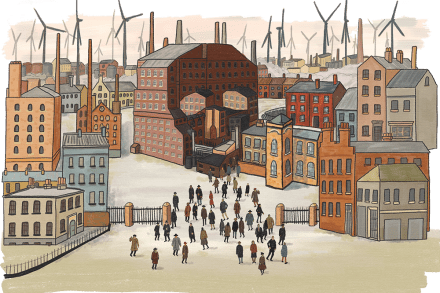
The French sociologist Alain Touraine coined the term ‘post-industrial society’ in 1969. By the 1980s it had become shorthand for the kind of services-based, individualistic economies most major developed nations had created. Today, the UK is moving its economy beyond that. We are creating what might be called a ‘zero-industrial society’. Climate change targets, soaring energy prices and rising taxes on employment are killing off Britain’s small and vibrant industrial base. Last week, Ineos closed its ethanol plant in Grangemouth, Scotland, with its chairman Sir Jim Ratcliffe warning of ‘the extinction of our major industries’. The previous month, Airbus announced it was cutting 500 jobs.

The growing wealth gap between Britain and the US

From our UK edition

New year predictions are always rash, but it feels as though one aspect of the story of 2025 can already be written. The gap between the economic fortunes of the US and Europe will continue to widen – and Britain will be trapped very much on the European side of the divide. In three weeks’ time the US will have a new leader, one who will unashamedly put the interests of US business first. Donald Trump’s threat of punitive tariffs may or may not be realised (as in his first term, it could prove to be a negotiating tool to press for the removal of restrictions on US exports and an end to currency manipulation by China). But several things are certain. A Trump-led US will not be adopting a growth-destroying social democratic model.

Portrait of the week: Reform’s rising membership, peerages and an 11lb puffball

From our UK edition

Home Nigel Farage, the leader of Reform UK, said that the party now had more members than the Conservatives. On Christmas Day, 451 migrants crossed the Channel; another 1,000 arrived in the next three days but three died off Sangatte. Lord Mandelson, having failed to be elected Chancellor of Oxford University, was appointed ambassador to the United States. Sue Gray, the Prime Minister’s former chief of staff, was made a peer with 29 other Labour nominations; among the six Conservative nominations were Nigel Biggar, a retired Oxford professor who has identified some good aspects of the British Empire, and Toby Young, founder of the Free Speech Union and an associate editor of The Spectator.

Can Kamala Harris answer a single question?

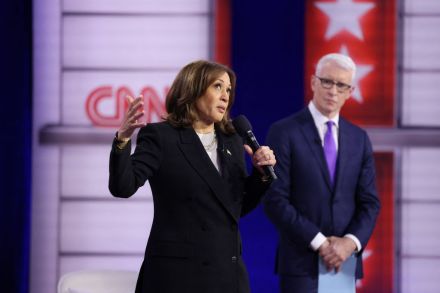
It’s official. Donald Trump is “like Hitler” and Kamala Harris — even though she does “pray everyday, sometimes twice a day,” can’t seem to answer questions. Her "joyful" campaign took a confusing turn in her CNN town hall in Pennsylvania Wednesday night. She opened with an attack on Donald Trump, in answer to Anderson Cooper’s question about John Kelly’s claims. Kamala says Donald Trump is “increasingly unstable,” “unfit,” “fascist to the core” and that “he himself has said he would terminate the constitution of the United States.” It wasn’t until much later that “joy” and “optimism” were mentioned. The audience at the Delaware County town hall consisted of undecided voters.

kamala

Why Kamala Harris will lose

When you look back on the 2024 presidential election and try to understand why it was that Kamala Harris lost, there are a few things to remember. The first is that the two most important issues for American voters were the border and the cost of living. By “the border” I do not just mean the incomplete physical barrier along our southern frontier. That structure is merely the objective correlative of a policy that has its roots in such lofty ideas as sovereignty, the meaning of citizenship and national identity. After her coronation as the Democratic candidate in late July, Harris began to squirm and prevaricate about her appointment by Joe Biden as the “border czar.” But we have the phrase in black and white in the record of the appointment.

Harris

Softballs for Kamala at the National Association of Black Journalists

Vice President Kamala Harris met with the National Association of Black Journalists for an interview this afternoon. Instead of going back-to-back with Donald Trump for his explosive interview with the NABJ in July — she spoke to a historically black sorority instead — Kamala rescheduled for September. And bless Politifact’s heart, they partnered with the NABJ, per a tweet before the interview, to fact-check her. These ruthless and cut-throat journalists would not let Kamala get by without a real grilling. Harris avoided many pointed questions. The journalists — who included Politico’s Eugene Daniels, a big Harris fan — seemed to think Kamala’s policies weren’t radical enough.

kamala

My time on Hinge

From our UK edition

Back to work, back to school, back to politics: the French call it la rentrée and my own summer idyll in their country must end soon too. Back to the miserabilism of Starmerland – where all news, especially good news, must be seen as bad. What good news is that? I mean that shop prices fell this month by 0.3 per cent, after heavy discounting of non-food goods, for the first time since 2021; overall UK inflation having fallen close to the Bank of England’s 2 per cent target. Which makes autumn interest-rate cuts all the more likely, improving the outlook for mortgage borrowers and increasing the chance that the last two quarters’ strong growth will be sustained. In short, the Tories left a recovering economy for Labour to derail.

Is this Rachel Reeves’s idea of a programme for growth?

From our UK edition

It is certainly true that the Labour party has been more than a little devious over the tax rises that are to come. After an election campaign in which it insisted it had no plans – and no need – to increase taxes beyond a few measures such as extending VAT on school fees, mysterious holes started appearing in the public finances as soon as the party achieved office. So acute, apparently, is the lack of funds that Sir Keir Starmer felt the need to warn us this week that October’s Budget will be ‘painful’. It is an old trick, which David Cameron and George Osborne also tried to pull off: making out that the public finances handed over to a new government are in a much worse condition than had previously been believed.

The myth of Britain’s fleeing non-doms

From our UK edition

According to popular imagination, the skies over Britain have been full these past few months of fleets of private jets carrying their non-dom owners to fiscally safer climes. According to your point of view, this has either rid the country of parasites or denied us investment and trickle-down wealth. Two glossy reports pumped out by financial companies in the past month seemed to promote the idea and were immediately leapt upon by those who oppose the abolition of non-dom status. First, there was the UBS Global Wealth Report 2024, which predicted that the number of dollar millionaires living in Britain will plunge by 17 per cent between 2023 and 2028.

Trump and Vance tour swing states to dim DNC limelight

While the DNC is in full swing in Chicago, Donald Trump and J.D. Vance are spending the week traveling to battleground states as part of their campaign’s way of counterprogramming. Trump’s schedule is packed this week, with more events than he’s done in several weeks. Today, Trump made an appearance in Howell, Michigan, to “deliver a strong message on law and order, making it clear that crime, violence and hate of any form will have zero place in our country when he is back in the White House,” according to Trump campaign spokesperson Karoline Leavitt. Trump came under fire from Democrats for choosing Howell, part of Livingston County, which was rocked by white supremacist demonstrations last month with some chanting “Heil Hitler” and has links with the KKK.

dnc trump vance

The one bright side of the looming debt crisis

By almost every historical indicator, the US is clearly approaching a debt crisis. The federal government’s aggregate liabilities now exceed its gross domestic product. The annual interest required to service federal obligations is greater than what Congress spends each year on defense. And projected annual deficits for the next decade are well ahead of estimated revenues by more than $2 trillion. Many state legislatures are deeply underwater as well, despite receiving generous Covid related bailouts from President Biden’s 2021 American Rescue Plan Act. California’s temporary $100 billion surplus in 2022, for example, has morphed into a projected deficit of $68 billion over the next two years.

dollar debt

Has GDP growth come at the wrong time for Labour? 

From our UK edition

11 min listen

The broader story this morning paints a positive picture for the UK economy. While growth in June took a pause, growth in Q2 for this year is estimated to be 0.6 per cent, roughly in line with what markets were predicting, as forecasts for UK growth have been repeatedly revised upwards since the start of the year. Growth was 0.8 per cent in the three months to May, indicating the positive upward trend only paused at the start of the summer. This sounds like great news, but has it come at the right time for Labour?  Today we have also had A Level results and top marks have risen despite a return to pre-pandemic levels. What do the numbers say?  James Heale speaks to Farser Nelson and Kate Andrews.  Produced by Oscar Edmondson.
The myth of a vibes election

I’ve seen it repeated numerous times, most recently by our friends over at the Free Press: 2024 is a “vibes election.” The definition of this is clumsily characterized, but essentially it means (as the FP says) that the personalities matter more than the policies. Who would you like to have a beer with, not who would you prefer to handle the very urgent need to pass Social Security Disability Insurance reform. This contention, made by many intelligent people, is absolute shite. The 2024 election has been one of the most stable elections of the modern era in terms of voter priorities, with the top three issues — the economy, immigration and security — locked in for more than a year.

vibes

Give us a pubs tsar – but spare us Tim Martin

From our UK edition

More than a third of UK universities are in financial doo-doo: staff cuts, cancelled courses, slashed research budgets and possible bankruptcy beckon. Behind this is the fact that domestic students paying £9,250 in fees (way behind inflation since that figure was last raised in 2017) cost £11,750 to teach, representing a collective annual £5 billion loss hitherto made up by international students paying £20,000 each. But the last government’s ban on foreign students bringing dependants with them has provoked dramatic falls in non-EU recruitment: bizarrely, the straw that’s breaking some universities’ backs is a 49 per cent decline in Nigerian students applying for one-year Master’s courses.

Rachel Reeves has proved that strikes pay

From our UK edition

Keir Starmer and Rachel Reeves were adamant that economic growth would be their first priority in government. It is hard to square that with the decisions the Chancellor has announced this week. The Chancellor claims to have discovered a £21.9 billion ‘black hole’ in the nation’s finances, yet she has created the largest part of that sum by deciding to spend £9.4 billion on inflation-busting pay settlements for public-sector workers without asking for reforms in return. This, it seems, is the first Reeves doctrine: pay now to avoid strikes later Junior doctors are to receive a rise of more than 20 per cent, spread over two years. But it is also the way that Reeves has justified the move that may well cause her trouble in the future.

Winter for boomers

From our UK edition

-18 min listen

Rachel Reeves wakes to mixed headlines today after she announced a range of spending cuts to part fill a £22 billion ‘shortfall’ in public spending for this year alone.  The most controversial move by Reeves on Monday was her decision to axe the winter fuel benefit for pensioners not eligible for benefits. That saves £1.5 billion but has already been blasted by Martin Lewis and Age UK as a blunt measure that will hurt those on modest pensions who struggle to make ends meet.  Is there more hard medicine to come? Katy Balls speaks to Kate Andrews and John McTernan, former political secretary to Tony Blair.

Labour won’t spend outside fiscal rules, says Reeves

From our UK edition

Chancellor Reeves adamant she will ‘make sure the sums add up’ Rachel Reeves gave an interview with Laura Kuenssberg this morning in which she emphasised the ‘mess’ she says the Conservatives have left behind, and restated that Labour would not spend outside of its fiscal rules. Kuenssberg asked the Chancellor whether she would be prepared to ignore the recommendations of the independent pay review bodies, which have called for a public sector pay rise of 5.5 per cent. Reeves would not confirm the government’s position, but accepted that ‘there is a cost to not settling’ public sector pay disputes, implying she might be open to above-inflation pay increases. What is Labour doing for the poorest in the country?

Will Reeves boost public sector pay?

From our UK edition

As the dust around the election settles, a question Tory MPs and supporters still grapple with is why Rishi Sunak called the election when he did – not least because economic indicators point to improvements over the summer and autumn, as inflation returns to target and growth starts to pick up. But Rachel Reeves, the new Chancellor, is having none of this narrative. ‘I really don’t buy this idea that somehow we’ve been handed a golden inheritance,’ she told Laura Kuenssberg on the BBC this morning, in her first sit-down interview since she entered No. 11. ‘If the former prime minister and chancellor had thought things were so good, they would have allowed the election to take place in the autumn.

Can Labour deliver economic growth?

From our UK edition

13 min listen

This morning, Rachel Reeves made her first speech as chancellor. She announced mandatory housing targets, promising 1.5 million homes over the next five years, as well as an end to the onshore wind ban. What else does she have in store, and can Labour deliver the growth the country needs? James Heale discusses with Katy Balls and Kate Andrews.

Portrait of the Week: Farage returns, Abbott reselected and Trump guilty 

From our UK edition

Home Nigel Farage took over leadership of the Reform party from Richard Tice and is standing for parliament in Clacton. This came as news on Monday to Tice, and to Reform’s candidate for Clacton, Tony Mack. Outside the Wetherspoons pub where he launched his campaign, Farage had a McDonald’s banana milkshake thrown over him. Farage proposed net-zero immigration. The Conservatives then said they would ask the independent Migration Advisory Committee for a recommended level for an annual cap on visas, and put that to a parliamentary vote. Invasive Asian hornets, which can eat 50 bees a day, were found to have survived a British winter and might stay permanently.