Economics

How your brain buys a sofa

From our UK edition

Almost every popular commercial product owes its success to two different qualities. First, it does the job it is ostensibly designed to do pretty well. Secondly, it has some quality that you might call ‘limbic appeal’. It delights or soothes our unconscious mind in ways which defy objective measurement. Much as it delusionally believes that it runs the show, the power granted to conscious reasoning within the brain is that given to a slightly colour-blind, utilitarian man when he buys a sofa with his wife. The man may have his own preferences, but he has a minimal role in the selection, involving as it does many complex factors that defy male comprehension (my wife has names for colours that seem not to exist on the visible spectrum).

Who needs governments?

From our UK edition

On 26 October last year, the Spanish government shut up shop in preparation for a general election. This duly took place in December but then a strange thing happened: after all the build-up, the arguments, the posters and the television coverage, the result was… nothing. The various parties were so balanced, so mutually distrustful and ill-assorted that no government could be formed. Since last October, therefore, there has been no government in Spain. One can imagine that the average political correspondent would think this a terrible problem, maybe even a crisis. The Financial Times has referred to Spain ‘enduring’ months of ‘political uncertainty’. This is assumed to be a matter requiring furrowed brows and grave tones.

If you’re riding the FTSE rebound you might still want to sell in May

From our UK edition

When the FTSE100 fell close to 5,500 in February, we all said ‘Mr Bear is back’. On Tuesday the index hit a high for this year of 6,400, and we all wondered whether Mr Bear had done what I said he wouldn’t, and shuffled back to hibernation. But the truth is that shares have lately moved in parallel with the oil price, which has perked up partly for technical reasons including temporary curtailment of supply from Kuwait; and a major element of the FTSE recovery is in commodity stocks that had been wildly oversold. So we shouldn’t read any great swing of confidence into a market still 600 points down on a year ago.

My tip for the next cool shop: Argos

From our UK edition

When I was at school in the 1970s, some of the richer kids would come back from their summer holidays with jaw-dropping tales about the wondrous places they had visited. Chief among them, as I remember, was Schiphol airport. ‘It was amazing,’ they would say. ‘There were shops and restaurants and stuff,’ and you could buy a Walkman for some insanely low price. A few others vainly tried to trump the Schiphol crowd by fancifully claiming to have been to Frankfurt airport and seen an actual sex shop there — an assertion widely disbelieved, certainly by me, until I used the airport 15 years later and discovered it was perfectly true.

Who killed murder?

From our UK edition

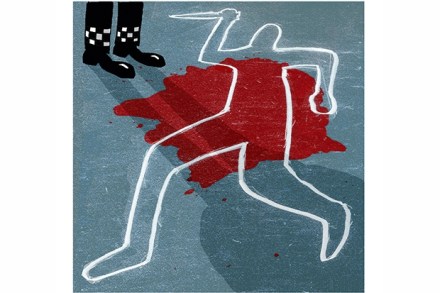
Pity the poor crime writers. Our earnings, like those of all authors, are diminishing for reasons far beyond our control. Our fictional criminals and detectives are being outsmarted by genetic fingerprinting, omnipresent security cameras and telltale mobile phones. Who needs Sherlock Holmes to solve a tricky crime when you have computers, with their unsporting ability to transmit and analyse enormous quantities of data and identify culprits? But the bigger problem for us novelists (if not for everyone else) is that murder itself is dying. The official homicide rate peaked in 2002, thanks to Dr Harold Shipman, and has since fallen by half — from 944 then to 517 last year.

It’s the Labour moderates who need to get real

From our UK edition

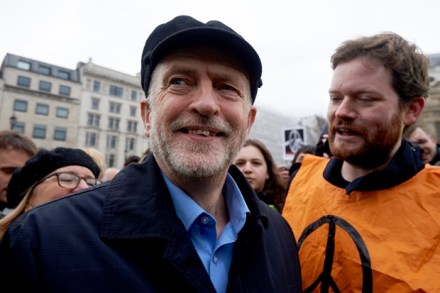
It has become commonplace to remark that there exists in Britain a mainstream political grouping that seems to be dwelling on another planet. Lost in fantasy, harking back to days long-gone, it lives on illusion. Time and the modern world have passed it by. Fleet Street and fashionable opinion rage against these mulish daydreamers for turning their backs on the voters and depriving Britain of an effective opposition. And all this is true. In only one detail are Fleet Street and fashionable opinion mistaken. They’ve got the wrong grouping in their sights. It is not Jeremy Corbyn, John McDonnell and their crew who fit this picture: it is the Labour moderates. Neo-Blairites and neo-Brownites are in cloud cuckoo land — and in control of the parliamentary Labour party.

I told you so: the UK electricity gap looms wider than ever

From our UK edition

Amid all the turmoil in global energy markets, we should not lose sight of the UK power programme that we’re praying will keep our lights on a decade hence: it is, as you know, a hobbyhorse of mine. So how’s it going down at Hinkley Point in Somerset? My man with big binoculars in the Bridgwater Bay nature reserve tells me he’s seeing plenty of lorry movements on the nuclear site, but signals from EDF of France — which has a two-thirds interest in this £18 billion project, alongside Chinese investors — are very worrying. Having already spent £2 billion, the French state utility has deferred until at least the middle of this month a final commitment that was expected last week.

Keynes’s big mistake

From our UK edition

Some things are universally accepted as true. Water finds its own level; crumpets are best eaten in winter; and the England football team will not win the World Cup again, ever. On a par with these things, the most accepted part of economics is Keynesianism. Of course, John Maynard Keynes said lots of things about economics in between his many and varied sexual encounters. But, as is the way of the world, one of the things he said turned out to be particularly influential. It is so influential that it has gone around the world. It is repeated and relied upon by Japanese finance ministers, New York Times columnists, Nobel prize winners and anti-austerity demonstrators. It is in textbooks around the globe. It is on page 262 of the Edexcel Economics A-level text book.

The Spectator Dashboard: interactive UK data

From our UK edition

Great progress has been made in open data over the last few years, with most important facts and figures now available online. The quality of the UK economic debate has been enhanced by the creation of the Office for Budget Responsibility, which publishes forecasts in a non-tricksy way. The journalist is spoiled for choice. But, still, you don't tend to see such forecasts republished: the BBC doesn't share them and even the FT's 'economy at a glance' restricts itself to historic data – and static graphs, which you can't interrogate. At The Spectator, we've been using dynamic graphs for a while. Now, we're moving up to the next level using HighCharts, a more versatile Norwegian graph-making engine. The below graphs are part of it.

If the world economy crashes again, blame the central bankers

From our UK edition

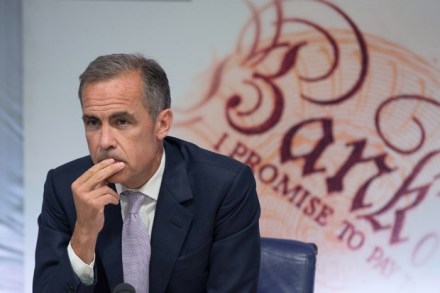
Like the Christmas pudding sampled by Hercule Poirot at Kings Lacey — but six weeks early — our Spectator Money supplement contains a little treasure in every portion, and perhaps even a priceless gem. I particularly commend the essays by Warwick Lightfoot and Subitha Subramaniam on interest rates, and why central banks have become so hesitant to raise them. In recent days we’ve had an indication from Mark Carney of the Bank of England that UK rates will stay at their current low well into next year, maybe until 2017; in the US, strong job numbers have pumped expectations that the first rate rise for nine years will be delivered by Fed chairman Janet Yellen in December.

John McDonnell’s true economic guru: the emperor Nero

From our UK edition

John McDonnell, shadow chancellor in the Corbynite splinter-group, has announced that £120 billion is waiting to be reclaimed from tax avoidance, evasion and other schemes. Nero was equally detached from reality. The Roman historian Tacitus tells us that in ad 65 a fantasist from Carthage by name of Caesellius Bassus bribed his way into an interview with Nero and told him that on his estate there was hidden a vast quantity of gold, not in coin but in unworked bullion — great columns of it. It had been hidden there, he said, by Dido, the Phoenician queen who had founded Carthage. Nero was thrilled.

Cheer up: we’re robust enough to withstand a shock from China

From our UK edition

Home from the hot Aegean, huddled by the fire as rain ruins the bank holiday weekend, I’m thinking: what gloom has descended since I’ve been away — and doesn’t it call for a round-up of cheerful news? So here goes. The UK economy grew by 0.7 per cent in the second quarter and a respectable 2.6 per cent over the past year. US growth has been revised sharply higher to 3.7 per cent, scotching our claim to be the fastest growing western economy, but George Osborne can still say convincingly that ‘we’re motoring ahead’ — and weak first-quarter performance can be seen as a blip rather than the revelation of doom it was declared to be by Ed (‘Where is he now?’) Balls. Tax receipts are rising at an annual rate of 4.

Sorry, but I can’t join in the China panic

From our UK edition

 MS Queen Victoria, 38°N 19°E I’ll do my best, but I’ve got to be honest: being surrounded by shining Ionian waters and convivial Spectator cruisers isn’t helping me channel the panic that has gripped global markets. So forgive me if this dispatch doesn’t have the apocalyptic tone you’re expecting. I’m as irritated as anyone that contagion from China’s share-gambling epidemic has knocked my modest interest in FTSE100 stocks back to where it stood in late 2012, but ask yourself: do you know anything about China or the global economy today that you didn’t know a month ago?

Despair springs eternal

From our UK edition

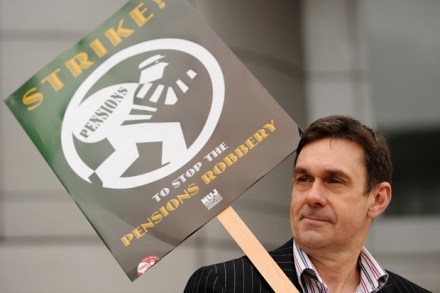
The literary emissions of the left are hardly ever enjoyable, but they can be instructive. Last year Thomas Piketty’s Capital in the 21st Century became one of the biggest-selling political books of the year. Like a thousand-page Soviet report on tractor production, it hardly seemed intended to be read. The point of its success was that it could be said to ‘prove’ the left’s argument. They could then hit their opponents over the head with it and move to the next stage. Last year they questioned some premises of capitalism and now Paul Mason, the economics editor of Channel 4 News (and Spectator diarist), is here to say that capitalism is in fact over.

Degrees in disaster

From our UK edition

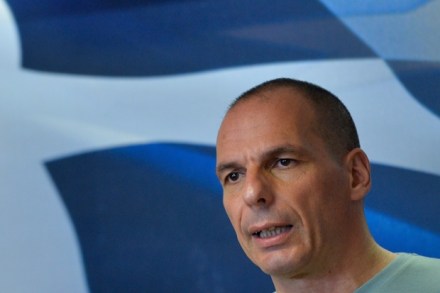
So farewell, Yanis Varoufakis. You used to be Greece’s finance minister. Then you resigned, or were you sacked? You took control of the Greek economy six months ago when it was growing. Yes, honestly! Growth last year ran at 0.8 per cent, with forecasts of 3 per cent this year. The government had a primary budget surplus. Unemployment was falling. Until you came along. Varoufakis was a product of British universities. He read economics at Essex and mathematical statistics at Birmingham, returning to Essex to do a PhD in economics. With the benefit of his British university education he returned to Greece and, during his short time in office, obliterated the nascent recovery. The economy is now expected to contract by 4 per cent this year — an amazing transformation.

Just giving

From our UK edition

Seven years ago I wrote here about a site called Kiva.org. I had met the co-founder of this charity when she came to Oxford in 2007 and was intrigued by her idea. Jennifer Jackley had been inspired to start the site by Muhammad Yunus’s work on microlending — the practice of issuing small loans to people in the developing world who would other-wise have no access to credit. At Kiva.org, rather than giving money, you lend it. You choose people and businesses, mostly in the poorest parts of the world, and advance them a fraction of the amount they want to borrow, typically $25. The loan is then paid back to you monthly, usually over a year. You can withdraw it or, more commonly, lend it to someone else. It is a kind of circulatory charity.

The wrong man

From our UK edition

For the final three years of his 18-year career at Goldman Sachs, Jim O’Neill, the Treasury’s new commercial secretary with responsibility for developing the Northern Powerhouse, served as chairman of Goldman Sachs Asset Management, the company’s least-regarded and most bothersome unit. While two younger executives ran the business, O’Neill was dispatched to faraway conferences to bore audiences of docile suits with his views on whether Nigeria or Malaysia offered a better investment opportunity. When finally in early 2013 he resigned his sinecure, he was not replaced and his title was mothballed. Since then, he has been all but marching up and down Whitehall wearing a sandwich board pleading for a government job.

A lightbulb moment at the self-checkout

From our UK edition

I spent the last few days in Deal and Folkestone with Professor Richard Thaler at Nudgestock, Ogilvy’s seaside festival of Behavioural Science. On my way home I decided to stop off at M&S to buy some runny scotch eggs and a pie, accompanied by some unwanted green things to make my basket look middle-class. Finding a long queue at the main checkout, I grudgingly took my goods to the self-checkout machines. (For the uninitiated, Richard Thaler is the co-author of Nudge, and more recently the author of Misbehaving.

Late news: what was really served at the Mansion House banquet

From our UK edition

Last week’s deadline did not allow me to report from ringside at the Mansion House dinner, but there was so much to observe that I hope you’ll forgive a late dispatch. What a vivid guide to City psychology and precedence it offered. In the anteroom, Lord (Jim) O’Neill, the Treasury’s new Northern Powerhouse minister, could be seen chatting to ex-BP chief Tony Hayward, now chairman of mining giant Glencore Xstrata. At the top table, HSBC chairman Douglas Flint was carefully separated (by António Horta-Osório of Lloyds) from Governor Carney, so they could avoid discussing HSBC’s plans to move back to Hong Kong.

Pedant’s revolt

From our UK edition

It used to be that the most annoying thing in academic life was political correctness. But a new irritant now threatens to supplant it: the scourge of correct politicalness. The essence of correct politicalness is to seek to undermine an irrefutable argument by claiming loudly and repetitively to have found an error in it. As with political correctness, which seeks to undermine arguments by declaring the person making them a bigot, correct politicalness originated in the US. But it now has its exponents here, too. Foremost among them is Jonathan Portes. Portes’s career recalls that of the character Kenneth Widmerpool in Anthony Powell’s Dance to the Music of Time.