Economics

Why is big business so interested in left-wing politics?

From our UK edition

Numerous commentators have noted how the Irish marriage referendum was influenced by big business, especially Californian-based companies like Google. It's one of the curious trends of recent years that big business, once considered the enemy of ‘the Left’, is now its greatest proponent; or at least the dominant strain of Leftism, social justice liberalism. Silicon Valley is the most extreme example of this, an industry that is young, dynamic and universally socially liberal; but elsewhere most politically interested billionaires in the West tend to be more liberal than the population, whether it's George Soros funding various social justice causes or other Democrat-supporting moguls.

Unequal struggle

From our UK edition

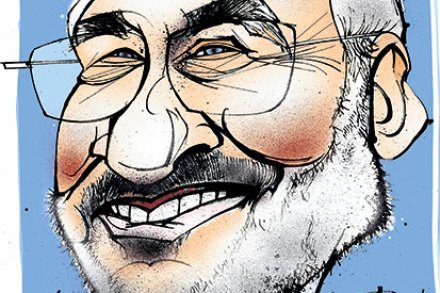
‘How do you feel when you go back to Gary?’ I ask Joe Stiglitz. ‘Well, frankly, I get depressed,’ he replies. ‘The American middle class was created in places like my home town and is now struggling badly — which makes me sad.’ Stiglitz, a Nobel prize-winning economist and the closest thing the left has to an intellectual superstar, grew up in Gary, Indiana, during the 1950s, when it was the heart of the booming US steel industry. His father sold insurance and his mother was a teacher. ‘We had a modest detached brick house, with a lawn all around — it was safe and secure,’ he recalls. ‘Back then, if you worked hard and played by the rules in America, you’d make it — you could get ahead.

Full employment, Prime Minister? What exactly do you mean by that?

From our UK edition

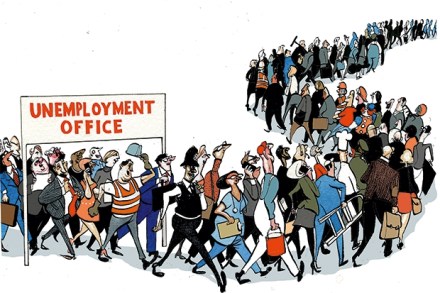
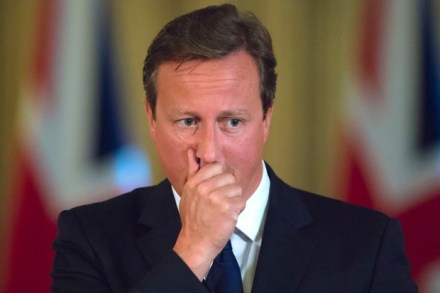
‘Two million jobs have been created since 2010 — but there will not be a moment of rest until we have reached our goal,’ said David Cameron in a Telegraph article a fortnight before the election: ‘Two million more jobs; or full employment in Britain.’ It was a bold statement. Indeed you might think, given unemployment at 1.84 million in the winter quarter, that the target for new jobs was actually an error on the part of who-ever drafts the Prime Minister’s prose. Either way, it drew little attention amid the smoke of battle.

Why estate agents aren’t dying out

From our UK edition

I don’t like to make business predictions, but — barring some apocalypse — I suspect there will be plenty of estate agents around in 2065, and occupying prominent high-street shopfronts just as they do now. This may seem an absurd prediction: after all, almost no one now uses an estate agent to find a house: we go to property websites instead. And, since we all assume the purpose of an estate agent is to find buyers for a house, a role usurped by Rightmove and Primelocation, we think the remaining days of the estate agency are few. However, perhaps the principal role of an estate agent is not to find us a house so much as to be a scapegoat if the house we buy proves to be terrible.

Why attack ‘trickle-down economics?’ It doesn’t exist – and never has done

From our UK edition

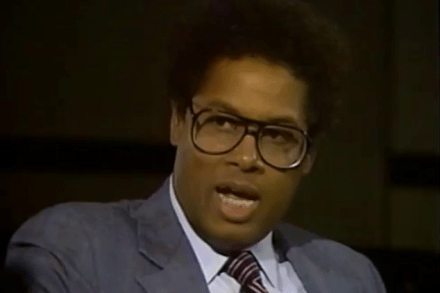
Now and again, intelligent people, politicians and columnists attack ‘trickle-down economics’ in the mistaken belief that it exists. Or that it ever existed. In his classic book, Basic Economics, Thomas Sowell gives a brief history. Here’s the excerpt: There have been many economic theories over the centuries, accompanied by controversies among different schools of economists. But one of the most politically prominent economic theories today is one that has never existed among economists – the ‘trickle down’ theory. Yet this non-existent theory has been attacked from the New York Times to a writer in India. Franklin D.

The extraordinary Green manifesto

From our UK edition

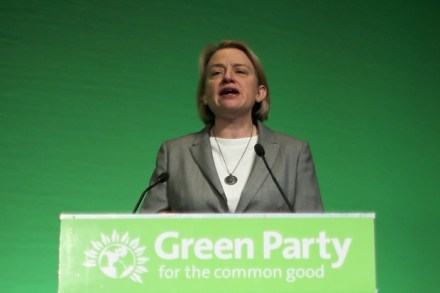
I’m disappointed that Ed Balls’s suggestion that the Office of Budget Responsibility should audit the parties’ manifestos was never taken up, not least because we will never know what Robert Chote thinks of the Green party’s claim that all its proposals are ‘fully costed’. Believe it or not, this includes the commitment to spend £45 billion on loft insulation in the next parliament. It’s quite something, the Greens’ manifesto. No doubt you’ll have already read about some of their more reasonable measures — such as the ‘complete ban on cages for hens and rabbits’ and the insistence that ‘UK taxpayers’ money is not used for bullfighting’.

Diary – 16 April 2015

From our UK edition

To the dentist. And for an extraction. I hadn’t had a tooth out in decades. But the twinges when I bit on a nut warned me that my problem molar — much abused by a badly fitted bridge in the 1970s — had finally given way. My usual dentist confirmed as much with a poke and an X-ray. Then came the surprise. ‘I’m going to hand you over now,’ he said. Having a tooth out has ceased to be a hazard of life to be borne and grinned at. Instead it’s become dental surgery. And it requires a specialist. Mine was a man with a mission. ‘My job is to make sure you feel no pain,’ he said. And he proceeded, with skill, charm and patience, to do just that.

John Maynard Keynes: transforming global economy while reading Virginia Woolf

From our UK edition

To the 21st-century right, especially in the United States, John Maynard Keynes has become a much-hated figure whose name is synonymous with bogus spending on public works, insouciance in the face of mounting debt and, of course, homosexual promiscuity. It’s a virtue of Richard Davenport-Hines’s new biography that it makes clear how much this under-reads him. So far from being the flippant old queer calumniated by Niall Ferguson, Keynes worried himself sick about inflation and was far more alarmed by budget deficits than George Osborne seems to be. He was essentially a Nonconformist Liberal for whom faith was impossible, and who saw liberalism as something needing saving from itself.

What Samsung’s new TVs owe to Jeremy Bentham

From our UK edition

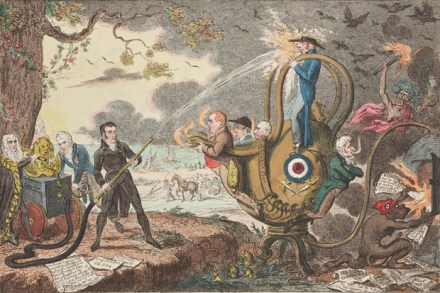
Watching brief Samsung warned users of its voice-activated televisions that what they said in front of the TV could be transmitted to other people. The story attracted comparison with the telescreens in George Orwell’s Nineteen Eighty-Four, but the principle of keeping a population under control by surveillance was foreseen a century earlier by Jeremy Bentham. — In 1791 he came up with the idea for a Panopticon, a circular prison with one-way observation holes which would allow a single gaoler to patrol several hundred prisoners, none of whom could tell whether they were being watched at any one moment. — Bentham saw the government’s eventual rejection of the scheme as ‘sinister’, a word now more likely to be used to describe the idea itself.

The low sculduggery of high Victorian finance

From our UK edition

The whole idea of capitalism, according to Enlightenment philosophers, was that it created a positive spiral of moral behaviour. ‘Concern for our own happiness recommends us to the virtue of prudence,’ wrote Adam Smith. ‘The profits of commerce,’ according to David Hume, carry us towards a state in which ‘the tempers of men, as well as their behaviour, refine apace.’ In the first chapter of Forging Capitalism, Ian Klaus encapsulates this theory as an 18th-century artist might have titled an allegorical painting of intertwined figures: ‘Commerce encouraging Virtue, and Virtue harnessing Commerce.’ But that’s not really the way it was, Klaus goes on to argue — and certainly not the way it is today, he implies.

Don’t believe the gloom-mongers: deflation will be good for Britain

From our UK edition

Campaigning in Putney in 1978, Mrs Thatcher famously took out a pair of scissors and cut a pound note down the middle, telling her audience that the remaining stump represented what was left of the pound in your pocket after four years of Labour and high inflation. David Cameron may soon be able to repeat the stunt — except rather than cutting a note in half he will be able to stick a bit on the end to represent the extra buying power being granted to consumers courtesy of deflation. Inflation on the government’s preferred measure, the Consumer Prices Index (CPI), has fallen to 0.5 per cent. With the price of crude oil slumping and a supermarket price war in full cry, it may well dip below zero in coming months. That is to say: the cost of living is about to fall.

Is David Cameron telling porkies on the deficit? His spokesman explains

From our UK edition

As Fraser points out, David Cameron has gone from saying the deficit has been brought down by a third to claiming it has been halved, but with the often unspoken caveat that this is as a share of GDP. After the Prime Minister dropped this claim into his speech today without that very important small print, journalists grilled his official spokesman on whether Cameron was misleading voters at the afternoon lobby briefing. I’ve written up the transcript of our attempts to ask the same question many different ways. Journalist: When the Prime Minister said in his speech this afternoon the government had halved the deficit, did he qualify that in any way? Spokesman: How do you mean?

The subversive wonders of Kilkenomics – where economics meets stand-up

From our UK edition

‘What is a Minsky moment, anyway?’ asks Gerry Stembridge, an Irish satirist. ‘I’ve been reading about them in the papers and have often wondered’. Stembridge is putting the question to Paul McCulley, chief economist at Pimco, the world’s largest bond fund with over $200 billion under management, one of the ten most influential economists on earth. McCulley is sporting a T-shirt and jeans. The two men, Celtic comic and American financial whiz, are on stage in a theatre in Kilkenny, a bijou provincial city in south-east Ireland. It’s Saturday night and they’re facing a sell-out crowd — all of whom have paid to watch a debate on global economics and most of whom aren’t waiting until the interval to have a drink.

Why I’m glad there’s no British Las Vegas

From our UK edition

I didn’t realise that the Rialto Bridge has a moving walkway and muzak, that the gondolas beneath it float on a clear blue pool, and that the school of Tiepolo had so many apprentices available to paint hotel ceilings. ‘Still in Venice, Martin?’ you’re thinking. ‘Surely that was last month?’ Well no, your intrepid columnist has moved from the old world to the new, and reports this week from the desert frontier where unfettered capitalism meets the lowest human urges: Las Vegas. It’s an overwhelming experience, so forgive me if my grip on what’s happening at home — reactions to David Cameron’s CBI conference speech, for example, and the rejected Qatari bid for Canary Wharf — is a little hazy.

The idiot economy – behind the ‘dark web’ cyber-crime busts

From our UK edition

Spectator Money is out, with ideas on how to make it, spend it and even how to be seen spending it. Freddy Gray looks at the 'social economy' - think tax loopholes for financiers of politically favoured endeavours; while Camilla Swift peruses credit cards such as Kanye West's 'African American Express' and the Dubai First Royale, 'studded with diamonds. Bring it on, Sheikh Sugardaddy.' Spare a thought, though, for the inconspicuous consumers - or at least, the wannabes.

There is no such thing as ‘immigrants’ – only Poles, Yanks, Somalis…

From our UK edition

There was much glee about yesterday’s publication of a report into the economic impact of immigration, which concluded eastern Europeans had provided a net benefit of £4.4 billion to the UK economy. There was far less mention of the fact that immigrants from outside Europe in the same period cost the taxpayers £118 billion. But as Christopher Caldwell observed in Reflections on the Revolution in Europe, the immigration debate is not about economics, for ‘the social, spiritual, and political effects of immigration are huge and enduring, while the economic effects are puny and transitory. If, like certain Europeans, you are infuriated by polyglot markets and street signs written in Polish, Urdu, and Arabic, sacrificing 0.

S&M&B&Q: Why aren’t there sex-and-shopping novels for men?

From our UK edition

I never got beyond page 20 in Fifty Shades of Grey. No one got shot in the first chapter, and there were more than four characters, so I rapidly found the plot confusing. In any case, I am averse to physical pain in any form (if I were to engage in BDSM activities, my secret codeword would be ‘ouch’) so it wasn’t really my thing. But the book does leave us with one literary Everest still to be conquered: if someone can write a pornographic novel for women, is there a similar fortune to be made writing a sex-and-shopping book for men? So that’s my plan for retirement. To write a novel for blokes where graphic scenes of deviant sexual activity are interspersed with practical, time-saving trips to Argos and B&Q.

My generation can’t afford to buy a house in London; so what?

From our UK edition

The UK Land Registry today released its latest report on house prises, showing the ticket-cost of an average home in England and Wales down 2.2 per cent to £177,299 in September from a peak of £181,324 in November 2007. No, that still doesn't mean that underpaid Westminster interns can afford to buy a home in central London. Per the Land Registry, average house prices in the capital rose 18.4 per cent since this time last year. Cue the New York Times with an opinion article composed by a young writer, cavilling about the matter: 'Without capital, those of us who do not own property resign ourselves to running in an exploitative rat race. . . . I live two boroughs away from where I was born [in east London], yet I’ll never be able to afford a home.

Why the UK should should be subject to different rules on European migrants

From our UK edition

The rest of Europe has, predictably, reacted negatively to the suggestion that the UK should be able to impose some kind of cap on free movement while remaining in the EU. At first glance, it does sound as if David Cameron wants the UK to stay a member of the European club without subscribing to one of its founding rules. But there’s actually a very good argument for why the UK should be treated differently. As I say in my column this week, Britain is the one major EU economy that is never going to join the euro. This makes Britain a special case. If there is no limit on the number of EU migrants who can move here, the UK - with its different business cycle - is going to become the main safety valve for the Eurozone when it goes into recession. This is already beginning to happen.

Get me out of here: London is the ‘childbirth capital of Europe’

From our UK edition

I see that London is now the 'childbirth capital of Europe', with the highest birth-rate on the entire continent. London, and the UK generally, previously enjoyed very low birth-rates, among the lowest in Western Europe (together with the other law-abiding, sexually restrained, protestant people of the North West). The cause of this change is, of course, mass immigration. And, one would expect, non-European immigration. This change had not been anticipated by the people who predict what our population is going to be 20, 30 years down the line. It now looks like life in Britain - the 2037 figure of just below 75 million, as predicted by the Office for National Statistics - will be an underestimate.