Economics

The ONS’s inflation measurement change isn’t ‘new’

The way we measure inflation is changing, and there could hardly be a less crucial time for it to do so. The ONS will be updating the method for collecting individual prices from supermarkets, and will also publish new figures on inflation rates for different types of household. The anti-poverty campaigner Jack Monroe has tweeted that the ONS ‘have just announced that they are going to be changing the way they collect and report on the cost of food prices and inflation to take into consideration a wider range of income levels and household circumstances’. But Monroe, who hope that the new metrics will show that inflation is hitting poorer families harder, will be disappointed.

Is Labour ready to become the party of business?

While the Tories limp from one scandal to the next, an opportunity has opened up for Labour when it comes to courting business. Although it’s unlikely many voters elected Boris Johnson into office because they trusted his moral compass they did at least think he would deliver on his promise of sunlit uplands. But two years and a pandemic later, government spending as a percentage of national income is set to top 45 per cent, we’ve yet to ignite a bonfire of EU regulations, inflation has reached 5.4 per cent (and still rising) and the cost of living crisis is rapidly worsening. Voters are starting to question whether, with the Conservative party, the economy is really in a safe pair of hands. But can Labour position itself as the new party of business instead?

The inevitable return of inflation

From our US edition

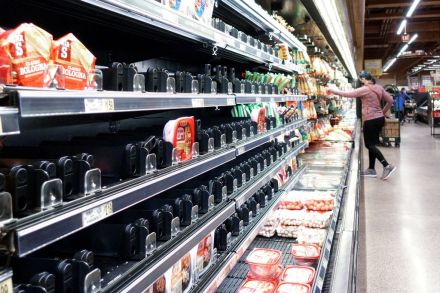
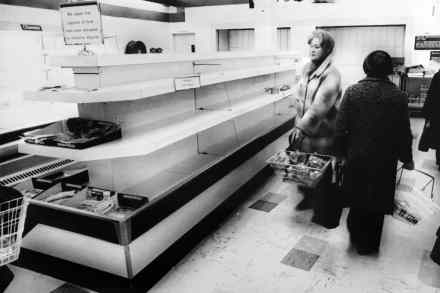
The Labor Department reported this week that the December inflation rate hit 7 percent on an annualized basis, the highest since 1982. That was when the country was just beginning to recover from the inflation of the 1970s, the highest peacetime inflation in the nation’s history. The inflation rate for the last three months of 2021 was 9.1 percent. The price of gasoline is up almost 50 percent over a year ago, used cars are up 37 percent and furniture is up 17 percent. Shortages cause by supply-chain disruptions are partly responsible for the upsurge (supermarket shelves have been notably empty in recent days). As grocery and food workers return to work after the latest surge of Covid, those prices should begin to drop.

inflation

Get ready to start paying the cost of Covid

Forget the desirability (or lack thereof) of tax hikes: can Britain survive them? That’s the economic question that kicked off the new year in cabinet this week when Jacob Rees-Mogg was reported to have encouraged the Prime Minister and his colleagues to roll back plans to bring in the new National Insurance levy this April. A recap on the proposals: the 1.25 per cent National Insurance hike will be paid by both employers and employees, and will eventually be funnelled into social care, we're told. But for the first few years, most of the tax revenue it raises (roughly £12 billion) will go to addressing the NHS backlog and the millions of people on waiting lists.

The hypocrisy of Elon Musk

Tesla's sleek, if expensive, electric cars are leading the battle against climate change. Its batteries are moving renewable energy into the mainstream, while its founder Elon Musk, the world’s richest man, likes to present himself as a free-thinking radical. It is hard to think of a company more right on than Tesla — well, okay, perhaps Unilever — or one that depends more on its politically correct credentials. But hold on. There turns out to be one opposed minority that Tesla couldn’t care less about: China’s Uighurs. Most of the corporate world will sooner or later have to make a tough decision: do they care about human rights?

Will someone wake up the Bank of England?

It is called managing expectations: the steady drip of forecasts and scenarios designed to prepare us for bad news, so that when that news does finally arrive it doesn’t seem nearly as bad as it would otherwise have done. So is that what the Bank of England is up to with its deputy governor, Ben Broadbent, telling us that inflation next April could ‘comfortably exceed’ 5 per cent? It is reminiscent of the moment in July when the Bank’s departing chief economist, Andy Haldane, dropped in the suggestion that inflation by the end of 2021 could be closer to four percent than three percent.

When will the Tories do something about house prices?

Anyone who doubts that the fiscal response to the pandemic has stoked inflation needs to look at the latest figures from the Nationwide on the housing market. Yet again they confirm that the deepest recession in modern history has been accompanied by a boom in house prices. Moreover, the inflation does not seem to have been reined-in by the ending of the stamp duty holiday. The price of the average home, according to the building society, rose by a further 0.9 per cent in November to reach £252,687. This is ten per cent up on last November and 15 per cent up on March 2020, at the beginning of the pandemic. How can a global crisis which temporarily put several million people out of work in Britain have resulted in a housing boom?

Supply chain for dummies: a fairy tale

From our US edition

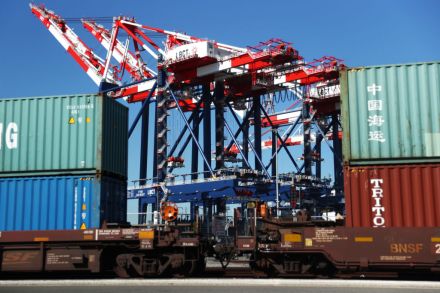
Joe Biden cheerfully told Americans that most of them are too thick to understand what a “supply chain” is. Naturally, he understands it thoroughly. You can see with your very own eyes how well he has handled it. Since, as Joe said, you must be wondering why so many shelves are empty, I’m here to explain. Following the president’s wise advice, I will use small words and a simple story. Let’s begin in the good ol’ days, not too long ago, when the shelves were magically full. The story begins in a land ever so far away, where happy people worked and worked to make Christmas toys for children in Kansas. When they finished making the toys, they placed each one in a little box and then placed lots of them in a great big box.

supply chain

Eighteen months of inflation is not ‘transitory’

The big central banks have been insisting for months now that the rise in inflation is temporary, and will fade once the great awakening of the world economy starts to settle down. The Federal Reserve, Bank of England and the European Central Bank have looked on as inflation has overshot their forecasts. But when the opportunity to tame it with an interest rate hike approaches, the banks pass it up, reiterating instead that it is ‘transitory’ — the monetary equivalent of ‘it’ll be fine’. With inflation now at a 30-year high in the United States — 6.2 per cent — it’s starting to look like a pretty big bump. But should we worry? Is this just a glitch of lockdown unwinding itself?

What is the Bank of England playing at?

Last week, the Bank of England sent a number of confused messages. One was almost shocking: Andrew Bailey said that it isn’t his job to steer markets on interest rates 'day by day and week by week'. But as economic commentator Matthew C. Klein dryly noted this is literally his job. It is debatable whether the Bank of England needs to manage the entire yield curve (ie, buying and selling bonds in an attempt to set interest rates years into the future) but the central bank should be in charge of the short end. Those opposing an interest rate rise say that central banks should never shock markets. The Bank of England should copy the ECB, it’s argued, and start giving guidance on interest rate rises months in advance.

Will the Tories cut taxes before the next election?

The Tory party has reached a fork in the road, I say in the Times today. One path involves sticking to the spending plans, hoping to cut taxes before the next election and getting rid of the new perception of them as tax raisers. The other drags them into ever more spending, led by big increases in public sector pay, and ends with them going to the country as a high-tax party. In his Budget speech and his address to Tory MPs, Rishi Sunak made clear that his preference was for the former approach, which should cut taxes before the country goes to the polls again. But sticking to even the spending limits set out this week will require tough choices that the Tories have not wanted to make in recent years.

Rishi Sunak’s low tax pitch to MPs

Is Rishi Sunak a low tax chancellor? He certainly likes to tell anyone who will listen that he is. Yet his actions tend to suggest the opposite. The tax burden is currently on track to reach its highest level since the early 1950s, and while Sunak unveiled one big tax slash in the Budget in the universal credit taper rate cut, the main thrust of Sunak's announcements was spend, spend, spend. Tonight Sunak addressed Tory MPs at a meeting of the 1922 committee. After announcing £150 billion in extra public spending, Sunak sought to convince his party that, despite this, he was committed to lowering taxes.

The numbers game

From our US edition

The most important macroeconomic development of the last three decades has been the extraordinary growth of the Chinese economy. In 1990, it was largely a subsistence peasant economy with a negligible footprint in world trade. China now provides the largest share of world exports, and by some standards has already become the world’s largest economy. In 1990, the wage of an average Chinese worker was perhaps 1/40th of that of an American worker. By 2020, it was just about a quarter: a tenfold gain in just 30 years. Before the 18th century, all societies were basically subsistence peasant agricultural societies with a small upper layer of landowning nobles and clerics. Then the Industrial Revolution began.

inflation labor

A brief history of embarrassing economic forecasts

From our US edition

Many are familiar with the old aphorism that in real estate the three most important determinants of value are location, location, location. Things are a bit different in making economic forecasts and predictions, where two variables matter most: accuracy, of course, but also timing. Regarding accuracy: a lengthy list of economists — some quite eminent — have ended up with egg on their faces because of inaccurate predictions and forecasts. In this regard, there’s the observation by the distinguished economist Irving Fisher, 92 years ago today on October 16, 1929, that stock prices had reached 'what looks like a permanently high plateau’. Since the Great Crash occurred two weeks later, Fisher’s timing wasn’t so great either.

forecasts

Sunak faces the free-marketeers

Rishi Sunak didn’t give too much away tonight when he spoke in the 'ThinkTent' at Conservative Party Conference. The Chancellor is known for being cautious with his words, and has been increasingly tight-lipped in the weeks leading up to his October Budget. But his presence at the fringe event was telling in itself. Sunak was only billed for one public fringe event this year, co-hosted by the Institute of Economic Affairs and Taxpayers’ Alliance. Their ‘ThinkTent’ boasts some of the most free-market, libertarian events you’ll find at conference: both organisations are strong advocates for a low-tax, smaller state. So, not necessarily an obvious place to find the Chancellor who has overseen record peacetime spending over the past 18 months.

We’re living through eerie reminders of the 1970s

There are eerie parallels with 1970s at the moment, I say in the Times today. The inflation of that decade was principally caused by the abandonment of the gold standard in 1971 and the oil shock of 1973-4, which saw the price of a barrel of oil go from $3 a barrel to $12. Today, we have seen huge amounts of quantitative easing from central banks to keep the economy going through Covid – and unlike the post-financial crash QE, which was largely used to repair banks’ balance sheets, it has gone into the real economy. On top of that, we have now seen the gas price rise fourfold. There are other supply issues too; just look at how the shortage of lorry drivers is affecting petrol deliveries.

Could the squeeze on living standards bring down Boris?

There is about to be a two-phase onslaught on the living standards of those on low-to-middling incomes. On 1 October the energy price cap, for dual fuel, rises from £1,150 to £1,277. This is a rise of 11 per cent, at a time when furlough is ending and just a few days before the £1,000 a year uplift to Universal Credit is removed (which presumably Boris Johnson will not be swanking about in his big speech to Tory conference). That’s the first hit to living standards. There’ll then be a gradual further erosion of living standards with rising food inflation (of around five per cent, as per what Tesco’s chairman John Allan said on my show this week).

Has the Bank of England given up on its duty?

Has the Bank of England’s Monetary Policy Committee quietly excused itself from its duty of keeping inflation down: namely, keeping the Consumer Prices Index (CPI) close to a 2 per cent target? I ask because the minutes of its September meeting, released today, show little inclination to raise rates from their historic low of 0.1 percent, even though it predicts that inflation will rise above 4 per cent and stay there at least into the second quarter of 2022.  The MPC seems to have evolved into a Committee for Leaving Interest Rates Alone or Occasionally Lowering Them You can argue that inflation isn’t everything, that growth matters more and that monetary policy should not obsess about short-term targets.

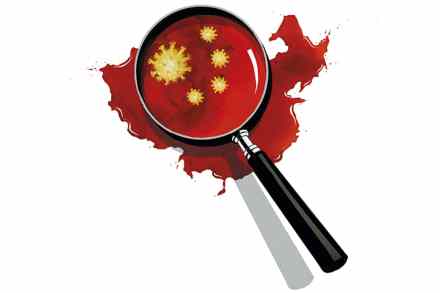
China and the WHO are given an easy ride in the Covid blame game

Are you ready to relive 2020? That’s what Adam Tooze is offering as he tells the story of Covid-19 through the spectacular and terrifying economic consequences created by the global health crisis. For many, the answer will be a simple no. But for others looking to make sense of an utterly surreal year, Shutdown might seem an obvious place to start. Unfortunately, the book offers less analysis and more ranting than would normally be expected from an economic digest — especially one written about one of the most startling shocks to the economy the world has ever seen. Some readers may like the rant.

Green bonds offer nothing but virtue-pleasing

Would you touch a ‘green gilt’ issued by the government, with an interest rate of just 0.87 per cent? Some people, apparently, would. The Treasury announced yesterday that it had shifted the first £10 billion tranche of ‘green gilts’ to raise finance for projects such as zero-carbon buses, wind farms and other green things. Indeed, the bond – which matures in 2033 – was ten times oversubscribed. The government had already planned to issue a further £5 billion, and might now be encouraged to issue far more.