Economics

Is the US in recession or not?

From our UK edition

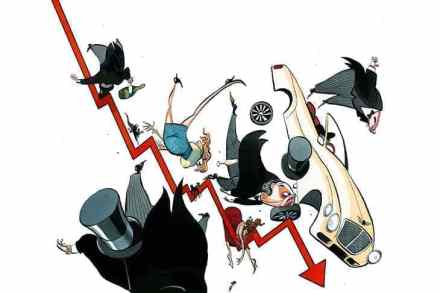
There's an almighty debate ongoing in the US about what exactly a 'recession' is. Treasury secretary Janet Yellen said the US economy is not shrinking, saying it is in a state of 'transition', not recession. But in a clip from 2000 being circulated on Twitter that is comically apt, Bill Clinton said 'a recession is two quarters in a row of negative growth'. https://twitter.com/DailyCaller/status/1552720121445105666?ref_src=twsrc%5Etfw Regardless of who's right, the US is currently in Bill Clinton's definition of a recession. Figures show that the economy shrank by 0.2 per cent in the second quarter of this year, following a 1.6 per cent fall in the first quarter. Over the year, the US economy is now 0.9 per cent smaller than it was a year ago.

Read: the new Chancellor’s interview with the BBC

From our UK edition

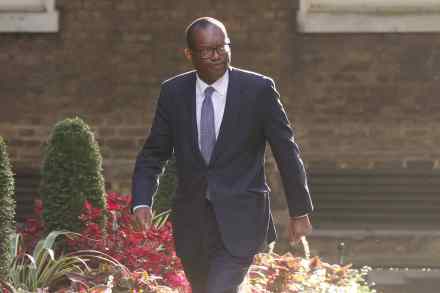
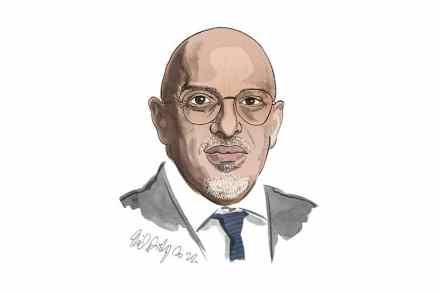
This is an edited transcript of the interview with the new chancellor Nadhim Zahawi on the Today programme this morning. Nick Robinson: You faced a choice yesterday, and I'd like you to explain it to our listeners. Why was it in the country's interests as against yours, for you to stay in the cabinet and not to follow Rishi Sunak and Sajid Javid? Nadhim Zahawi: Because we are facing a global battle against inflation. Inflation is raging here in the United Kingdom, in Germany, in Canada and the United States. We have war on our continent that very few people anticipated. And I think many, many people listening to this programme today are struggling with their weekly shop and with their utility bills.

Where’s Boris’s plan to stop the economic chaos?

From our UK edition

Interest payments on the national debt rose 70 per cent last month to £7.6 billion (compared with a year earlier) – largely because of the impact of inflation on income paid to holders of index-linked gilts, which are inflation-protected government bonds. More worryingly, this was 49 per cent more than the official forecast made in March by the Office for Budget Responsibility (OBR). It suggests the OBR’s forecast that the government will have to pay £87.2 billion in interest payments (a colossal sum) may be too low, especially since the ONS is not factoring in the most recent inflation figures in its calculations of the monthly bill.

Inflation is a social evil, so why don’t our leaders care?

From our UK edition

It was a ‘destroyer of society’, a ‘tax on ordinary people’s savings’ and a threat to social order. You don’t have to spend very long browsing the history books to find thumping quotes from Ronald Reagan or Margaret Thatcher denouncing rising prices as an evil that had to be defeated. And today? Even with prices in the UK now rising at 9.1 per cent, the fastest for 40 years, there are just a few mumbled apologies, coupled with some evasive excuses. That is not good enough. If we are going to defeat inflation all over again, it will take some leadership. We learned today that inflation has nudged up again, this time well past the 9 per cent barrier.

The deep roots of global inequality

From our UK edition

Thomas Piketty, the French economist who shot to fame for writing a colossal work of economics that many people bought but few actually read, recently received some advice. ‘What you write is interesting,’ a friend told him, ‘but couldn’t you make it a little shorter?’ Piketty has answered the call for brevity with a book which by his standards is the equivalent of a Post-it note. It’s certainly ‘brief”– but is it a ‘history of equality’? Alas, no. What we have instead is an eye-wateringly left-wing manifesto for dismantling economic inequality, both domestically and internationally.

The moral cost of inflation

Inflation is about far more than rising prices. In this excerpt adapted from Inflation: What It Is, Why It’s Bad — and How to Fix It, the book’s authors explain how the debasement of money ultimately corrupts society. The scenario is fairly standard: central banks devalue money; prices shoot up. Governments look for ways to tamp down inflation by keeping people from spending. They also respond with price controls, capital controls, higher taxes. Governments grow larger and often impose more constraints. People lose their freedom, and worse.

inflation

Has liberalism destroyed itself?

From our UK edition

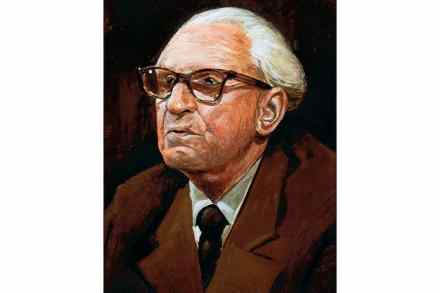
According to Vladimir Putin, liberalism is an ‘obsolete’ doctrine, a worn-out political philosophy no longer fit for purpose. In this well-timed, rather urgent book, Francis Fukuyama attacks that view and puts a vigorous case for the defence. Despite its faults, liberalism is a force for good, he says, and it remains the only political philosophy capable of taking on the authoritarians of Moscow and Beijing. But the despots are not the central focus of his argument. The biggest threats to the liberal society, he writes, come from within. In Fukuyama’s crisp retelling, the liberal ideal emerged in the aftermath of Europe’s wars of religion. The notion that people could only exist as part of a rigid group had led to division, antagonism and slaughter.

Free markets deliver real American greatness

Since its postwar rise, the American conservative movement has staked its reputation on defending the free market as an abiding principle. Conservatives pointed to the liftoff in the American economy caused by the Reagan tax revolution and the deregulation of heavily controlled parts of the economy. Less government and less regulation were better for the American economy. The left disagreed with this fundamental axiom of conservative wisdom. Now, surprisingly, many on the right have joined them. Something obviously changed in the post-Cold War period. China’s entry to the World Trade Organization in 2001 resulted in the so-called China Shock, or the loss of 15 to 20 percent of manufacturing jobs in America.

free market

The Biden Bust is here

From our UK edition

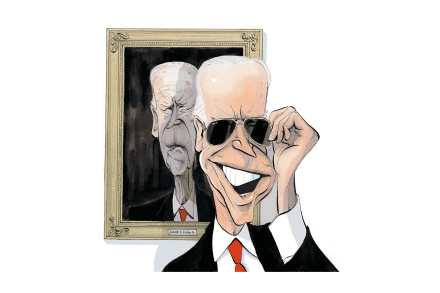
A wave of government spending would reboot the economy. Fairer taxes would pay for restored infrastructure. Skills would be improved, productivity raised, and new digital champions would emerge. When Joe Biden was elected, he promised the most radical programme of economic reform since Franklin Roosevelt's New Deal in the 1930s, and, to his army of cheerleaders at least, the American economy was about to be completely transformed. But hold on. Only a year into his term, the reality is very different from the promises. In reality, the Biden Bust has arrived. Donald Trump may have been personally obnoxious, but he bequeathed an economy in perfectly good shape The US GDP figures released today was genuinely shocking.

Like it or not, cryptocurrency is here to stay

From our UK edition

There was a time when you could read a book to keep up to date about a subject. Well, that’s over. If a week is a long time in politics, in crypto it’s like a geological period. By the time a book on crypto hits the shelves it needs to be in the ancient history section. The Cryptopians is an attempt to sum up ‘the first big cryptocurrency craze’ by Laura Shin, a financial journalist who writes for Forbes and who has a successful crypto podcast. Its scope is the first decade of crypto, from the creation of Bitcoin to the current frenzy of DeFi (Decentralised Finance) and NFTs.

The trouble with the right’s hands-off economic approach

On the American right today, economics trumps all else. While conservatism has always been bedeviled by the tension between economic science and traditional, family-focused values, the last four decades have witnessed a decided shift toward embracing economics as the sole indicator of a successful society. Those who create wealth, in theory and in practice, are accorded the closest thing to nobility an egalitarian society will tolerate. And indeed the American free market remains the most powerful lever the world has to erase class, poverty, and privilege in the equal pursuit of opportunity.

trump economy economic new york stock exchange wall street

Rishi Sunak’s spring statement speech in full

From our UK edition

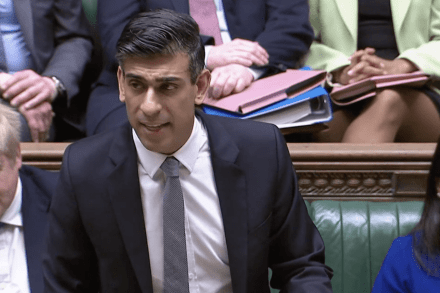
Mr Speaker, As I stand here, men, women and children are huddled in basements across Ukraine seeking protection. Soldiers and citizens alike have taken up arms to defend their land and families. The sorrow we feel for their suffering, and admiration for their bravery is only matched by the gratitude we feel for the security in which we live. And what underpins that security is the strength of our economy. It gives us the ability to fund the armed forces we need to maintain our liberty. The resources we need to support our allies. The power to impose sanctions which cause severe economic costs.

What does the Fed’s interest rate hike mean?

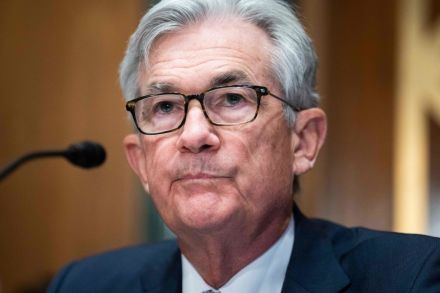
The Federal Reserve raised interest rates by 0.25 percent last week, the first increase since December 2018. Back then, Donald Trump had been very vocal in his criticisms of the Fed and its chair Jerome Powell, demanding no more rate increases. There was no resistance from the White House this time with press secretary Jen Psaki saying that the Biden administration respected the Fed’s independence. Powell called the rate increase necessary due to inflation coupled with rising prices. “As we emphasize in our policy statement, with appropriate firming in the stance of monetary policy, we expect inflation to return to 2 percent while the labor market remains strong,” said Powell, before warning that it will take longer than expected for inflation to sink.

interest inflation

Rishi keeps coy on this week’s mini-Budget

From our UK edition

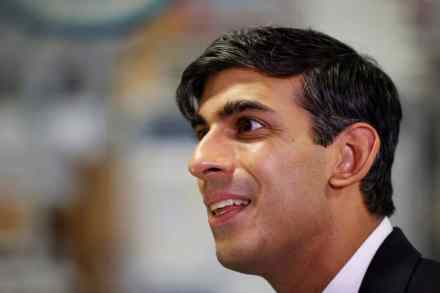
What support might the Chancellor dish out to help with the cost of living squeeze in the Spring Statement this week? In line with his previous media appearances, Rishi Sunak's statements ahead of his mini-Budget this morning on the BBC didn't give much away, as the Chancellor 'can't speculate' on what's to come in his announcements this week. But the pressure is on to address the energy and basic goods prices which have been skyrocketing since we emerged from the height of the Covid emergency: the energy price cap lifts nearly £700 this spring, and is likely to rise again in the autumn. https://www.youtube.com/watch?

Make China pay for its quiet support of Putin’s war

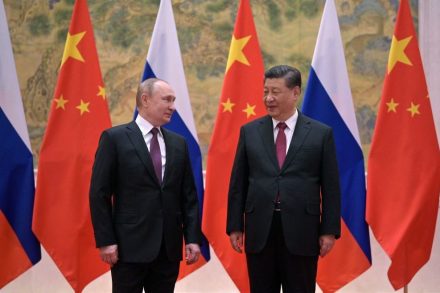
China is tacitly backing Putin’s aggression against Ukraine. The Biden administration should combat this by imposing economic costs on China through the corporate Environmental, Social and Governance disclosure requirements that are already in place. Xi Jinping and Vladimir Putin met in February at the Beijing Olympics, their thirty-eighth visit in the nine years since Xi took power. In a 5,000-word statement on February 4, Xi and Putin proclaimed their friendship with “no limits” and “no forbidden areas of cooperation.” Just weeks before the invasion, China signed agreements to buy from Russia energy and agricultural products worth over $200 billion.

support

Rishi Sunak’s energy bill dilemma

From our UK edition

This morning’s revelation that the UK economy grew 0.8 per cent in January, the fastest growth since April last year, is welcome news after a Christmas plagued by Omicron – but it’s news that’s out of date, too. As Capital Economics warns: ‘This is as good as it gets for the year'. Russia’s invasion of Ukraine, the commodity price jump and the cost-of-living crisis will soon show in the figures. Today’s ONS release warns that even in January, businesses were already reporting significant rises in the cost of energy and staff wages. The week after next, Rishi Sunak will present a mini-Budget. The Chancellor faces a conundrum: how to explain the inflation and energy bill hikes that are still to come?

Is Boris in denial about the looming economic crisis?

From our UK edition

The priority for the UK and other rich democracies is to protect the people of Ukraine from the depredations of Putin's forces. A close second should be protecting the poorest people in our countries and vital public services from the cancerous impact of soaring inflation, made much worse by the West's economic warfare against Putin's Russia. The most basic costs of living are soaring. And that means a devastating recession that has already begun for all those but the richest. This blow to living standards will be the worst in living memory, more pernicious than the impact of either the banking crisis or Covid. Talking to ministers and MPs, it is clear to me that they as yet fail to appreciate the scale of the economic shock that is upon us.

The ONS’s inflation measurement change isn’t ‘new’

From our UK edition

The way we measure inflation is changing, and there could hardly be a less crucial time for it to do so. The ONS will be updating the method for collecting individual prices from supermarkets, and will also publish new figures on inflation rates for different types of household. The anti-poverty campaigner Jack Monroe has tweeted that the ONS ‘have just announced that they are going to be changing the way they collect and report on the cost of food prices and inflation to take into consideration a wider range of income levels and household circumstances’. But Monroe, who hope that the new metrics will show that inflation is hitting poorer families harder, will be disappointed.

Is Labour ready to become the party of business?

From our UK edition

While the Tories limp from one scandal to the next, an opportunity has opened up for Labour when it comes to courting business. Although it’s unlikely many voters elected Boris Johnson into office because they trusted his moral compass they did at least think he would deliver on his promise of sunlit uplands. But two years and a pandemic later, government spending as a percentage of national income is set to top 45 per cent, we’ve yet to ignite a bonfire of EU regulations, inflation has reached 5.4 per cent (and still rising) and the cost of living crisis is rapidly worsening. Voters are starting to question whether, with the Conservative party, the economy is really in a safe pair of hands. But can Labour position itself as the new party of business instead?

The inevitable return of inflation

The Labor Department reported this week that the December inflation rate hit 7 percent on an annualized basis, the highest since 1982. That was when the country was just beginning to recover from the inflation of the 1970s, the highest peacetime inflation in the nation’s history. The inflation rate for the last three months of 2021 was 9.1 percent. The price of gasoline is up almost 50 percent over a year ago, used cars are up 37 percent and furniture is up 17 percent. Shortages cause by supply-chain disruptions are partly responsible for the upsurge (supermarket shelves have been notably empty in recent days). As grocery and food workers return to work after the latest surge of Covid, those prices should begin to drop.

inflation