Economics

The Disappearance of Michel Houellebecq: French chin-stroking at its very best

From our UK edition

Just when you thought Bernard-Henri Lévy had taken a chin-stroking national stereotype as far as it could possibly go, you open Le Monde‘s business pages and see this. Bernard Maris, one of France’s most respected financial correspondents, has written a 160-page book entitled Houellebecq Économiste. Maris’s book sets out its stall as an economic reading of the writer’s oeuvre, promising amongst other delights, a Malthusian interpretation of his 2005 novel The Possibility of an Island and an analysis of the division of labour in The Map and the Territory. Imagine Robert Peston writing a Hobbesian study of Irvine Welsh and you’re halfway there. I like Houellebecq’s novels.

Adam Smith is the father of more than one sort of economics

From our UK edition

Gandhi would test his resolve by sleeping between two naked virgins, an avenue not really open to me, as my wife is an Anglican vicar: though Anglicanism imposes almost no constraints on your behaviour or beliefs nowadays, it still frowns on sleeping with naked virgins, especially if they are of the opposite sex. So my equivalent of this exercise is to try to go into certain shops for half an hour and emerge without buying anything. Lakeland is an especially tough challenge here, but the real Matterhorn for me is an airport branch of Dixons.

What are the Chinese up to in Africa?

From our UK edition

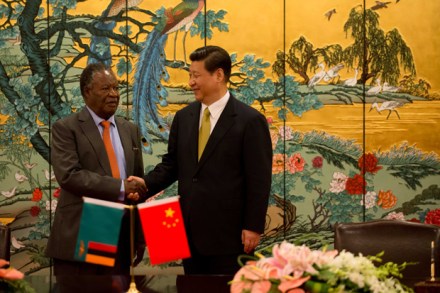
Few subjects generate as much angst, or puzzlement, among Western policymakers in Africa as China’s presence on the continent. In his new book, China’s Second Continent, the American journalist Howard French recalls meeting US officials in Mali to sound them out on the matter. Instead, he finds himself barraged by questions. ‘It would really be useful for us to know what the Chinese are up to,’ one American official tells him. ‘So far we’ve been limited to speaking with them through translators. We’ve got very little idea about any of this.’ Grasping the range and scale of China’s activities in Africa is indeed a tall order. Commercial deals are cloaked in secrecy. Immigration statistics from African countries are poor.

The opéra bouffe that was the Bretton Woods conference

From our UK edition

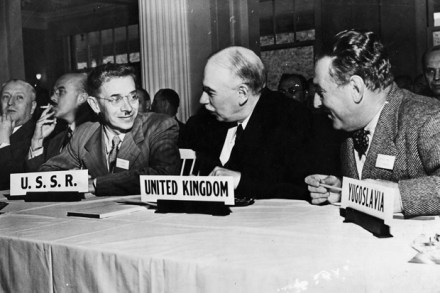
There ought to be a comic opera about the Bretton Woods conference — Thomas Adès’s Powder Her Face, about Margaret, Duchess of Argyll, with its mordant libretto by Philip Hensher, should be the model. Everything about the conference was overdone. It was held in 1944 in the gargantuan Mount Washington Hotel in New Hampshire, which provided a preposterous background of gimcrack luxury. The arrangements were as farcically managed as the Atlanta Olympics. The boy scouts who were dragooned in to help run the conference would make a wonderfully playful chorus in the Adès-Hensher opéra bouffe. There were 400 delegates from 77 countries — to say nothing of hundreds of slavering newshounds.

A Labour MP defends the Empire – and only quotes Lenin twice

From our UK edition

In a grand history of the British empire — because that is what this book really is —  you might expect more hand-wringing from a historian and Labour MP who has previously written a life of Engels. But despite quoting Marx half a dozen times (and Lenin, twice!) there is something about the idea of empire that excites Tristram Hunt. And this is a book about ideas, for all that it is rich in architectural description, economic fact and colourful anecdote. It describes how — and indeed when and where — the imperial ideology shaped and reshaped itself.

Team Osborne party with John Maynard Keynes

From our UK edition

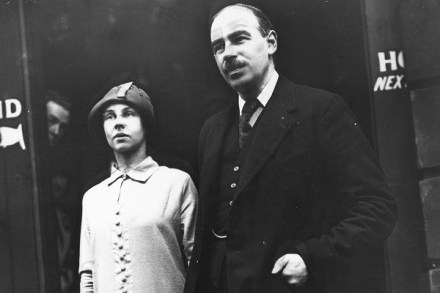
The Chancellor's economic brain, Rupert Harrison, looked distinctly restless last night, sipping champagne in John Maynard Keynes's drawing room. Osborne's chief-of-staff, the architect the evil Tory austerity, did not seem entirely comfortable as he stood beneath an imposing mounted copy of The General Theory. This awkward tableau came about thanks to the launch of a book about the Bretton Woods summit by Sky News’s Economics Editor Ed Conway. The party was gathered in the very house from which Keynes departed on his way to the famous conference in July 1944. Conway said: 'It's quite rare to have a book launch these days. You either do it if you're expecting a global best seller, or because it says something about the writer's incredible vanity...

Monty Don, Kirstie Allsopp and Bear Grylls – we get the TV shows we deserve

From our UK edition

We’re now on day three of the Chelsea Flower Show, and this year the BBC have taken their coverage to the max. As well as the quotidian hourly slot with Monty Don, Joe Swift and newcomer Sophie Raworth, in the week preceding the show we were also treated to the daily Countdown to Chelsea. What is it that makes the public so interested in gardening that we are willing to watch so much of it? Gardening is, for the most part, about scrabbling around in the mud and digging up weeds. But that’s the point. If this were a country where the majority of people earned their keep by growing plants – ie arable farming – it’s unlikely that watching other people do the same would make for enjoyable viewing.

Ten handy phrases for bluffing on Thomas Piketty’s ‘Capital in the Twenty-First Century’

From our UK edition

How do you sound clever and au courant in 2014? Easy. You talk knowingly about Capital in the 21st Century, the seminal, magisterial, definitive, landmark, pick-your-coverblurb-adjective book by French academic Thomas Piketty. It's all about the growing gap between rich and poor, you see, and inequality is all the rage. No wonder: it's fun to get all hot under the collar about the 'mega-rich' — especially if you're secretly cushioned by the knowledge that you've got a bit tucked away yourself. Piketty (who must himself be making a mint) even topped the Amazon.com bestseller list last week, not bad for a such a big book on such a heavy subject. But really, who is going to trudge through 700-pages on economic theory?

Why Fraser Nelson is wrong about a jobs ‘miracle’

From our UK edition

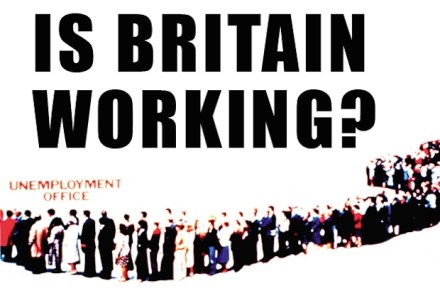
In his blog earlier today, Fraser Nelson argues: 'The UK jobs miracle is happening mainly due to radical welfare reform – the type Labour ducked in office..Under Labour, record numbers of people in work were celebrate as an end in itself – but most of the increase was accounted for by immigration. So more jobs did not mean less poverty – not if a quarter of Glasgow and Liverpool were still languishing on the dole at the peak of a boom. This time, it’s different. The welfare reforms are restoring the see saw link between jobs and dole queues.' I suppose I should by now get over the fact that intelligent, articulate journalists feel able to write with such certainty about data they simply don't understand.

You can buy happiness. Here’s how…

From our UK edition

If you are reading this article online, perhaps you could go to the comments section and let us know what single slightly unusual item you have bought which has brought you the most reliable and lasting happiness. Perverse answers are welcome, of course, but I am not so interested in suggestions such as ‘a Thai bride’ or ‘a brewery’ or ‘“The Concert” by Johannes Vermeer’. What I am hoping for is a list of slightly unusual domestic or practical items which you might have bought on a whim or as a slight extravagance but which subsequently you found surprisingly delightful or life-changing to the point of boring your friends about them.

Is full employment just another of George Osborne’s political stunts?

From our UK edition

‘Full employment’ usually means the lowest achievable rate of unemployment — somewhere south of 5 per cent compared with 7.2 per cent today, or to put it in numbers, fewer than 1.5 million compared with 2.3 million last month. You might think it ought to be a target of every Chancellor of the Exchequer. Only Norman Lamont ever said otherwise in public, telling the House of Commons in 1991 that ‘rising unemployment and the recession have been the price that we have had to pay to get inflation down. That price is well worth paying.’ Now George Osborne has embraced the full employment target, taking a little more wind out of Labour’s sails as he did so, and has said he wants us to have the highest employment rate in the G7.

The engagement-ring theory of property bubbles

From our UK edition

Google ‘the bread market’ and you get 135,000 hits, mostly from specialist food industry websites. Google ‘the property market’, however, and you get over 180 million. ‘The financial markets’ nets you 282 million. Seen like this, it’s unsurprising that capitalism has a reputational problem. The likelihood that the word ‘market’ is attached to any area of commercial activity is in direct proportion to the degree to which that category is seriously messed up. The idea that all ‘markets’ are effectively the same is perhaps one of the stupidest economic errors of the past 50 years. For a start, asset markets are not like other markets.

The rise of the BRICs and the fall of the JUUGs

From our UK edition

It was back in 2001 that my good friend Jim O’Neill of Goldman Sachs coined the acronym ‘Bric’, short for Brazil, Russia, India, China. These were the emerging markets that were going to surpass the developed economies. And so they have. Well, nearly. I, too, am partial to a good acronym and it has always seemed to me very unfortunate that there isn’t a matching one for the four biggest established economies. According to the International Monetary Fund, these are currently the United States, Japan, Germany and the United Kingdom (based on last year’s GDP figures). I therefore propose ‘Juugs’. The rise of the Brics and the fall of the Juugs has a good ring to it.

Niall Ferguson’s diary: Brazil is overtaking us – but it no longer feels like that

From our UK edition

 São Paolo It was back in 2001 that my good friend Jim O’Neill of Goldman Sachs coined the acronym ‘Bric’, short for Brazil, Russia, India, China. These were the emerging markets that were going to surpass the developed economies. And so they have. Well, nearly. I, too, am partial to a good acronym and it has always seemed to me very unfortunate that there isn’t a matching one for the four biggest established economies. According to the International Monetary Fund, these are currently the United States, Japan, Germany and the United Kingdom (based on last year’s GDP figures). I therefore propose ‘Juugs’. The rise of the Brics and the fall of the Juugs has a good ring to it.

Is there a way to live without economic growth? 

From our UK edition

During Japan’s lost decade in the 1990s I found myself handing out rice balls to Tokyo’s homeless on the banks of the Sumida river. The former salary men — it was always men — slept in cardboard boxes the size of coffins. I peered into one. Its owner had neatly arranged his last few possessions. Crockery, two wash rags and a blanket were all emblazoned with the designer logos I associated with Japan’s boom years when I had lived in Tokyo. They had washed up like artefacts from another age in this unlikely setting. They signalled more than anything else to me that Japan’s economic miracle was well and truly in the past. Financial Times Asia editor David Pilling lived in Japan for seven years.

A credit boom before each bust

From our UK edition

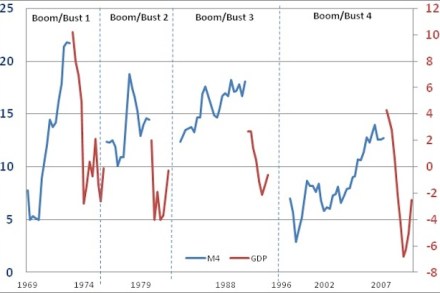
Here is a graph that shows the four economic downturns Britain has been through (red lines) over the past forty years. What I find strking is that each downturn was preceded by the same thing: a surge in the growth of money (blue line). In other words, the bust followed an unsustainable credit-induced boom. The motives and justification behind monetary policy leading up to each boom/bust might have been different. In the early 1970s, monetary policy was shaped by Competition and Credit Control (CCC) reforms. In the late 1980s, those who decided monetary policy wanted to shadow the Deutschemark, then join the Exchange Rate Mechanism (ERM). After that unhappy experience, monetary policy was made in order to target inflation.

Economists – the scourge of mankind

From our UK edition

Are there any disciplines on earth as hyped-up and overrated as economics? Every subject depends to some extent on others; you can’t, for example, understand history without a bit of geography or human biology, and you can’t master either of those without a bit of chemistry, for different reasons. The same goes for all disciplines – except, for some reason, economics, where the opinion of the experts seems to count for a great deal in discussions where their field is only one aspect. The great example of this was the euro, which was promoted by the great and the good of the dismal science as a brilliant idea because, of course, reducing barriers between markets will make us wealthier.

British households are still overwhelmed by debt

From our UK edition

Despite 'the age of austerity', Britain still has a debt problem. That’s the conclusion of a new report from the Centre for Social Justice. It suggests that personal debt in the UK has reached a record high of £1.4 trillion, or 90 per cent of the UK's economic output last year. That’s not happened overnight; but the debt level has increased steadily over the last decade: Breaking this down, the CSJ says that the average household debt is now £54,000 (nearly double what it was a decade ago). Thanks to the increase in borrowing, 5,000 people were made homeless last year due to mortgage and rent arrears.

The man who made it OK to talk about immigration

From our UK edition

It takes a lot to make the subject of immigration respectable for liberals, at least if you’re pointing out its problematic aspects. But Paul Collier, an Oxford economist specialising in the world’s bottom billion, has, in the 270-odd pages of his new book Exodus, opened up the issue for the left — well, for all comers, actually. Which, for a book suggesting among other things that, left to itself, there is no natural limit to immigration, is quite something. ‘The overwhelming reaction I’ve had,’ he told me, from his Oxford berth at the Centre for the Study of African Economies, ‘is that people thank me for making the subject discussable.

America is not facing a debt crisis. Why pretend otherwise?

From our UK edition

The maths of America’s financial problems are fairly simple. Every year the federal government spends more than it brings in so must borrow to fill the gap. This is fine when you’re young and healthy, with great prospects and you are borrowing to invest. But one day your lenders look at you and realise you’re not young and growing any more. You’re middle-aged and knackered. You are borrowing simply to spend and time is running out for you to pay back your debts. It’s an ugly moment for anyone, especially the most powerful country in the world. There are economists like Paul Krugman who argue that America is not like a household or a person. It can borrow and invest in ways unique to sovereign powers. Countries do not simply age and die.