Driving

A beautiful monster: the Aston Martin Vantage reviewed

From our UK edition

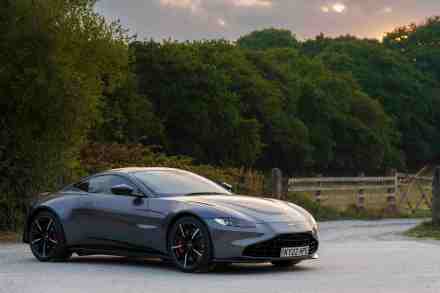
The new Aston Martin Vantage is shorter and hotter than the DB11: a smaller, truer sportscar, though slightly less elegant. 'Gentlemanly' is what the copywriter calls the DB11, but this is a 'hunter' and 'predatory'. Ferraris, meanwhile, are a little too hot for me – though I accept that they are sublime, if Ferraris are your thing – and the Toyota Supra, which I love – even shorter, even hotter, much cheaper – doesn’t make quite the same impression on the A30. People (I mean men over 40) love Aston Martins. They view them as an expression of British pride, and coo over them like babies, by roaring past, overtaking, and slowing down, and then insisting you overtake them in turn. The whole encounter is managed by hand signals and engine snorts, and it is delightful.
Stop demonising cyclists

From our UK edition

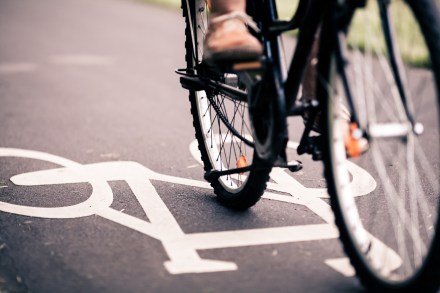
If you were to ask me how many bicycles I’ve had in my life, my response would be about as precise as Boris Johnson’s to the question of how many children he’s fathered. In my case, so many bikes have been stolen over the years – including one attached to a signpost (which vanished along with the bike) and another that I left unlocked for 45 seconds outside Nicolas on Holland Park Avenue. That turned out to be the most expensive bottle of wine I’ve ever taken to a dinner party. (In fact, that was the same bike that had previously been harvested of 90 per cent of its components after being tied up in the street one night, leaving only the bare frame.) So many bikes, but I persist.

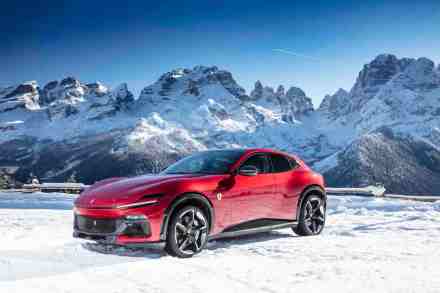
Is the Purosangue SUV a real Ferrari?

From our UK edition

I recently spent a long weekend in the Italian region of Emilia-Romagna, driving a fast car, eating tortellini alla panna twice a day and rifling through Luciano Pavarotti’s DVD library. The tenor’s house, outside Modena, has been converted into a museum filled with his many shiny awards and Hermès scarves, framed photos with Bono and Mandela and, yes, his unrivalled collection of Police Academy movies. I also visited Modena’s sprawling San Cataldo cemetery to see the imposing family tomb of one Enzo Anselmo Giuseppe Maria Ferrari, 1898-1988. I listened carefully. It was peaceful. Apart from birdsong, not a whisper. There was no whirring, no drilling, no vibration or rumbling from underground. Everybody said he’d be spinning in his grave. Talk about a let-down.

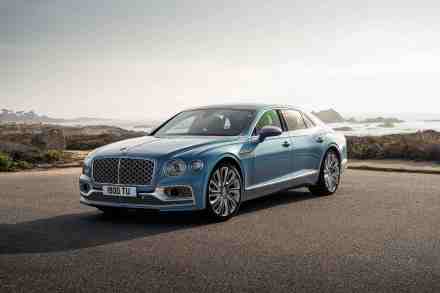
Style on a plate: Bentley’s Flying Spur Hybrid reviewed

From our UK edition

Britain makes the world’s best luxury cars: we got there early, as we did with the Industrial Revolution, which is why our infrastructure is fraying, though our cars aren’t. You can argue about Rolls-Royce vs Bentley, and both be right, though the late Queen chose a Bentley for the state limousine and a Jaguar Land Rover for the state hearse in Royal Claret. (It was little discussed, for reasons of taste, but it was a very beautiful hearse. The claret was right.) Perhaps a Rolls-Royce is too elitist though; with minimal specification, it could be made to look like a crown. Here is the Bentley Flying Spur Mulliner: the Bentley saloon, a GT with four doors. You can take a 4.0 litre V8 or a 6.0 litre W12 engine, but electrification is coming: this is the 2.

Why after Covid does everyone drive like maniacs?

I’m cruising on an uncongested stretch of Interstate 80 when I see an eighteen-wheeler plodding up the hill ahead. I tap my turn signal, glance at my blind spot and coast smoothly into the passing lane. I’m gearing up my vocals for the “got runned over by a damned old trainnnn!” line of David Allan Coe’s song, playing on the radio, when I’m spooked out of my aria by a mid-size SUV barreling down on my bumper like a furious Pamplona bull. “Cop!” is my first thought, as my pursuer appeared out of nowhere. I let off the gas and check my speed: seventy-nine in a seventy. Too late to tap my brakes. Besides, he’s likely to smash into me if I try that. I rush to merge back into the other lane and await the flashing blue lights. Except the blue lights never come.

Why thieves are after your number plates

From our UK edition

My day had started as it always does, with a near 40-mile round trip to school, then an hour’s walk in the pretty country park close to our home near Nottingham. As usual, I parked in the small car park and exchanged ‘good mornings’ and ‘beautiful weather, isn’t it?’ with the familiar faces I see most days – dog walkers, joggers and mums herding their kids to the village school. There was nothing out of the ordinary about my walk, which covers an undulating route on a track alongside the canal, through a small wood and past fields of sheep. Until I returned to my car, that is.  Straight away I realised something was different, but it took a few seconds to register what it was. The front number plate was missing.

The hidden benefits of smart motorways

From our UK edition

In 2015, Holborn Underground station was suffering from serious overcrowding at peak hours, with a bottleneck forming in the space leading to the escalators. So Transport for London tried an experiment. Abandoning the usual ‘stand on the right, walk on the left’ convention, they placed signs on two of the three ascending escalators instructing people on both sides to stand. Outrage followed. But the experiment worked. Escalators with passengers standing transported an average of 151 people per minute, compared with 115 for the dual-use escalator. People cannot all walk up an escalator in strict lockstep for fear of ending up on the sex offenders register You can see why people objected: it is counterintuitive to the point of seeming daft.

In praise of the speeding crackdown

From our UK edition

We all needed a laugh, what with the pound tanking and inflation running away, my old pal Kwasi delivering a Budget, probably for a bet, like Milton Friedman’s last cheese-dream, and the threat of nuclear annihilation starting to seem like a welcome turn up for the books. Said laugh has just been obligingly provided by the Metropolitan Police. They have just, without broadcasting the fact, decided to enforce the speed limit with the tiniest bit more rigour – and as a result, they’ve nicked more than two and a half times as many people for speeding in the first six months of this year than they did in the last six months of last year.

Forget trains: American car culture is worth defending

Had Amtrak come to a screeching halt this week, as it was on the verge of doing, most Americans would not have noticed. Of those workers who still commute to in-person jobs, 76 percent drive their own cars, 10 percent ride a bike, and only 11 percent use public transportation. Other countries tend to give us a bad rap for our car-loving ways. Most of us — nine in 10 Americans over the age of 16 — drive. And we drive a lot: 59 minutes and 30 miles a day, on average. We’re on the road twice as much as our friends in France, Germany, and Great Britain. So when non-American critics blame climate change on our driving habits, I can’t help but think they’re just plain jealous. Here’s the thing about America: it’s huge. That means people can spread out, and we have.

A driver’s license, if you can keep it

I remember still the foreboding language and tone when I was learning to drive in New Jersey over a decade ago. First, you needed to earn your permit. Never forget that driving is a privilege, not a right (which only works if driving is an option, not effectively a requirement, though drivers ed isn’t in charge of land use). After your permit, you start with your probationary license. And in a twist that somehow passes civil liberties muster, you’re not even allowed to appeal a ticket issued to you during your probationary period. You feel a bit under suspicion until you finally get that license. Yet for all that, it’s still, basically, a lot of bureaucracy and paper-pushing.

The sad demise of American car culture

Today’s youth get a bad rap for being boring: they don’t join clubs, volunteer, pursue hobbies, or invent anything. Their sartorial style is a sad mishmash of tired trends, their movies unimaginative remakes (there are nine Spider-Man movies now), and their music is largely stoned hip-hop artists talk-singing to the same hypnotic beat. There are many forces at work in the dulling of the current generation, but one of the simplest reasons youngins may not feel inclined to go anywhere or do anything is because getting there is such an exercise in meh. When was the last time you sat in the driver’s seat of a new car, gripped the steering wheel and felt one iota of excitement?

car

The pernicious creep of the 20mph zone

From our UK edition

‘Twenty is plenty’ say the passive-aggressive road signs as you drive very slowly through 20mph zones all over Britain. The slogan is accompanied by a cartoon drawing of a snail. Then you get a frowny-frowny-frowny electronic sign and you slow from 25 to 20 to make it turn into a smiley face. That’s how we’ve been softened up: with a cocktail of the sanctimonious and the kindergarten. As I crawl along the empty dual carriageway of Park Lane late in the evening, where the speed limit has been reduced from its previous 40mph to the now blanket central-London limit of 20, I hiss: ‘No, twenty is not plenty. Twenty is lente.’ It feels ludicrously slow: the trundle of a Dinky car, and an affront to common sense.

Buying a brand-new car is the ultimate good deed

From our UK edition

The Department for Transport recently ended a £1,500 subsidy towards the price of new, lower-priced electric cars one year earlier than planned. To their credit, there are better ways to promote electric-car use – for instance by encouraging the installation of public charging stations. As it is, the spread of rapid-charging stations in the UK is bizarrely uneven. Some parts of the country are well served, but there are unexpected black spots. Oddly, trendy places where people talk endlessly about sustainability – such as Oxford, Cambridge and Brighton – are hopeless for rapid charging points, while less fanciful places like Thurrock, Milton Keynes and Newport are awash with them.

Why sat navs are a conversation killer

From our UK edition

When my daughters learned to drive, I suggested they take their tests in automatics as driving manual cars would soon be redundant. I worry about this. Not because I think I was wrong, but because I fear that gear-changing is yet another of those once commonplace skills which may soon be lost to technology for ever, like double-declutching or the ability to memorise more than three phone numbers. As evidence of this depletion of tacit expertise, consider how the satnav has eroded map-reading skills in anyone under 40 – something which might explain why the Russian army sticks to main roads even when driving tanks. Since nobody uses printed maps any more, it has left people spectacularly ignorant of relative geography.

My solution to unfair traffic fines

From our UK edition

My driveway now lies in the middle of an ‘Average Speed Check Zone’. It’s a wonderful arrangement – for me – since the slower traffic makes it easier to pull into the road. Yet I am still free to drive through the village like Fangio since average speed check cameras do not record your speed, only time taken between two points. Since I rarely drive past my house without stopping, it barely affects me at all. It’s symptomatic of a wider problem. To what extent can we truly rely on technology to replace human judgment in the administration and enforcement of rules? If a traffic camera catches one person a day, that driver is likely at fault.

My plan to cut congestions on our roads

From our UK edition

Much of the current antipathy towards the car derives from the excessive influence Londoners exert over national debates. London is an outlier in being one of the very few places where you can avoid owning a car, and where cycling or public transport is faster than driving. Indeed a car is less useful in the middle of London than anywhere else: you can’t drive to work, you can’t park at the shops and, if you set out from inner London, after 30 minutes of fraught driving you will merely end up in a worse part of London. This is not true in other cities, where 30 minutes’ drive will take you from the centre to attractive countryside and fast roads.

Letters: What happened to bells on bikes?

From our UK edition

Jesus wept Sir: Sam Dunning’s brilliant exposure of the corrupting links between Jesus College, Cambridge and the Chinese Communist party (‘Centre of attention’, 5 February) raises the question of how the college can be rescued from its current leaders. Their virtue-signalling gestures (the Benin bronze, the Rustat memorial etc) have already prompted many of us alumni to delete Jesus from our wills. But this association with vile tyranny is altogether more serious. Perhaps an academic boycott might bring the Master and Fellowship to their senses. Certainly something must be done to save this ancient Christian foundation from its present role as an agent and support of manifest evil.

The Highway Code to hell

From our UK edition

I did a speed awareness course on Monday. For the uninitiated, you have the option of doing one of these if you’re caught speeding and want to avoid getting three points on your licence. It only lasts two and a half hours and there’s no test at the end, so it’s a no-brainer, although you have to do it again if you’re spotted playing on your phone at the back. I’ve never heard of anyone choosing the three points instead. Like most people forced to undergo this humiliation, I was convinced I had nothing to learn. We all know about the laws of motion: the faster you’re going, the longer it takes to stop. And, inevitably, I found myself silently correcting the poor English of the two trainers.

Fact check: are cycle lanes really making traffic worse?

From our UK edition

London is the most congested city in the world and it’s the cycle lanes wot done it. That is the impression you will pick up from the headlines this morning.  'Cycle Lanes Blamed as City Named Most Congested,' reads a BBC headline, to take but one example. The story emerges, it turns out, from a global index published by transport consultancy Inrix, which claims that motorists in London spent an average of 148 hours in traffic jams this year, more than in any other country in the world. In the past year, the city climbed from being the 16th most-congested of those studied to the most congested of that lot.