Driving

The case for road pricing

From our UK edition

Thornton Wilder remarked that there are individuals who fall in love with an idea long before its appointed rendezvous with history. We hurl ourselves against the indifference of the age. It is now four decades since one of my first columns was published in London’s Evening Standard. In it I proposed an idea of which (if you read on) you’ll hear more. I got no response. It’s nearly 20 years since I wrote essentially the same piece as a whimsical side column for the Times. Labour’s Alistair Darling had called for debate on the idea. It never happened and my column attracted little notice. Fifteen years later, excited by a competition the Wolfson Foundation ran for the best proposal for implementing the idea, I wrote a serious 1,000-word column for the Times.

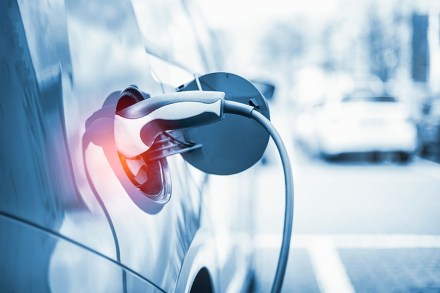
Charging ahead: how to get the best out of an electric car

From our UK edition

Where do you want to go? China or India? I have always found India infinitely more fascinating — for a simple reason. If you ask Sinophiles about China, they always quote statistics; Indophiles tell you stories. It’s fine to know that China has built 24,000 miles of high-speed rail track, or that its GDP is growing at an annualised rate of 8.27 per cent, but it doesn’t make me want to visit. It’s like reading an article about the film industry in the Economist: informative, yes, but it doesn’t make you want to go to the cinema. The electric car market is trapped in a similar numerical morass. The more you read on the subject, the more you wish you had a degree in electrical engineering. I suppose all technologies are like that in the early days.

‘Smart’ motorways are an accident waiting to happen

From our UK edition

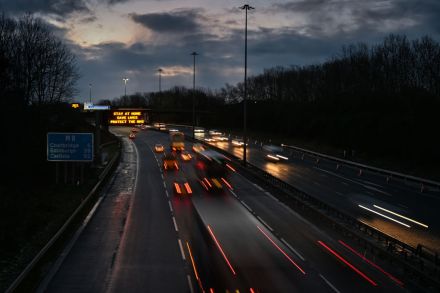
If I could wave a wand and reverse just one government policy it would be the expansion of so-called 'smart motorways' in the face of what seems the iron determination of the Department for Transport to press ahead with them. These are motorways where the hard shoulder is incorporated into the motorway to create an extra lane – a loss supposedly compensated for with periodic refuges for breakdowns. If you wondered why stretches of the M4 are shut most weekends for works, this is what they are doing. The consequences of such supposed 'improvements' can be lethal.

Women need to take control and take the wheel

From our UK edition

There is a Saudi Arabian film that I love. It is called Wadjda and is about a young girl who longs to have her own bike, so that she can play outside and ride wherever and with whomsoever she likes. Yet Riyadh’s restrictive patriarchy frowns upon women having agency over their means of transport, even bicycles, ensuring that they are forever at the mercy of capricious and often irascible male drivers.  I have thought about this film and its message a lot this year, when the many benefits of having our own independent methods of transport, primarily cars, have been amply highlighted.

What does it mean to be ‘fit as a butcher’s dog’?

From our UK edition

Boris and the butcher’s dog Who first coined the phrase ‘as fit as a butcher’s dog’? It has been traced to Lancashire. It is not the only quality attached to butcher’s dogs, however — such animals were perhaps widely observed as a result of customers having to entertain themselves somehow while the butcher prepared their cuts, and a dog gave them something to watch. A variant has someone as ‘happy as a butcher’s dog’. John Ray, in his collection of English proverbs from 1670, describes the expression ‘as surly as a butcher’s dog’.

Why is buying a car such an ordeal?

From our UK edition

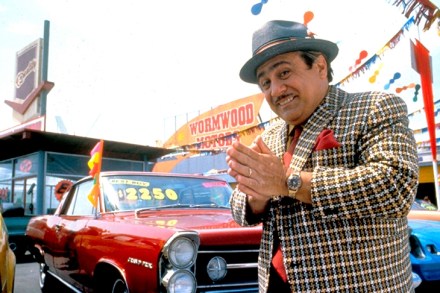
Why is it so insanely difficult to buy a car? And especially if you are a woman? Part of the trouble is that car salesmen are a particularly unreconstructed breed of men who think ‘lady’ customers will be more interested in the size of the vanity mirror than the fuel consumption. But it’s not just that — it’s the fact that they treat the transaction with all the pomp and gravitas of applying for a half-million-pound mortgage. This started back in February when I left a party (remember those?), got into my Volkswagen and set off into St James’s. Somehow I pressed the accelerator instead of the brake and drove smartly into the side of a taxi, making a serious dent.

London’s war on motorists isn’t helping anybody

From our UK edition

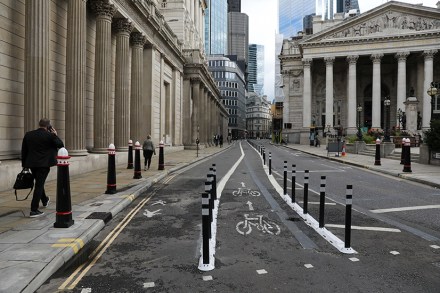
Late one evening in Yangon in Myanmar a few years ago, I noticed a grey Morris Minor van patrolling the streets. It had an old-fashioned double--ended trumpet loudspeaker on its roof blaring out an amplified voice. ‘What’s it saying?’ I asked my guide. ‘It tells the people “It’s late! Stop drinking and go to bed! You have a busy day tomorrow!”’ That’s the spirit. We should get some of that in London. ‘Stop eating! Get on your bike! Pedal faster!’ Why has Covid brought out a rash of virtuous bullying? I have lost count of the number of times that Radio 4 has asserted that this plague needs to create a better, more caring, more aware, lovelier human race. (And if not, we can, of course, be ordered to be so.

The case for road rationing

From our UK edition

Here’s the quandary. How in future can we make the kind of rapid advances we have made during the Covid crisis without waiting for a lethal pandemic — or worse — to force our hand? We have, after all, made exceptional non-medical discoveries in the past few months. By being forced to adapt simultaneously, we have discovered better forms of collective behaviour which might never have emerged independently. I was an early convert to video-conferencing, yet even I was astounded at the extent to which the world can function remotely.