DNA

Does a propensity for crime depend on one’s DNA?

This book begins strangely. Kathryn Paige Harden and her man Travis go off into the Texas desert to take some LSD in the hope that it will provide a ‘hard serotonergic reboot’. They have not so far had sex, but Travis has plans. ‘You’ll come back with your third eye,’ he says, ‘and then we’ll fuck. You’ll be glad we waited.’ At this point you may be tempted to hurl the book across the room. The self-centredness is oppressive. But persist. It rapidly becomes a very powerful read. Harden is a psychologist and behavioural geneticist, and the primary theme of Original Sin is the way in which science raises questions about morality and the law. For example, is a psychotic man who murders his wife less guilty than a sane man who does so with a clear head?
Who wants to bring back the Neanderthals?

In the not-too-distant future, if your T-shirt starts giving fashion advice or we’re all enslaved by a race of disease-resistant metahumans, then blame Martin Amis. More precisely, blame his obsession with Space Invaders. With a foreword by Steven Spielberg, Amis’s 1982 Invasion of the Space Invaders: An Addict’s Guide to Battle Tactics, Big Scores and the Best Machines gave intellectual heft to a pursuit – videogaming – that had hitherto been the preserve of glassy-eyed youths. His advocacy proved prescient. Over the next couple of decades, the best minds of a generation dedicated their lives to making pixellated worlds as compelling and realistic as possible.

‘They don’t want me to rise again’: China’s gene-editing scientist on why he’s back in the lab

Before he agrees to be interviewed, He Jiankui has one request: that he is introduced as a ‘gene editing pioneer’. This may come across as grandiose, but it is also indisputable. No one else in history, after all, can say they have created genetically edited human beings. In 2018, He dropped the mother of all scientific bombs when he announced that he had used Crispr, a gene-editing technique, to alter the DNA of two babies. In a YouTube video, He explained that the twins, ‘two beautiful Chinese girls’, codenamed Lulu and Nana, had been born safely just a few weeks before in Shenzhen. Both had had their embryos edited to prevent them catching HIV from their father. Later, it emerged that another woman was pregnant with a genetically modified baby.

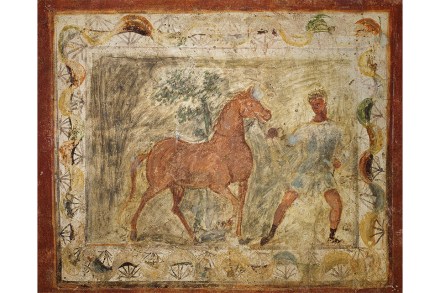
Bones, bridles and bits – but where’s the horse?

The German cultural scientist Ulrich Raulff has written that horses have as many meanings as bones. In the archaeologist William Taylor’s new history of horses and humans, we meet all those bones. Found in thawing permafrost, in caves, and buried ceremonially in graves in Siberia and Chile, the bones are cracked open by Taylor to show how the horse evolved in the Americas before its early encounters with human hunters. Does a 5,000-year-old worn tooth tell us it once chomped a bit? Does damage to vertebrae indicate a rider? Then came domestication, transforming the species from near extinction to tool and symbol on every major landmass on the planet. After that, horses and their keepers created empires, paced epically long trade routes – and brought plague from the steppes.

Life is a far richer, more complicated affair than we imagined

In 1982, the philosopher Karl Popper suggested that ‘science may be described as the art of systematic simplification’. In this mind-stretching book, Philip Ball seems to wish to prove Popper’s statement both wrong and correct. On the one hand, Ball is a clarifier supreme. It is hard to imagine a more concise, coherent, if also challenging, single volume written on the discoveries made in the life sciences over the past 70 years. The author is a former editor of Nature and has been privy to the flow of cutting-edge results coming from the world’s leading research programmes over the past decades. How Life Works has a sense of up-to-the-minute authority. Yet Ball is also deeply alive to the human story within his project, leavening technical matters with wit and humour.

The best of this year’s gardening books

What makes a garden is an increasingly pressing question, in the light of what Jinny Blom, in her witty and wise What Makes a Garden: A Considered Approach to Garden Design (Frances Lincoln, £35), calls ‘hairshirt hubris’. By that she means the refusal of some gardeners to call any native plant a weed or any slug or aphid a pest. She wishes to inject a little sense into what has become an ill-tempered dialogue between ‘traditional gardeners’ and the self-deniers who cannot see gardens as anything but parcels of sacrosanct earth, in which any major intervention by a human is to be regretted. But to Blom, garden-making is one antidote to the modern curse of solipsism. ‘Gardens insist we care for them as much, or more, than ourselves.