Depression

The midlife crisis spread: why are the affluent so depressed?

From our UK edition

‘You are here’, as those signs in windswept carparks unhelpfully point out. Yup. No mistaking it, you will tend to think glumly as you look at them. I had the same feeling when I looked at a new report from no less an institution than America’s National Bureau of Economic Research. The report is called The Midlife Crisis. It tells us that in the western world, one’s forties and early fifties are associated with problems with sleep, clinical depression and suicidal thoughts, disabling headaches and dependence on alcohol, alongside a decline in basic measures of life satisfaction. Well, fancy. I don’t know about clinical depression and suicidal thoughts, I should say. Not so melodramatic, me.
How we fell for antidepressants

From our UK edition

The French novelist, Michel Houellebecq, with his accustomed acuity about modern culture, titled his last novel but one Serotonin. By then, of course, this famous neurochemical had become the key to a perfect human existence, too little or too much of it resulting in all the little problems that continue to plague mankind. If only we could get the chemical balance in our brains right, all would be well, life would return to its normal bliss! After the commercialisation of Prozac, people started talking about the chemical balance in their brains in much the same way as they talked about the ingredients of a recipe. As Peter D.

America is forgetting how to make stuff

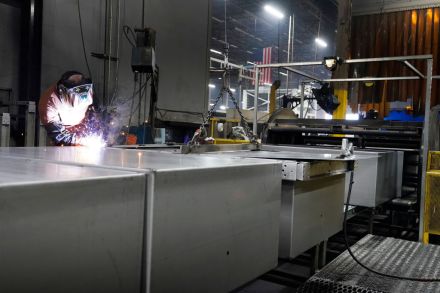
Articles about the future and “progress” have been popping up a lot lately, with conversations revolving around the inevitable advancements in technology and automation. Where we should head next is the collective theme. To the metaverse? To outer space itself? But instead of setting our sights on colonizing Mars or creating a perfect alternate reality, we should slow our roll, focus on the here and now and consider whether the frenzied “progress” we’re in such a rush to make has demonstrated any benefit to real-life people. Manufacturing is a good place to start. Let this startling reality sink in, reported in 2017 by the Organization for Economic Co-operation and Development: Between 2000 and 2010, US manufacturing experienced a nightmare.

A gay journey of self-discovery

From our UK edition

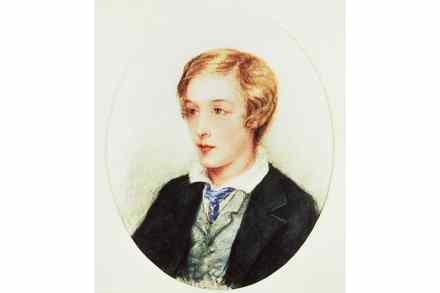
Seán Hewitt, born in 1990, realised that he was gay at a very early age. ‘A kind, large woman’ who was babysitting him told him that it was wrong. ‘I was perhaps only six or seven at the time, but she knew. I knew it too. It was as if she had peered into the deep, secret part of my soul and seen what I was hiding.’ Alongside the precocious knowledge came desperate attempts to conceal the truth. Hewitt adopted alien ways of being: ‘I regulated myself; I policed myself.’ As an adolescent, he spread rumours about his exploits with girls. He even watched heterosexual porn on the sitting room television in the hope that his classmates would spot him from the street.

Is losing God making America miserable?

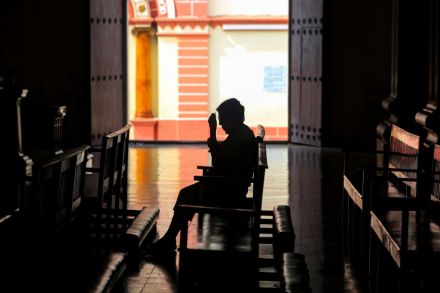
The number of Americans who believe in God has reached an all-time low, according to a Gallup survey that’s been tracking our nation’s “values and beliefs” since 1944. For a God fearin’ woman such as myself, it’s a disheartening statistic. But we are told never to abandon hope, and recent events — the Supreme Court rulings against abortion and in favor of prayer, a million swing voters switching their registrations to Republican, Keeping Up with the Kardashians finally airing its last season — betoken a more God-centered future. Gallup reports: The vast majority of US adults believe in God, but the 81 percent who do so is down six percentage points from 2017 and is the lowest in Gallup’s trend.

god

Get off the La-Z-Boy this summer

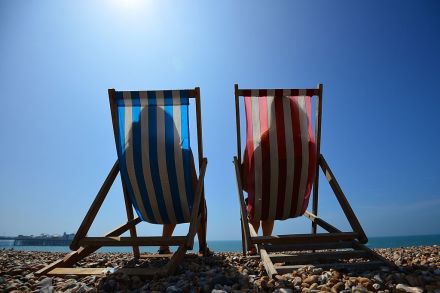
After two and a half years of Covid waves and last year’s elusive hot-vax summer that never was, Americans are depressed, bored and clamoring for something to do. I’m one of them. Yet when it comes to choosing what to do, many of us are paralyzed by an embarrassment of riches. Allow me to be the thorn in your side that says: get off your La-Z-Boy and go do something. Anything. Scrolling through Netflix for your next binge-watch doesn’t count. Give your couch cushions some time to regain their figure. I’m probably the worst person to be penning this advice — I’m five days delinquent on my column deadline, and have been at least as late every month for as long as I’ve been writing in these pages.

summer

Jonathan Bate weaves a memoir around madness in English literature

From our UK edition

There is a trend for books in which academics write personally about their engagement with literature. Examples include Lara Feigel’s Free Woman, in which the author blends a memoir of her marriage break-up with a close reading of Doris Lessing’s fiction, and Sally Bayley’s Girl With Dove, which fuses an account of a traumatic childhood with sketches that focus on Bayley’s early love of books. Addressed to a wider readership, these works combine autobiography with literary criticism. They are carefully crafted, confessional and ask why literature matters.

‘Father Stu’ and the merits of suffering

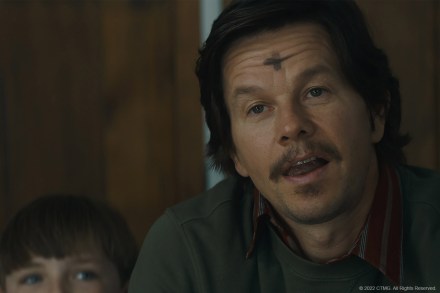
Father Stu opened in theaters this Holy Week. It’s a movie about a real-life man who led a depraved and reckless life, found God, became a priest, suffered greatly and died from an incurable disease. And did so — more importantly — with patience and good nature that inspired multitudes of those around him. The film’s message is essentially that suffering has value, and as we sit in the richest nation in history drowning in the highest levels of depression ever recorded, such a reminder could not come at a better time. It’s a curious thing that so many people are dissatisfied with life when the standard of living has never been higher.

Anxiety is killing parenthood

From our UK edition

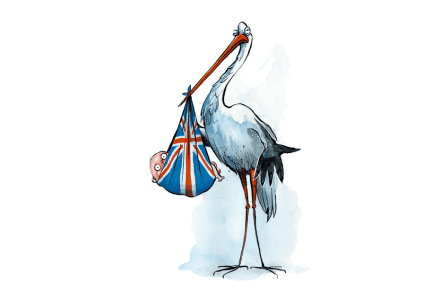
Britain is on a slow descent to oblivion. Scotland is even closer to the abyss, with a birth rate of just 1.29, well below the UK’s sub-replacement level of 1.65. It turns out the answer to the West Lothian question is that West Lothian will disappear. Doomsday demography should matter, but Whitehall is in no way prepared to deal with it. New research published this week found that mental illness in early adulthood could account for up to 60 per cent of future childlessness. A generation too worried to have children spells disaster for countries that need to support ageing societies. Researchers looking at the populations of Sweden and Finland have drawn a link between dozens of mental health disorders and later childlessness.

Christina Patterson overcomes family misfortunes

From our UK edition

The journalist and broadcaster Christina Patterson’s memoir begins promisingly. She has a talent for vivid visual description, not least: ‘We are a pink and navy family. Two pink girls, a navy boy and a navy wife.’ Her early family holidays in Sweden, where her mother is from, are full of lingon-berries, hammocks and mini-golf. She recounts the story of her parents’ courtship as students and says of their relationship: ‘Love at first sight. Love for nearly 50 years. Love till death do us part’ — ominously pointing out how easy they have made love and marriage look. Most arresting, however, in this early part of the book, is her depiction of her elder sister Caroline’s nervous breakdown as a teenager.

Will the real Mel Brooks please stand up?

From our UK edition

‘I went into show business to make a noise, to pronounce myself,’ Mel Brooks told Kenneth Tynan in 1977, in a New Yorker profile entitled, with appalling relish, ‘Detours and Frolics of a Short Hebrew’. ‘I want to go on making the loudest noise to the most people.’ His memoir All About Me! may be his final act of this pronunciation. He is 95. His real name is Melvin Kaminsky but that wouldn’t fit on a drum — a drum is his natural instrument — and he shortened it to Brooks. He was the youngest of four boys of Max and Kate. His father died when he was two, and Mel created Maxes wherever he could — Max Bialystock in The Producers, a man too vivid to be forgotten; and a son with Anne Bancroft, Max Brooks.

Why America’s attitude to mental illness is dangerously deluded

From our UK edition

A friend who works in social care speaks to me earnestly about a troubled young colleague: ‘Of course, she’s got a borderline personality disorder...’ I check her there: ‘What do you mean by that?’ She thinks for a moment and continues: ‘Well, she’s very emotional, she can’t maintain relationships, and she’s very defiant…’ I wait for a moment to see if there’s anything else before I say my bit: ‘Perhaps she just has a bad character — because fundamentally that’s all a personality disorder is: epithetic psychiatry. There’s no defined organic basis for these so-called disorders, no psycho-dynamic aetiology either, no progression — and, of course, no cure.

Why I’ve gone off country sports

From our UK edition

‘Oh, I do so love to see all the lovely pheasants running around the place,’ said the lady walking the Alsatian up the farm track. The huge dog was straining at the leash, pulling her along, but she was trying to stop for a chat with the builder boyfriend as he mended a fence. I came alongside them in my car as I arrived at the farm to ride Darcy. I got out and joined the tail end of the conversation, in which the builder b took it upon himself to explain to this sweet lady that the pheasants got shot. Look, he had to. She was under the impression the footpath ran through a wildlife park, and that the millionaire at the top of the track was putting the pheasants there for the walkers to look at. I reckon this explains why the whole village support the local shoot.

Everyone is depressed!

Former first lady Michelle Obama told late night host Stephen Colbert this week that she suffers from 'low-grade depression' and anxiety. If you rolled your eyes at that self-diagnosis, you're not alone. Mrs Obama has joined the hordes of celebrities who have publicly spoken about dealing with anxiety disorder, including Kim Kardashian, Selena Gomez, Cardi B, Adele and Jennifer Lawrence. Apparently this is supposed to make these mega-rich, ultra privileged individuals more relatable to the average human. I mean, who doesn't get a bit nervous before embarking on a worldwide singing tour or giving a 'thank you' speech after receiving an Oscar?

depression michelle obama

Why I’ve gone right off the police

From our UK edition

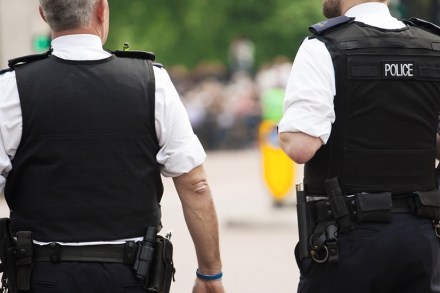
‘Welcome to Victims First. Please leave your name and number and we will return your call. Beeeeeeeeeeeep!’ I had rung the number given to me by the police to pay my fixed penalty fine for not having an MOT. This £100 I was trying to pay was coming out of an increasingly tight household budget, incidentally, so I decided that the fairest thing to do was to claw it back from the state. I had, of course, deeply apologised to the officer who pulled me over for forgetting the MOT after the Covid extension period ran out. And I begged him to let me drive straight home, park off road, and take the Volvo to be tested the very next morning. But he insisted I had to be fined.

Why the first self-help book is still worth reading: The Anatomy of Melancholy anatomised

From our UK edition

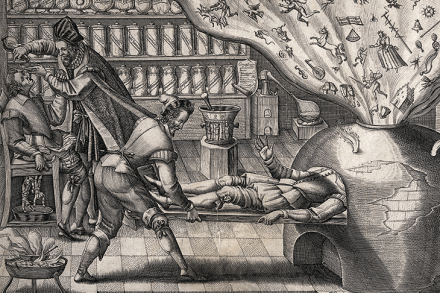
Footling around on the internet recently, I stumbled on a clip of a young woman singing Leonard Cohen’s ‘Hallelujah’ to a full-grown cow. As she sat cross-legged, strumming away not very well on a guitar, the cow lay down beside her and gently nudged her with its huge head as adoringly as any puppy. The sight brought to mind a passage in Robert Burton’s The Anatomy of Melancholy in which he reflects on music as a remedy: Harts, hinds, horses, dogs, bears are exceedingly delighted with it; elephants, Agrippa adds; and in Lydia in the midst of a lake there be certain floating islands (if ye will believe it), that after music will dance.

A burnt-out case: the many lives of Dr Anthony Clare

From our UK edition

Those who best remember Dr Anthony Clare (1942-2007) for his broadcasting are firmly reminded by this biography that we didn’t know the half of him. Its authors are Brendan Kelly, professor of psychiatry at Trinity College, Dublin and editor-in-chief of the International Journal of Law and Psychiatry and Muiris Houston, a columnist for the Medical Independent and the Irish Times. Theirs is a meticulously sourced, clearly arranged, carefully assembled account of Clare’s packed life and multiple achievements. Yet through it thrums a sense that you can only really understand him if (a) you are a psychiatrist and (b) you are Irish. Born in Dublin, Clare was the youngest of three children, the only son. His mother was fiercely ambitious for him; his father was a solicitor.

Why are more people dying at home?

From our UK edition

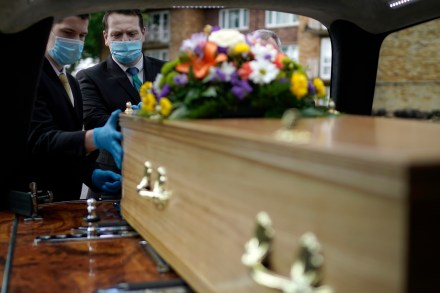
The death drought continues. For the eighth week in a row the Office of National Statistics (ONS) has recorded fewer deaths in England and Wales than would be expected at this time of year. In the week ending 7 August, 8,945 people died, one fewer than the previous week and 157 (1.7 per cent) lower than the five-year average for this week of the year. There is, however, a geographical divide: deaths in the East Midlands are running five per cent higher than the five-year average. While deaths in the North East and North West are slightly higher than usual. What should be worrying the government is the sharp rise of people dying in private homes With the number of deaths across England and Wales below average, the figure for ‘excess deaths’ for 2020 is also down.

My hairdresser cured my depression

From our UK edition

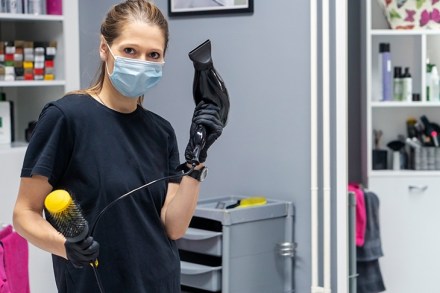
I walked to the salon in fiery sunshine. Gorgeous, zaftig Elody was wearing a short satin dressing gown of silver and gold. She was alone. ‘Ça va?’ she said, helping me into the gown. ‘Black dog,’ I said. ‘What is black dog?’ she said. ‘Cafard,’ I said. ‘A black ox trod on my foot.’ I sat in the chair, removed my glasses and stared in the mirror. The straps of my black face mask made my ears stick out. And strewth, the hair. ‘Two owls and a hen, four larks and a wren,’ I said. Elody speaks no English and my French is rudimentary. ‘What?’ she said. I had a stab at translating the limerick into French. She stared at me via the mirror with rapt, sceptical attention.

Gardening is a powerful antidote to grief, pain and loss

From our UK edition

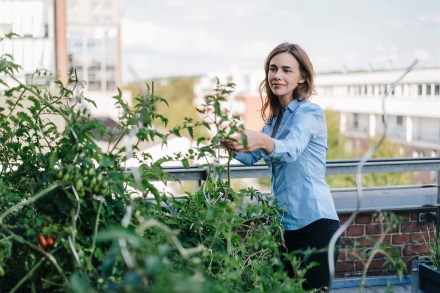
Viewed from a purely private garden perspective, this has been a ver mirabilis. The blossom has been wonderful and long-lasting, the sun has shone on the daffodils and tulips, and there has been enough moisture in the ground for impressive growth in trees, shrubs and vegetables. Thanks to lockdown and all its confinements, I have enjoyed an intensity of engagement with my garden I’ve rarely experienced since the days when I was a young, mustard-keen apprentice gardener. I feel as if I have watched every leaf unfurl, every flower open, every bird swoop across the lawn. Spring gardening, with its pleasant, mindful monotony of pricking out seedlings and pulling up speedwell, has soothed my nerves, consoled my sadness, calmed my fears, and brought a welcome sense of proportion.