Depression

Low life | 26 January 2017

From our UK edition

‘If life is a race, I feel that I’m not even at the starting line,’ I said to the doctor in French. (I’d composed, polished and rehearsed the sentence in the waiting room beforehand.) She was a sexy piece in her early fifties with a husky voice. She listened to my halting effort to describe my depression with a smile playing lightly over her scarlet lips as though I were relating an amusing anecdote with a witty punchline lurking just around the corner. I further explained in French that I had been properly but briefly depressed once before, about 15 years ago.


Low life | 12 January 2017

From our UK edition

Still depressed, or, as Matthew Arnold put it, ‘the foot less prompt to meet the morning dew’, I got out of bed one afternoon and exchanged the soggy Devon hills for the tower blocks of Canary Wharf. I went at the invitation of Dr Ivan Mindlin, orthopaedic surgeon, Las Vegas casino house doctor during the mob-run era of ‘Lefty’ Rosenthal and Tony ‘the Ant’ Spilotro, and one of the most successful sports bettors in US history. He kindly put me up in an ‘executive’ room at a hotel round the corner from his 18th-floor apartment. The first night we went for dinner at a Chinese restaurant. We went there on foot. It was like going for a walk in a multicultural concrete-and-glass future.

Low life | 5 January 2017

From our UK edition

On the Monday before Christmas, the black dog came around again and I couldn’t get out of bed. I lay all day staring at the wall. Depression has little to do with sadness, I think. It’s blankness. The same thing happened to me about 15 years ago. I was like a prize gonk for the four or five weeks it took for the Prozac to work, which it did, and since then I’ve managed to foster and sustain all the illusions I need to keep me buoyant. I couldn’t get out of bed on the Tuesday either. I was adrift in outer space. But I knew I must pick up the phone and make an appointment to see someone with a prescribing pad. It’s easier said than done, though, getting an appointment to see a doctor during the festive period.

The switchers

From our UK edition

‘He’s such a good competitor. He works so hard and he deserves it,’ said his predecessor Lewis Hamilton after Nico Rosberg won this season’s Formula One drivers’ championship. Replied Rosberg,the new champion: ‘He’s a top man and a top driver. He’s like Robocop. I thought I could pull clear of him but he kept coming back.’ Well, actually, no. The quotes are real but the words were not uttered by Rosberg and Hamilton, whose championship is yet to be decided.

Low life | 20 October 2016

From our UK edition

In 1999 I went to the doctor about the impotence. Don’t worry, he said. I have good news for you. He prescribed a new drug called Viagra to get me over the psychological hump. It worked; spectacularly. In 2001 I went to the doctor mumbling about depression. Don’t worry, he said. I have good news for you. He prescribed a new drug called Prozac to lift me out of it. Within three months I was back on the poop deck of this ship of fools with the wind in my hair and salt spray on my face. In 2013 I went to the doctor because I couldn’t pee. A blood test showed I had cancer. Don’t worry, he said. I have good news for you. These days we have so many effective new drugs against cancer, it might not kill you. Three years later it still hasn’t.

Long life | 13 October 2016

From our UK edition

Monty Don, the television gardening presenter, always comes across on screen as irrepressibly cheerful and enthusiastic, but this is a misleading impression. In fact, he gets black moods. ‘It’s no secret that for many years I’ve suffered from depression,’ he said last week at the Cheltenham Literary Festival. He had tried Prozac and cognitive behavioural therapy, but the only treatment that had worked for him was provided by his dog. ‘If you are unwell, physically or mentally, a dog is a huge comfort,’ he said. ‘Dogs heal. There is plenty of evidence to show that.’ I was glad to hear this praise at a time when the word dog is more famously being used as a term of disparagement.

Unhappy Pill

From our UK edition

A study came out last week that should have caused great alarm. For 13 years, researchers at the University of Copenhagen studied more than a million women between the ages of 15 and 34 who were taking a type of drug — one that is popular in all developed countries. Taking this drug, the researchers found, correlated with an increase in the risk of depression. The correlation was particularly strong in adolescent girls, who showed an 80 per cent higher chance of being diagnosed with depression. Usually when a story about women’s health and depression breaks, a phalanx of activists and campaigners pop up all over the media to ‘raise awareness’ of the issue.

What’s to blame for a generation’s desperation?

From our UK edition

Youth is wasted on the young, for the most part, and thank God for that. There’s nothing grislier than a teenage girl aware of her hypnotic effect on men, or a youngster who begins his important thoughts: ‘As a young person, I…’ These days, though, it’s not youth that’s wasted on the young so much as life, which is an altogether more troubling problem. Over the last year or so, I’d say a good third of the British kids I’ve met, from 15 to 25, have been suffering in some way from anxiety or depression. Often it’s obvious: severe anorexia; forearms calibrated with razor marks. The child says a wan hello, then slinks off to re-submerge in social media. The adults discuss the problem sotto voce.

The great depression

From our UK edition

If it was not yet ‘The Age of Anxiety’ in 1947, when Auden published his long poem of the same name, now it most certainly is, given the manifold global uncertainties that keep any sane person awake with worry. Nearly 20 per cent of adult Americans have been diagnosed with a general anxiety disorder, while the pharmaceutical industry has produced a legion of drugs that promise to combat the effects of such conditions. In Adam Haslett’s beautiful new novel, Imagine Me Gone, mental illness rips through one New England family over the course of four decades. Told in alternating first-person chapters by the parents and their three children, it is a captivating portrait of the ways depression and anxiety mark both the afflicted and everyone who loves them.

Mr Spock and I

From our UK edition

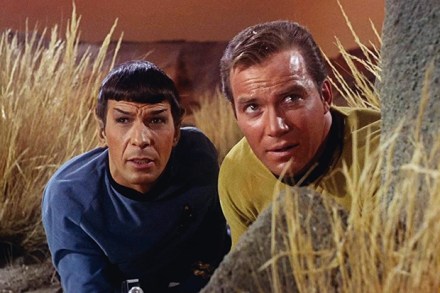
For a show with a self-proclaimed ‘five-year mission’, Star Trek hasn’t done badly. Gene Roddenberry’s ‘Wagon train to the stars’ is celebrating its 50th anniversary, although, as Marcus Berkmann’s entertaining and irreverent history points out, things could have been very different. Roddenberry’s initial idea was for a troupe of disparate 19th-century adventurers to explore the undiscovered corners of the New World in a grand airborne dirigible. While the prospect of Leonard Nimoy arching an eyebrow in a flimsy, flying gondola is irresistible, it’s hard to imagine such a concept proving as enduring as Roddenberry’s eventual brainchild.

A good editor and a good man

From our UK edition

Before embarking on this book, Jeremy Lewis was told by his friend Diana Athill that his subject, the newspaper editor and philanthropist David Astor, was too ‘saintly’ for a lively biography. As a publisher, she had worked on an earlier authorised tome, and thought she knew. Lewis, and Astor, proved more resilient. There are always column inches in a well-connected plutocratic clan such as the Astors. And Astor’s mother, Virginia-born Nancy, was the gold-plated battle-axe who made Cliveden, the family house in Buckinghamshire, the centre of 1930s appeasement. The story is really how Astor (born in 1912) took on his Christian Scientist mother, threw off the trappings of privilege, and became the owner and editor of the Observer during its mid-20th-century heyday.

Voices of St Joan

From our UK edition

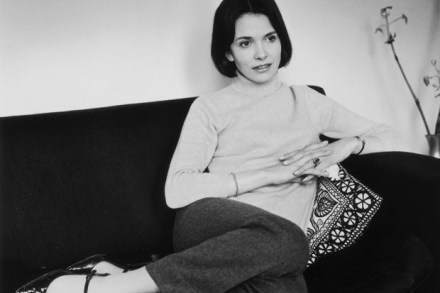
I don’t know if this counts as name-dropping, but I recently interviewed a boyhood friend of Elvis Presley’s in Tupelo, Mississippi. The interview required a bit of patience, because his memories of the young Elvis appeared only intermittently amid a lengthy ramble through more or less anything that crossed his mind. But, as it turned out, it was also good preparation for reading Stop the Clocks. Joan Bakewell published her autobiography in 2003 and this, as the subtitle suggests, is intended to be a far looser set of reflections.

Fear of the baby-snatchers

From our UK edition

Baby George was born into a happy family. His mother and father love him dearly. He lives in a cottage in a pretty village, with a six-year-old sister who adores him, and his grandmother lives nearby. His parents both have good jobs and his nursery is filled with toys. By most measures, George has had a good start in life. It was only when his mother was diagnosed with post-natal depression that George’s prospects looked bleaker. Not because his caring mother was feeling blue, but because in this, paranoid, post-Baby P era, the authorities take no chances. The slightest whiff of a mother unable to cope, and they swoop down, ready to whisk the baby away. When Rosie first realised she was depressed, she assumed the doctor would be able to offer her advice about how to cope.

The Spectator’s notes | 26 November 2015

From our UK edition

Because, it says, of its ‘liberal values and respect for human dignity’, the Economist has put out a film about Emily, a 24-year-old Belgian woman, who wants assisted dying. She is physically healthy, and comes, the film assures us, from a happy family. She has suffered from severe depression since childhood, however. By her own account, her self-made video (two years ago), in which she says ‘I don’t want to live a lie’ and ‘It keeps feeling empty whatever I do’, made her feel empowered. It inspired her to seek death at the hands of doctors. Belgium is one of two countries in the world which permits assisted dying for psychiatric reasons.

Love, loneliness and all that jazz

From our UK edition

Woody Allen (born Allan Stewart Konigsberg), the prolific, Oscar-winning auteur, New Orleans-style jazz clarinettist, doyen of New York delicatessen society, moralistic nihilist and icon of nebbishes everywhere, will be 80 on 1 December. He says he hopes to sleep through the occasion, but he is already completing next year’s film, his 47th, and preparing a series of programmes for television. In the meantime, here, in homage, are two magnificently illustrated catalogues raisonnés. Both books incidentally tell the story of his life, including the time when he courted his former partner Mia Farrow’s adopted daughter, Soon-Yi Previn, and caused all media hell to break loose. He survived disapproval by working, married the girl in 1997, and they still live happily together.

Long life | 23 July 2015

From our UK edition

The smart phone is a wonderful thing. We are never out of touch anymore, neither with friends nor with the world at large. But increasingly we read of the harm that it is doing us. We are no longer its masters but its victims. It makes us tense, anxious and insecure. We respond with unnatural haste to every noise it emits; and even when it isn’t peeping or squeaking at us, we neurotically check it all the time for messages that might have crept in surreptitiously. Psychologists and sociologists are having a field day warning us of its dangers. Our obsessive phone checking is affecting our brains, they say. It blights our relationships and stops us concentrating on anything.

‘What will they do when I am gone?’

From our UK edition

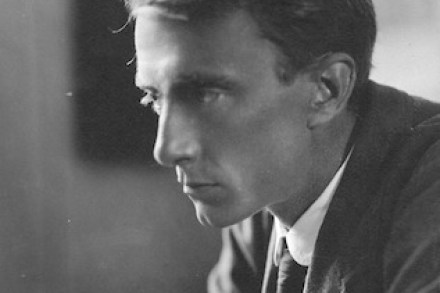
Edward Thomas was gloomy as Eeyore. In 1906 he complained to a friend that his writing ‘was suffering more & more from a silly but unavoidable nervous interest in the children’s movement in and out of the house’. The following year, he noted, I have no ‘interests’ at all, and marriage, he said, is ‘continually encrusting the soul’. To be fair, his life was a torment — depression, worrying about and writing for money, a miserable marriage — and perhaps most cruel of all he was denied the comfort we have, as later readers, of knowing that it will all turn out all right in the end. His was a messy life which found an elegant ending: with the writing of a handful of perfect poems, and then an abrupt death.

Why I’m thankful that Atos found me fit to work

From our UK edition

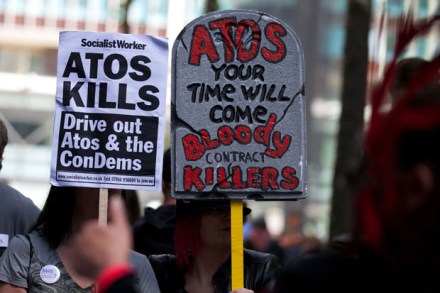
I was signed off work five years ago. I had lost my job and was, unsurprisingly, feeling low; I went to see my GP, as I was having difficulty sleeping. Rather than dishing out a few sleeping pills, as I had hoped, my doctor googled the letters PHQ-9 on his computer and quickly went through the multiple-choice test for depression he found. Within a few minutes, I walked out of the surgery with a diagnosis of depression and a sick note stating that I was, in his medical judgment, unfit for work. Looking at the Patient Health Questionnaire now, one thing immediately stands out: the copyright notice.

The crisis of masculinity won’t be solved with antidepressants

From our UK edition

There was much discussion recently about the rise in male suicide rates, after official figures published last week showed they were at their highest level since 2001. But one aspect of this has attracted little attention: the lack of support for men abused by their partners. In a poll of 130 Citizens Advice Bureaux workers, 63 per cent said it was easy to get help for women reporting domestic abuse, compared to 13 per cent for men. It’s bad enough that men struggle to find help once they pluck up the courage to ask for it. But they are also less likely than women to look for support in the first place - and more likely to be disbelieved.

Eugene O’Neill: the dark genius of American theatre

From our UK edition

George Bernard Shaw called him a ‘Yankee Shakespeare peopling his isle with Calibans’. He was dubbed ‘a fighting Tolstoy’ and ‘the great American blues man of the theatre’. Before he was 35, Eugene O’Neill had emerged as the first real titan of American theatre, a preeminence he has never lost. When Sinclair Lewis was awarded the Nobel Prize in 1930, he responded that they should have given it to O’Neill, because he had done ‘nothing much in American drama save to transform it utterly… from a false world of neat and competent trickery to a world of splendour and fear and greatness’. O’Neill’s struggle to wrench American theatre into splendour, fear and greatness is the subject of Robert M.