Depression

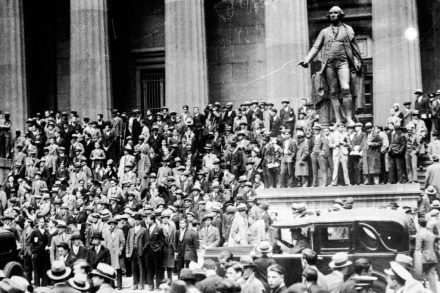
Andrew Ross Sorkin reconstructs the 1929 crash

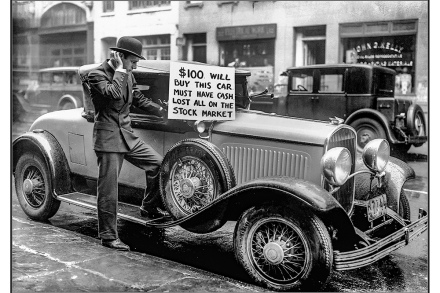
During the great financial panic of 1907, the banker J.P. Morgan locked the titans of the financial world in his lavish private study to determine which banks to rescue and which to let fail. This intervention saved the banking system, restoring public confidence. But trust in Wall Street was shaken to its core. Six years later, Congress passed the Federal Reserve Act, which sought to stabilize the American financial system by establishing a central bank to regulate credit and serve as lender of last resort. By the mid-1920s, the very mechanisms that were designed to promote stability had fueled a surge in stock market speculation.

1929 crash

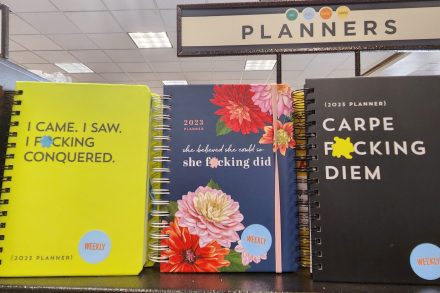
A very demoralizing trip to Barnes & Noble

America is enduring a mental health crisis, and you need go no farther than your local Barnes & Noble bookstore to see evidence. I was an avid journal-keeper for years and love all things paper, so I get a little giddy perusing the “stationery and gifts” section. Last weekend, however, rather than being energized by the prospect of filling one of those gorgeous, gilded, supple leather books with my most brilliant thoughts and sweetest sentimentalities, I was left feeling sad about the message sent by so many of the journals, planners, and gifts for sale. Judging from the featured items, you’d be led to believe America is a nation of depressed, exhausted, anxiety-ridden alcoholics. And for the most part, you’d be right.

Elon Musk: innovator, CEO, ket head 

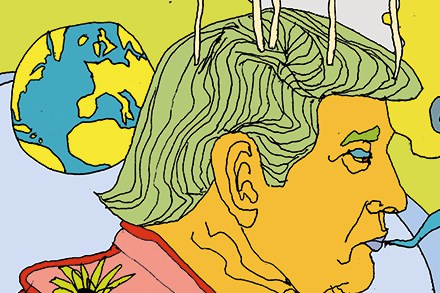
What’s your poison? All of the greatest minds have one. Freud loved cocaine, Charles Dickens dabbled with opium, Steve Jobs once claimed that LSD was “one of the two or three most important things I have done in life.” It turns out that Elon Musk’s drug of choice is ketamine, a controlled substance usually reserved for tranquilizing horses.  Elon Musk “microdoses” the substance, according to the Wall Street Journal. “The CEO has told people he microdoses ketamine for depression, and he also takes full doses of ketamine at parties, according to the people who have witnessed his drug use and others who have direct knowledge of it,” the report says.

elon musk ketamine

America is forgetting how to make stuff

Articles about the future and “progress” have been popping up a lot lately, with conversations revolving around the inevitable advancements in technology and automation. Where we should head next is the collective theme. To the metaverse? To outer space itself? But instead of setting our sights on colonizing Mars or creating a perfect alternate reality, we should slow our roll, focus on the here and now and consider whether the frenzied “progress” we’re in such a rush to make has demonstrated any benefit to real-life people. Manufacturing is a good place to start. Let this startling reality sink in, reported in 2017 by the Organization for Economic Co-operation and Development: Between 2000 and 2010, US manufacturing experienced a nightmare.

Is losing God making America miserable?

The number of Americans who believe in God has reached an all-time low, according to a Gallup survey that’s been tracking our nation’s “values and beliefs” since 1944. For a God fearin’ woman such as myself, it’s a disheartening statistic. But we are told never to abandon hope, and recent events — the Supreme Court rulings against abortion and in favor of prayer, a million swing voters switching their registrations to Republican, Keeping Up with the Kardashians finally airing its last season — betoken a more God-centered future. Gallup reports: The vast majority of US adults believe in God, but the 81 percent who do so is down six percentage points from 2017 and is the lowest in Gallup’s trend.

god

Get off the La-Z-Boy this summer

After two and a half years of Covid waves and last year’s elusive hot-vax summer that never was, Americans are depressed, bored and clamoring for something to do. I’m one of them. Yet when it comes to choosing what to do, many of us are paralyzed by an embarrassment of riches. Allow me to be the thorn in your side that says: get off your La-Z-Boy and go do something. Anything. Scrolling through Netflix for your next binge-watch doesn’t count. Give your couch cushions some time to regain their figure. I’m probably the worst person to be penning this advice — I’m five days delinquent on my column deadline, and have been at least as late every month for as long as I’ve been writing in these pages.

summer

‘Father Stu’ and the merits of suffering

Father Stu opened in theaters this Holy Week. It’s a movie about a real-life man who led a depraved and reckless life, found God, became a priest, suffered greatly and died from an incurable disease. And did so — more importantly — with patience and good nature that inspired multitudes of those around him. The film’s message is essentially that suffering has value, and as we sit in the richest nation in history drowning in the highest levels of depression ever recorded, such a reminder could not come at a better time. It’s a curious thing that so many people are dissatisfied with life when the standard of living has never been higher.

Everyone is depressed!

Former first lady Michelle Obama told late night host Stephen Colbert this week that she suffers from 'low-grade depression' and anxiety. If you rolled your eyes at that self-diagnosis, you're not alone. Mrs Obama has joined the hordes of celebrities who have publicly spoken about dealing with anxiety disorder, including Kim Kardashian, Selena Gomez, Cardi B, Adele and Jennifer Lawrence. Apparently this is supposed to make these mega-rich, ultra privileged individuals more relatable to the average human. I mean, who doesn't get a bit nervous before embarking on a worldwide singing tour or giving a 'thank you' speech after receiving an Oscar?

depression michelle obama