Dengue Fever

What’s it like to get sick in Cuba?

From our US edition

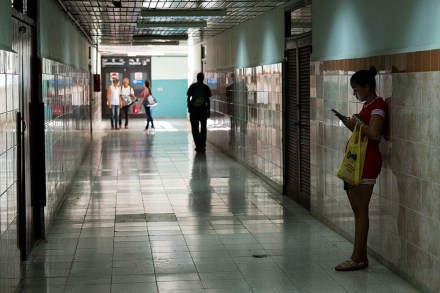
I have dengue, a vile and potentially life-threatening virus given to me by an Aedes mosquito. For good reason, it used to be called breakbone fever. It’s not the first time. I last felt my eyes swell and my joints being crushed five years ago, almost to the day. Dengue is common in Cuba, increasingly so since the government ran out of the money to fumigate for mosquitos. The first time was worse – so far. It arrived like a cloud of poison gas; I barely got up the stairs before collapsing. I was more naive then and what followed, in the fug of fever, taught me a lot about my Cuban family and the Cuban state. People are selling water door to door. We’re hearing of dysentery. How far away is cholera?
sick cuba

The good, the bad and the grotesque: the mind-blowing diversity of parasites

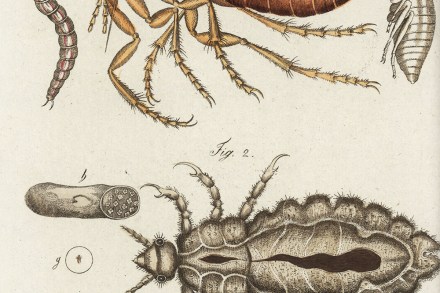
The oldest surviving sentence ever written in the first alphabet is inscribed on an ivory comb found in the ruins of the Canaanite city of Lachish in what today is Israel. Dating back around 3,700 years, it offers the owner a blessing of sorts: “May this tusk root out the lice of the hair and the beard.” As Dino J. Martins points out in his marvelously entertaining tour of the netherworld of parasites, the comb (the design of which is almost indistinguishable from the plastic ones we use for the same purpose today) speaks of the depth of the human relationship with lice – creatures that have traveled with us, fed on us and multiplied with us for millions of years. Martins is the perfect guide.

The good, the bad and the grotesque: the mind-blowing diversity of parasites

The oldest surviving sentence ever written in the first alphabet is inscribed on an ivory comb found in the ruins of the Canaanite city of Lachish in what today is Israel. Dating back around 3,700 years, it offers the owner a blessing of sorts: ‘May this tusk root out the lice of the hair and the beard.’ As Dino J. Martins points out in his marvellously entertaining tour of the netherworld of parasites, the comb (the design of which is almost indistinguishable from the plastic ones we use for the same purpose today) speaks of the depth of the human relationship with lice – creatures that have travelled with us, fed on us and multiplied with us for millions of years. Martins is the perfect guide.

Reluctant servant of the Raj: Burma Sahib, by Paul Theroux, reviewed

Eric Blair, to give George Orwell his baptismal name, arrived in Burma (present-day Myanmar) as a 19-year-old trainee police officer at the end of 1922 and left it in mid-1927 just before his 24th birthday. Not much of his time there had a direct impact on his work beyond a solitary novel, Burmese Days (1934), two luminous essays, ‘A Hanging’ (1931) and ‘Shooting an Elephant’ (1936), a poem or two and a scattering of autobiographical fragments, most of which turn up in the second half of The Road to Wigan Pier (1937). None of his letters home survives and only a handful of reminiscences by people who knew him as a servant of the Raj.