Defence

Cameron's fight over the Falklands

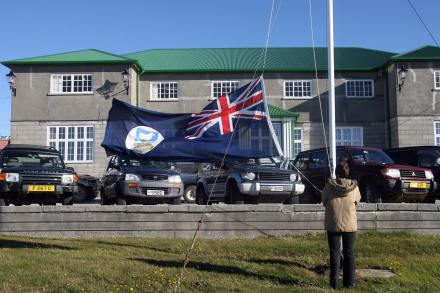
Thirty years on from the Falklands War, and the hostility between Britain and Argentina persists. And it was that hostility that delivered the most striking moment of PMQs earlier. Not only did David Cameron, at the insistence of Andrew Rosindell, describe the Argentinian attitude towards the Islands as ‘far more like colonialism’ than that of the British, but he also confirmed that the National Security Council yesterday discussed the simmering situation in the south Atlantic. As he put it himself, he wants to send out a ‘strong message’ to Argentina, after the recent sabre-rattling actions of their President, Cristina Kirchner — which Daniel has blogged about here. The question that’s

Murphy sets Labour's new strategy a-rolling

A few weeks ago, a shadow minister urging Labour to avoid ‘shallow and temporary’ populism over spending cuts might have seemed like a sally against the party’s Ballsist wing. But given that Ed Balls has since said that ‘Labour will give more details of its tough spending decisions [in 2012]’, then Jim Murphy’s intervention in the Guardian today is a little less provacative than that. In truth, the shadow defence secretary’s words fit perfectly into Labour’s plan to sound more fiscally responsible this year. It is, most likely, party policy dressed up as a clarion call. What’s striking is that Murphy goes beyond this simple rhetoric, becoming the first shadow

Dire straits

The situation in the Strait of Hormuz continues to intensify, with Defence Secretary Philip Hammond showing that, like his predecessor, he is not shy of pushing back when he gets a shove. Today he warned Iran that any attempt to block the straits, a key shipping lane, would be ‘illegal and unsuccessful’, and would be countered militarily if necessary.     In truth, any conflict over the straits would be very costly for both sides. Iran is likely to have the capacity to strike, in a shock-and-awe attack, at US and British bases in Kuwait, Bahrain and Oman. But this would be a dramatic escalation of events which would —

Will Israel bomb a near-nuclear Iran in 2012?

An Israeli strike on Iran has to be the most over-predicted event of recent years. It was meant to happen last year. And the year before that. But now there are reasons why 2012 could, indeed, be the year when Israel will find it propitious to take overt military action against Iran’s nuclear programme. (Everyone assumes that a range of covert activities, from assassinations to cyber attacks, are already ongoing). The Iranian government is moving closer to having the requisite capabilities, and can reasonably be expected to take the final steps towards nuclearisation. What better way for Tehran to distract attention from their burgeoning problems — including sanctions, economic hardship,

Stopping Maliki's coup

The year is ending not with a successful US withdrawal from Iraq — as President Barack Obama claims — but with what amounts to a coup d’etat by the country’s Shiite prime minister (and former ally of the US) Nouri al-Maliki. Less than 24 hours after the last US soldier left Iraq, the country’s Sunni vice-president Tareq al-Hashemi was wanted on charges that he led death squads, in a case most observers think could reignite the sectarian slaughter of 2006-07. Violence in Iraq has subsided since 2006-07, when Sunni insurgents and Shiite militiamen killed thousands of civilians each month — but, without U.S. troops to act as a buffer, many

Fog around the Falklands

For the populist president of Argentina, Cristina Kirchner, the ban on Falklands-flagged ships agreed by the Mercosur summit in Montevideo is a diplomatic triumph. It comes after a string of similar moves throughout the region aimed at tightening the noose around the Falklands. For example, HMS Gloucester was denied access to Montevideo in 2010 and, in an effort to strengthen Brazilian-Argentinian ties, Brazil did the same when HMS Clyde sought to dock in Rio de Janeiro. In reality, ships from the Falklands can switch flags before they enter any regional ports, but Argentina’s intent is to isolate the islands — and bring fellow South American nations along with them in

Breaking the silence | 14 December 2011

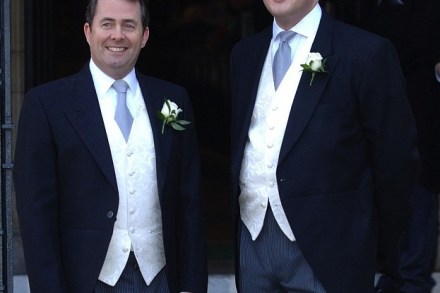
There’s a great selection of writers named of the cover of our Christmas issue. But one name, however, may stand out: Adam Werritty, who has written an article giving his take on the scandal that brought down Liam Fox earlier this year. We thought CoffeeHousers might care to read the whole thing (naturally, before buying a copy of the issue here), so here it is: When you hire a morning suit for a wedding, you count on being photographed a few times on the day — for photos that will be quickly buried in wedding albums. But by now, half the country will probably have seen pictures of me as

The Harrier Flies Again!

That’s the good news. The bad news is that these admirable little planes won’t be flying for Britain. Navy Times (and others) report that the United States Marine Corps plans to purchase the whole of the United Kingdom’s Harrier force. The spare parts will apparently cost the cousins some $50m and a price for the airframes will, apparently, be agreed soon. This is good news for the Harriers and for the US Marines who, as one Harrier expert told Navy Times, “We’re taking advantage of all the money the Brits have spent on them. It’s like we’re buying a car with maybe 15,000 miles on it.” Gee, ya think? Yeah,

From the archives: A world at peace

To mark last year’s Armistice Day, we republished The Spectator’s editorial reponse to the end of the first world war. This year, here is the editorial from the end of the second world war: A world at peace, The Spectator, 17 August 1945 The world is at peace. That assertion is possible at last. The war that most concerned this country and Russia ended in May. The war that most concerned the United States and parts of the British Commonwealth has ended in August. It has laid unequal strains on various Allied Powers. Britain and America have been at war with Japan for nearly four years, Russia for no more

At the going down of the sun

Vernon Scannell, a poet who fought in North Africa in the Second World War, observed in his poem ‘The Great War’: ‘Whenever the November sky Quivers with a bugle’s hoarse, sweet cry The reason darkens; in its evening gleam Crosses and flares, tormented wire, grey earth Spattered with crimson flowers, And I remember, Not the war I fought in But the one called Great Which ended in a sepia November Four years before my birth’. Everyone in Britain, to an extent barely believable across the rest of Europe, has grown up in the shadow of the Great War — and particularly the trench lines that cut across the fields of

Remember the living | 11 November 2011

Every time a politician suggests a introducing a flag-waving British national day, the idea falls flat. We already have one: 11 November, Remembrance Day, where we remember our war dead and resolve to help the living. In my Daily Telegraph column today, I talk about how the government can better serve the tens of thousands who have come back from active service in Afghanistan and Iraq.   Britain is, for the first time since the post-war years, a nation with a large veteran community. And we’re still not quite sure how to handle it. The Americans are: they had Vietnam, and learnt the hard way about post-traumatic stress disorder (PTSD)

Going soft

One of the greatest threats to British security is not whether the government opts for Tornadoes over Harriers, but whether we have credible, militarily-capable allies. So the fact that so many European countries have lost the will to fight — cutting defence budgets while the popular backing for ‘hard,’ as opposed to ‘soft,’ power declines — is a problem. To address this, Europeans need first and foremost to redevelop a narrative of power. In a new pamphlet, former MoD official Nick Witney tries to lay out the required narrative. He argues that Europe’s future security and prosperity now depends on success in a global competition. Europe’s belief that “soft power”

Ellwood returns as PPS to the Minister for Europe

Tobias Ellwood has been appointed as PPS to the Europe Minister David Lidington. The vacancy had been created when Adam Holloway decided to resign from the job so that he could vote for the EU referendum motion. This appointment is a nifty piece of party management. Ellwood was Liam Fox’s PPS but when Fox resigned, the new Defence Secretary Philip Hammond decided, to the resentment of some Tory backbenchers, not to keep him on. Instead, Hammond chose to appoint Clare Perry, a member of the 2010 intake who had worked for George Osborne and Hammond in opposition. Some Tory MPs, and particularly those who felt passed over, saw this as evidence that

Gus O'Donnell reports — and Liam Fox responds

Gus O’Donnell’s report into Liam Fox, Adam Werritty and all that has finally been released. You can read all ten pages of it here. We shall have more on it shortly, but, for the time being, here’s Liam Fox’s statement in response: “I am pleased that the report makes clear that the two most serious allegations, namely of any financial gain sought, expected or received by myself and any breach of national security, have no basis. As I said in the House of Commons last week, I accept that it was a mistake to allow the distinctions between government and private roles to become blurred, and I must take my

MoD to-do list

A day into his new job, Phillip Hammond would be excused for sitting back and wondering what he has let himself in for. The job of defence secretary is every Tory’s dream, and the businessman-turned-politician is well-placed to excel in it. But the armed forces and the Ministry of Defence face a number of challenges that would test even history’s greatest defence and war secretaries. Six challenges stand out: 1) To reshape the military’s structures, systems and capabilities. This should be done according to the decisions taken in the SDSR to place defence on a surer financial footing. Much of what needs to be done has been set in train,

How important is the Ministry of Defence?

How important is the Ministry of Defence? Not, according to Fraser, important enough to this government to appoint a Secretary of State who has any great interest in Defence issues. This is fairly remarkable. You might have thought – and the MoD’s particular problems might have persuaded you – that defence would be an issue demanding a specialist but that reckons without the managerial habits of modern politics. This is not a criticism of Philip Hammond. He will doubtless be, as they say, a “safe pair of hands” at the MoD. Nevertheless, while procurement issues and budget-management are a large part of the MoD’s future they are not the only

Liam Fox, the morning after

It is as you’d think: a sea of news coverage and commentary about Liam Fox’s departure. Some of its currents are merciless, such as the Mirror’s front cover. Some are more circumspect, such as an excellent pair of articles by The Spectator’s own Matthew Parris (£) and Charles Moore. But, on the whole, there is a strange absence of finality about this story. A Defence Secretary has resigned – and rightly so, I think – but we still cannot be completely sure why. Maybe it is just the “appearance of impropreity,” as Philip Stephens puts it, that killed this Fox. Or maybe there is something more poisonous waiting to emerge

Hammond fills Fox’s shoes

It’s official: Philip Hammond is the new Defence Secretary and it’s a wise choice. The tough work: making the cuts, axing Nimrod, leaving the east coast undefended etc.: has been done. I doubt Cameron would have been able to get that little lot past his party as easily had it not been done by Liam Fox. Now, the task is implementation. It requires mastery of detail and a sharp eye for financial irregularities, and Philip Hammond is the man for that. As Osborne’s number two in Opposition, he will, like Des Browne, approach defence from the perspective of fiscal management. The future of Trident is less assured: Hammond will not

Personal loyalty brings down Fox

When Liam Fox celebrated his 50th birthday, he invited friends – those who would be likely to turn up for his 60th no matter what political fate befell him. Political allies fall away, ran his argument, but not friends. No one would have imagined that he’d be able to test this theory within just three weeks. On Monday, it looked more likely than not he would survive: he gave what seemed like a full apology and made full disclosure. The Tory tribe had rallied behind him. It was embarrassing that his best man had turned up to share vodka martinis with him in various parts of the globe, but where

Fox resigns, Cameron responds

Liam Fox has just resigned as Defence Secretary. Here is his resignation letter to the Prime Minister in full: Dear David, As you know, I have always placed a great deal of importance on accountability and responsibility. As I said in the House of Commons on Monday, I mistakenly allowed the distinction between my personal interest and my Government activities to become blurred. The consequences of this have become clearer in recent days. I am very sorry for this. I have also repeatedly said that the national interest must always come before personal interest. I now have to hold myself to my own standard. I have therefore decided, with great