Defence

A day of Tory grumbles

Today is one of those days when you can’t walk around the Palace of Westminster without bumping into a Tory with a grumble about the coalition’s polices. First of all, there’s massive irritation that the government has been forced into agreeing that prisoners should have the right to vote. It has revived Tory concerns about the ECHR and annoyance that the presence of the Lib Dems in the government means that nothing will be done about it. Then, there’s this Anglo-French defence agreement. Tories are, understandably, deeply suspicious of anything that smacks of giving the French a veto over the deployment of British forces. For many Tory MPs, the answer

Entente très cordiale

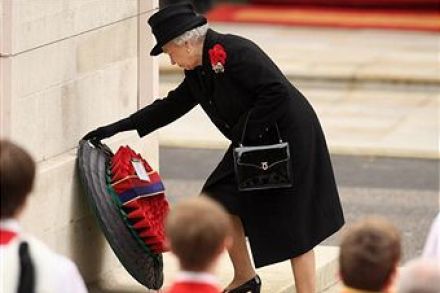
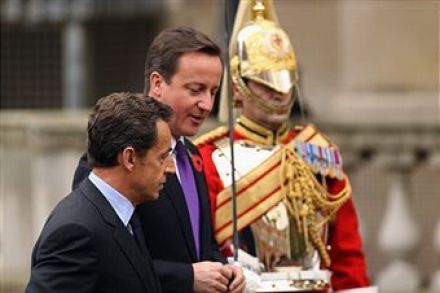
When it comes to pomp, Britain and France are still superpowers. The entente très cordiale has brought out all the plumage of 400 years of professional soldiering – bearskins, ostrich feathers, mink, gold leaf, thorough-bred horses, billowing capes and vibrant shades of scarlet and blue. Waterloo must have been a hell of a fashion show, before the guns inaugurated spectacle of a different kind.    As Liam Fox explained on the Today programme, this agreement enables two ailing but still ambitious powers to project force overseas beyond their specific territorial interests. They will share aircraft carrier capabilities, nuclear research secrets, and a pool of elite combat forces to be deployed

WEB EXCLUSIVE: The Spectator defence debate

With the strategic defence review hot off the presses, The Spectator asked Allan Mallinson, Robert Fox, Con Coughlin, Adam Holloway MP and Richard Dannatt to discuss if the time has come for the army, navy and air force to be combined into a massive British Marine Corps. For the benefit of CoffeeHousers, here is Lloyd Evans’ parade ground review.

The day of reckoning draws near

Tomorrow we finally move from generalities to specifics.  No need to argue any more about whether the losers will be up in arms or will it all be a damp squib.  Tomorrow we get the gory detail. At the time of the Emergency Budget we were told to expect cuts in non-ring-fenced departments of 25 percent.  Then we heard that departments had been asked to provide scenarios for 25 percent and 40 percent cuts.  That was always going to be necessary because Defence and Education (the two largest departments apart from the ring-fenced Health) weren’t ever going to be cut by that much.  After today’s Strategic Defence and Security Review,

Cameron reveals the scale of defence cuts

David Cameron delivered his statement on the Strategic Defence and Security Review with few rhetorical flourishes. He had two main messages: i) the mission in Afghanistan would be spared from the 8 percent cuts in this Parliament’s defence budget, and ii) the problems the review is trying to deal with stem from the fact that “the last government got it badly wrong.”   The appalling legacy that Labour has left the coalition on defence rather hamstrung Ed Miliband in his response. The most memorable line in it was a gag about how he had advance sight of the statement in ‘today’s papers, Monday’s papers, Sunday’s papers.’ Indeed, trickier for Cameron

Not fit for purpose

John Reid famously declared that ‘the Home Office was not fit for purpose’. But judging by the fudge over the carriers this epithet would have been better applied to one of his previous departments, the Ministry of Defence. Something has gone very wrong when it would cost more not to build something than to build it. How the MoD got into this position over the carriers needs to be the subject of an urgent and thorough investigation. Those responsible for this absurd situation need to be held to account. It is also ridiculous that there will be several years when there’ll be no carrier from which helicopters can be launched

The coalition's carrier trouble

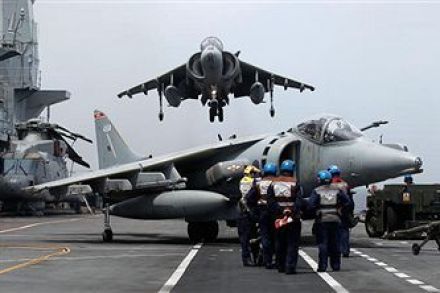
We will be presented with the full defence review at around 1430 today – but already its contents are spilling out across the papers. Much of it is unsurprising: a delay for the Trident upgrade, two new aircraft carriers, etc. But some of it is slightly more surprising: for instance, the immediate decommissioning of both our 80-strong fleet of Harriers and the Navy’s 25 year-old flagship, the HMS Ark Royal. As Liam Fox admitted on the Today Programme earlier, those last two measures will mean that Britain loses the ability to fly jets from its carriers for up to ten years. Ruling the waves, and even the skies, has been

Fox in the dock?

Split-stories have their own momentum. As soon as you know that a certain secretary of state is in the dog house with Downing Street, you start seeing things through that prism. So when I saw that the press release on the government’s new national security strategy contained quotes from the PM, the Foreign Secretary, the Home Secretary and the Development Secretary, but not the Defence Secretary, I immediately regarded it – and perhaps wrongly – as part of the Westminster Fox hunt.   Liam Fox’s appearance on the Politics Show on Sunday was ill-advised. By celebrating his defiance of the Treasury’s demands and trumpeting the PM’s support for him, he

The coalition outlines its national security concerns

What a curious creature this National Security Strategy is. For some reason, I expected something more than a 39-page document in the same mushy pea colour scheme as the coalition agreement. But that is what we’ve got – and it doesn’t really tell us much. The centrepiece of the document comes on page 27 (reproduced below), with a neat, three-tier guide to the security risks facing this country. At the highest priority level are atrocities such as “chemical, biological, radiological or nuclear attack by terrorists,” and “hostile attacks upon UK cyberspace”. Further down, there are mentions for “organised crime” and “disruption to oil or gas supplies,” among others. But, before

The government protects yet more spending

This morning’s papers announce that cuts to the defence budget will be considerably less than 10 percent, following an intervention from David Cameron. Liam Fox has fought a valiant rearguard to protect his budget; success has come at significant personal cost.  And that’s not all. The BBC has learnt that the schools budget is to receive a real terms spending increase when the Fairness Premium for the disadvantaged and the Pupil Premium are added to the final reckoning. This is politically interesting: education is the one issue where Labour’s opposition has been coherent. Michael Gove was eviscerated over his incompetent cancellation of the school building project and his free schools

The cuts are almost settled

We are entering the end game of the spending review. The Department of Education settled this morning, according to both Tory and Lib Dem sources. Although there is confusion about whether the money for the pupil premium is coming from inside or outside the education budget – Clegg’s speech suggested outside but other Whitehall sources are not so sure. Liam Fox has told friends that he knows the final number for the defence budget and that it is a lot better than expected over the summer. Fox has played a blinder in terms of defending his budget but this has come at a huge personal cost for him. Even supporters

Counting down to the spending review

Only one week to go, folks, until the main event itself: the Comprehensive Spending Review. And judging by this morning’s papers, the Treasury have almost settled on their final acts. Only the welfare, eduction and defence budgets have any significant question marks hanging over them. Those question marks, though, are fading fast. A story in this morning’s Times (£) reports that David Cameron has endorsed the building of two aircraft carriers, but has decided to delay the Trident upgrade until after 2015. No, strictly speaking, he’s not going back on this. Rather, the idea is that the coalition will keep on working towards a replacement for Trident between now and

A cul-de-sac of Gordon Brown’s making

Earlier in the week, Liam Fox gaily described the Prime Minister as his ‘closest ally’ – a statement which aroused a little cynicism. But it seems that Fox was not exaggerating. According to the FT, Cameron now backs the navy’s grand blue-water strategy. Cameron’s about turn is striking: the last time the National Security Council convened he supported David Richards (he still does to an extent, pledging that army troop numbers will not be cut). The strategic arguments have not changed, which suggests that the politics has. Fox’s letter was one thing, the Clyde shipyards another. Cancelling the carriers would obviously have adverse consequences for Glasgow’s economy and the disparate

Fox to the rescue

The best form of defence is attack. Liam Fox distracted conference from the various rows that have afflcited it by castigating Labour’s abysmal record on defence. He was helped enormously by the terrorist outrage in Sanaa, the Yemen – a cowardly atrocity that reinforces his observation that ‘the country’s finances are wrecked and the world is more dangerous than at any other time in recent memory.’ He recited the refrain that cuts are regrettable but necessary, before adding that, thanks to Labour, Britain has to fight on with less. Serving the interest on Labour’s debt costs the same as an extra four aircraft carriers, 10 destroyers, 50 C17 cargo planes

Cameron says "yes" to the Trident upgrade – but questions remain

Courtesy of Ben Brogan, one of the most noteworthy passages from David Cameron’s appearance on Today this morning: ‘Jim Naughtie: Is the Trident upgrade untouchable? David Cameron: We do need an independent nuclear deterrent… JN: Is that a yes? DC: Yes. Basically I was going to give you a longer and fuller answer but the short answer is yes… To me and the Coalition government, yes, Britain’s independent nuclear deterrent is being replaced.’ It is certainly the most assertive that Cameron has been on the subject since the advent of the coalition, but a couple of questions remain that prevent it from being utterly unequivocal. First, what timeframe is the

What to do with Balls?

Ed Balls is adept at opposition – making a case throughout the recent leadership hustings for immigration controls that he knows are unworkable in practice. Mike Smithson reports than a senior Lib Dem thinks Ed Balls would be an ideal opponent for Liam Fox, the man to exploit the coalition’s most obvious weakness. It’s a salivating prospect for the independent observer – confrontation between two skilled and principled communicators – and if anyone can damage a Conservative-led government on defence it is Balls. But there’s the rub. In their ideal worlds, Balls and Fox don’t differ on the broad principles of defence policy. Balls’ call for the independent nuclear deterrent’s renewal and

Double deficit

What’s at the heart of the row over defence funding? George Osborne hinted at it today when he told the Telegraph that “frankly, of all the budgets I have seen, the defence budget was the one that was the most chaotic, the most disorganised, the most overcommitted”. The problem is that during the Labour years, various accounting scams were deployed to shunt costs further into the future – but this was not matched by resources. So they would, for example, delay an order by two years. There would be a price to pay for this delay, but it would be a cost that came after the election so Labour didn’t mind. (One

Fox, Osborne and Cameron engaged in Whitehall’s oldest battle

Tory on Tory is a brutal cock-fight when defence is concerned. After the leaking of Liam Fox’s now infamous letter and David Cameron’s measured retaliation, George Osborne has broken his silence. Making unspoken reference to the £38bn black hole in the MoD’s budget, Osborne tells this morning’s Telegraph that he was ‘not thrilled’ to learn of Fox’s ‘do we really want to cut defence this much letter’ and says that Labour left the MoD in ‘chaos’, signing Britain up to ‘expensive and pointless projects’. The press will run this as a conference Tory splits story. There are clear differences between ministers, but they actually reflect entrenched positions within the MoD: