Defence

Cameron road tests his anti-Ed message

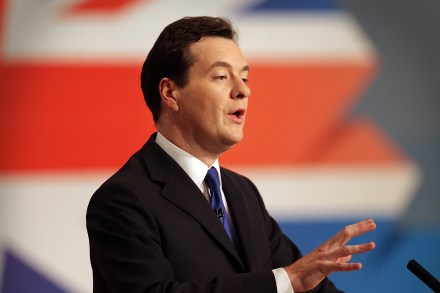
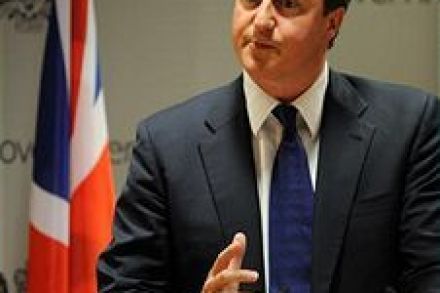
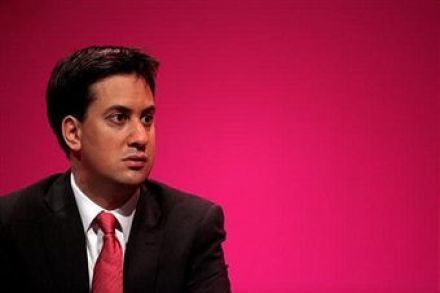
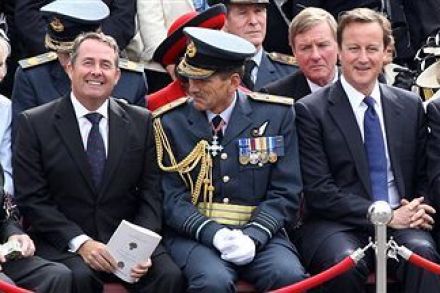
After Fern Britton’s triumph over Gordon Brown a couple of years ago, we should know that This Morning interviews can have a certain bite to them. But if you needed more convincing, then how about David Cameron’s appearance on the show this morning? Lurking behind all the talk of baby Florence and the Obamas, was a sprightly discussion of both defence cuts and the new Labour leader. Cameron was combative on both. Most noteworthy were Cameron’s attacks on Ed Miliband. I imagine they will set the template for how the anti-Ed operation is conducted in future. The main aim, it seemed, was to defuse Miliband’s talk of an optimistic New

Forget the culprit, the MoD leak suggests that Fox doesn’t have Cameron’s confidence

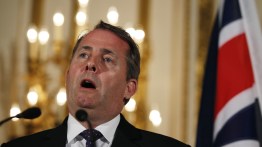
Liam Fox is sombre rather than sombrero. A man to reckon with, you’d have thought – determined to fight dangerous cuts to Britain’s over-extended defence budget and an apostle of the Tory right. Which makes yesterday’s leak all the more extraordinary. The question is not who leaked this incendiary letter, but why Fox wrote it. The night before an important National Security Council meeting, and Fox has an important point to convey. Why not ring the Prime Minister? Go round to No.10 for chat? He is the Secretary of State, but he has to communicate matters of confidence and competence between himself and the PM with such formality, and in

Miliband's dilemma

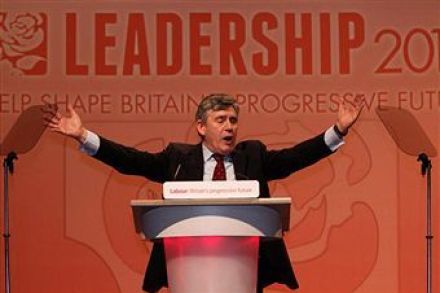
The day after the leader’s speech is always a slightly flat time at a party conference. But Manchester today feels particularly flat. Everyone knows that the two big political stories are happening down in London: David Miliband’s expected announcement that he is not standing for the shadow Cabinet and the Fox flap. One of the challenges for Ed Miliband is going to be asserting his authority with his parliamentary colleagues, most of whom didn’t vote for him. Added to this is the fact that many of them remember him as a young bag-carrier. Members of the shadow Cabinet were openly mocking his ‘new generation’ line last night. All this is

Plugging the leak

So did Liam Fox leak the letter? Only if he is suicidal. He’s been around long enough (having been a frontbencher from the Major years onwards) to know how the game works. Briefing journalists is one thing, leaking a private letter is utterly counterproductive. It will make it harder for him to get the settlement he wants, and it will damage him by making him look as if he were responsible for it. I gather that the MoD is in a state of terror right now, with phone records and emails being trawled to find the guilty party. And whoever did this has such a crude understanding of media spin

Liam Fox does a David Miliband

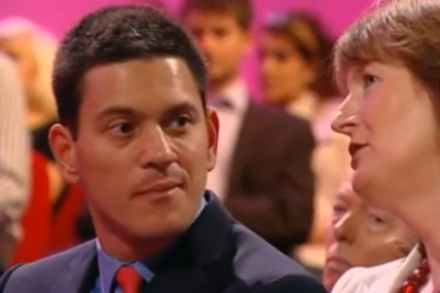
At least the political fates have a sense of humour. No sooner had David Miliband’s frustration screamed into view last night, than the Tories were hit by a story that was similar in several regards: the leaked Liam Fox letter, expressing his anger over spending cuts. Here are a handful of those similarities: 1) Leakage. David Miliband’s words for Harriet Harman were meant to be for their ears only, but the TV cameras picked them up. Similarly, Fox’s letter was meant to be between him and the PM – but now it’s splashed across the front page of the Telegraph. The only difference is that the Fox letter has been

Liam Fox Declares War on George Osborne

Liam Fox may well be correct to argue that the Ministry of Defence ought not to be subject to the same level of cuts as other government departments. It is odd to ring-fence NHS and International Development budgets but not the MoD even though there’s supposed to be a war on and all the rest of it. But let’s not pretend that a 10% cut in the MoD budget will necessarily, as the good doctor warns, “destroy” the “reputation and capital” the Tories have accumulated on defence issues for the very good reason that I’m not sure how much that capital has really been earned. Eighteen months ago Fox’s defence

David Miliband torpedos his brother's big speech

Make no mistake: David Miliband has handled himself with a fair amount of dignity over the past few days. But now some of his frustration has simmered to the surface. ITV news cameras were trained on him earlier, and caught him leaning towards Harriet Harman as she applauded his brother’s claim that the Iraq War was “wrong” (see from two minutes into this video). According to the lipreaders, he says to her: “Why are clapping? You voted for it.” To which she replies, “I’m clapping because he’s leader and I’m supporting him.” The elder Miliband does not look impressed. To be honest – and although I didn’t support the Iraq

The eagle has landed

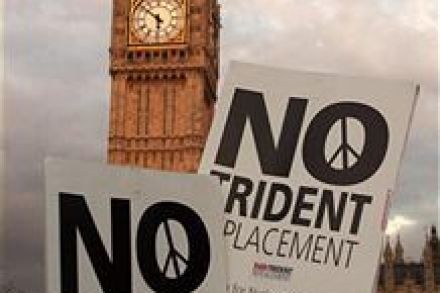
Shades of Jack Higgins in Whitehall this morning: the Prime Minister is convening the furtive sounding National Security Council, which will be presented with initial drafts of strategic defence review. As Richard Norton-Taylor puts it, the government has the opportunity to be radical and make this a ‘horse versus tank moment’, which is ironic given that the tank is poised to pass into obsolescence. In truth, the drama is some way off; the government has delayed decisions rather than take them. The nuclear deterrent is not part of the review – the politics and economics of Trident’s replacement proving too contentious for the precious coalition. Personnel cuts are being resisted

Politicking with the defence of the realm: advantage Labour

Is Trident’s renewal (either a like-for-like replacement or an alternative) within the scope of the Strategic Defence Review or not? The Lib Dem conference voted to include an alternative in the SDR. But, apparently, the cash-strapped coalition seeks to defer any decision (which will take renewal out of the review entirely). Earlier today, Lib Dem defence minister Nick Harvey intimated that he preferred deferral. As the video below suggests, Harvey’s objective is overwhelmingly political and couched in the language of opposition, not government: I don’t see this as a ‘hot potato’ for Labour. Cast in opportunism’s obvious garb, the Liberal Democrats are playing politics with national security and the Conservatives

What you need to know ahead of the Spending Review: making the right defence cuts

This is the latest in our series of posts on the Spending Review with Reform. A list of previous posts can be found here. The debate on the defence budget has become one of the most fiercely contested in recent days.  Over the weekend, editorials in both The Times and The Daily Telegraph agreed that defence was different because it wasn’t just a matter of cuts in the short term, it was also a matter of the UK’s strategic defence needs for years ahead.  Building on a report by the House of Commons Defence Select Committee, they raised concerns that the Government is forcing through the Strategic Defence and Security

Andrew Mitchell recasts DfiD's role

Andrew Mitchell’s speech today at the Royal College of Defence Studies confirms me in my view that Mitchell is one of the most impressive members of the current government. Mitchell, a former soldier, is moving the Department for International Development away from being the government wing of Oxfam and into a department that plays its part in delivering Britain’s foreign policy objectives. The main theme of his speech today was that DfID and the Ministry of Defence have to work more closely together in post-conflict environments. For instance, Mitchell has cut aid to middle income countries to redirect it to Afghanistan, where it can play a role in trying to

Deferring deterrent

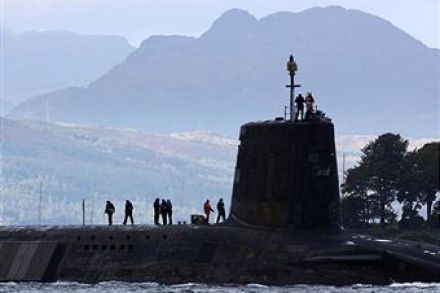
We’ve been here before: Hacker’s ‘Grand Design’, a scheme to save money by cancelling Trident. The BBC reports that the coalition plots a similar ruse – the renewal of Trident is understood to have been deferred until after the next election. This is the best of bad a situation. Britain has an independent nuclear deterrent, albeit nearing obsolescence. Trident’s renewal Is a point of contention for the coalition – with the Tories for and the Lib Dems against. Better to delay than squabble. It makes financial and strategic sense too: the upfront renewal cost is £20bn, deferring is understood to cost somewhere in the region of £750m; the suicide bombing

A Whitehall cabal has Fox by the short and curlies

The Defence Select Committee delivers a familiar litany this morning. The Strategic Defence Review (a structural reform of Britain’s defence establishment) is being driven by savings not threat, consultation has been insufficient and cuts will be implemented at terrifying speed. The committee’s report concludes that the review will be to the detriment of Britain’s defence capabilities. Liam Fox’s summer battle with Downing Street has been overshadowed by IDS’ belligerence. In truth Fox has already lost. The National Security Council, the Treasury and the Cabinet Office have put him in a strait-jacket and hijacked his review. The opportunity to reform procurement and phase out obsolete heavy merchandise and training, both of

Richard Dannatt's Convenient Excuses

Let us concede that the MoD has been under-funded and over-stretched in recent years. Let us also concede that Gordon Brown and Tony Blair should have been aware of this and done something about it. But let’s also remember that the armed forces’ thirst for funds is essentially unquenchable. There is always something more, something newer, something bigger, something more expensive that they will say they need (that is, want) to do their job more effectively. That’s human nature but I suspect we could increase defence spending by 50% and still be treated to headlines complaining that the MoD needs more cash. And, look, it’s very convenient for General Sir

Liam Fox rows back on carrier sharing

For a while then, it looked as though Britain and France really were going to share aircraft carriers as a mesure d’austérité. But, today, Liam Fox seems to have put a block on the idea, describing it in Paris as “utterly unrealistic”. He did, though, add that we could pool some of our transport planes and helicopters with the French (which sounds like the military equivalent of hitching a lift, if we happen to be going in the same direction). And Fox’s spokesman has since said that there still might be “strategic co-operation across the maritime domain,” whatever that means. So some sort of link-up with the French should be

Britannia ruled the waves

As Pete wrote this morning, the plan to share aircraft carriers with France is controversial. It seems that concerns over sovereignty, job losses and differing strategic interests reduce to the one issue that no government has addressed: the protectionist system of defence procurement, which hampers the operational effectiveness of our armed forces. Typically forthright, Douglas Carswell identifies the problem: ‘Seems like protectionist defence procurement isn’t quite giving us sovereign capability the way we were promised, eh? Had we ordered much of the new carriers to be built overseas, we could have had them at a fraction of the £5 billion cost. But the asinine logic of the Defence Industrial Strategy

A totemic austerity measure

As austerity measures go, the plan to share aircraft carriers with France is totemic stuff. Not only could it save the Exchequer a heap of cash – by reducing the need for two replacement carriers – but it also says a lot about how our government wants to operate in the world: multilaterally, flexibly and, perhaps, with less emphasis on military force. Divvying up one’s navy with another country does not suggest a strident foreign policy. Indeed, future operations would have to be planned and conducted with the aid of phonecalls to Paris. Of course, this will likely be a controversial move. There are issues of national sovereignty at play

Cameron's close shave

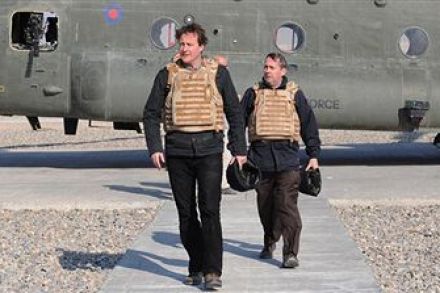
As Paul Goodman notes, being Prime Minister means taking risks. So perhaps we shouldn’t be surprised to read in the Times (£) that, during his recent trip to Afghanistan, the security threat to David Cameron was more urgent than previously thought: “At the time Downing Street played down the incident, saying that it should not be seen as a huge security issue. But The Times can reveal that senior military figures are demanding changes to the way in which future visits to war zones by Mr Cameron and other senior Whitehall figures are conducted. They believe that the Taleban knew which helicopter was carrying Mr Cameron and are deeply concerned

In praise of British ingenuity

Two spitfires have just flown over our offices at The Spectator, to commemorate the Battle of Britain. The aircraft are deservedly iconic, but it’s a bit of shame that over the years they’ve eclipsed the de Havilland Mosquito in the public memory. They were developed too late for the Battle itself, but were incredible aircraft when they were deployed. And, crucially, privately-developed. In 1937, the British had only 46 bombers where the Germans had about 800 – and the speed at which the RAF developed was extraordinary. The battle of Britain exposed the weaknesses in the Luftwaffe – and Nazi procurement policy. Hitler relied on a vast, unwieldy bureaucracy to

Remembering the few

Today is the 70th anniversary of Winston Churchill’s ‘Few’ speech. Here’s how the Spectator reviewed it at the time: Mr Churchill looks ahead, The Spectator, 23 August 1940 Mr Churchill surpassed even his own masterpieces of lucid and spirited exposition in his speech on Tuesday, in which he surveyed the first year of the war and the last exciting days of victory in the air and looked fearlessly into the future. During the previous fortnight, and especially during the previous week, the nation had become aware of the fact that the intensified air attack was part of that onslaught on Britain whose approach was trumpeted in Germany. It might be