Defence

Not just a wily Fox, but a watchful hawk with time on his side

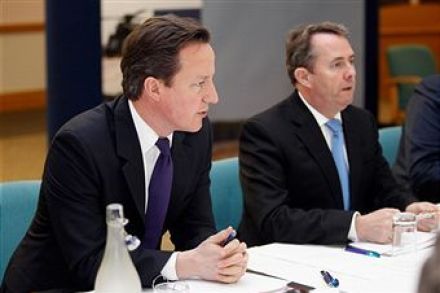
Liam Fox is fond of reminding us that he didn’t come into politics to cut the armed forces. A wistful look falls across his face when he says it – an indication of frustration as much as sincerity, a sense deepened by his letter of concern about the government spending so much more on international development. Opponents of Fox might characterise this as hypocrisy: he would reduce the size of the state without touching the armed forces, they say. His enemies in the Conservative party say that it’s typical of this “clever fool’s” intellectual indiscipline. Fox the military and fiscal hawk wants to “have it both ways”. The Economist has

Labour’s malfunctioning front bench

The old adage that it’s hard to make an impact in Opposition is ringing true. Dan Hodges has denigrated Labour’s opposition thus far in the New Statesman’s political column today. He charts the party’s competing interests to create the sense that Miliband’s lack of direction, which is marketed as consensual politics, is the prime cause for Labour’s passivity. A listening exercise and numerous policy reviews are under way, but Labour is still stuck at Robert Frost’s fork in the road. Sooner or later, Miliband will have to act. Without firm leadership, shadow ministers are being left to their own devices; which perhaps allows the coalition to escape misfortune because often

The coalition's 2015 problem

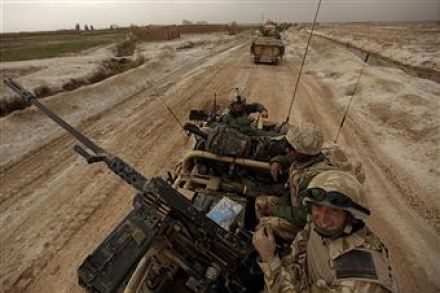
The generals and the politicians are at odds with each other. This much has been clear since the run-up to last year’s Defence Review, but it finds a particularly clear expression in the Telegraph’s interview with Lt Gen James Bucknall today. Britain’s most senior commander in Afghanistan may not say, in terms, that we should avoid a timetable for withdrawal from the country — but he skirts awfully close to it. “It is of utmost importance that we stay the course, that we stay as long as it takes to finish our job,” he says, only a fortnight after David Cameron announced that 450 troops will be pulled out of

Yemen implodes

Sometimes you wait and wait for an event, and nothing ever happens. Pakistan is always said to be teetering on the brink of collapse but never quite edges over the precipice. The same used to be the case with Yemen. In fact, Coffee House predicted that Yemen would implode last year, but Yemeni President Ali Abdullah Saleh managed to hold the country together in the face of terrorism, irredentist movements, insurgency and, recently, pro-democracy protesters demanding his resignation.   Now, however, the wily leader may finally have run out of road. Heavy clashes have erupted in the capital Sanaa, a day after Saleh again refused to sign a Gulf-brokered power-transition.

Choppers add to the Libyan fog of war

There was much ado about choppers in Westminster earlier today. Yesterday, French Defence Minister Gerard Longuet told reporters that Britain and France were to deploy attack helicopters to Libya; and that the British had instigated this move. The fog of war then descended. Labour’s defence spokesman Jim Murphy called on the British government to explain why the conflict is escalating. Armed Forces Minister Nick Harvey contradicted Longuet’s account; and a source at the Ministry of Defence told me that this was the first he’d heard of helicopters being deployed to Libya in that role. The implication was that the French were trying to force the issue. Then again, a separate

An especially businesslike relationship

The ash cloud nearly claimed its first victim last night: Barack Obama had to leave Ireland early in order to fly to Britain. The Palace’s insistence on protocol has been upset and the President’s entourage has been advised not to risk the tap water; other than that, all is well. However, the visit has set sceptical tongues wagging. Some diplomats wonder why the President is here. Afghanistan, the Middle East, joint national security and the world economy are on the agenda, but there is no unifying theme to discussions. Some ideologues fear that the eternal bond between Britain and America is relaxing into a union of convenience. On the other

Debt as a security concern

Is Britain’s growing national debt a matter of national security? In a speech this morning, Liam Fox said so. Sure, he said, you can protest at the defence cuts — but strength comes from having a strong economy and strong national accounts. “Those who are arguing for a fundamental reassessment of the Defence Review are really arguing for increased defence  pending. But they fail to spell out the  inevitable result — more borrowing, more tax rises, or more cuts elsewhere. The bottom line is that a strong economy is a national security requirement and an affordable Defence programme is the only responsible way to support our Armed Forces in the long term.” In

Fox letter: storm in a fair trade, biodegradable cup

David Cameron probably let out a sigh when he was informed that yet another letter from Liam Fox had been leaked to the press. And when the Defence Secretary called No 10, as he undoubtedly did, to do his now-familiar Captain Renault routine, the Prime Minister can be excused for feeling a little frustrated. For the debates that have occurred in consequence miss a number of key points. The PM believes in overseas development – believes it is right, believes it is useful. No doubt he may find it useful to “decontaminate” the Tories but would not have been willing to spend 0.7 percent of GDP for something he did

Leak shows that Fox objects to plans to spend more on overseas development

A second letter from the Defence Secretary to the Prime Minister has leaked out. Tomorrow’s Times reports on a note that Liam Fox sent to the Prime Minister opposing the government’s plan to legislate for Britain to spend 0.7 percent of gross national income on overseas development aid. It won’t come as a huge surprise to anyone that Dr Fox is sceptical of aid spending. But for another letter from him to the PM to reach the press will further strain relations between the MoD and Downing Street. There will be those in the Cameron circle who think that it is not a coincidence that both of the missives that have leaked out have

How to fix the National Security Council

The National Security Council was a sound idea. But it has disappointed, both inside and outside Whitehall. The Ministry of Defence has complained that it “failed to give strategic direction”. Among previous supporters in the media, Con Coughlin has commented sourly that “all it has achieved so far is the replacement of Blair’s much-derided ‘sofa government’ with a new, back-of-the-envelope approach”. James Kirkup was even driven to ask “What exactly is the point of it?” Where did things go wrong? First, it seems that more effort went into spinning it to the media — it was a ‘War Cabinet’ to Sun readers, an end to ‘sofa government’ to those disaffected

Back to the start on a military covenant

I suppose you could call it an O-turn. First, the Prime Minister declared, in a speech aboard HMS Ark Royal last year, that a new military covenant would be enshrined “into the law of our land.” Then, there seemed to be a U-turn, with the government committing only to review the covenant annually, not to lend it legal force. Yet, now, a U-turn on the U-turn, with the news that it will be etched into the staute books after all. The defence minister Andrew Robathan tells today’s Telegraph that, “we are putting the military covenant on a statutory basis for the first time.” The formal announcement is expected in the

The Dame departs

Pauline Neville-Jones was a first. She was one of the first women in the Foreign Office to climb the department’s male-dominated ladder, serving as Lord Tugendhat’s chef de cabinet at the European Commission, obtaining the coveted post of Political Director and eventually becoming JIC Chairman. She led the British delegation at the Dayton Peace Accords and she probably thought she would be the first British National Security Adviser. But it was not to be. Her usefulness to the Prime Minister seems to have been mainly in opposition, where she could add a voice of knowledge to a Shadow Cabinet with very little governmental experience. The Tory Green Paper on National

Pakistan responds

The covers of our newspapers are emblazoned with Bin Laden this morning — but it is an article in a US newspaper that really catches the eye. Pakistan’s President, Asif Ali Zardari, has written an op-ed for the Washington Post that defends his country’s role in the struggle against Al-Qaeda. It’s a defence that has four components. 1) Sympathy: “Pakistan … joins the other targets of al-Qaeda in our satisfaction that the source of the greatest evil of the new millennium has been silenced.” 2) Credit-sharing: “We in Pakistan take some satisfaction that our early assistance in identifying an al-Qaeda courier ultimately led to this day.” 3) Defiance: “Pakistan has

An honest plea? Or a cynical gambit?

I was planning on collating today’s sunny newspaper covers for Coffee House — but Tim Montgomerie has beaten me to it. So let’s, instead, turn our attention away from the Royal Wedding, and on to Libya. A striking thing has happened there this morning: Gaddafi has called for a ceasefire, and for negotiations between his regime and NATO. Although the murderous leader’s television address was shot through with the usual defiant rhetoric — “No one can force me to leave my country and no one can tell me not to fight for my country,” he bellowed — it also included some concessionary passages. “Let us negotiate,” was one of them.

Why Gitmo ought to be closed

It is hard to feel anything but nauseous when reading the Guardian’s continuing special report on Guantanamo Bay, which started yesterday. The paper has released hundreds of classified files which were obtained last year by Wikileaks, including detainee assessments prepared between 2002 and 2009 to summarise what the government knew about each detainee — and they do not paint a pretty picture. Some detainees are clearly guilty as sin. But others seem to have been caught in the crosshairs of conflict. One example seems to be Abdul Badr Mannan, who was arrested in Pakistan and turned over to US forces in the belief that he was affiliated with al-Qaeda. According

Oh what a lovely war

The triumvirate of Obama, Cameron and Sarkozy have presented a united front to NATO and the Arab League and said there will be no respite in Libya. Writing to the Times (£), they say: ‘Britain, France and the United States will not rest until the United Nations Security Council resolutions have been implemented and the Libyan people can choose their own future.’ They also add that to leave Gaddafi in power would be an ‘unconscionable betrayal’, a marked shift in emphasis. It’s rousing stuff, designed to twist reluctant arms at the NATO summit in Berlin. However, as former ambassador to Tripoli Oliver Miles suggests, this letter is unlikely to be

Can Nato cope in Libya?

Just because Nicolas Sarkozy believes something does not make it untrue. The French president was adamant that Nato shouldn’t take over the Libya campaign. He preferred to run an ad hoc coalition of the willing. Britain, however, was keen for the alliance to take control of a mission that seemed too loosely-organised. Once the United States decided to fade into the background of the military operation, the impetus for a switch to Nato grew. A few weeks into the transfer, people are beginning to wonder whether President Sarkozy was right in the first place. According to yesterday’s Sunday Times, Nato is doing what it did in Bosnia: blocking the rebels

How might the MoD get round its spending settlement?

The Ministry of Defence is Whitehall’s last monolith. Charged with the nation’s defence, it is powerful enough to challenge the Treasury. As Pete notes, there are signs that it’s trying to defer (if not avoid) the cuts laid out the punishing strategic defence and security review. It has many ways of doing this. Obviously it can use political pressure because troops are deployed in Afghanistan and Libya. But there’s also a neat accounting step that allows the MoD can transfer costs directly to the Treasury. You may recall that the Budget contained a £700m increase for ‘single use military expenditure’ (SUME) in 2011-2012. SUME does not appear as capital spending

More demands on George Osborne

Is the defence budget the most chaotic in all Whitehall? George Osborne said as much last October — and he’s still dealing with its hellish intricacies now. The main problem, as so often in military matters, is one of overcommitment. Thanks to various accounting ruses on Labour’s part, large parts of the MoD’s costs were hidden in the long grass of the future. It was buy now, pay later — with Brown doing the buying bit, and the coalition doing the paying. The number that William Hague put on it last year was £38 billion. The MoD was spending £38 billion more, over this decade, than had been budgeted. Even

17,000 servicemen to go

The MoD has released its plan for redundancies. The numbers and plan were leaked at the weekend, but here are some details: 1) There will be 17,000 redundancies – 7,000 from the army and 5,000 each from navy and RAF. The first tranche will be notified by commanding officers in September 2011. 2) Some of the reductions are expected to be achieved through not filling vacancies and slowing recruitment, but it is estimated that 11,000 jobs will be lost by April 2015. 3) This is a compulsory programme, but the MoD hopes that the majority of losses can be met through volunteers. Volunteers will serve a 6-month notice period, non-volunteers