Death

Distant voices

From our UK edition

One of the weirdest responses when someone close to you dies is the gradual realisation that now at last you know them fully. They become to you complete, rounded, fully themselves, in a way that just does not seem possible while they are still alive. It’s so frustrating. Just when you’re at last ready and able to talk to them in the way you’ve always wanted, in full knowledge of who they are, seeing clearly every aspect of their person, they are no longer present. Radio 4 has come up with a partial antidote to this aspect of death, loss, grief, and so too of life and living, with its unsettling new lunchtime series, Unforgettable (produced by Adam Fowler), the title inspired by Natalie Cole’s 1991 single, where she duets with her long-dead father.

Red hot

From our UK edition

Everything about Julieta feels totally Almodóvarian. It’s a family saga that smoothly blends tragedy and levity, with exquisite performances from a company of passionate actresses. It looks carefully ravishing. Many of the director’s abiding themes are here: terminal illness, sudden death, a mother’s love for her child, men hanging about the fringes. And yet it is based on a most un-Hispanic source. The Julieta of the title was originally Juliet, who features in three interlinked short stories from Runaway, the 2004 collection by Alice Munro. Munro won the Nobel Prize for Literature three years ago after a lifetime writing quiet stories that conceal hammer blows.

Super human

From our UK edition

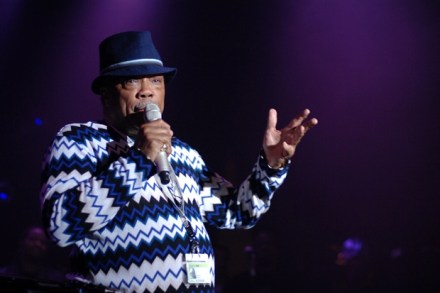
‘We think we’re in charge of this stuff but we’re not,’ said Quincy Jones, the composer, arranger, jazz trumpeter, musical genius. He was talking to Julian Joseph at the Montreux Jazz Festival for Jazz Line-Up on Radio 3 (Saturday). ‘It’s divine intervention.’ Jones, who masterminded Michael Jackson’s Thriller as well as countless other hits, film scores (including The Italian Job and The Color Purple) and his own ‘Soul Bossa Nova’, was remarkably sanguine about his extraordinary career. His enormous self-confidence was there from the start. Finding himself in Paris in the 1950s touring with a big band, he decided to stay on so that he could study with Nadia Boulanger and learn how to write for a symphony orchestra.

The Teutonic King Arthur

From our UK edition

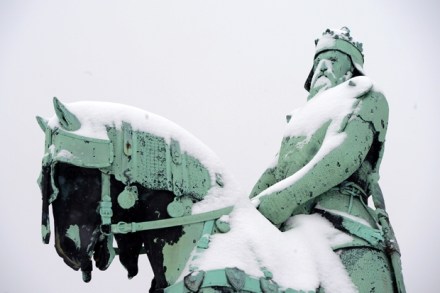
Hitler, ever seeking to emulate strong German hero types (especially if their Christian name was Frederick), unsurprisingly named his great invasion of Russia ‘Operation Barbarossa’. It is in this context that the name — meaning ‘Redbeard’ — is best known today. Apart from that, a rather clunky eponymous Italian film from 2011 and a presence in the underground heavy metal music scene, awareness of the medieval German emperor outside of Germany and Italy is very limited. This owes much to the fact that John Freed’s biography is the first in English for half a century. A 700-page doorstopper, this impressive, learned book certainly makes amends for this previously serious oversight. Frederick was the most powerful figure in 12th-century Europe.

Accentuate the positive | 7 July 2016

From our UK edition

Fifty years ago on Monday the World Service programme Outlook was launched as an innovative news and current affairs programme presented ‘magazine style’ with live interviews featuring ‘star’ guests. Such ‘soft’ journalism was highly suspect back in 1966, as England won the World Cup, Russia landed the Lunar 9 mission on the moon and China embarked on its Maoist cultural revolution, because it relied not so much on factual truths or reportage but on the emotional truth of what it felt like to be there in that place at that moment in time.

Barometer | 22 June 2016

From our UK edition

Big game hunt Wales beat Russia 3–0 to finish above England in their group at the European Football Championships. Which is bigger in Wales, football or rugby? — The Football Association of Wales was founded in 1876, five years earlier than the Welsh Rugby Union. However, rugby then took off rapidly in south Wales while football remained stronger in the north. — Wales lost their first matches to England in both football (2–1) and rugby (8–0). — Rugby and football matches have both filled Cardiff’s Millennium Stadium (capacity 76,000), though in a recent Wales Online poll, rugby was still reckoned more important, by 56% to 44%.

Loved and lost | 2 June 2016

From our UK edition

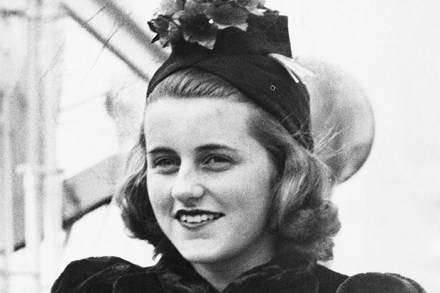
Kathleen Kennedy and her elder brother JFK were the grandchildren of upwardly mobile Irish Catholic immigrants. John F. Fitzgerald, ‘Honey Fitz’, became mayor of Boston, and Patrick J. Kennedy was a saloon-keeper and failed senatorial candidate who sent his sons to Harvard. ‘Kick’ was the fourth child, nicknamed for her ebullient personality, but born just as her mother, Rose, was thinking of leaving her serially unfaithful husband, Joe Kennedy Snr, who made his huge fortune from Hollywood studios and booze. Kick spent her early years schooled at, and confined to, convents, except when the whole family escaped to Hyannis Port or Palm Beach.

Memories, dreams, reflections

From our UK edition

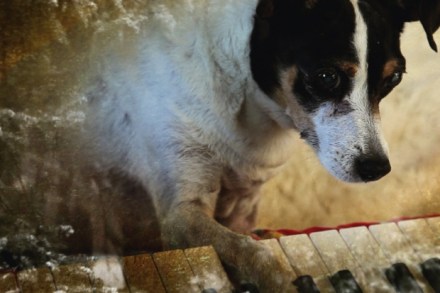
Heart of a Dog is a film by Laurie Anderson and it’s a meditative, free-associating rumination on life, loss, love and dogs, with particular reference to her and her late husband’s (Lou Reed, who died in 2013) beloved rat terrier, Lolabelle (who died the same year). It follows no linear logic. It’s a visual collage, a cine-poem, a dreamy documentary essay that was screened in London earlier this week to owners and their dogs — to rave reviews. ‘It’s great!’ said a golden retriever, but as he said the same of ‘a ball’ and also ‘a pizza crust’, he may not be the most reliable of critics. (This is why you never see golden retrievers on Film 2016 or writing for Sight & Sound.

Death and the Bard

From our UK edition

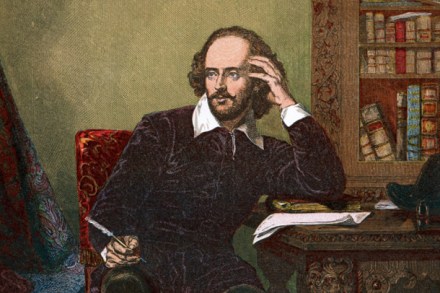
[audioplayer src="http://feeds.soundcloud.com/stream/260046943-the-spectator-podcast-obamas-eu-intervention-the-pms.mp3" title="Lloyd Evans and Dr Daniel Swift discuss how Shakespeare died" startat=1008] Listen [/audioplayer]How did the Bard kick the bucket? The 400th anniversary of Shakespeare’s death reignites interest in a great literary mystery. All we know for sure is that he was buried on 25 April 1616 in Holy Trinity Church, Stratford, and it’s a fair assumption that he died a couple of days earlier, around his 52nd birthday. A dearth of evidence compels us to sift the plays for clues to his lifestyle, which may, in turn, help with the autopsy. Historians condemn this kind of detective work but their reasons seem pretty unfair.

Communism kills

From our UK edition

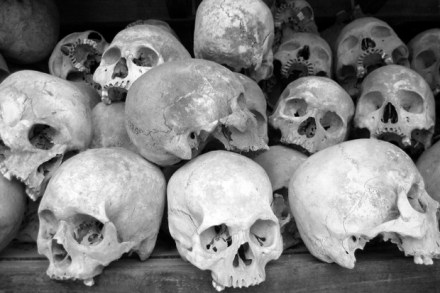
I went to Budapest last year and did the usual touristy things. I climbed up the hill to the fantasy castle walls in Buda. I took a boat ride. I went to the Turkish baths — edging cautiously into scalding hot water and then summoning up the courage to tip a bucket of cold water over myself. Finally, I reached the grim end of the tourist trail: the so-called House of Terror. On the outside, it looked like every other Hungarian house on the boulevard. Inside, it was a museum set up in the actual place where first Nazis, then communists, inflicted imprisonment, terror and murder. Visiting it was a powerful emotional experience. You see the actual basement cells where prisoners were tortured or hanged.

Barometer | 11 February 2016

From our UK edition

Matters of life and death Lord Lucan is now officially presumed dead. How do you have someone declared dead? In England and Wales, under the Presumption of Death Act 2013… — Anyone can apply to have anyone else declared dead, but if the applicant is not a spouse, civil partner, parent, child or sibling of the presumed deceased they must show they have a significant interest. — The person should have been missing for at least seven years, but it is possible to have someone declared dead earlier if the court is convinced they have died. — It costs £480. — An order can be revoked if the person later turns up alive, but that will not reinstate a marriage or civil partnership. — The act cannot be used in the instance of a missing monarch.

Death on the NHS

From our UK edition

I’ve never understood the phrase ‘died peacefully’. Two weeks ago I watched my mother die, in the very same NHS hospital where I watched my father die almost ten years earlier. There was nothing peaceful about it, at least from my unwanted ringside seat. The end — acute pneumonia providing the final nail in a soon-to-be purchased coffin — was painfully slow. It dragged on and on and on. She struggled for her last breaths and appeared distressed, confused and frightened to the end. The last time I had been to St Helier hospital in south London was September 2005, as my father slowly slipped away. Naturally the memories came flooding back. And so did confusion. Ten years is a long time, especially in the NHS.

Chance encounters

From our UK edition

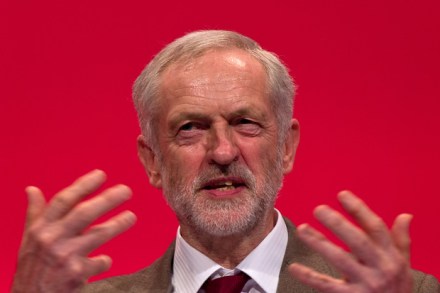
Some might say that Jeremy Corbyn is cloth-eared, tone-deaf, socially inept but on Monday morning, as the death of the pop artist David Bowie scrambled the agenda on Radio 4’s Today programme, he was as graceful and twinkle-toed as Bowie himself. The opposition leader had been invited on to the ‘big slot’ just after the eight o’clock bulletin to talk about his ‘shock’ reshuffle last week. David Cameron and the Archbishop of Canterbury, no less, had already provided their rent-a-quote verdicts on Bowie’s life and death. Nick Robinson asked Corbyn for his thoughts. Quick as a flash, he responded, ‘Does that mean I’m joining the great and the good...?

Tricycle’s Ben Hur is magnificent in its superficiality – a masterpiece of nothing

From our UK edition

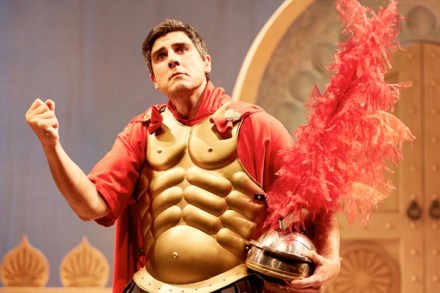
It’s the target that makes the satire as well as the satirist. Is the subject powerful, active, relevant and menacing? Patrick Barlow’s new spoof, Ben Hur, must answer ‘No’ on all four counts. The show takes aim at two principal irritants: vain actors and the Hollywood epics of the 1950s, whose titanic scale was offered as bait to audiences besotted with their cosy new TV sets. Old Hollywood is a spent ogre these days and the foibles of the acting trade are hardly a threat to civilised life, so the show can’t embrace our immediate concerns. But the execution is compellingly assured.

Why do we assume our western good life will last for ever?

From our UK edition

The slaughter in Paris is a catastrophe for the victims and their families, but the usual hysterical response across the media reminds us, yet again, what an extraordinary achievement it is that we Westerners simply assume the world owes us a life lived to the full, in comfort and security. From the ancient world until relatively recently, there was little sense that the world owed us anything. About half of Romans would not make the age of five; probably a third would not make three months. War was commonplace, as deadly for civilians as soldiers, as were disease and famine. The destruction of Pompeii by Vesuvius was greeted with relative indifference. Ancients simply accepted that this sort of thing was bound to happen.

Death watch | 19 November 2015

From our UK edition

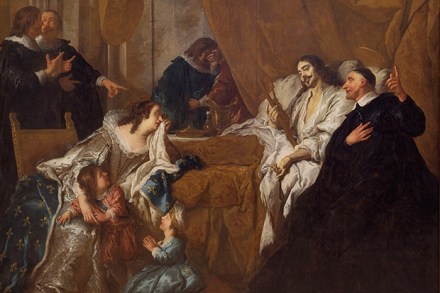
At the beginning of the summer of 1715 Louis XIV complained of a pain in the leg. In mid-August gangrene set in and by 1 September he was dead. He’d been on the throne for 72 of his 77 years. A new exhibition at Versailles looks at the elaborate rituals that followed. The Sun King died as he had lived — in public. Despite his illness, he carried on his daily routine until two days before his death, a decision made easier perhaps by the fact that he’d always conducted a good part of the affairs of France from his bedroom. It was no ordinary bedroom, and what went on there wasn’t ordinary either.

Diary – 5 November 2015

From our UK edition

I had only experienced great loss when my mother died. It was desperately harrowing, but not as harrowing as the news that my sister Jackie had passed away. My mother had suffered a long lingering illness but Jackie only told me about her cancer two weeks before she died. It was a shattering, heart-breaking blow that I still haven’t assimilated and I don’t know if I ever will really get over it. I expect one learns to live with loss but she remains as vivid in my heart and my mind as if she were still alive. Jackie was a special woman, not because she was my sister but because of her indomitable spirit, amazing energy, generosity, kindness and warmth.

What is it about Bill Viola’s films that reduce grown-ups to tears?

From our UK edition

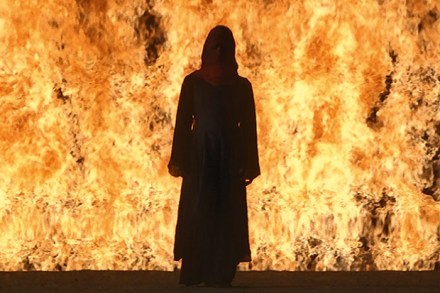
Even the most down-to-earth people get emotional about Bill Viola’s videos. Clare Lilley of Yorkshire Sculpture Park (YSP) seems close to tears as she takes me round his new show. Lilley is the show’s curator. She’s usually so matter-of-fact, but when she talks about Viola her eyes light up. When she took her two teenage daughters to his studio in Los Angeles, she tells me, they both cried when they saw his films. I like to think I’m made of sterner stuff, but when she leaves me in the Sculpture Park’s Underground Gallery, where Viola is on show, after a few minutes in there on my own I’m blubbing like a baby. What is it about Bill Viola that makes grown men (and women) weep?

Letters | 3 September 2015

From our UK edition

Suicide and assisted dying Sir: As a mental health practitioner, I am grateful to Douglas Murray (‘Death watch’, 29 August) for his incisive commentary on the impact of legalised euthanasia on people with psychiatric conditions. Supporters of assisted dying argue that a permissive act would be tightly framed, but the scope would inevitably widen, as has occurred in Holland. Although Lord Falconer and fellow travellers would bar people of unsound mind from the intended provision, this would soon be challenged as discriminatory: because effectively, a person would be punished for losing decision-making capacity. If proponents of euthanasia are really so rational, while their opponents are blinded by emotion or faith, how can this anomaly be justified?

Dying for attention

From our UK edition

Not content with Facebooking our every foible, Instagramming the births of our children and live-tweeting our daily lives, more and more of us are now making a public spectacle of dying. We’re inviting strangers not merely to ‘like’ expertly filtered photos of our breakfasts, but to admire the way we peg out. Nothing better captures the death of privacy than this publicisation of death. It began with the literary set. It’s a rare writer these days diagnosed with a terminal illness who doesn’t get a book out of it. Jenny Diski is the latest public dyer. She’s giving readers of the London Review of Books a blow-by-blow account of her death by lung cancer, covering everything from the diagnosis to her chemo sessions.