Death

Poetry in motion | 6 April 2017

From our UK edition

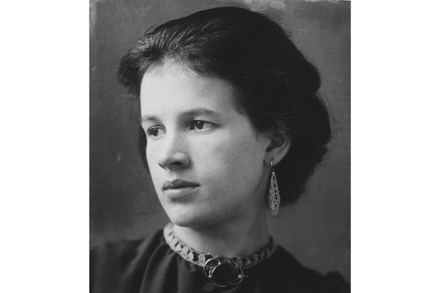
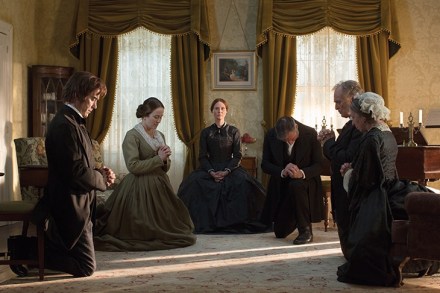
Films can be poetry — or like poetry; or poetic, at least — but can poetry ever be film? That is our question for today, and I’ll attempt to answer it, although there is absolutely no saying that I’ll be able to do so. Always touch and go, that. A Quiet Passion is Terence Davies’s biopic of the 19th-century American poet Emily Dickinson, author of ‘Hope is the thing with feathers/ That perches in the soul’ and ‘Because I Could Not Stop for Death’ (look it up; do) and, all in all, 1,800 (incredibly wonderful) poems, of which only 10 were published in her lifetime. Who was this woman? She’s fixed in our minds as a recluse who would only talk from behind her bedroom door, but was she always?

Letters | 16 March 2017

From our UK edition

Pope Francis’s mission Sir: Despite Damian Thompson’s intimations (‘The plot against the Pope’, 11 March), Pope Francis is going nowhere except onwards and upwards. Jorge Bergoglio has a loving family background which gives him a mature, balanced personality. He is gifted with a fine, open mind, underpinned by an Ignatian spirituality which reminds him of his sinfulness and his constant need for God’s grace. He also has vast experience of the pastoral ministry in the Buenos Aires slums. No doubt there is a ‘Borgia’ element in the Vatican. This lust for power is not at all what the crucified Christ encouraged in His disciples. As the Pope presses on with the belated but vital reform of the Catholic church, we pray, and he must watch his back.

Wild life | 9 March 2017

From our UK edition

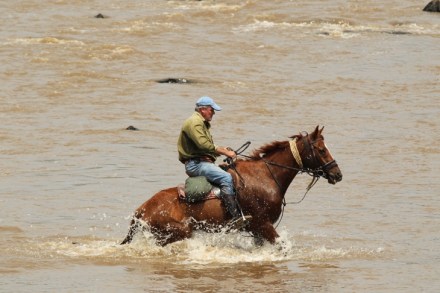
Laikipia On Tristan Voorspuy’s hell-for-leather riding safaris across Kenya’s savannah, he cracked a bullwhip at predators that tried to eat his guests. One time a lion chased American actress Glenn Close on her horse and Tristan said, ‘We nearly lost her.’ They all joked about it that night around the campfire. Tristan was among the last of the stylishly mad people in Kenya. He once rode his horse into the bar at the Muthaiga Club during a stag party. From the saddle, he toasted the groom, his steed defecated on the parquet and off he trotted between astonished drinkers into Africa’s night. Tristan was a gentleman and well read.

Comfort the suffering

From our UK edition

If a single book could help you to be kinder and more compassionate, could expand and deepen your understanding of other people (and possibly yourself) and make you less afraid of dying in the process, you would surely be eager to acquire it at once. Well look no further, for Grief Works is that book. The King Lears among us — whose every third thought is the grave — will need no persuading that a collection of essays about surviving bereavement is an enthralling read. For those of a more timid or sunny disposition, ask yourself this: when someone you love dies, how will you manage? The odds of avoiding grief are not in anyone’s favour. In Britain half a million people die each year and it’s estimated that each death affects at least five people.

Low life | 19 January 2017

From our UK edition

Our friend Anthony was reportedly dying and a party of four drove over to the nursing home to say cheerio. The journey across deepest Provence was an hour and a half each way and we went in my old Mercedes. I fixed my attention on the badge and the twisting road beyond it, rhythmically chewing one square after another of 4mg fruit-flavoured nicotine gum. My morning dose of 75mg Venlafaxine filtered out extraneous thought, self-criticism and fantasy, leaving me feeling unusually self-possessed. The mental picture I keep of Anthony is just the eyes, which are a startling shade of light blue. I’ve never got used to them. Since I have known him he has usually worn a jacket of faded blue cotton that matches their colour exactly and doubles their disconcerting effect.

A priest at the door

From our UK edition

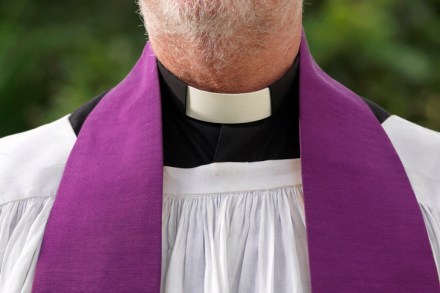
It was October 2010 the night the priest came to our door. The knock startled Tim’s dullard beagle into a howl just as Tim’s mother was serving up dinner. She and her husband had flown in from New York a few weeks earlier to care for their dying son. Tim and I had moved to London the year before. Our friends — newsroom colleagues — visited sometimes, though only with advance notice. Tim’s brain tumour had severely blunted his wit. I was prone to crying jags. As a couple, we did not inspire drop-ins. Tim’s mother told us to start eating and went to answer the knock. The beagle ricocheted in frenzy between food and front door. ‘Charity collectors,’ Tim’s father guessed.‘They love targeting dinner time.

Long life | 8 December 2016

From our UK edition

While American conservatives, including Donald Trump and the Cuban exiles in Florida, whooped with joy at the news of the death of Fidel Castro, and while millions of America-haters throughout the world extravagantly mourned his passing, Barack Obama was circumspect. ‘History will record and judge the enormous impact of this singular figure on the people and world around him,’ he said. This was a restrained comment by an American president about a foreign leader whose 47 years of dictatorship had been sustained almost entirely by stirring up hatred of the United States; and we won’t have to wait for history’s verdict on his impact on that particular country, for we know already how enormous it was. He not only humiliated JohnF.

Long life | 1 December 2016

From our UK edition

Most people who die in Britain are now cremated — more than 70 per cent of them — but there is often uncertainty among the bereaved about what to do with the ashes. When dead bodies aren’t burnt, it is straightforward: they are buried in coffins. But the options for the ashes of the dead are various. They may be interred in a churchyard or a cemetery, they may be planted among the roots of a new tree, and they may be scattered in the countryside, in a river, or at sea. But these are just the conventional choices. Lots of exotic alternatives are also offered.

Barometer | 24 November 2016

From our UK edition

Bucks for Bucks Buckingham Palace is to be renovated at a cost of £369m, funded through an increase in the sovereign grant. How much have home improvements to the palace cost over the years? — The original house was built by the Duke of Buckingham in 1706 for £7,000. — In 1761, George III spent £21,000 to buy it, and £73,000 on remodelling it. — In 1826, George IV hired John Nash to remodel the building for £450,000. He was fired in 1828, having spent £496,169. — In 1845, Queen Victoria complained it wasn’t big enough for her growing family and added the east wing, using £53,000 raised by selling Brighton Pavilion.

Permanent ink

From our UK edition

 Brooklyn Shall I have my sister’s skin peeled off for display after she dies? Specifically, the tattooed bits — the swatches on either forearm adorned with foliate designs by her favourite artist, and the patch on her wrist inked in her own handwriting with transliterated Hebrew. I’ve always liked them, and not just because they annoy Mother. Should they be separated from her mortal remains, preserved through the wonders of mortuary science, and mounted in a shadow box to grace my bookshelf in her memory? I ran the idea by her the other day while lounging in her Brooklyn garden. Without looking up from the barbecue where she was grilling our formerly free-range dinner, Sister replied, ‘What?’ Her reaction was understandable.

Intimations of immortality

From our UK edition

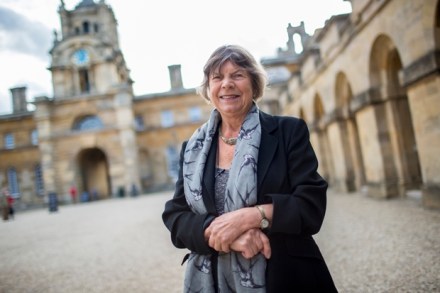
A preoccupation with death is felt from the start of Margaret Drabble’s new novel, which opens with Francesca Stubbs, in her seventies, considering whether her last words will be ‘you bloody old fool’ or ‘you fucking idiot’. Fran is central to the web of characters that populate the book, linked by varying degrees of friendship and kinship, but tied more firmly together by the approach of death. Drabble squares up to old age with pragmatism: she shows us its terrible physical pain, loneliness and expense, but lightens what could threaten to be a grim read with observational humour, delighting in her characters’ eccentric pleasures.

High life | 27 October 2016

From our UK edition

I was not on the winning side of the debate, despite giving it the old college try. Thank god for my South African friend Simon Reader, who coached me just before I went on. Mind you, my side felt a bit like Maxime Weygand, the French general who, in June 1940, was happily smoking his pipe back in Syria when he got the call to take over the French army. The Germans had already taken Holland and Belgium and had breached la Ligne Maginot, Gamelin had thrown in the towel, and Paul Reynaud had called for a fresh face to stop the mighty Wehrmacht. ‘Gee, thanks a bunch,’ said Weygand, but took it like a real Frenchman and surrendered to the German army a couple of weeks later.

A matter of life and death | 20 October 2016

From our UK edition

Shades of The Master and Margarita haunt Rabih Alameddine’s sixth book, in which Jacob, a Yemeni-born poet with a day job in IT, battles with drugs, insanity, visions of the Devil and a variety of Christian saints while trying to come to terms with the fallout from the Aids crisis. As that crisis wore on, ignored by the powers-that-be, Jacob’s lover and all of his closest friends died, leaving him with an apartment full of ashes and an eye-watering variety of instructions for their disposal. Yet, while echoes of Bulgakov’s masterpiece inform The Angel of History from first to last (there is even a cat named Behemoth), Alameddine has created a scintillating, original work whose moral complexity and detail of observation are wholly contemporary and entirely his own.

He blew his mind out in a car

From our UK edition

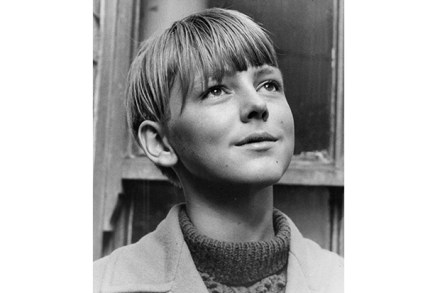
There was a touch of Raymond Radiguet, the young literary sensation of 1920s Paris, about Tara Browne. In life poetically beautiful, poetry-imbued, tender and trusting, deliciously precocious and eerily presumptive, androgenous in looks but not desires, Tara died —‘without knowing it’, as Cocteau said of Radiguet — tragically, but given his penchant for very fast cars, unsurprisingly young. And, like Radiguet, having touched the lives of those who knew him with a kind of iridescence that remained with them more than half a century later.

Thoroughly bewitching

From our UK edition

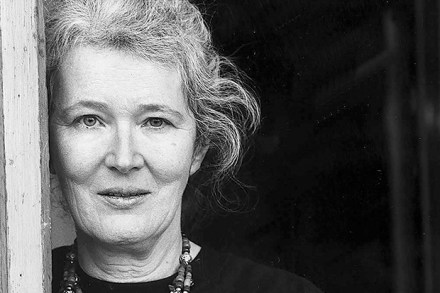
Angela Carter was a seminal, a watershed novelist: perhaps one of the last generation of novelists to change both the art she practised and the world. Reading this splendid biography, it is hard to avoid the false conclusion that she always knew exactly what she was doing. Her life, in its swerves and unexpected corners, always turns out to be contributing to her work; how clever of her, one starts to think, to get a job on a local news-paper, to go to Japan, to have an array of dotty, oppressive or plain witchy aunts, mother and grandmother…. Of course it was not like that. Carter’s life seems rich and inevitable in the retelling because she made use of almost everything. There was not much that she wouldn’t look at with interest.

Va-t’en, Satan

From our UK edition

What do you say to someone who is killing you? It is seldom possible to decide in advance. We are told that Fr Jacques Hamel, aged 85, murdered while saying Mass at Saint-Étienne-du-Rouvray on 26 July, said, as his killers brought him to his knees to cut his throat: ‘Va-t’en, Satan.’ It is a reasonable thing to say, not necessarily identifying the attackers with Satan, just indicating that he is at work in the actions of the moment. Fr Hamel’s death reminded me strongly of that of St Thomas Becket at the hands of fellow Normans in 1170. Language had due importance on that occasion. Reginald FitzUrse, on breaking into the cathedral, shouted: ‘Where is Thomas Beketh [sic], traitor to the king?

Estate agent

From our UK edition

A big misunderstanding about art is that it excites serene meditation and transcendent bliss. But anyone who has worked in a public museum or a commercial gallery knows that this is untrue. The moral climate of the contemporary art world would embarrass the Borgias. Art excites peculation, speculation, back-stabbing, front-stabbing and avarice while fuelling nasty spats about attribution and ownership between heirs, relatives, executors and collectors. Nowhere is this more comically apparent than in the matter of artists’ estates. Once a private concern of family and lawyers, the ‘artist’s estate’ is becoming recognised as a tangible and valuable entity that needs professional management just like any other financial asset.

Distant voices

From our UK edition

One of the weirdest responses when someone close to you dies is the gradual realisation that now at last you know them fully. They become to you complete, rounded, fully themselves, in a way that just does not seem possible while they are still alive. It’s so frustrating. Just when you’re at last ready and able to talk to them in the way you’ve always wanted, in full knowledge of who they are, seeing clearly every aspect of their person, they are no longer present. Radio 4 has come up with a partial antidote to this aspect of death, loss, grief, and so too of life and living, with its unsettling new lunchtime series, Unforgettable (produced by Adam Fowler), the title inspired by Natalie Cole’s 1991 single, where she duets with her long-dead father.

Red hot

From our UK edition

Everything about Julieta feels totally Almodóvarian. It’s a family saga that smoothly blends tragedy and levity, with exquisite performances from a company of passionate actresses. It looks carefully ravishing. Many of the director’s abiding themes are here: terminal illness, sudden death, a mother’s love for her child, men hanging about the fringes. And yet it is based on a most un-Hispanic source. The Julieta of the title was originally Juliet, who features in three interlinked short stories from Runaway, the 2004 collection by Alice Munro. Munro won the Nobel Prize for Literature three years ago after a lifetime writing quiet stories that conceal hammer blows.

Super human

From our UK edition

‘We think we’re in charge of this stuff but we’re not,’ said Quincy Jones, the composer, arranger, jazz trumpeter, musical genius. He was talking to Julian Joseph at the Montreux Jazz Festival for Jazz Line-Up on Radio 3 (Saturday). ‘It’s divine intervention.’ Jones, who masterminded Michael Jackson’s Thriller as well as countless other hits, film scores (including The Italian Job and The Color Purple) and his own ‘Soul Bossa Nova’, was remarkably sanguine about his extraordinary career. His enormous self-confidence was there from the start. Finding himself in Paris in the 1950s touring with a big band, he decided to stay on so that he could study with Nadia Boulanger and learn how to write for a symphony orchestra.