David hume

Is it better to be reasonable or rational?

You find yourself in the heat of an argument and your mulish interlocutor refuses to see the light. ‘Please,’ you implore, ‘be reasonable.’ But what exactly are you asking? Do you want him to be more rational? Or to act as a typical person might act in his shoes? Maybe the whole question is hopelessly subjective, as your paragon of reasonableness may be his idea of madness, and vice versa. Or else perhaps your request is a mere smokescreen – a sly piece of rhetoric to mask your will to power behind the language of decency? In a short and deftly argued book, Krista Lawlor, a professor of philosophy at Stanford University, dives into the questions of how to be reasonable and why it matters – in law, in our relationships, in morality and in political life.


The pleasure of reliving foreign travel through food

The idea of the kitchen as a space for transformation and transportation is not a new one. Many writers have explored the room’s ability to offer both domesticity and alchemy at the same time – how it allows cooks to travel vicariously through the food they make. This is the subject of Cold Kitchen, Caroline Eden’s memoir of her time spent in her kitchen in Scotland and of her travels to Eastern European and Central Asian cities – and somehow she makes it fresh and compelling. She is an author and critic who has written extensively about the food and culture of the countries of the former Soviet Union. Black Sea, in which she explored Odessa, Istanbul and Trabzon, received a clutch of prizes, and Red Sands, about Central Asia, won the prestigious André Simon food book award.

A dutiful exercise carried out in a rush

Like department stores, empires and encyclopaedias, the multi-volume narrative national history is an invention of the later 18th century. It reaches its apogee, promising to bring everything important within a single enclosure, in the 19th and early 20th century. After that, ambitious examples appear to be fighting against a general lack of enthusiasm. Most of these works are little read now, from David Hume’s 1750s The History of England all the way through to Winston Churchill’s idiosyncratic A History of the English-Speaking Peoples in the 1950s. The grand sweep has a tendency to define the significant in advance.

The age of de-enlightenment

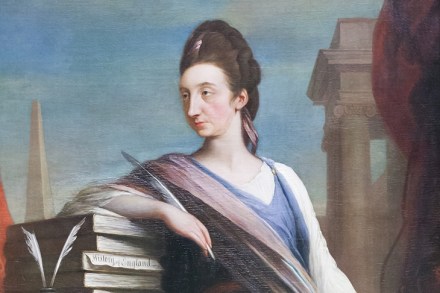
Depictions of Thomas Carlyle and David Hume in the Scottish Portrait Gallery will be altered to make it clear they were horrible racist bastards, apparently. All of the Scottish Enlightenment thinkers are under review, including Adam Smith, who thought that people living beyond Europe were largely savage. I am not sure how they will alter the bust of Carlyle — perhaps chisel a swastika on his forehead? Carlyle was certainly rightish on many issues: you don’t get Friedrich Nietzsche in your fan club if you’re woke. But when I started reading the chap, back in the late 1970s, it was for the witty and sharp Sartor Resartus that I loved him, and his essays on heroes and hero worship.

The Enlightenment was a many-splendoured thing

History used to be so much easier. There were the Wars of the Roses, then the Reformation, the Civil War, the Enlightenment and finally the Victorians. Each one had its own century and its distinctive tag. Throw in Henry VIII and Elizabeth I, garnish with a few zealots and adventurers, some glorious triumphs and some grisly deaths. It was all part of our Island Story. You knew where you were. Take the Enlightenment, for example. Everyone knew that this was the Age of Reason: the moment when science finally started to impose order and banish religion. The French rationalists had their heyday, Voltaire, the philosophes and all that, before they were vanquished by the Scottish empiricists David Hume and Adam Smith and the great commercial acceleration of the late 18th century.