Culture

George Packer interview: The American Dream is dangerous because people yearn for it to be true

From our UK edition

George Packer is a staff writer at The New Yorker and the author of The Assassins Gate: America in Iraq, a book that received several prizes. Packer’s other non-fiction books include, The Village of Waiting and Blood of the Liberals, the latter winning the 2001 Robert F. Kennedy Book Award. He is also the author of two novels, The Half Man and Central Square.  Packer’s latest book, The Unwinding: An Inner History of the New America, is a work of non-fiction that attempts to document the massive political and economic changes that have taken place in the last three decades in the United States.

Timothy Beardson interview: It’s urgent that China reforms

From our UK edition

Recent convulsions in China’s banks will not, I suspect, have surprised Timothy Beardson, a sinophile, veteran Hong Kong financier and author of Stumbling Giant: The Threats to China’s Future. He argues that China’s extraordinary growth over the last 30 years has come in spite of its banking system. A dinner party might speculate where China would be if not for Mao; but a more immediate question is: where would China be if its banking system supported the private sector? “If the economy has grown by 10 per cent for 30 years, as is reported (and I think that the data in China is very frail – it probably hasn’t grown at 10 per cent a year – but it’s clearly grown at a very high rate and that’s all that matters).

Art and the raging bull

From our UK edition

In these days of growing concern at the methods of factory farming and the welfare of the animals which are raised and killed for our consumption, it is instructive to compare the life of domestic beef cattle with that of a Spanish fighting bull. The cattle may have less than two years of life in cramped conditions, while the toro bravo roams free and unmolested on pasture for five years. Alexander Fiske- Harrison makes the comparison succinctly: ‘Five years on free-release and then the arena, or 18 months in prison and then the electric chair’. He maintains (there is some evidence for this, to do with beta-endorphins) that the fighting bull’s suffering is reduced because, once in the ring, it feels no fear, only aggressive anger.

Culture wars

From our UK edition

Shadow arts minister Dan Jarvis set chins wagging today by suggesting that ‘well-placed sources in Whitehall’ had told him that the Department for Culture Media and Sport could be scrapped in this summer’s spending review. This is an old rumour that does the rounds every so often; but it’s not completely bonkers in this spending environment, and government culture vultures are fighting back. One DCMS source told me that Jarvis ‘doesn’t know what he’s talking about. There is absolutely no truth in these rumours.’ The denial, though insulting, will please Dan the Man because the ex-Para would be out of a job if the Department for Fun closed.

The arts, the Ancient Greeks and Maria Miller

From our UK edition

The Culture Secretary, Maria Miller, has said the arts world must make the case for public funding by focusing on its economic, not artistic, value; it must ‘hammer home the value of culture to our economy’. The ancients would have wondered what she was taking about. There was no concept of ‘the arts’ in the ancient world; nor any concept of ‘art’, at least among the Greeks. What we call ‘art’ was, in Aristotle’s definition, ‘the trained ability to make something under the guidance of rational thought’. It was, in other words, craftsmanship. So ‘artists’ were regarded rather as we would regard car mechanics or dentists.

This Britain: Maria Miller confuses economics with pleasure and beauty.

From our UK edition

Is it possible for a government minister to give a speech that is not a "keynote address"? That was my first thought upon reading Maria Miller's speech at the British Museum last week. My second thought was remembering the old saw that any time a government minister talks about "culture" it is sensible to reach for your Browning.  Thirdly, I recalled that Maria Miller is the kind of Commissar whose officials think it sensible to threaten journalists. So I suppose that I was predisposed to think poorly of her speech on the economic importance of the arts. Well, it was still a rotten speech that lived-down to these low expectations.

Roy Lichtenstein: comic genius?

From our UK edition

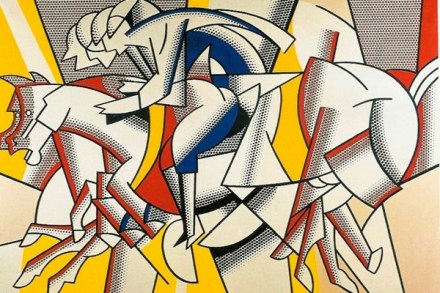
Tate Modern promises that its forthcoming retrospective will showcase ‘the full scope of Roy Lichtenstein’s artistic explorations’, to which Spectator art critic Andrew Lambirth responded acidly: ‘I look forward to being pleasantly surprised.’ And it’s true that once Lichtenstein perfected his dot patterning technique in the mid-Sixties, he stuck with it until his death more than 30 years later. Alastair Sooke’s How Modern Art Was Saved By Donald Duck is available as a Penguin Specials paperback from Tate Modern; elsewhere, it’s in eBook format only. It won’t convince any sceptics of Lichtenstein’s infinite versatility, but it does make a case for him as a supreme examiner of style.

In defence of Suzanne Moore

From our UK edition

Tell me if you have heard this already but it appears that Suzanne Moore has offended the trans-gender lobby. She did this by writing an essay about women’s anger for a Waterstone’s collection of essays, which was then republished by the New Statesman. The following sentence caused deep offence (is there any other kind?): 'We are angry with ourselves for not being happier, not being loved properly and not having the ideal body shape – that of a Brazilian transsexual.' Faced by the not-inconsiderable wrath of the trans-gender community, Suzanne responded in characteristic fashion with a counterblast in the Guardian: 'In Iceland, they put bankers in prison for fraud. Here, we give them knighthoods. So to be told that I hate transgender people feels a little ... irrelevant.

Which words would you ban?

From our UK edition

Which words in current use would you ban? Lake Superior State University answers this question each year, with its famous ‘List of Words to be Banished from the Queen’s English for Misuse, Overuse and General Uselessness’. Words are recommended by members of the English speaking world, and then selected by the university. Top of the list is ‘fiscal cliff’: the catchall phrase for the various political (and cultural) difficulties that have arisen from America’s fiscal and economic crises. Opinion is split on which of ‘fiscal’ or ‘cliff’ is the greater offence. Other irate correspondents object to the vague metaphor: is America trying to scale the cliff or trying not to fall off it?

The Atlantic, the ocean that made the modern world

From our UK edition

Just as the classical world was built around the Mediterranean, the modern world was built around the Atlantic. The Romans called the Med ‘Mare Nostrum’ – Our Sea. The Atlantic, on the other hand, was a place of contest for centuries. European nations fought for supremacy and plunder upon it, traded for wealth across it, and scrambled for territory around it. According to John K. Thornton, author of A Cultural History of the Atlantic World 1250-1820, the creation of an ‘Atlantic World’ was driven by the hunger of European states for hard cash. Money was needed to support the fantastically expensive armies which, from the late Middle Ages onwards, European nations were obliged to maintain as they engaged in a prolonged arms race.

Robert Hughes – The novelty of the shock

From our UK edition

The real shock of the new came in 1991. It was sobering, and it was reverent, which aren’t exactly the first words one would associate with The Shock of the New art critic Robert Hughes. No wonder it went largely unacknowledged when he passed away last month. While Hughes’ seminal art history series continues to re-run on BBC4, it’s not without irony that one recalls that in ’91, 11 years after it originally aired, Hughes panned the whole concept of the art documentary. Admittedly, he’d always been slightly sceptical. He opened the first edition of his book (originally a mere spin-off of the series; ultimately, as Hughes himself said, something that far outlived it) with the confession that television can be no substitute for the true experience of art.

Spicing up my life

From our UK edition

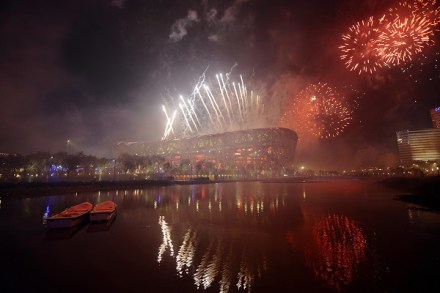
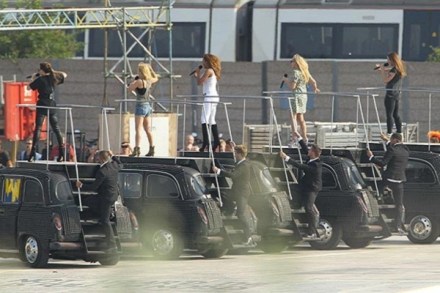
I do not necessarily wish to imply I have the gift of prophecy. But this is either uncanny or part of some cosmic plan to aggravate me. Three years ago on an edition of Question Time, alongside the then Olympics minister Tessa Jowell, the panel was asked whether we regretted bidding for the Olympics (since a recession had come along afterwards). I said that I had never been terribly in favour of getting the Olympics, not because of the expense or because our athletes wouldn't do our nation proud (as they more than have) but because of how bad we in Britain had become at selling ourselves as a culture. I referenced the beautiful closing ceremony of the Athens Olympics, which included a recording of Maria Callas, the finale of Mahler 3 and a reading from George Seferis.

Compromised by not compromising

From our UK edition

‘In a relationship, when does the art of compromise become compromising?’ Thus spoke Carrie Bradshaw. Such knowledge suggests that I have passed her tipping point; my compromises have compromised me. But, then again, one can’t dissent from Robert Louis Stevenson’s view that ‘compromise is the best and cheapest lawyer’, especially when it comes to relationships. There are worse fates than having to do the washing-up occasionally to a backing of unwanted telly. Yesterday evening, I had hoped to watch highlights of England’s humiliation at the hands of the South African cricket team, but, alas, was forced to settle for Eastenders. Such is life. In fact, Eastenders wasn’t all that bad. It certainly wasn’t dull.

Frontier dreams

From our UK edition

When I was growing up, the Dallas theme tune was like a call to prayer. As the Copland-esque trumpets rang out, we ran to the television set. A hushed silence descended as cattle stampeded beneath the snazzy gold title credits. To watch the glamorous travails of the Ewing family from a sofa somewhere near Coventry in the 1980s was to experience the very promise of the age. Escapism, certainly. But Dallas was also about dreams. Frontier dreams. That there was a place on earth where oil men in Stetsons plotted each other’s downfall while slurping bourbon was too fabulous. That these men were married to women with shoulder pads bigger than Darth Vader’s was beyond inspiring if you were a kid growing up not in Midland, Texas, but in The Midlands, UK.

In Blair’s shadow

From our UK edition

An ebook arrives! The future of publishing on my hard-drive. All the big profits are in cyber-publishing these days, as I discovered last month when I downloaded an ebook for three quid and found it contained just 85 pages. This one, by Alwyn W. Turner, has only 72 pages, but it’s a penny cheaper at £2.99. I read it in less time than it takes to bake a potato. Turner’s theme is the agony of the British left. In 1992, Labour’s shock defeat at the polls plunged the party into despair and gave the modernisers a mandate to do whatever was necessary to win power. Turner’s plan is to revive our memories of that ignoble turning-point and to enshrine 1992 as the must-have date of 2012.

Prophetic times

From our UK edition

The subject here is colossal, covering a substantial stretch of the later Roman empire, the last years of the Persian empire, the conversion of the Arabs, the spread of Christianity and what happened to Judaism. The time span runs, effectively, from the death of Jesus to the moment in the eighth century when the Abbasids acquired through violence the vast empire of the Umayyads, stretching from the Loire to the Hindu Kush, and founded Baghdad. The title of Tom Holland’s book is rather studiously general, but his central topic is unmistakable: the founding and establishment of Islam and its political and martial setting. If Holland didn’t want to make a point of this in his title, one couldn’t blame him.

Riots and responsibilities

From our UK edition

The riots are fast in danger of becoming the forgotten issue in our politics. The social and cultural problems that they laid bare have been knocked out of the news by the continuing financial and political drama in the Eurozone But if we, as a society, don’t work out how to address these problems then they will simply get worse. The essay by David Lammy, the MP for Tottenham, on what happened this summer in The Guardian magazine today is thought-provoking even if I don’t agree with all of its conclusions. . Interestingly for a man of the left, Lammy accepts the points that the riots were about culture as much as anything else. As he writes, ‘the mothers sitting nervously in my surgeries were not just talking about money.

Music, moonlight and dahlias

From our UK edition

The words that echoed constantly in the back of my mind as I read this book were from Paul Simon’s song ‘Train in the Distance’: ‘the thought that life could be better is woven indelibly into our hearts and our brains’. The words that echoed constantly in the back of my mind as I read this book were from Paul Simon’s song ‘Train in the Distance’: ‘the thought that life could be better is woven indelibly into our hearts and our brains’. Paul Hollander’s thesis is that modern America’s ultra-individualism has led its citizens to expect perfection in every aspect of life, relationships included. Which means that Uncle Sam and Auntie Samantha are in for a few disappointments.

England from above

From our UK edition

It is a shame that Sir Roy Strong is subjected to the now-obligatory drivel about his being a ‘national treasure’, because this unthinking cliché diminishes his contribution, over more than 50 years, to our cultural life, whether as a curator or, in later times, as a gardener. Sir Roy has also written a number of books, and in his preface to this one describes his mission to bring the past of our country before a general readership. His last, A Little History of the English Country Church, certainly furthered that aim: it described how our shared past could be discovered by looking in these buildings.

Off target

From our UK edition

Target culture. It's a pejorative phrase, and understandably so. As we discovered during the New Labour years, targets designed to encourage good public services can frequently do the opposite — replacing genuine care with box-ticking, and action with bureaucracy. I mention this now because of an article in this week's Spectator (do subscribe, etc.) by an anonymous Metropolitan Police officer. He describes how a target culture has skewed the work of the force and, in some cases, even the law itself. Here's one anecdote, which rather sums it all up: "I know of one instance in which a uniformed sergeant stole (or neglected to hand in) some confiscated cannabis.