Culture

By caving in to religious misogyny, ‘anti-racist’ liberals reveal their inner racist

From our UK edition

Even by the low standards of English lawyers, the men and women who run the Law Society have behaved like shameless hypocrites. Instead of confining themselves to offering professional advice, they set themselves up as Islamic theologians. In a practice note on Sharia-compliant wills, the Law Society advised the 125,000 solicitors in England and Wales to urge Muslim clients to discriminate against women, non-Muslims, adopted and 'illegitimate' children. 'Male heirs [should] in most cases receive double the amount inherited by a female heir,' it said, and 'non-Muslims may not inherit at all'. Likewise 'illegitimate and adopted children are not Sharia heirs' and should not be left a penny.

The great David Ekserdjian deserves a museum of his own

From our UK edition

Ever since Mr Blair’s New Dawn of 1997, the dominant idea in public policy towards public collections has been ‘access’. The doctrine is more than half-right: art, antiquities etc paid for by the public are not doing their work unless we can see them. But it has promoted the heresy that the person chosen to run every museum must be a communicator rather than a scholar. Actually, both is best. True, some learned persons are interested only in objects and cannot communicate with the human race, but the best evangelisers for a museum or gallery are the people who really know its contents. The best-known current example is Neil Macgregor, at the British Museum.

Celebrating diversity means imposing misogyny

From our UK edition

People talk about their commitment to equality and diversity so readily they must assume there is no conflict between the two. The phrase falls off the tongue as if it were an all-in-one package, and people can 'celebrate diversity' and support equal rights without a smidgeon of self-doubt. Until, that is, they have to make a principled choice. Then, whether they admit it or not, they find that they can believe in equality or they can believe in diversity, but they cannot believe in both. If this sounds like the start of a patient exploration of a delicate philosophical distinction, don't be deceived. There is nothing difficult to understand, and my patience with the double standards of multi-culturalism snapped long ago.

Spastics, cretins and the political correctness of the right

From our UK edition

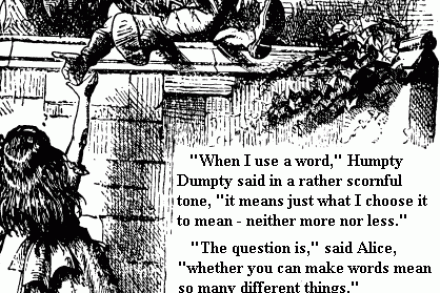
Ruth Richards, head of communications at Mind, has written a response to my criticism of the pointlessness of politically correct descriptions of the mentally ill and handicapped. As you would expect it is worth reading in full, but I am afraid it left me unconvinced. She thinks that the effort to reshape language is worthwhile, and cannot see how today’s polite discourse will become tomorrow’s insults. 'I don’t agree that in however many years’ time the terms we use today will become offensive in their own right. “Person with mental health problems” is just far too clunky to be shouted in the playground.' So it is. But 'mental' is already an insult, and other attempts to change the world merely by twiddling with language have been equally futile.

The cheating language of equality

From our UK edition

If you write about the mentally ill – people who suffer a short breakdown, maybe, or long periods of crippling stress – or say that those who must cope with autism, depression or schizophrenia all their lives are “handicapped”, you will be hammered. But not by the state and its supporters, or by members of the public with deep and prejudiced fears about mental illness. You can say the health service is impoverishing care for the mentally ill because its administrators know they are an unpopular minority, who can be hit without a political cost. You can write about how the criminal justice system is imprisoning vast numbers of minor offenders whose sicknesses ought to be treated in hospital.

Tracey Emin’s knickers – a short history of contemporary British art

From our UK edition

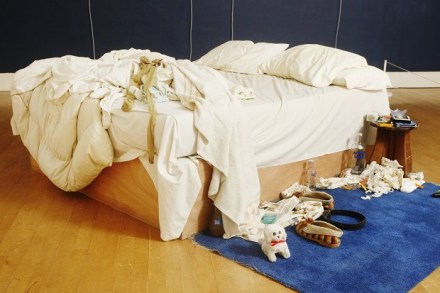
Tracey Emin’s bed is to be sold at auction this summer with a guide price of £800,000 to £1.2 million, although the man who sold it to Charles Saatchi has said it’s priceless. Emin was part of the British art movement in the ‘90s that gave Richard Dorment trouble at dinner parties; this scene is an occupational hazard of being an art critic, he said. ‘The beautiful person I'm sitting next to has bluntly informed me that modern art is rubbish. We're only on the soup, and a long evening stretches ahead. Whether or not we round this dangerous corner depends on my neighbour's tone of voice, which can range from raw aggression to lively interest. If it is confrontation she is after, the rule is: change the subject as fast as possible.

Racism is on the rise, apparently. What do we mean by ‘racism’?

From our UK edition

Well, how worried should we be about racism? The British Social Attitudes Survey says 3 in 10 Brits describe themselves as “a little “ or “a lot” prejudiced against people of other races. It wasn’t just white people either. This brings us back to levels in the Eighties, though to be honest it’s only five per cent above the all-time low of 25 per cent in 2001. Not particularly surprisingly those most likely to admit to racial prejudice were male manual workers, though there was a rise in the numbers of male professionals in the category. Young people were less likely to admit to being racist – a quarter, by comparison with 36 per cent for the over-55s.

Sajid Javid’s first task is to recognise that the price of a cultural asset lies in its value as art

From our UK edition

The suggestion, made by the poet Michael Rosen and others, that Sajid Javid is not sufficiently cultured to be Culture Secretary is as ludicrous as it is pompous. The secretary of state does not write poetry – even bad poetry. He decides how best to make the arts flourish, both as a source of spiritual value and revenue. Therein is a challenge – one that his predecessors have failed to meet. The nadir of Maria Miller’s lamentable ministerial career was not her recent non-apology or even the episode which saw her advisor appear to threaten a newspaper. No, it was the speech on culture in the age of austerity she gave last summer.

Ed Vaizey for the BM?

From our UK edition

There was only one topic of discussion at the launch of Nadine Dorries’s novel Four Streets last night - will Maria Miller survive? The conversation was particularly pointed because Ed Vaizey and Helen Grant — Miller’s now former colleagues at the Department of Culture Media and Sport — were both present. They at least tried not to gossip. Vaizey was invited to speak by Dorries in his ‘capacity as a Culture Minister and a friend’. He gave a comedy turn; lavishing Nadine with praise for her ‘brilliant, brilliant book which I have not yet read.’ He continued: ‘I asked Nadine for a copy and she said you can buy it off Amazon — it costs the equivalent of about 18 and a half pints of milk, not that you would know, posh boy.

Let’s not stop at Maria Miller. Let’s get rid of the Department of Culture completely

From our UK edition

The arts world will not shed a tear at the news that Maria Miller has resigned. Though it was Jeremy Hunt who wielded the axe to the arts budget, it was Maria Miller who spearheaded a shift in philosophy in the Department of Culture, Media and Sport that arguably annoyed the luvvies even more than the cuts had done. Breaking the only rule that the arts world still deem sacred, Miller demanded, in her only keynote arts speech last April, that culture ditched the art-for-art's-sake argument for its existence and replace it with an art-for-the-economy's-sake argument. 'When times are tough and money is tight, our focus must be on culture's economic impact,' she said.

Civilisation’s watery superhighway

From our UK edition

The clue is in the title: this is not about the blue-grey-green wet stuff that covers 70 per cent of our planet’s surface. Rather, it’s about how the sea and our use of it have influenced us economically, culturally, religiously and politically: Much of human history has been shaped by people’s access, or lack of it, to navigable water .... Life on the water — whether for commerce, warfare, exploration or migration — has been a driving force in human history. Admitting that he wants to ‘change the way you see the world’, Lincoln Paine also claims that ‘The past century has witnessed a sea change in how we approach maritime history.

France’s cultural excess is immoral (but I still love it)

From our UK edition

For a committed, if unsuccessful, capitalist, I enjoy French culture an embarrassing amount - every last state-funded drop of it. Give me five-act operas with cast lists the size of a small Chinese city, give me obscenely expensive works of public art, give me inhumane concrete estates, give me unintelligible modernist music and I’ll be drooling with pleasure all night. In fact, I'm seeing a five-act French opera with a cast list the size of a small Chinese city tonight in Bordeaux. That’s the kind of disgusting thing I like to do. In my defence, I am aware that what I am doing is immoral and what is being created should be consigned to hell.

Welcome to Culture House Daily

From our UK edition

From today, The Spectator's gift for online enlightenment and trouble-making will now extend into the world of culture. Our aim is take the insurgent spirit of Toby Young's Modern Review, and apply it to the digital world -- that is, to provide low culture for highbrows, and high culture for lowbrows  Culture House Daily will be a deference-free, one-stop shop for the latest news and sharpest views on the arts. Unveiling a steady stream of fresh content each day, Culture House Daily will present a mixture of news, overnight reviews and opinion, alongside plenty of lovely images. It will be the perfect space to help you navigate the shifting sands of contemporary culture.

In praise of Milton Keynes

From our UK edition

Who would ever have thought it, but I have become quite fond of Milton Keynes. Although I live slightly closer to the ancient city of Northampton than to this widely mocked ‘new town’ of the 1960s, I definitely prefer the latter. Northampton is a fine example of the ruination of an English market town by misguided post-war planners; Milton Keynes an example of the fulfilment of their utopian dreams. It is no utopia, of course.

Immigration is about culture as well as politics

From our UK edition

Must say, I felt a bit defensive when I looked at the tables of origin for immigrants to Britain for the decades to 2011, helpfully set out in  The Daily Mail. The real gist of the thing was the numbers – an increase from just under 2 million in the decade to 1951 to 7.5 million in the decade to 2011. But what was riveting was the immigrants’ countries of origin. For most of the time, the Irish led the field, with about half a million a year arriving in the course of each decade, give or take 100,000. In the last decade though, we were knocked right off our perch. At the top was India from which almost 700,000 people came during the ten years to 2011, followed by nearly 600,000 Poles and nearly half a million from Pakistan.

The Turner Prize lives the myth of constant renewal

From our UK edition

Let’s imagine for a minute that the Turner Prize is cancelled next year. Would anyone care? A few members of the artistic elite and a handful of artists perhaps, but beyond that? I don’t think they would. There are plenty of other valuable art prizes out there, after all. And no one has really taken it seriously for a while now. Each year the same, tired debates come out about how ‘art can be whatever it wants to be’, which is true, but also happens to be the least controversial thing you can say. So it’s off. Cancelled. No more queues of people waiting to see a light switch turn on and off. No more unmade beds. And no more sullying Turner’s name for the sake of a prize which once awarded first spot to a man dressed as a bear. Would it matter?

What is the point of having a ‘city of culture’?

From our UK edition

‘Hull has been named the 2017 city of culture. Better luck next year, Luton.’ So wrote the Telegraph’s Tim Stanley on Twitter. Nadine Dorries said: ‘Hull? City of culture? As one originating from Liverpool, a former recipient, I'm er, surprised but of course, delighted for Hull!’ That summarises the general reaction to the choice of the 2017 UK City of Culture. I’ve never been to the East Riding city, so I can’t comment on whether the widespread view of it as a dump is fair, but certainly lots of the cities that compete for this honour are certified Crap Towns. Dover? Stoke-on-Trent?

Spectator Play: The highs and the lows of what’s going on in arts this week | 4 October 2013

From our UK edition

The latest adaptation of one of Trainspotting author Irvine Welsh's books is Filth  - a film so filthy that Deborah Ross had to ‘endure’ the film ‘from behind her hands’. But, somewhere amongst the ‘enduring’, she became ‘strangely hooked’, as Bruce Robertson (aka James McAvoy) led her through Edinburgh’s ‘dark underbelly of general horridness’. Filth may be ‘ghastly and unpleasant, but also kind of brilliant’, says Ross. Here’s the trailer: Breaking Bad started off with mixed reviews and an ‘uncertain future’, as it ‘dumbfounded viewers and critics alike’ – at least according to the economics professor Steffen Huck.

Audio: Ed Balls jokes about David Cameron’s ‘surprisingly small towel’.

From our UK edition

As Ed Balls knows, people tend only to remember one thing about a speech. A word if you’re lucky, a sentence if you’re really lucky. Or an image. Perhaps he was relyijg on HS2 to grab the headlines because the image he conjured up for us today was David Cameron getting changed in the beach with a Micky Mouse towel: not a fat Prime Minister, you understand. Balls tells us that his wife, Yvette Cooper, was impressed at how “for a 46-year-old man, David Cameron looked rather slim. Slim? What on earth she mean? And here’s the Jim Davidson-style punchline: “I just thought for a Prime Minister, it was a surprisingly small towel.