Crime

Trump’s shrewd move in DC will resonate across the US

President Trump’s initiative to restore law and order to the streets of the nation’s capital is a smart political move. All Americans consider Washington “our city,” and we want it safe. We can see on the nightly news that it is not, and we’re not happy about it. If Trump can turn that around, he will get well-deserved credit, not from the legacy media but from the public.Trump and his party will reap a second major benefit, as well. If he can lessen the muggings, car jackings and armed robberies, if he can move the homeless off downtown streets, he will highlight the difference between his approach and the painful failures in Chicago, New York, Los Angles and other major cities, all of them governed by Democrats. That’s a huge political benefit, if he can secure it.

Donald Trump

The decline and fall of TfL

From our UK edition

Don’t get me wrong: London’s transport system is still one of the best in the world. I’d sooner have a backstreet dentist with jittery hands pry my right molar out with a rusty wrench than wait for a bus in Naples or attempt to understand the New York subway map. But that doesn’t mean Transport for London is without fault. The mere thought of the Central line during rush hour is enough to turn the sanest of commuters into a babbling, dribbling, catatonic mess.  TfL customers are dissatisfied: staff are nowhere to be seen; criminals use the Tube network like a labyrinthian tunnel system, evading prosecution at every turn; and strikes and service disruptions have driven a wedge between commuters and transport workers. But it’s not just the Tube.

The lies of the land

From our UK edition

You can gauge the fragility of an ideology by the blind fury with which it reacts to questioning. So it is with neo-liberalism. Teacher Simon Pearson, for example, was sacked for suggesting that the jailing of Lucy Connolly – who said very nasty things about asylum seekers – was an example of two-tier justice and that, while her words were indefensible, she should not have been sent to prison. One could counter that opinion, but only at the risk of coming into collision with hard facts concerning sentencing – hence the sacking. Best to get shot of your political opponents, especially when he or she is demonstrably correct. Only by doing that can the ideology cling on.

Is Bukele a tyrant or a triumph?

El Salvador’s young and telegenic president, Nayib Bukele, has rewritten the rules. Term limits? Scrapped. Presidential terms? Extended. Runoff elections? Abolished. If all goes according to the script – penned and passed by his party in the legislature – Bukele will remain in power well into the 2030s, if not beyond. A decade ago, such a move might have sparked bipartisan alarm in Washington. Today, reactions are mixed – with many in the growing MAGA wing cheering El Salvador’s constitutional shake-up as a win of their own. This shift is a window into a deeper realignment in conservative foreign policy: one that moves closer to the unapologetic defense of national interest and drifts further from the spread-democracy-everywhere consensus.

Nayib Bukele (Getty)

Vance & Farage’s budding bromance

From our UK edition

16 min listen

Nigel Farage hosted a press conference today as part of Reform's summer crime campaign 'Britain is lawless'. He unveiled the latest Tory defector: Leicestershire's Police & Crime Commissioner Rupert Matthews. Amidst all the noise of whether crime in the UK is falling or not, plus the impact of migration on crime, is Reform's messaging cutting through? Would US Vice President agree with Farage's message that Britain is lawless? Vance is in the UK, staying in the Cotswolds, as part of his summer holiday. Tim Shipman and Lucy Dunn are joined by James Orr, associate professor at Cambridge University, and a friend of Vance's to talk us through the dynamics between Trump, Vance, Starmer, Lammy and Farage. Does Farage have Vance's ear?

Why can’t we agree on data?

From our UK edition

12 min listen

John O’Neill and Sam McPhail, the Spectator’s research and data team, join economics editor Michael Simmons to re-introduce listeners to the Spectator’s data hub. They take us through the process between the data hub and how their work feeds into the weekly magazine. From crime to migration, which statistics are the most controversial? Why can’t we agree on data? Plus – whose data is presented better, the Americans or the French? For more from the Spectator’s data hub – which may, or may not look like the thumbnail photo – go to: data.spectator.co.uk Produced by Patrick Gibbons and Megan McElroy.

The ballad of broken Britain

From our UK edition

In my corner of Bristol, alongside drug dealers, shoplifters and street drinkers, we now have our very own pyromaniac. They started small – an abandoned office chair, a clothing bank and an old telephone box – before moving on to bigger things. Half a dozen cars have been torched over the past few months, including two on my road, and, most recently, a derelict pub. The other Saturday, hearing a commotion outside, my wife jumped out of bed and flung open the curtains. The scene that greeted us was apocalyptic. In daylight, on a narrow suburban street, the arsonist had set fire to three motorbikes parked in a row, which in turn had set alight a car and a hedge. It was pandemonium.

Can Clarksdale find its mojo again?

When Bubba O’Keefe announced he was running for mayor of Clarksdale this spring, there was a mixed response. This dirt-poor, crumbling Mississippi Delta city is more than 80 percent African American – and Bubba is white. But so poorly had the current mayor, who is African American, been performing that Bubba’s supporters thought he’d be a shoo-in, and that the residents would buy into the mantra that he was Clarksdale’s last hope, white or black. Locals describe Mississippi as the crime state. And Clarksdale is the worst city in Mississippi. There are 20 times more murders per capita in Clarksdale than in New York. As Bubba says: “We only have a population of 13,000 and there are 19 or 20 murders a year.

California

California is doomed

Why is anyone even remotely interested in regime-changing a nasty, far-away foreign country that hates America when there is a nasty country much, much closer that hates us, too? OK, technically California is not a country, but it’s about the same size as Japan and Sweden. Its GDP – $4.1 trillion – is the fourth-highest in the world, behind the other 49 combined United States, China and Germany. It has as many residents as Canada. More people live here than in Spain or Saudi Arabia (and more than in our 22 smallest states combined). California is a monster in every way. That used to be a good thing: its powerful allure and economic might attracted the best and brightest from all over. Einstein taught in Pasadena, at Caltech.

Diddy is finished

In the end, the verdict in the most talked-about trial of the year, perhaps the decade, came in far quicker than most commentators had expected. Judge Arun Subramanian had wisely suggested that he wanted a unanimous verdict on the charges that Diddy had been arraigned on and that he wanted this verdict to come in before the 4th of July holiday. Many had assumed, given the sheer weight of evidence against Diddy (real name, as we were informed many times, Sean Combs), that it would take at least a week to sort through the often sordid and distressing material that the jury were presented with over the course of the seven-week trial. In the end, however, it took just over a day of deliberations.

Diddy

Why is the MoJ making life so hard for prison charities?

From our UK edition

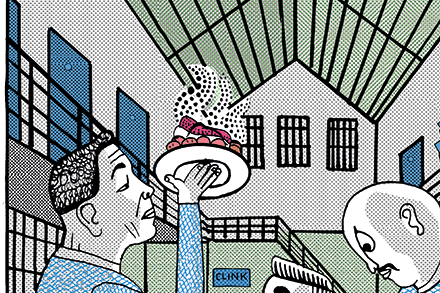
For 15 years The Clink charity has run commercial restaurants in prisons, training inmates to cook and teaching them front-of-house service. It is a vital way of giving offenders a second chance. But many of its operations have been forced to close due to the folly of the Ministry of Justice (MoJ). At Styal women’s prison in Wilmslow, Cheshire, The Clink restaurant, which has been running for ten years, cannot continue to operate. Despite plenty of interest from inmates, recent changes to the eligibility criteria have drastically reduced the number of women permitted to work there. ‘Sometimes we are trying to run it with five, possibly only three, women,’ explains the manager. ‘It’s just not possible.

Have I unmasked Cambridge’s bike bandit?

From our UK edition

The Cambridge bike bandit emerged. I watched the rough, smiling face of the old man who came slowly from his bungalow and urged me to join him around the back; he didn’t look like a thief. We entered his grassless yard filled with bikes, tyres and tools. ‘This Raleigh, £80,’ he said, withdrawing a creaky frame from the pile. ‘I just changed the tyre. You see? Not heavy. Made in England. Nottingham. You can try a little bit. Try it for ten minutes. I don’t mind.’ A source had told me about the bandit, a man who openly shifted stolen bikes from a suburban Cambridge home, so bad and unpoliced has bike theft become in the city. I had got the outlaw’s phone number and arranged to meet him under the guise of making a purchase.

The shoplifters are winning

From our UK edition

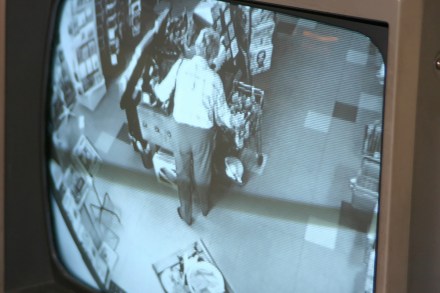
It was when I saw an entire crate of orange juice exit my local supermarket that I knew something had died. The Artful Dodger school of shoplifting has officially been boarded up, its artisan poachers and pilferers as redundant to the modern world of thieving as swag bags, eye masks and soft sole shoes.  There’s no longer any attempt at discretion or skill when it comes to shoplifting in my nearest Co-op in south London. The thieves don’t enter in trench coats and furtively peruse the aisles. They stroll in, take as much as they can carry and walk out again, knowing that the worst punishment they face is being given some scatological invective from the five-foot-nothing woman of venerable age who is usually locked inside her till cubicle.

My friend the people smuggler

From our UK edition

Usually when I start listening to a true-life podcast, I don’t know how it ends. That’s not the case with The Smuggler, BBC Radio 4’s new investigation into people smuggling. Across ten episodes, its Orwell Prize-winning presenter, Annabel Deas, tells the story of ‘Nick’, on the face of it an unlikely protagonist. Nick is white, English and a former soldier in the British Army. He’s also a friend of mine. We met in jail in 2021 and have stayed in contact ever since. So I know Nick’s story. I even know how it ends. Despite all this, I found myself absolutely gripped by The Smuggler. This is partly because it’s such a fascinating, and timely, topic. Migration is rarely out of the news. Keir Starmer keeps promising to ‘smash the gangs’ and ‘stop the boats’.

Can anything solve Britain’s prisons crisis?

From our UK edition

While we were inspecting HMP Elmley on the Isle of Sheppey, a commotion broke out on one of the wings. ‘What’s up?’ one of my team asked the nearest prison officer. ‘Bloke who’s getting out tomorrow has just been told he’s being shipped to Rochester jail.’ The man was manhandled towards a prison van. ‘If I was him, I’d kick off too,’ the officer added quietly. Reducing the prison population will do nothing to stem the flow of drugs pouring into every jail in the country That week things were so desperate in the south of England that the prisoner was being forced to spend one night in a jail 20 miles away so that new arrivals could be squeezed in that afternoon.

Scuzz Nation, the death of English literature & are you a bad house guest?

From our UK edition

40 min listen

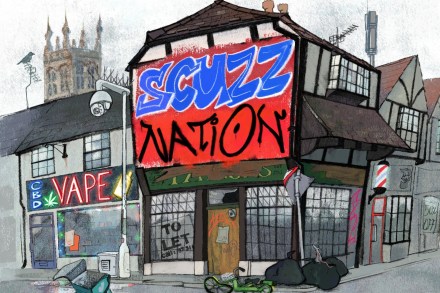
Scuzz Nation: Britain’s slow and grubby declineIf you want to understand why voters flocked to Reform last week, Gus Carter says, look no further than Goat Man. In one ward in Runcorn, ‘residents found that no one would listen when a neighbour filled his derelict house with goats and burned the animals’ manure in his garden’. This embodies Scuzz Nation – a ‘grubbier and more unpleasant’ Britain, ‘where decay happens faster than repair, where crime largely goes unpunished, and where the social fabric has been slashed, graffitied and left by the side of the road’. On the podcast, Gus speaks to Dr Lawrence Newport, founder of Crush Crime, to diagnose the issues facing Britain – and offer some solutions to stop the rot. (01:28) Next: is it demeaning to study Dickens?

Welcome to Scuzz Nation

From our UK edition

Reform’s success in last week’s local elections has been attributed to many causes. Labour’s abolition of the winter fuel payment for pensioners. The hollowing out of the Conservative party’s campaigning base. Nigel Farage’s mastery of social media. But if you want an emblem of why voters turned their back on the political establishment let me give you Goat Man. In one ward in Runcorn, the seat Labour lost to Reform by just six votes, residents found that no one would listen when a neighbour filled his derelict house with goats and burned the animals’ manure in his garden. Despite repeated appeals to authority, no action was taken.

Is the end of ‘non-crime hate incidents’ in sight?

From our UK edition

Could the end of non-crime hate incidents (NCHIs) be in sight? As the head of the Free Speech Union, I’ve been campaigning for their abolition for five years and there was a breakthrough this week with the Conservatives unveiling a plan to scrap them. Chris Philp, the shadow home secretary, is going to table an amendment to Labour’s Crime and Policing Bill that would make it illegal in almost all circumstances for the police to collect or retain personal data relating to hate incidents where no laws have been broken. For those unfamiliar with this Orwellian concept, an NCHI is a record the police make when someone accuses you of a ‘hate crime’ and they can find no evidence a crime has been committed. That sounds odd.

Would you steal from a restaurant?

From our UK edition

‘You wouldn’t steal a car…’ began the early noughties anti-piracy video. ‘You wouldn’t steal a television… You wouldn’t steal a handbag.’ No, but it seems from reports from restaurants, you might slip some silverware into a handbag if you’re out for dinner. In February, Gordon Ramsay revealed that nearly 500 cat figurines had been stolen in one week from his latest restaurant, Lucky Cat. The maneki-neko cat models – said to bring good luck – cost £4.50 each, which makes that a loss of more than £2,000 for the restaurant in just seven days. What is it about dining out that means we think pocketing property is acceptable?

Trump’s ‘move fast and break things’ approach to crime could finally make DC safer

A lot can change in a year. We have a new president, a new congressional majority, a new season of The White Lotus.  But what about crime in Washington, DC, the subject of my last piece for this magazine back in April 2024? Is our nation’s capital still racked with carjackings and homicides – or have we begun inching our way back to some form of public order? In 2023, Washington saw 274 reported homicides, making it the district’s deadliest year in two decades. There were also 959 carjackings and 3,470 robberies. Overall, violent crime was up 39 percent. We did a lot better in 2024. There were just 187 murders, a 32 percent reduction, while robberies dropped 39 percent.

dc safe