Crime drama

I’m done with Rivals

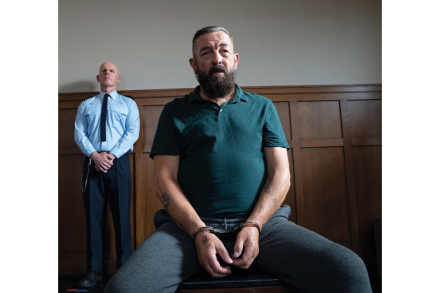
Everybody has been raving about Legends, the Netflix series about undercover customs officers in the 1990s busting a heroin ring. But even though it’s ‘based on a true story’, there are times when it feels more like a histrionically implausible, over-reverential recruitment drive for HM Customs and Excise. ‘Thought they were just those men in white shirts embarrassing you at the airport by exposing the stash of cheap baccy hidden in your holiday underwear? Think again!’, you can imagine the tagline running. The model here, of course, would be Top Gun – the 1986 movie, heavily supported by the US military, which supposedly caused the number of men applying to become US Navy fighter pilots to increase by 500 per cent (a figure that’s since been debunked).

The Murray Test for TV drama

It is almost a century since Ronald Knox wrote his ‘Ten Commandments’ for detective fiction. Most of them still hold true. For example, his edict that twin brothers and other lookalikes must not be introduced to the story unless the reader has been prepared for them. Also the forbidding of more than one secret passageway or room in any story and the insistence that the sidekick, Dr Watson-like figure should never keep a thought to himself, while having thoughts slightly below the anticipated intelligence of the average reader. My favourite rule is number five. ‘No Chinaman must figure in the story.’ In reality this is an extension of rule one, which holds that the criminal must be someone who has appeared early in the story.

I love how awful My Oxford Year is

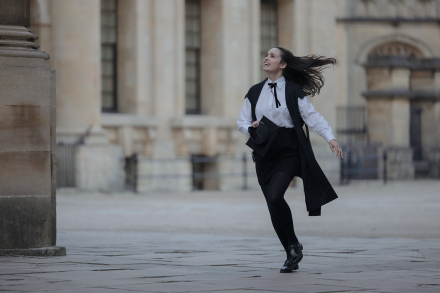
The punters are saying My Oxford Year is a disaster. ‘Predictable, uninspiring and laughable,’ complains some meanie on Rotten Tomatoes. But they’re missing the point. My Oxford Year may be a work of accidental genius, but it’s a work of genius nonetheless. You will squirm, you will laugh derisively, you will cringe. By the end, though, you will be forced to admit that you secretly enjoyed every moment, for this is the very examplar of a so-bad-it’s-good masterpiece. You know it’s going to be awful from the very first frame: a still representing the bookshelf of our handsome, clever and poor heroine Anna De La Vega (Sofia Carson) who has come up to Oxford to spend a year doing an MA in Victorian poetry prior to taking up a job at Goldman Sachs.

Dope Thief is a cut above your usual inner-city crime-drama porn

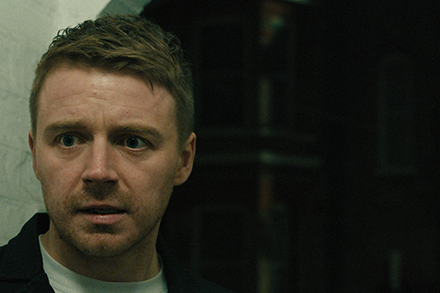
I really had no interest in watching Dope Thief. It’s another of those crime dramas set in a bleak-looking city – possibly there are some pretty parts of Philadelphia but we only get to see the bad bits – where everyone seems to be on welfare or a drug dealer, or both, everything looks washed out, grimy and grey, and where you could die horribly any second. And I get quite enough of all this on my increasingly rare trips to London. But I was desperate. I’ve finished the second season of Severance (very good; definitely worth the effort); White Lotus will only see you through one night a week; season three of Reacher is so dismal it doesn’t even qualify as ‘so bad it’s good’. So I needed something else and the online reviews for Dope Thief looked decent.

Schoenberg owes his survival to crime drama

George Gershwin once made a home movie of Arnold Schoenberg grinning in a suit on his tennis court in Beverly Hills but, sadly, never filmed one of their weekly matches. According to one observer, the composer of ‘I Got Rhythm’ played with languid strokes in a ‘nonchalant and chivalrous’ manner against the ‘choppy, over eager’ strokes of the creator of Erwartung. That figures. But how odd that the two men should be friends and passionate admirers of each other’s work. Gershwin paid for the first recording of Schoenberg’s gnarliest string quartet, the Fourth; when the younger man died, Schoenberg described him as ‘a great composer’ and expressed ‘the deepest grief for the deplorable loss to music’.

Am I slightly psychopathic to be so obsessed with gangster TV?

Most of my favourite TV shows seem to involve gangsters in one way or another: The Sopranos, Breaking Bad, Top Boy, The Offer (that brilliant series on Paramount+ about the making of The Godfather), series two of The White Lotus, Suburra, Gomorrah; even, you could argue, Game of Thrones (cod-medieval fantasy gangsters with dragons) and Succession (gangsters who don’t need to use guns). It’s the first thing in ages where I’ve been salivating to watch the next episode Perhaps there’s something lightly psychopathic about being so allured by a genre which celebrates relentless, brutal killing, where the forces of law and order and civilisation are the enemy, and where the business model is to get stupidly rich at the expense of the desperately poor, addicted and hopeless.

Epic, immersive and tiresomely long: Killers of the Flower Moon reviewed

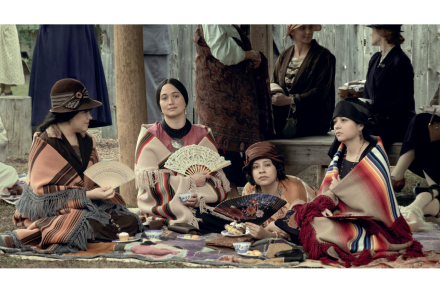
Martin Scorsese’s Killers of the Flower Moon is a Western crime drama that runs to three-and-a-half hours. (Sit on that, Oppenheimer!) But which is it: an epic masterpiece? Or just very, very tiresomely long? There are certainly pacing issues, and things that needed further explanation – there is no hand-holding. That said, the running time does allow for world-building, and it builds a world so engrossing that when I came out of the cinema onto the high street it was weird to see a Superdrug and Costa Coffee rather than dusty tracks and horses and vast landscapes beset by oil derricks. So I guess it’s epic and also tiresomely long. Does that help? This isn’t a thriller.

Unhurried and accomplished whodunit: ITV’s Holding reviewed

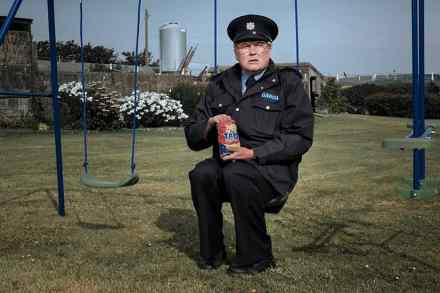
A couple of years ago, I happened to read Graham Norton’s third novel Home Stretch. Rather patronisingly, perhaps, I was surprised by how accomplished it was, especially in its sympathetic but melancholy portrait of life in a West Cork village. Yet, judging from ITV’s new adaptation of his first novel Holding, this was something he’d pulled off before – because, here again, it’s pretty clear both why Norton would want to write kindly about the kind of place he grew up in, and why he would have wanted to leave it. Monday’s first episode efficiently established the rural-Irish setting with shots of fields, cows and wind turbines. We then saw the village policeman P.J.

Enjoyable but hardly classic Alan Bennett: The Outside Dog & The Hand of God reviewed

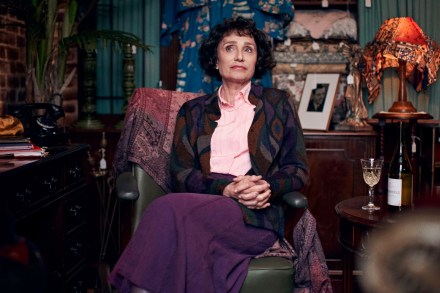
The season of Alan Bennett’s Talking Heads continues at the Bridge. In The Hand of God we meet Celia, a posh antiques dealer, who befriends old maids in the hope of acquiring their valuables cheaply. Like everyone in her trade she uses play-acting and mind games to give her the advantage while haggling. If her enemy falters, she pounces. A man visits her shop and becomes visibly excited by a framed drawing which Celia hoped to flog for £30. Spotting his eagerness, she trebles the price. He pays up and hurries out. Later she learns that the drawing was by an old master whose style she failed to recognise. Millions have slipped through her fingers. Kristin Scott Thomas is well cast as this suburban snake in the grass. All the visuals are beautifully judged.