Covid

Scottish Covid adviser’s vaccine confusion

From our UK edition

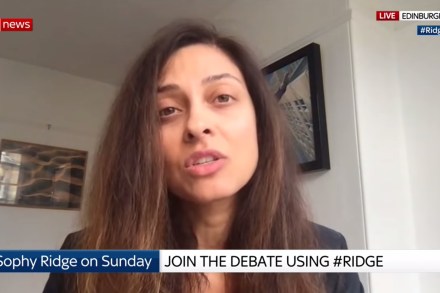
Oh dear. During the course of the pandemic, the University of Edinburgh professor of public health Devi Sridhar, has become a regular sight on television screens and comment pages – offering her insights on the best course of action over Covid. In her role on the Scottish government’s Covid-19 advisory group, Sridhar has previously caught Mr Steerpike's attention for lobbying repeatedly for more SNP powers which she claims are necessary to stop the spread of coronavirus. The snag? There was nothing stopping the Scottish government from quarantining travellers using their own powers, a move that was already planned at the point Sridhar demanded it.

Why ministers are worried about foreign holidays this summer

From our UK edition

On 5 April, the government will publish its framework for deciding what foreign travel will be allowed this summer. As I say in the Times today, there is very little optimism in Whitehall about European holidays this summer. This might seem odd given that every adult will have been offered at least their first dose by then. Surely the vaccine should allow us to go abroad even to places where there is Covid in circulation? But not if the worry is about a vaccine-evading variant being imported into the country. As one of those involved in devising the way out of lockdown puts it:  The nightmare scenario is a vaccine-evading variant emerges and rips through the population ‘Variants of concern are the one big threat to the whole programme.

Kids will thank us for shortening the school summer holidays

From our UK edition

Oh for a normal summer – so close now, but Covid remains capricious, a wave across Europe threatening to wash it all away. But just think: for some schoolchildren, and their parents, the normality of the long six-week summer break may not be such an appealing prospect. Sure, the middle-classes are able to pack it with enriching activities – exciting new skills, friendships and memories. But, for kids in families with stretched budgets, it can be isolating, impoverishing, boring. And, as quite a substantial body of evidence now shows, very bad for their emotional and cognitive development – some studies even conclude that the majority of the attainment gap between rich and poor children can be explained by the cumulative impact of successive summer breaks.

MPs back extending Covid powers until September

From our UK edition

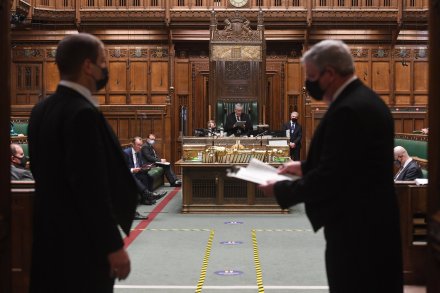
MPs have voted to extend emergency coronavirus powers for another six months by 484 to 76 against. This means the government has retained wide-ranging powers including those given to police and immigration officials when dealing with people suspected of carrying Covid. In the debate ahead of the vote, the Health Secretary insisted that the powers will stay in place 'only as long as necessary'. Discontent is growing in the Tory party over the government's approach However, when pressed, Matt Hancock would not rule out MPs being asked to renew them again in six months' time.

The practical problems with vaccine passports

From our UK edition

The story of Covid has been one of government repeatedly ruling things out – and then coming back several weeks later and introducing them nonetheless. It happened with lockdown, compulsory wearing of masks, and now it looks as if it might be happening with vaccine passports. Remember vaccines minister Nadhim Zahawi telling us of vaccine passports in February: ‘That’s not how we do things in Britain. We do them by consent.’ This week the Prime Minister seems to have changed the government’s tune, by suggesting that we might, after all, have to show some kind of proof of vaccination before being allowed into pubs or other such premises.

Sturgeon suffers courtroom blow over church lockdown rules

From our UK edition

The Scottish government has suffered a major reversal in court over its Covid-19 regulations. The Court of Session has found its blanket ban on public worship to be unlawful. In January, Nicola Sturgeon closed places of worship across Scotland ‘for all purposes except broadcasting a service or conducting a funeral, wedding, or civil partnership’. She said at the time that, while ministers were ‘well aware of how important communal worship is to people… we believe this restriction is necessary to reduce the risk of transmission’. Canon Tom White, parish priest of St Alphonsus in Glasgow's east end, and representatives of other Christian denominations, sought judicial review.

Boris tries to avoid a vaccine war

From our UK edition

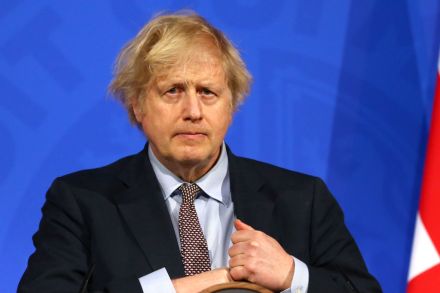
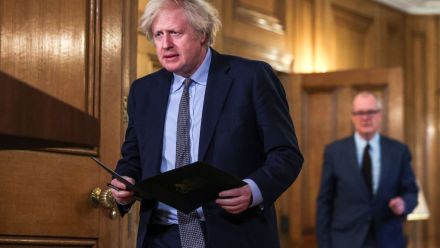
After France's Europe Minister became the latest politician to threaten a vaccine export ban on the UK, Boris Johnson used today's press conference to try to diffuse the row ahead of Thursday's summit of EU leaders. When asked in the Q&A session whether such an export ban could derail the UK roadmap for ending lockdown and if the UK would retaliate, the Prime Minister stressed the need for cooperation from all sides. No. 10 fear retaliatory measures in the event of a vaccine export ban could make the situation go from bad to worse Johnson said the UK would continue to work with European partners to deliver the vaccine rollout – suggesting that the pandemic wouldn't be over for anyone until it was over for everyone.

Vaccines should mean more freedom – not less

From our UK edition

Do vaccines lead to freedom – or to more lockdown rules? That very question would have seemed bizarre a few weeks ago, when Matt Hancock told this magazine that he’d ‘cry freedom’ when the most vulnerable had been protected. But now, things are swinging the other way. The end of the second wave in Britain (infections and intensive care admissions are down 95 per cent from the peak) has not been followed by reopening. Instead, it’s being used as rationale to continue lockdown for months to come. The latest is international travel: the freedom to leave the country.

Stanley Johnson and the Covid loophole

From our UK edition

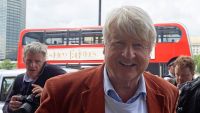
Labour have been taking a cheeky pop at the PM's father today in the Guardian over new coronavirus regulations coming into force later this month. Under the guidelines from 29 March, people will be allowed to leave the UK to prepare a second home for sale or rent as part of a list of specific 'reasonable excuses to travel' outside the country. Andrew Gwynne has dubbed this the 'Stanley Johnson clause' in a reference to the latter allegedly breaking Covid guidelines by travelling to his Greek villa to make it 'Covid-proof.

Why are Covid conspiracies so appealing?

From our UK edition

The recent decision by several European countries to suspend the use of the AstraZeneca vaccine will have thrown petrol on the bonfire of conspiracies surrounding the pandemic. These range from believing that vaccines contain microchips so that Bill Gates can track you, to believing that the virus is a global conspiracy to allow governments to introduce new draconian measures to control their populations. Why are so many conspiracy theories thriving today and what do they tell us about ourselves? During my time serving in Iraq I heard lots of conspiracy theories. Many concerned exaggerated capabilities of the equipment we had, such as the belief that night-vision goggles and even Army-issued sunglasses gave the troops X-ray vision.

Is Macron losing control of France?

From our UK edition

There may be a touch of the Monday blues for Emmanuel Macron this morning as he scans the headlines in France. A new poll reveals that vaccine scepticism in his country has reached record levels, thanks to his recent belittling of the AstraZeneca vaccine. Sixty-one per cent of those canvassed expressed their doubts about the vaccine, up 18 per cent from last month. Only 23 per cent said they had confidence in the AstraZeneca jab. In contrast, 75 per cent of British people have faith in the vaccine. But if the French are increasingly reluctant to be vaccinated, they are determined to enjoy the arrival of spring – Covid restrictions or not. In Marseille yesterday around 6,500 people danced and partied at a street carnival, many of them wearing fancy dress.

Let’s call time on Britain’s gerontocracy

From our UK edition

The boomers are eating their grandchildren. They don’t see it this way, of course, but they are doing it nonetheless. Covid, or rather the British state’s response to the pandemic, is just the latest evidence of this. Whatever you make of Boris Johnson's handling of the pandemic, one thing is clear: the cost of lockdown will be funded by young people in taxes for years to come. But it will most of all be paid for with time. We can find ways to minimise the impact of the government debt, but we can’t give people a year of their lives back. It is a natural part of history that good fortune is not distributed evenly. That some generations are lucky and others are not is obvious, as is the fact that some will be called upon to make greater sacrifices.

Where’s Nicola Sturgeon?

From our UK edition

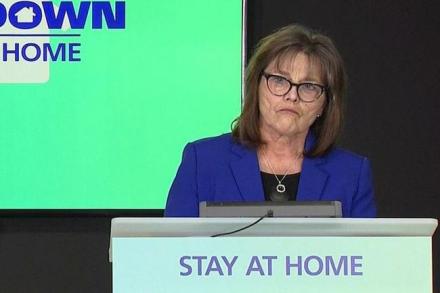
After being accused last night of misleading the Scottish parliament, Nicola Sturgeon's daily Covid briefing was high on Mr Steerpike's watch list today. Alas upon tuning in, viewers were greeted with the sight of Jeane Freeman, the country's health secretary (under fire for quite different reasons) rather than her embattled party leader. Asked by Sky about whether Sturgeon should resign, Freeman snapped back that: 'This is a Covid briefing and that is what I am here to answer questions on' before (quelle surprise) saying she still believed her colleague did not mislead parliament and that she should not resign. So where is Sturgeon and why is not doing her much loved daily presser?

Shock as NYT praises Britain

From our UK edition

In recent years Britain has become something of a Bermuda Triangle for the New York Times. Since voting for Brexit in 2016, the UK has become reimagined in the reporting of the Gray Lady's esteemed reporters. It is a strange, desolate place, where locals huddle round bin fires on the streets of London, gnawing on legs of mutton and cavorting in swamps during the summer, ever fearful of the despot Prime Minister, Boris Johnson. But has all that now changed? Mr S was minded to call the Tower to check on London's ravens after seeing an article published today titled: 'Britain's 'One-Jab' Strategy' with the subheading 'Britain’s “one-jab” strategy is working, offering lessons for the world'.

Has Britain fallen victim to the Asian vaccine war?

From our UK edition

The success story of Britain's vaccine rollout has hit its first major obstacle: five million doses of the AstraZeneca vaccine will be held up for a month. But how many of us knew it was India, not manufacturing plants in the UK or Europe, that was supplying a considerable amount of our vaccine needs? And does the delay show that Britain is now caught in the middle of an emerging vaccine war in Asia? The delayed jabs are being manufactured in the Indian city of Pune (pronounced Poona).

Is India to blame for the UK’s vaccine delay?

From our UK edition

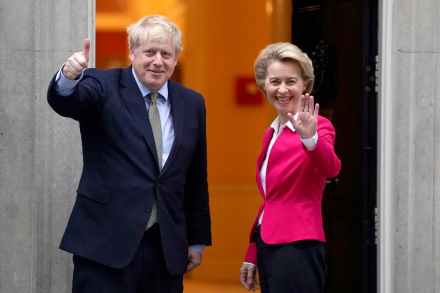
The UK vaccination programme has been such a success to date that until yesterday evening it seemed a formality that the government would achieve its target of offering all adults at least a first dose of a Covid vaccine by July. Indeed, on Monday it looked as if this date might be brought forwards when it was announced that there would be a huge uplift in vaccine shots available, thanks to the arrival of a large consignment of AstraZeneca vaccine from India. Instead of 2 million doses a week, the vaccination programme would be able to deliver 4 million doses. On Wednesday evening, however, that hope was shattered. Firstly, Ursula von der Leyen renewed her threat to block exports of the Pfizer vaccine, British supplies of which are sourced from a factory near Brussels.

How real is the performing arts exodus?

From our UK edition

Think back 12 months to when you first felt the pandemic. Not when you first read about Covid-19, but the moment of impact — the lurch in the stomach as it hit you that this time, it really wasn’t going to be OK. For Emma Cook, a freelance stage manager on the John Cleese farce Bang Bang!, the moment came during a rare week off. ‘I was sitting in a restaurant near the Bush Theatre in London, waiting to go and see The High Table, and I got a message from a friend who had just flown back from overseas: “Why are the theatres all closed?”. I thought, no they’re not, I’m about to see a show. So I walked over to the theatre and they told us: “No, sorry. We’ve had to stop everything.” And that was when Covid suddenly became big and real.

Public Health England’s obesity obsession

From our UK edition

Few government agencies have had a worse pandemic than Public Health England (PHE) whose mission is ‘to protect and improve the nation’s health and to address inequalities.’ Criticisms levelled at PHE over the past 12 months include failing to expand diagnostic testing and contact tracing, discouraging the use of face masks, failing to share infection data with local authorities and overcounting the number of Covid deaths in England. It has also been slated for focusing too much on lifestyle choices at the expense of properly preparing for a pandemic. In 2018/19, some £220 million of the public health budget was spent on anti-obesity schemes – more than twice the budget for infectious diseases.

Watch: Nicola Sturgeon’s hostile Covid briefing

From our UK edition

First Minister Nicola Sturgeon appeared to be in a poor mood today, after David Davis used parliamentary privilege in the Commons last night to make a series of allegations against the Scottish government over its handling of the Salmond investigation. After the ITV journalist Peter Smith asked Sturgeon about the new allegations at the Scottish government’s Covid briefing, the First Minister at first refused to answer the question at all, saying ‘I’m not having this briefing side-tracked into the latest instalment of the conspiracy theories we’ve all be hearing about for a long time’. Sturgeon then took a rather more hostile approach, saying she would only answer questions from the journalist about Covid.