Covid

The UK’s Covid strategy gets a vaccine boost

From our UK edition

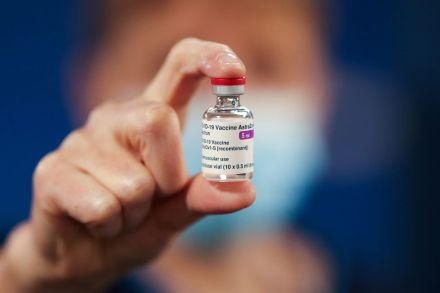
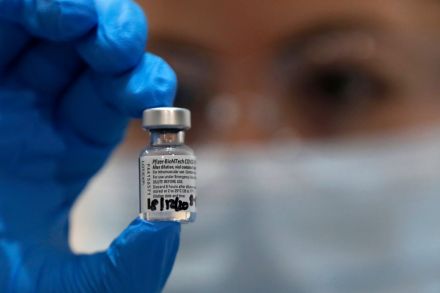
Matt Hancock had good news for today's press conference: the Health Secretary said the effectiveness of vaccines was beginning to show in the data. While hospitalisations are falling across the board, they are falling the fastest among the priority groups that have received the vaccine. Deputy Chief Medical officer Jonathan Van-Tam said that both the Oxford/AstraZeneca and Pfizer vaccine are reducing hospitalisations by 80 per cent in the over-70s. Hancock said that the most recent data showed that protection from the Oxford vaccine after 35 days is even greater than Pfizer – though both vaccines produce an 80 per cent reduction in hospitalisations.

Can the EU be trusted to introduce vaccine passports?

From our UK edition

The contracts were badly drafted. The orders were late. Too few resources were made available for the scale of the task, and the regulators dithered and delayed. Even the most fanatical federalists such as Guy Verhofstadt have admitted the EU’s vaccine programme was little short of a catastrophe. But hey, what does that matter? Ursula von der Leyen has decided this is the moment to double down on the EU’s Covid-19 strategy, and launch a centralised vaccine passport. What could possibly go wrong? Well, er, as the EU’s vaccine fiasco has taught us, lots actually. Von der Leyen has today tried to bounce back from her difficulties with the vaccine programme with a plan for EU-wide Covid passports.

The battle for the soul of the Jewish community

From our UK edition

There are two groups in the Jewish community – mainstream Jews who, while still religious, do their best to assimilate into the wider community and the Chareidi, ultra-orthodox Jews who tend to shun British society. Those two groups are now locked in a struggle for the future of the Jewish community. For over 100 years, the Chareidi – with their distinctive costume, based on the fashions of 18th century Poland – have had a sort of symbiotic relationship with the mainstream. If mainstream Jews needed kosher slaughterers, rabbinical judgements, circumcisions and even rabbis for the smaller pulpits, they relied on the Chareidi. They were the ones with an encyclopaedic knowledge of Jewish law.

What Angela Merkel can learn from the Queen about vaccine scepticism

From our UK edition

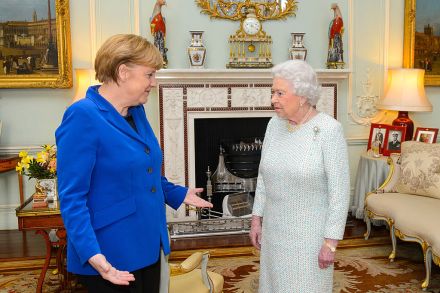
You have to feel for Germany. After a fraught vaccine procurement process, not only is the government struggling to persuade its citizens to take the Oxford AstraZeneca vaccine, but Angela Merkel has now stated that she will not be given the jab on account of her age.  ‘I do not belong to the recommended age group for AstraZeneca,’ the German chancellor told Frankfurter Allgemeine Zeitung newspaper. It could well be the final nail in the coffin for an EMA-approved, safe vaccine that has cost her country millions. Merkel’s view may be aligned with government policy – she is 66 and therefore, under the German rules which state that over 65s should not be given the vaccine, she does not qualify for a dose.

Why do old people have fewer antibodies after the vaccine?

From our UK edition

The UK policy of delaying second doses of the Pfizer vaccine has been criticised by some as risky, with Pfizer warning that there is no data on the effectiveness of its vaccine other than for the dosing regime used in phase 3 trials: two doses, 21 days apart. But evidence is steadily trickling through. Earlier in the week I wrote here about the Scottish population-wide study which found that a single dose of the Pfizer vaccine reduced hospital admissions by 85 per cent between 28 and 34 days after the jab. This morning comes Imperial College’s React-2 study, which paints a picture that is, on the face of it, rather less flattering. It tested 154,000 people for the presence of antibodies to SARS-CoV-2, the virus which causes Covid-19.

Boris’s lockdown speech was classic Blairite triangulation

From our UK edition

Several of Tony Blair’s ideas have found their way into the government’s Covid policy, most notably the policy of prioritising first doses. The end of Boris Johnson’s statement today owed a lot to Blair. Johnson cast himself as charting a middle course between those who think the government’s plan is too ambitious and those who want restrictions eased faster. It was classic Blairite triangulation. The road map is an interesting document. It is initially cautious and the decision to put five weeks between easing measures means that we won’t be able to sit inside a pub until 17 May, a long way from the idea that things would be heading back to normal by the Easter weekend. But at the end of the plan, the step up in freedoms is dramatic.

Will the vaccine reduce public support for lockdown?

From our UK edition

The vaccine news today is good, and better than would have been expected even a month ago. The Public Health Scotland data indicating that four weeks after the first dose of the Oxford / AstraZeneca vaccine there is a 94 per cent reduction in the risk of hospitalisation is phenomenal (the figure for Pfizer/BioNTech is 85 per cent). It suggests that the vaccines should deliver on the ‘protect the NHS’ part of the government’s strategy. This will lead to more Tory pressure on Boris Johnson for a faster easing of lockdown. The argument will go that given the data is better than expected, the pace of lockdown easing should be sped up.

When will vaccines let us reopen society?

From our UK edition

With every passing day, more Covid immunity is being gained as hundreds of thousands receive the vaccine. Of course, vaccines take time to mature in the body and offer protection, but with roughly a quarter of the population having now received their first inoculation, our approach to dealing with the virus will inevitably need to shift. The big question is how vaccination has changed the equation for how quickly society can be reopened. Modelling from the PCCF project at Bristol University, on cautious assumptions, suggests that the pace of the vaccine rollout would allow significant reopening with herd immunity achieved in July. First, let’s say how much vaccine immunity has been induced by the vaccine.

Does this Israeli study support Britain’s one-dose strategy?

From our UK edition

Is the British approach of prioritising first doses of Covid vaccines and not promising a second dose until 12 weeks later compromising our ability to fight the disease? It is not a moot point, with several EU figures asserting that it is a risky route to take. As I wrote here a couple of weeks ago, as far as the AstraZeneca/Oxford vaccine is concerned, what evidence we have supports the practice of delaying a second dose until 12 weeks after the first one; the vaccine is more effective that way. However, a question mark has continued to hang over the Pfizer/BioNTech vaccine. There is limited data on the most effective dosing regime in this case because the phase 3 trials did not experiment with delayed doses – everyone involved was given a second dose 21 days after the first.

Why Eastern Europe is looking to Russia and China for vaccines

From our UK edition

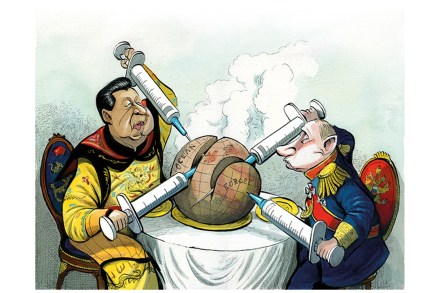
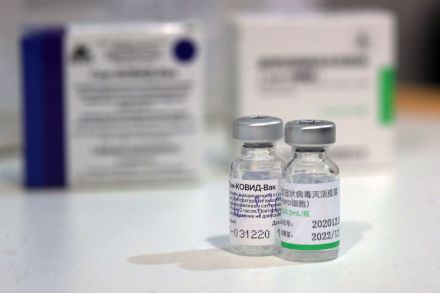
With Central and Eastern European countries still gripped by Covid-19, the EU’s slow vaccine rollout has offered little solace in the region. The light at the end of the tunnel seems far away, leading many to wonder whether the answer to vaccine shortages lies not in Brussels, but to the East. Interest in Russian and Chinese vaccines is certainly fast becoming a diplomatic issue for the region. Czech Prime Minister Andrej Babiš recently caused a stir with two international visits. The first was to his Visegrád Four ally Hungary, the second to non-EU Serbia, far and away mainland Europe’s vaccine leader: Babiš suggested both trips were made with the intention of working out what these countries’ vaccine programmes got right.

Britain should follow France and Spain’s lead on school closures

From our UK edition

This pandemic has not been short of unexpected twists. Perhaps the most surprising of them all has been Britain’s willingness to close its schools. Boris Johnson’s reasoning for his U-turn in January seemed paradoxical at best: despite judging schools ‘safe’, he closed them anyway. Even more incredibly, the bulk of British parents have been supportive of his decision. On this issue, at least, is it time to take our lead from Europe? While Britain has outpaced Europe in its vaccine roll-out, the attitude towards schooling on the continent has been much bolder than our own. Schools have remained open in both France and Spain throughout the winter, despite both countries experiencing a spike in Covid cases.

Is Boris Johnson opening the way for vaccine passports?

From our UK edition

The government's position on vaccine passports is a cause of continuing intrigue. Although Downing Street has insisted on several occasions that they will not be brought in domestically, there have been several statements that suggest otherwise. As well as looking at vaccine passports for international transport, Dominic Raab appeared to at least entertain the idea of vaccine certification when it comes to reopening hospitality. Speaking at Monday's press conference, Boris Johnson sought once again to offer assurances on the issue. Rather than domestic vaccine passports, he said that in terms of reopening the economy, mass vaccination and testing would be the go-to mechanisms.

‘Then the roof fell in’: My Covid fight

From our UK edition

There was all this talk about Covid, claiming that chaps who were over seventy and not underweight were vulnerable. I would nod sagely, never thinking that this could apply to me. Like a lot of men, when it comes to physique or romance I have a secret appeal court, to override the harsh judgments of birth dates and the shaving mirror. It assured me that I would not catch Covid.  Yet around the turn of the year, I kept on getting intimations and twinges. Full-blown Covid symptoms? No. Taste? Fine. Smell? Fine. Occasional cough but hardly so you would notice. But I was not happy. Was this plague, or hypochondria? The latter did not seem impossible. I was tested – a brush at the back of the throat variety – and passed, without feeling reassured.

Critics of the 10-year Covid jail sentence are right, but out of touch

From our UK edition

Not for the first time, metropolitan-based commentators and MPs have proved themselves to be out of kilter with the wider population. But there is an especially interesting disparity over the government’s proposals for ten-year jail sentences for travellers who try to conceal they have travelled from one of 33 ‘red list’ countries in order to avoid hotel quarantine. The proposal caused outrage among Conservative MPs as well as legal commentators such as Jonathan Sumption. Sir Charles Walker, vice-chairman of the 1922 Committee, accused the government of going ‘full North Korea’.

Boris Johnson urges caution on summer holidays

From our UK edition

Will Brits be able to enjoy a summer holiday after the pandemic? Just a few months ago, Health Secretary Matt Hancock suggested they would, telling MPs that he had already booked his summer break to Cornwall. But today, Boris Johnson joined in with the rather less cheerful messaging coming out of government that it was 'just too soon' to say whether people could book time away, whether in the UK or abroad.

How effective are the Covid vaccines?

From our UK edition

Reports have filtered through this morning about Public Health England’s assessment of the efficacy of the two vaccines so far administered to the public. The results have not yet been published, but the efficacy rates quoted in the Sun suggest that the Pfizer vaccine has proved to be between 79 and 84 per cent effective at stopping symptomatic infection after two doses. After one dose – which is all that most people have had so far – efficacy is reported as 65 per cent. Among the over 80s it is very similar, at 64 per cent. No figures are given for the AstraZeneca vaccine but it is suggested that the efficacy is 'similar'.

The class of Covid will pay the price for years to come

From our UK edition

Schools in England, it seems, will reopen fully on 8 March at the earliest – a full two months after they closed. The Prime Minister has declined to bring this forward, in spite of new Covid cases falling at a rate of 25 per cent per week. The Scottish and Welsh governments have both said they will partially reopen schools in February. What was looking like being half-a-term's lost schooling is now looking to be closer to a full term's worth. That comes on top of over two months of school closures last year – and some interrupted education in the autumn terms as teachers and pupils were forced to self-isolate on many occasions. What will be the long-term cost of the lost months of education? The OECD has had a go at estimating it.

Hungary’s vaccine strategy risks showing up the EU

From our UK edition

You have to admire Hungary’s chutzpah. Not only has it bypassed Brussels to pursue its own vaccine procurement strategy, it is also backing two of the most controversial horses in the race: Russia’s Sputnik V and China’s Sinopharm jab. It has just secured enough Sinopharm doses to vaccinate 250,000 people a month while its Sputnik V deal will mean 1 million Hungarians are vaccinated – a tenth of the population. The Sputnik V vaccine may start being rolled out as soon as next week. Hungary’s strategy may appear reckless but its hand has been somewhat forced by EU policy, which prohibitively states that individual member states may only enter into negotiations with vaccine suppliers who are not in talks with the EU.

India’s vaccine diplomacy

From our UK edition

‘Vaccine diplomacy’ is playing an increasingly important role in the geopolitics of the Covid-19 pandemic. Countries like China and India are attempting to bolster their credentials and earn some goodwill, by donating or selling their surplus vaccine supplies to low-income countries, or nations with longer term partnership potential. China has already donated half a million doses of the Sinopharm vaccine to its regional ally Pakistan. This followed President Xi’s announcement earlier this year that the development and deployment of a Chinese vaccine will be ‘a global public good.