Covid

Travel quarantine scrapped for double-jabbed

International travel rules will be relaxed on 19 June as part of the wider scrapping of social distancing rules and masks. Transport secretary Grant Shapps told the House of Commons that those entering England from green and amber nations will not be expected to self-isolate — provided they are fully vaccinated. In practice, what this means is that British summer holidays have been given the go ahead. France, Spain, Portugal and Italy are all on the amber travel list. Currently, the rules state that returning travellers must isolate for ten days, as well as complete a day two and day eight test. That second test has also been scrapped.  The crucial point is

Boris’s ‘freedom day’ spells misery for many

The projection from Sajid Javid that Covid-19 infections could surge to a record 100,000 per day in a few weeks, as all social distancing and mask-wearing regulations are removed, is especially terrifying for those whose immune systems are impaired or are clinically vulnerable in other ways. There are millions of these frail people. For those whose immune systems are compromised or suppressed, the efficacy of vaccines is much reduced. For others among the frail, any residual risk of becoming infected is too great, because for them it is literally a matter of life or death. So when you hear politicians and others talking about the important freedom to choose not

Javid: NHS backlog will get worse before it gets better

Sajid Javid’s parallel statement in the Commons to Boris Johnson’s press conference on the government’s plan for unlocking drew the same criticisms about failing to protect the vulnerable and bowing to Tory backbench pressure. He did get a ‘hallelujah’ from one such backbencher as he spoke of the end of social distancing. But the health secretary faced anger from the opposition benches about the decision to leave mask wearing up to the public and businesses at a time when cases are rising. Green MP Caroline Lucas compared Covid restrictions to road safety laws, asking why a similar approach to the speed limit couldn’t be taken to mask-wearing. Javid’s argument was that

Boris Johnson’s Covid double act

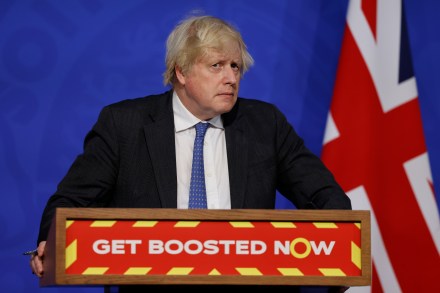
Boris Johnson used today’s press conference to unveil the government’s plan for stage four of the roadmap. Announcing that the public need to learn to live with Covid, the Prime Minister declared his intention from 19 July to reopen all remaining businesses, lift limits on gatherings and lift the bulk of rules on wearing a mask. While no final decision on what happens on 19 July will be made until next week, Johnson said it was time to move away from ‘legal restrictions and allow people to make their own informed decisions’. Although the contents of the PM’s statement points towards a big bang reopening, Johnson’s tone was rather more cautious. He warned

Boris Johnson’s plan for ‘freedom day’

Four weeks later than planned, ministers are preparing to lift nearly all Covid restrictions from 19 July. This afternoon, Boris Johnson will lead a press conference in which he will unveil plans for so-called freedom day later this month. At the same time, the new Health Secretary Sajid Javid will address MPs in the Commons. The announcement doesn’t mean 19 July is definitely going ahead; that will be confirmed next week. However, the mood music in government is very optimistic with ministers taking the view that rising cases aren’t an issue as the vaccine has successfully weakened the link between cases, hospitalisations and deaths.  When it comes to the rules

Will Sajid Javid champion the end of Covid restrictions?

As the row over Matt Hancock’s relationship with his married adviser Gina Coladangelo continues to dominate the news, attention in Westminster is turning to what his Cabinet successor will do. Will Sajid Javid’s appointment as Health Secretary lead to a change in the government’s approach to Covid? That’s the question Tory MPs are asking as Javid prepares to make his Commons debut today after accepting the role. On Sunday, Javid said his most immediate priority would be to return life to normal ‘as quickly as possible’. Of course, wanting a pandemic to end sooner rather than later isn’t a particularly controversial position, but given that Hancock earned a reputation as

Covid restrictions are taking a terrible toll on our schoolchildren

In some senses, life in Britain is slowly returning to normal. Thousands of people gathered to watch Royal Ascot last week. Next week is Wimbledon, where 15,000 fans will pack into centre court to watch the finals. Meanwhile at Euro 2021, up to 65,000 people are expected to attend the tournament’s climax at Wembley. It’s wonderful to see these sporting events back. However, it is deeply troubling that this ‘can do’ attitude doesn’t seem to apply to events holding equivalent significance in children’s lives. The end of what has been a historically troubled school year is upon us. Usually as children prepare for the summer holidays, it’s a rare chance for them to celebrate

Prepare for the EU’s ‘Hamilton moment’

The EU may boast a common currency like any other state (even if nearly a third of its 27 members do not use it). It may also have, through its regulatory jurisdiction over banks and financial services, a vast say in the running of the financial system throughout the bloc: powers at least comparable to those of a federal government such as that in Canada or Australia. But there is one thing the EU has not yet managed to get: a unified tax system.  Any attempt seriously to impinge on national tax laws still requires unanimity among member states. This irks Euro-federalists.  One reason is that it draws the centre

France’s silent majority has rejected Macron – and Le Pen

I popped down to the Salle du Peuple on Sunday to see how the voting was going in the departmental and regional elections. Although I’m no longer a municipal councillor – à cause de Brexit – and am no longer required to help invigilate the polling, I thought I’d take the temperature. Which was frosty. The French have a reputation for strong participation in elections, but not this time. By the time the votes were tallied, the winner was clear. Abstention won by a landslide. Two-thirds of my commune’s voters stayed at home, reflecting the national turnout. It was the lowest participation in at least 25 years and a vivid illustration of

Brexit, lockdown and the fracturing of British politics

Is our society becoming less tolerant and more viscerally tribal? Or is our politics provoking people into committing more angry and desperate acts? The harassment of BBC Newsnight political editor Nick Watt in Whitehall this week by a group of anti-lockdown protestors recalled the ugly mood that descended on the environs of the Palace of Westminster during the Brexit stalemate of 2016-20. Back then, it was Remainer MP Anna Soubry who suffered the worst incident of intimidation, while the Leaver Jacob Rees-Mogg was also horribly abused by a pro-EU crowd as he walked home from a key vote with one of his children. Many of us might have hoped that

Covid and the difficulty with ‘following the science’

Did anyone fancy being in Boris Johnson’s shoes before he made the decision to delay the full lifting of Covid restrictions? Keir Starmer, perhaps. But even Starmer might have preferred opposition if he had read the latest paper by the Scientific Pandemic Influenza Group on Modelling (SPI-M) committee, which will have informed the Prime Minister’s decision. It reinforces just how difficult it is for any government to ‘follow the science’. If you can sum the paper up in one sentence it would be ‘sorry, but we really don’t have much of a clue as to what will happen’. Here are just a couple of highlights: ‘The scale of this resurgence

How serious is Britain’s third wave?

The link between Covid cases and hospitalisations has been broken, we keep being told – vaccination having reduced the severity of infections, especially among more vulnerable older groups. It is a point reinforced this morning by Public Health England which reveals that the number of cases of the delta (formerly Indian) variant have increased from 12,431 to 42,323 in a week, but without a corresponding rise in hospitalisations. But how true is it that what looks like a third wave in new infections will not be accompanied by a large wave of hospitalisations? Previous experience with Covid – using PHE data – suggests there is not a very long lag between

Matt Hancock isn’t out of the woods just yet

Matt Hancock enjoyed an early boost in his evidence session to the select committees investigating the lessons learned from the government’s handling of the pandemic, when one of the committee chairs Greg Clark confirmed that Dominic Cummings had not submitted written evidence for the allegations he had made in his own session. Those allegations included that Hancock had lied to the Prime Minister about testing of patients being discharged into care homes; that he had been told by the chief scientific adviser that not everyone who needed treatment received it; that the Cabinet Secretary had ‘lost confidence’ in the minister’s honesty; and that he had interfered in the expansion of

Boris’s three unlocking options for 21 June

What will Boris Johnson announce on Monday? The Prime Minister is due to update the nation on whether the final stage of the roadmap out of lockdown can proceed on 21 June as planned. However, with cases on the rise and the Indian variant spreading, various government advisers have spent the past few weeks taking to the airwaves to warn of calamity ahead should Johnson lift all restrictions. There is also a push from some in the Cabinet to either delay the roadmap or opt for a more limited easing. In truth, no final decision will be made until Sunday. The Prime Minister is currently busy in Cornwall attempting to woo

France’s Covid stoicism has put Britain to shame

I feel like a teenager again. Tonight I’m allowed out until 11pm. What’s more, I’m permitted to go inside my local bar if it gets a little chilly late on. Merci, Monsieur Macron. I imagine every other adult in France is a little excited today as the country continues its return to normality post-Covid. The curfew, imposed at the start of the year, has been extended by two hours and restaurants and bars – whose terraces have been open for business since May 19 – are now able to open at full capacity. If all goes well the curfew will be lifted on June 30, as will the wearing of

Why the 21 June unlocking will probably not go ahead

The Prime Minister’s roadmap rules would logically dictate not moving to stage four of lockdown easing on 21 June, but delaying by two or four weeks – because the increase in the R transmission rate to more than one is driven in part by the stage two and stage three easings and not just by the greater transmissibility of the Delta variant. As Nadhim Zahawi said on the Peston show last Wednesday, the more significant characteristic of the Delta variant is that one vaccine dose is not terribly effective against it, though two doses provides decent protection. And that good protection kicks in two or three weeks after the second

Should the NHS mix Pfizer and AstraZeneca Covid jabs?

Should the NHS be mixing vaccines for better effect, or at least offering people who have had one dose of the AstraZeneca vaccine the choice of having the Pfizer vaccine for their second shot?  The question arises because that is exactly the regime which has been followed in Germany since the risk of clotting from the AstraZeneca vaccine became evident. When the German authorities made the decision to administer the Pfizer vaccine in place of a second shot of AstraZeneca there was not much evidence as to whether this would be an effective strategy.  But a study from a group of hospitals in Berlin suggests that a shot of AstraZeneca

Does the Indian variant increase the risk of hospitalisation?

Is the Indian variant really more like to land you in hospital? That is the claim being widely reported this morning, based on Public Health England’s technical briefing 14. The briefing claims that the Indian (or Delta variant) is associated with a ‘significantly increased risk of hospitalisation within 14 days of specimen date.’ If you are infected with the Indian variant you are 2.61 times as like to require hospitalisation within 14 days, relative to the risk if you are infected with the Kent variant. And you are 1.67 times at greater risk of having to seek A&E treatment or be hospitalised. It is only when PHE tried to adjust

Why won’t Boris put the Covid-free Cayman Islands on the ‘green list’?

Has Boris Johnson forgotten about the Cayman Islands? While the weather here is distinctly un-British, the overwhelming majority of the 65,000 or so inhabitants are British citizens. We are, after all, a British Overseas Territory, with a governor appointed by London. Next week, we’ll be enjoying a bank holiday to celebrate the Queen’s birthday. But during the pandemic, the British government has turned a blind eye to our Caribbean paradise by refusing to relax travel restrictions.  It’s hard to think of anywhere on Earth from which arrivals would represent a lower risk of bringing Covid into the UK. Since last summer, we have not had a single case of Covid transmission in the community.

Prepare for China’s nationalist turn

In recent days, it has been striking how many people in Westminster and Whitehall now think the lab leak theory is the most plausible explanation of Covid’s origins. China’s apparent success last year at stamping out the virus at home — with technological competence and sheer brutality — while cases spiked in the West, created a fear that the future belonged to Beijing.  But, as I say in the magazine this week, the growing plausibility that the virus leaked from a lab highlights the Achilles’ heel of the Chinese system: its lack of a mechanism for error correction. It is not that a lab leak couldn’t have happened in the