Covid-19

One hundred days in, is Biden getting a vaccine boost?

From our UK edition

Boris Johnson is set for a vaccine boost next week when local election results start rolling in. As James Forsyth explains in this week’s magazine, the vaccine rollout is forefront in voters' minds, with seven out of ten now inoculated or even fully jabbed up. For all the chaos raging around Johnson, with accusations from his former allies and long-term opponents coming in thick and fast, the PM looks set to retain his support where it matters: at the polling station.  Can the same be said for Joe Biden? Across the pond, America is experiencing an equally successful vaccine rollout, as both the US and the UK hover around the top five countries worldwide for their rates of vaccination.


The eurozone’s Covid recession has arrived

From our UK edition

The US is booming. The UK is set to grow at the fastest pace in half a century. China is expanding again at a blistering pace. Stock markets are rising. And commodity prices are racing ahead.  Across most of the world, economists are starting to worry about a runaway boom, stimulated by too much easy money. This, they fear, could easily run out of control. There is one exception, however: the eurozone. As of today, the zone is officially in a double-dip recession. The vaccine downturn has arrived. And while the consequences remain unpredictable, one thing is clear: they won’t be good.

How Tory MPs plan to clip Cummings’s wings

From our UK edition

On 26 May, Dominic Cummings will give evidence to MPs grouped on the health and science super committee, chaired by Jeremy Hunt and Greg Clark. This will be box office politically, because – as I have mentioned – Cummings will prosecute Boris Johnson and his scientific advisers for failing to lock down early enough in March 2020, and Johnson and Rishi Sunak – though not the scientists – for failing to lock down in early September (not late September). But the Tory controlled committee will not allow him to use them to humiliate the PM in other ways (though some might say the charge that the PM put thousands lives at risk by refusing to lock down is humiliating enough).

Vaccine passports for mass events might be the worst of all worlds

From our UK edition

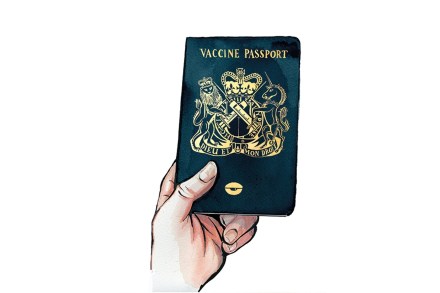
Are vaccine passports in our future? The ‘Covid-status certification’ review is underway, carved out of the Prime Minister’s roadmap and handed to Michael Gove in the Cabinet Office to assess and very possibly implement the scheme after Britain has been declared ‘free’. Since the first review update was published — clear on intention but vague on the details — there’s been plenty of speculation as to what kinds of events or establishments might require a passport to access them. Today we got some hints.

Covid has emboldened our modern censors

From our UK edition

The past year has accelerated all kinds of trends that were already moving through our societies. Social atomisation, the decline of the high street and communities, the rise of the nanny state — Covid and lockdown have brought all of these to the fore. Among the most concerning is the rise of Big Tech censorship, and the way in which a handful of Silicon Valley oligarchs have come to set the terms of debate and even rule on what is true. This week representatives from Facebook and Twitter were brought before parliament to discuss their firms’ censorship of discussion around Covid. Two particularly pertinent cases were raised — though there are many more.

Erdogan’s Covid crisis

From our UK edition

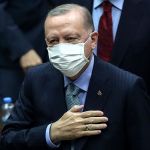
Turkish president Recep Tayyip Erdogan has announced that the country will be heading into its first full lockdown. An early success story, this time last year Turkey was being hailed as a model for its swift actions that ensured the country saw a relatively small death-toll, relative to its size (39,000 people in Turkey have died so far in the course of the pandemic). Now infections are surging: Turkey recorded a total of 61,028 daily cases of Covid-19 and 346 deaths last Tuesday, the highest since the pandemic began. And Erdogan is panicking. There was some hubris in Erdogan’s early declarations of victory against the virus last year.

Have we reached herd immunity?

From our UK edition

When the Office for National Statistics released the last antibody survey a fortnight ago, the results were underwhelming. After watching prevalence in the population shoot upwards for months, the figure had plateaued at 55 per cent. There were several reasons suggested for the stall, including the move to giving second doses and difficulties detecting fading antibodies (which the ONS is quick to point out does not necessarily mean a person no longer has immunity). But, regardless, it raised concerns that it might take longer to reach high antibody prevalence rates than previously hoped. Thankfully, today’s update has provided plenty of cheer. In the two weeks following the last update (taking us up to the week ending 11 April), antibody prevalence has risen across the UK.

wedding

Made of honor: the complexities of a COVID wedding

The birds are singing, the temperature is rising and I am frantically searching for a seamstress to hem three to four inches off a formal dress designed for a woman of normal height. You know what that means: it’s wedding season. This wedding season holds the uncertain distinction of being either the second under COVID or the first post-COVID, depending on your geography and luck. The pandemic was a tragedy for many couples who had planned their big day last year. According to the wedding website the Knot, less than half of couples who intended to get married in 2020 followed through with both their ceremony and reception.

How concerned should we be by the Indian variant?

From our UK edition

In recent weeks there has been a lot of new-found optimism in Britain with regards to Covid: case numbers, hospitalisations and deaths have dramatically fallen and the vaccine roll out continues at pace. The virus has now been overtaken as the main cause of death in England and Wales for the first time since autumn. But the pandemic continues to grow, and nowhere more so is this the case than India. Its hospitals are overrun. Crematoriums are overwhelmed and the first of nine planes from Britain set off on Sunday night to provide oxygen, ventilators and aid. Why should it be surging now? One of the theories behind this explosion is a new variant of coronavirus (B.1.617).

Are plans to abandon the office premature?

From our UK edition

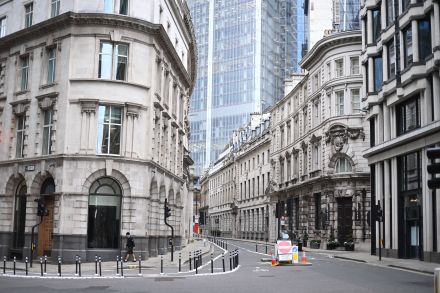
To what extent will our pandemic lifestyles stick? With ‘work from home’ guidance in place for the best part of a year now, it’s has been assumed that trends towards flexible working are accelerating. Until the guidance formally shifts and employees have complete freedom to return to work, no one is quite sure what the demand to return — or stay home — will be. But the City of London is already preparing, as today the caretakers of the Square Mile announced their plans to convert empty offices into residences with the aim of creating an additional 1,500 homes by 2030. This is a sizable increase given there are only estimated to be roughly 7,850 in the City.

How Britain can really help India tackle its Covid crisis

From our UK edition

India's Covid situation is dire: hospitals have run out of beds (some hospitals are treating patients in cars), people are turning to the black market for drugs and oxygen cylinders, and mass cremations are taking place in car parks. The official daily death toll is around 2000, but the likely reality is much, much higher. Britain has offered to help by sending 600 pieces of medical equipment to support the country in its Covid crisis. But the reality is that our country could do much more to help its ally than just offer a token shipment of supplies. The UK continues to block a patent waiver designed to boost the global production of Covid vaccines.

Does anyone doubt Boris’s leaked ‘bodies’ comment?

From our UK edition

Of course Boris Johnson raged, King Lear-like, that he was prepared to 'let the bodies pile high in their thousands' if the alternative was subjecting the country to a third lockdown more dispiriting than either of its dreary, even grim, predecessors. I say ‘of course he said it’ not just because at least three different sources have confirmed to at least three different reporters that the Prime Minister did say it but also, and significantly, because it would be so wholly in character for the Prime Minister to have said it. If it sounds like the sort of thing he would say, that is largely because it is the sort of thing he would say. Nor have his denials been convincing.

Gove’s ‘bodies pile high’ non-denial

From our UK edition

This afternoon's urgent question on allegations of Tory sleaze could have been a rather explosive affair. Instead, it was used by members of all parties to produce a series of rather rubbish slogans for the local and devolved assembly elections next month. The Conservatives wanted to deflect attention from their problems by complaining about a series of things: that the other parties were bad too, that voters didn't care about this stuff anyway, and that the government was being criticised for trying too hard in the pandemic. Labour and the SNP wanted to nail the Tories and produce similar clips for their campaigns, and the Lib Dems had a number of targets, including the SNP.

The EU will regret suing AstraZeneca

From our UK edition

Well, that will teach them to go around manufacturing a vaccine against a global virus at cost price, and at record speed. The European Union has today said it is planning to take legal action against the pharmaceuticals conglomerate AstraZeneca for failing to deliver enough doses of the Oxford shot on time.  No doubt European Commission president Ursula von der Leyen and her team are planning to be exonerated. They will finally be able to demonstrate that the whole vaccine debacle, for which the Commission has taken so much flak, and which has already caused thousands of unnecessary deaths across continent, was all the fault of the Anglo-Swedish company. No doubt the untrustworthy British will also be implicated.

‘Collective’ shines a light on Romania’s deadly corruption problem

From our UK edition

A gripping Romanian documentary has made history as the country's first film ever to be nominated for an Oscar in the international category. But 'Collective', which is also shortlisted for best documentary feature at tonight's ceremony, isn't a source of national pride. In fact, far from it: the movie shines a spotlight on the country’s rotten healthcare system. It follows a team of investigative journalists as they uncover deep-seated corruption in the aftermath of a deadly nightclub fire in Bucharest in 2015, that killed 65 people. While 27 died on the night of the fire, many more died in the months afterwards.

Boris’s vaccine propaganda film jumps the gun

From our UK edition

Westminster’s much anticipated summer blockbuster dropped last night: ‘A Beacon of Hope: The UK Vaccine Story’ was released on 10 Downing Street’s Twitter and YouTube accounts just after 6pm. The video was teased on Twitter on 10 March, featuring a dramatic score and a tagline ‘coming soon’, raising questions as to how ‘soon’ it would appear, what its contents might be, and whether releasing a victory video in the middle of the UK’s vaccine rollout was slightly premature. https://www.youtube.com/watch?v=xiCq-SkiYAY Now we have some of those answers.

The nationalists’ vaccine fallacy

From our UK edition

The trouble with nationalism of any and every sort is that, in the end, it eats your brain. As evidence of this we may simply note Nicola Sturgeon’s assertions this week that the success of Britain’s vaccination programme should in no way encourage the thought an independent Scotland might have struggled to match this happy development. According to Sturgeon, there is 'absolutely no evidential basis to say Scotland would not have vaccinated as many people as we’ve vaccinated right now' if it were an independent state. This is, to use the technical term, bollocks on a tartan pogo-stick.

What the fight against HIV can teach us about defeating Covid-19

From our UK edition

In the eighties, we were warned to beware an easily spread, deadly virus. The government’s ominous HIV adverts told us not to 'die of ignorance'. Thus a generation was educated through fear how to avoid infection by practicing safer sex and avoiding contact with the blood of those who are positive.  While those messages are still important today, HIV no longer represents the death sentence it once did. Still a life-altering and permanent disease, it can now be managed in a way that means people often live full lives with HIV, rather than die early because of it. No successful vaccination has been developed for HIV, but other medical developments helped to change the prognosis for those who contract it.

Starmer’s absurd reaction to the Dyson lobbying ‘scandal’

From our UK edition

In the midst of the David Cameron-Greensill lobbying scandal — a gift to the Labour party if ever there was one — Keir Starmer’s frontbench have managed to overshoot the mark. Talking up what she clearly hoped will be another storm for the government to weather, shadow business minister Lucy Powell had some strong words: It stinks, really, that a billionaire businessman can text the Prime Minister and get an immediate response and apparently an immediate change in policy. It seems like the country only works for people who are rich enough or influential enough and, frankly, donors to the Tory party, who have the personal mobile number of the Prime Minister and Chancellor.

Boris should heed Blair’s advice on the Covid vaccine data

From our UK edition

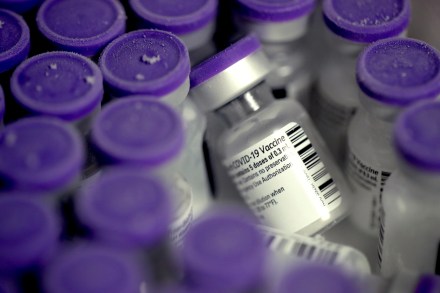
We’ve known from the data from phase three trials that the Pfizer and AstraZeneca vaccines have good efficacy against symptomatic cases of Covid-19. The data also hinted at near 100 per cent efficacy against serious illness, although the limited numbers of participants made it hard to be sure.  This morning, however, comes real world data showing the vaccines have all but eliminated hospitalisations. According to figures obtained by the Daily Telegraph, 74,405 people were admitted to hospitals across the UK between September 2020 and March 2021. Of these, just 32 were people who had received a vaccine at least three weeks earlier. The figures don't reveal whether or not there were any deaths.