Covid-19

The strange appeal of pandemic emoji

From our UK edition

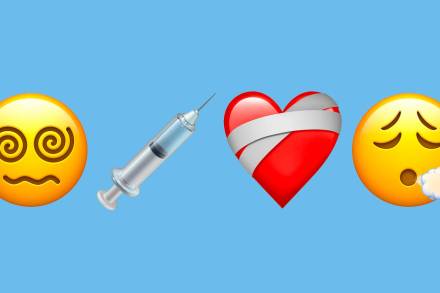
News that Apple has updated its emoji range to include pictograms specific to the pandemic may either disgust you or inspire you to send a volley of missives out immediately. As an emojiste, I am in the latter camp. I am delighted that I now have a bandaged heart, a dizzy face with spiral eyes, a face exhaling with exhaustion and, of course, a bloodless syringe in my emoji lexicon. My nearest and dearest WhatsApp interlocutors may groan but I simply don’t care. Far from an erosion of linguistic standards, I see emojis as an exciting semiotic advance. I only wish that Roland Barthes, the grand French semiotician of the last century, were around to decode it all. Emoji, which originated in Japan in the 90s, can be used in different ways.
How much credit does the NHS deserve for the Covid vaccine rollout?

From our UK edition

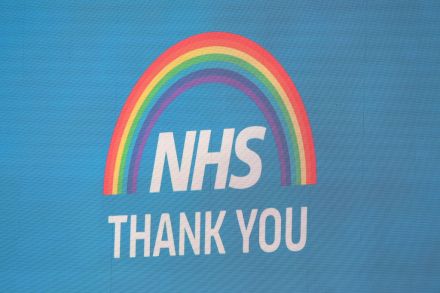
Who should we thank for our Covid vaccines? For many, the answer is straightforward: the National Health Service.  'Thank you NHS', says a profile sticker shared by thousands of Brits on Facebook. But while Britain's undoubtedly successful vaccine programme owes a great deal to the efforts of NHS staff, is it right to thank the NHS itself? Left to its own devices, would the NHS have delivered in quite the same way? And how much should we credit Boris's vaccine task force – rather than the health service – for the vaccine rollout? I am a critic of the NHS – but not for the sake of it. I criticise it when it delivers worse outcomes than comparable systems, which it often does.

Full easing of Covid restrictions on 21 June looks unlikely

From our UK edition

The prospect of the final easing of lockdown restrictions in England going ahead precisely as planned on 21 June is close to nil, according to ministers and officials. 'It is clear some social distancing will have to be retained, not everything we've set out for 21 June is likely to happen,' said a government adviser. 'But it is also possible some of the easing we've done today will have to be reversed.'  Neither he nor a minister would be drawn on precisely which parts of the planned unlocking may have to be delayed, or which aspects of unlocking that's already happened would need rolling back.

Will lockdown still end on 21 June?

From our UK edition

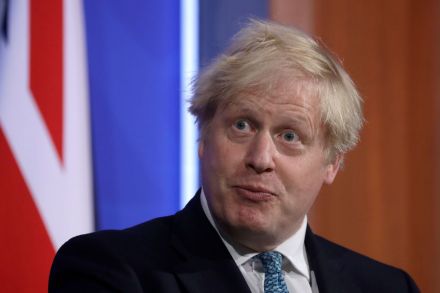
As the penultimate lockdown easing gets under way, ministers are being asked a question: will the 21 June unlocking be delayed? On Friday, Boris Johnson warned the rise of the Indian variant could 'pose serious disruption' to the planned lockdown easing next month, when nearly all Covid restrictions are expected to go. The line from the government hasn't changed much over the weekend; ministers are keen to say they hope it will go ahead but won't guarantee it. There is unlikely to be any formal decision until the week before the 21st, when the government will be able to review all the data.

Can Boris keep his roadmap on track?

From our UK edition

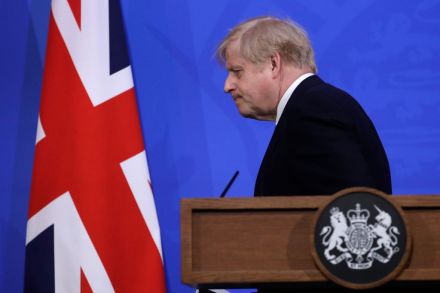
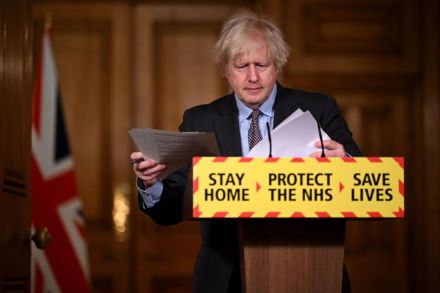
Boris Johnson's favourite phrase since he released his roadmap out of lockdown has been ‘cautious but irreversible’. These are the three words that supposedly describe the UK’s six-month timeline to freedom since it went into lockdown at the start of the year.  But the phrase was notably absent from tonight’s press conference. Instead, the Prime Minister warned that the rise of the Indian variant B1617.2 could pose a ‘serious disruption to our progress, and could make it more difficult to move to step 4 in June.’ The government’s worries, as Johnson laid out tonight, are what he described as ‘important unknowns’. The key question is to what extent the virus is more transmissible than the other variants.

A handy guide to hugging

From our UK edition

Boris Johnson has announced that the government will permit hugging from Monday 17 May. In subsequent weeks, it is expected that permission will be granted for people to hold hands, kiss and, perhaps, engage in even more intimate acts of mutual appreciation. However, the authorities remain cautious about mutant variants and their ability to spread through rampant hugging.  Former SAGE expert and BBC commentator, Neil Ferguson, has played a key role in government policy throughout the pandemic. Initially responsible for producing forecasts that led to social distancing policies, Ferguson is also rumoured to have performed a series of covert, close contact experiments with his married girlfriend.

Could the Indian variant slow unlocking?

From our UK edition

So is the 'irreversible' lifting of lockdown really irreversible after all? There is a grim echo of what happened last year in the sudden panic over the Indian variant of SARS-CoV-2. Yesterday, the Prime Minister said that he 'rules nothing out', following a meeting of the Sage committee over how to respond to the variant. Next month’s proposed reopening of society must now look in doubt. Monday’s relaxation, which will allow indoor hospitality for the first time this year, will for the moment go ahead, but we have seen how quickly these things can change — and with what little notice.

When will the economy recover to pre-pandemic levels?

From our UK edition

New growth figures were released this morning show that the economy contracted 1.5 per cent in Q1 this year and remains 8.7 per cent smaller than it was in Q4 2019 (the last quarter not to be impacted by the pandemic). Alongside this update, the Office for National Statistics also released its latest set of monthly figures, which saw GDP rise by 2.1 per cent in March — the biggest boost since August last year — taking the economy to 5.9 per cent below pre-pandemic levels. That GDP fell by just 1.5 per cent overall once again illustrates the extent to which businesses have developed a resilience to lockdowns. The first quarter of this year saw much economic activity either wildly distorted or banned outright.

Why a Covid public inquiry could prove useful for Boris

From our UK edition

The Prime Minister said today there would be a 'full proper public inquiry' into the government's handling of the Covid-19 crisis. This is highly significant, because a 'full, proper public inquiry' means one led by a judge and with witnesses represented by lawyers. I am also told – though Downing Street is refusing to comment on this – that the Cabinet will be asked by the Prime Minister to approve the terms of the inquiry on Wednesday morning, and there could be an announcement shortly afterwards. Such a public inquiry – like Leveson's into hacking and Chilcot's into the decision to go to war in Iraq – would take many years and might not report until after the next election.

Were fears of a third wave overblown?

From our UK edition

So, the third wave is officially no more. New modelling by SPI-M, the government’s committee on modelling for pandemics, has, at a stroke, eradicated the predicted surge in new infections, hospital admissions and deaths which it had pencilled in for the autumn or winter as a result of lockdown being eased.  Previous modelling published in April suggested that we could end up with 20,000 in hospital — higher than during the first peak last April. Now the third wave is looking less like the swell off Newquay during an Atlantic storm and a little more like a ripple on the Serpentine.

A ‘cautious cuddle’? No thanks, Boris

From our UK edition

There have been some truly dystopian spectacles during the past year-or-so of lockdowns. Cops using drones to spy on dog-walkers. Park benches sealed off with yellow tape. Curtain-twitchers dialling 999 after seeing the bloke next door go for a cheeky second jog. But this headline surely tops all of that: ‘Hugs will finally be legal again from next Monday.’ Read that again. We live in a country in which the government has accrued so much power that it now gets to tell us when we may hug each other. This should send a chill down the spines of all who care for liberty. To be honest, I wasn’t even aware hugging had been outlawed. I’ve been hugging people for months.

Hugging gets the green light

From our UK edition

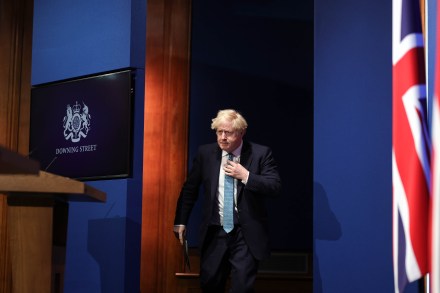
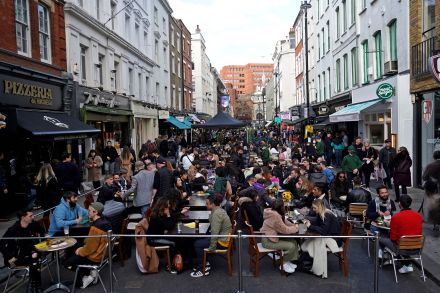
The next stage of the roadmap is set to go ahead. At tonight’s No. 10 press conference, Boris Johnson announced from next Monday, 17 May, groups of up to six (or two households) can meet indoors, while up to 30 people will be able to meet up outside. Face coverings in school classrooms will be scrapped, and there will no longer be a cap on the number of people attending a funeral. Indoor hospitality can reopen, including restaurants and pubs, while hotels, cinemas and theatres can also open their doors, albeit with social distancing still in place.

Does the UK’s ‘green list’ for travel make sense?

From our UK edition

International travel is back on the menu, in theory. From 17 May the ‘stay in the UK’ restrictions are lifting and residents can legally leave the country once again. But the number of destinations where you won't have to quarantine on return is limited, and travelling anywhere will require jumping through several hoops. At today’s No. 10 press conference, Grant Shapps revealed the first 12 countries that will be placed on the 'green list', which includes Portugal, Iceland and Israel. It’s a return to the traffic light system and most countries are ranked ‘amber’, which will require a ten day quarantine at home upon return. ‘Red’ countries will still require hotel quarantine, paid for by the traveller.

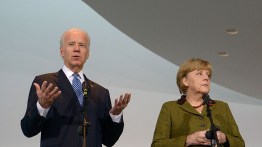
Merkel is right to reject Biden’s vaccine patent plan

From our UK edition

She handed the vaccine procurement process over to the European Union. She didn’t invest much in new production. And she allowed an American multinational to take control of a brilliant discovery by a small German biotech company. Angela Merkel, the out-going German Chancellor, has not had much success battling the Covid-19 crisis, and her handling of vaccines has been a catastrophe from start to finish. But she has finally got one thing right: she is defending the patents that protect the pharmaceutical industry. In the last week, president Biden has signalled that the United States is ready to back suspending patents on Covid vaccines.

In defence of Biden’s Covid-19 patent waiver

From our UK edition

For a man who is regularly derided by Republicans, president Joe Biden has racked up a fine number of achievements. He made his latest on 5 May, when he threw his support behind waiving the Covid-19 patents, overturning decades of American protection of its industries’ intellectual property rights. His words packed a punch: the Frankfurt-listed shares in BioNTech promptly lost 14 per cent, while Moderna and Novavax closed three to six per cent down in New York. The U.S. pharmaceutical industry was quick to denounce the measure, as Jeremy Levin, chair of the biotech trade association Bio, asserted that ‘securing vaccines rapidly will not be the result.’ But, in fact, that’s exactly what the result will be.

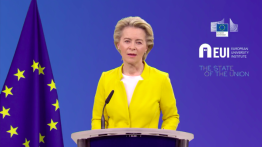
Watch: von der Leyen’s vaccine amnesia

From our UK edition

How well has the EU dealt with the pandemic? According to Ursula von der Leyen, the bloc's performance has been world beating. In an address yesterday, the Commission president lauded her own performance while claiming that the EU had proven its detractors wrong. During her so-called 'state of the union', she said: We all heard the nagging questions, especially in the first months of this pandemic: aren't nation states better equipped to fight this crisis? Isn't our union of 27 too slow to react? And our processes too cumbersome and our stakeholders too diverse? Today I am here to say: Europe has proven these claims wrong...Most importantly we decided to procure vaccines together in our union.

Will Britain’s economic recovery break records?

From our UK edition

It’s been a good week for seeing the vaccine factor at work. We’ve had multiple real-world updates on the Pfizer vaccine’s effectiveness against new variants of Covid-19 (this bodes well for the UK, which was the first country in the world to use the vaccine to protect its most vulnerable residents). And today we’ve had a revised economic forecast from the Bank of England, suggesting the UK’s impressive vaccine rollout could translate into the strongest growth since records began in 1949. The Bank of England now predicts that the economy will expand by more than 7 per cent in 2021, up from its forecast of 5 per cent in February.

Did I catch Covid from a naked-rumped tomb bat?

From our UK edition

Laikipia Until I promised to slaughter a fat-tailed sheep with a goat thrown in for a feast, the farm cowhands looked doubtful about going for their vaccinations. ‘Come on, it won’t hurt you,’ I cajoled. A panther-like man I’ve seen pursuing bandits with a rifle and reckless courage announced that he was frightened. The others nodded and rubbed their left arms. But at the offer of meat and sizzling fat over an open fire, everybody cheered up. Time was running short. A village clinic two hours away in Maasai country had phoned to say its supply of doses was sitting there unused and would I urgently muster some people?

The new care home scandal

From our UK edition

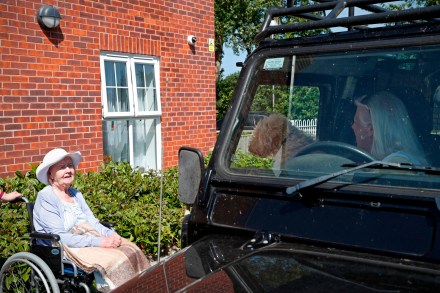
Care homes have been at the centre of controversy and mishandling throughout the Covid-19 crisis. Decisions taken last spring to move patients out of hospital, without so much as a Covid-19 test, contributed to a surge of cases in facilities designed to look after Britain's most vulnerable. Failure to tackle early on the problem of asymptomatic transmission meant that workers weren’t isolated. They unknowingly brought the virus in, sometimes to multiple homes. Zero detection – until it was too late – resulted in tragedy. It's estimated that over 29,000 excess deaths have occurred in care homes since last March. Now there is another care home scandal brewing, the details of which are just coming to light.

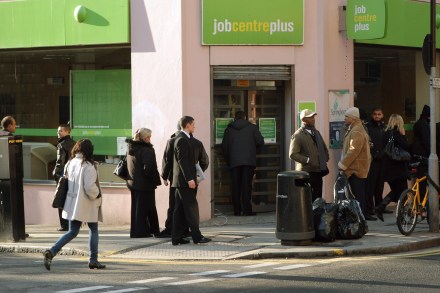
Why we should worry about the post-Covid exodus of older workers

From our UK edition

Concerns around unemployment during the pandemic have, understandably, been focused on younger people. Last year it was under-24 year olds most likely to be furloughed and then subsequently made unemployed when coming off the government’s scheme. For millions, the fate of their jobs remains on the line, as unemployment is expected to rise over the course of the year (albeit far less than originally predicted), even as the economy rebounds when lockdown restrictions lift. But today the Office for National Statistics flags another concern; one that could potentially have a bigger impact on the labour market’s recovery post-pandemic. While the youngest have experienced a substantial economic hit from the virus, so have those at the other end of the working-age spectrum.