Covid-19

Labour’s unlocking problem

From our UK edition

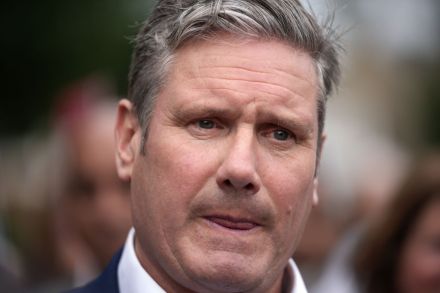
Labour is unhappy with the government's plan for unlocking, with leader Sir Keir Starmer calling it 'reckless'. In the Commons this afternoon, shadow health secretary Jon Ashworth and then shadow education secretary Kate Green complained about the statements from their ministerial counterparts. Ashworth treated fellow MPs to the slightly bizarre spectacle of him waving a paper Sajid Javid had written on pandemics while at Harvard, which seemed an incongruous political stunt. All the more discordant is the party's stance on unlocking, which seems to be to complain about it happening while offering a plan that isn't vastly different.
The Hancock era is over

From our UK edition

Could the NHS backlog be even worse than we feared? It’s been reported that the pandemic has pushed a total of five million people onto NHS England waiting lists. But speaking to BBC Radio 4 on Tuesday, health secretary Sajid Javid revealed a new figure, which was not previously in the public domain: As a fresh set of eyes coming in, the thing that shocked me most was the huge waiting list and the number of people that did not come forward because of the pandemic. We estimate there’s some seven million people that did not come forward to the NHS to be helped with things like cancer, with heart disease. Think about the deaths that have been sadly caused by that. It’s hard to wrap one’s head around that figure.

Boris’s ‘freedom day’ spells misery for many

From our UK edition

The projection from Sajid Javid that Covid-19 infections could surge to a record 100,000 per day in a few weeks, as all social distancing and mask-wearing regulations are removed, is especially terrifying for those whose immune systems are impaired or are clinically vulnerable in other ways. There are millions of these frail people. For those whose immune systems are compromised or suppressed, the efficacy of vaccines is much reduced. For others among the frail, any residual risk of becoming infected is too great, because for them it is literally a matter of life or death.

The economic case for ditching mask mandates

From our UK edition

After many months of hardship and sacrifice, freedom is finally within grasp. Boris Johnson has reclaimed his buccaneering, libertarian spirit and punctured the hopes of zero Covid zealots who wanted more working from home, social distancing and masks. When it comes to face coverings, however, lockdown fans have been working hard to convince the public that they ought to wear them voluntarily — on the off-chance they have the virus and unwittingly hop on to a tube carriage with the unvaccinated. Are they right? Masks are undeniably inconvenient. They’re a pain to wear and a nuisance if forgotten. They reduce the ability to communicate, interpret and mimic the expressions of those with whom we engage.

Javid: NHS backlog will get worse before it gets better

From our UK edition

Sajid Javid’s parallel statement in the Commons to Boris Johnson’s press conference on the government’s plan for unlocking drew the same criticisms about failing to protect the vulnerable and bowing to Tory backbench pressure. He did get a ‘hallelujah’ from one such backbencher as he spoke of the end of social distancing. But the health secretary faced anger from the opposition benches about the decision to leave mask wearing up to the public and businesses at a time when cases are rising. Green MP Caroline Lucas compared Covid restrictions to road safety laws, asking why a similar approach to the speed limit couldn’t be taken to mask-wearing.

Boris Johnson’s Covid double act

From our UK edition

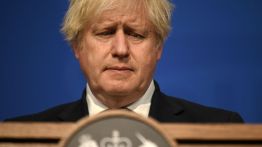
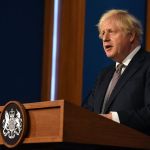
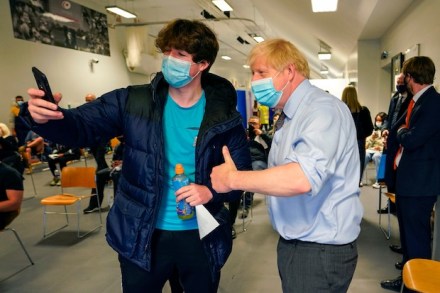
Boris Johnson used today's press conference to unveil the government's plan for stage four of the roadmap. Announcing that the public need to learn to live with Covid, the Prime Minister declared his intention from 19 July to reopen all remaining businesses, lift limits on gatherings and lift the bulk of rules on wearing a mask. While no final decision on what happens on 19 July will be made until next week, Johnson said it was time to move away from 'legal restrictions and allow people to make their own informed decisions'. Although the contents of the PM's statement points towards a big bang reopening, Johnson's tone was rather more cautious.

Boris Johnson’s plan for ‘freedom day’

From our UK edition

Four weeks later than planned, ministers are preparing to lift nearly all Covid restrictions from 19 July. This afternoon, Boris Johnson will lead a press conference in which he will unveil plans for so-called freedom day later this month. At the same time, the new Health Secretary Sajid Javid will address MPs in the Commons. The announcement doesn't mean 19 July is definitely going ahead; that will be confirmed next week. However, the mood music in government is very optimistic with ministers taking the view that rising cases aren't an issue as the vaccine has successfully weakened the link between cases, hospitalisations and deaths.  When it comes to the rules that are on course to be lifted, nearly all legally binding Covid restrictions are due to go.

How WhatsApp mums saved Kenya’s castaway children

From our UK edition

Kenya In March, Global Britain signed a new, post-Brexit trade deal with Kenya. This was a welcome agreement for my homeland, where the pandemic has caused tremendous economic suffering, but where comparatively few deaths have occurred among the fit, young population. Weeks later, on 9 April, the UK condemned its former colony to the red list of countries. Non-citizens were banned from travelling to the UK from Kenya, while arriving UK passport holders faced a £1,750, ten-day incarceration in a quarantine hotel. Such extreme measures were imposed on the excuse that a ‘significant’ number of passengers arriving from Nairobi tested positive for a variant of concern.

What will life look like on 19 July?

From our UK edition

When the cabinet met on Tuesday, ministers agreed that once the roadmap is complete the country will be able to live with Covid — even if cases continue to rise. The implication is that so long as the vaccines continue to work, there will be no going back after 19 July. There is increased optimism over that date as the day of the final easing. It is, in part, out of necessity.  Not only are Tory MPs on the rampage about the four-week delay from 21 June, but ministers also sense a growing backlash among the public over the half and half rules which mean full capacity for the Wimbledon final yet leave restaurants only able to fill a portion of their capacity.

How crises shape government

From our UK edition

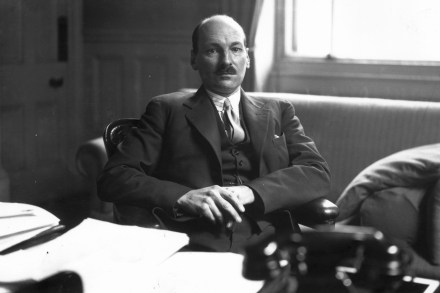
Crises often exhaust the capacity of governments to renew themselves. All consuming problems do not allow prime ministers to have what Walter Bagehot called ‘mind in reserve’ — and yet future success at the polls depends on it. The vast achievements of the postwar Labour government were largely built on the work of a Liberal in the form of the 1942 Beveridge Report, which most notably recommended a National Health Service. But Attlee was unable to create a new vision of his own during an era of crippling rationing and economic strife. Labour went from winning their first overall majority in 1945 to a very slim majority in 1950. Churchill’s Conservatives were returned to power within a year.

Hancock has made a mockery of his own rules

From our UK edition

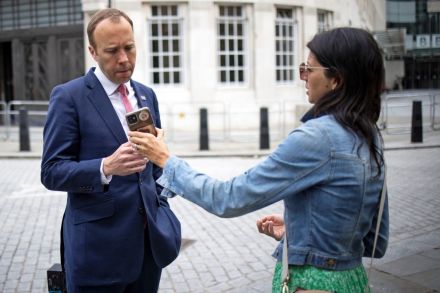
How much trouble is Matt Hancock in? The Sun splashes this morning on the Health Secretary’s affair with aide Gina Coladangelo. The paper has obtained screen grabs from leaked Whitehall CCTV footage showing very little the way of social distancing. The images are from the start of May, when laws were still in place to enforce social distancing. Hancock has issued a brief statement this morning, apologising for breaking the rules: ‘I accept that I breached the social distancing guidance. I have let people down and am very sorry. I remain focused on working to get the country out of this pandemic and would be grateful for privacy for my family on this personal matter.

The hypocrisy of Matt Hancock

From our UK edition

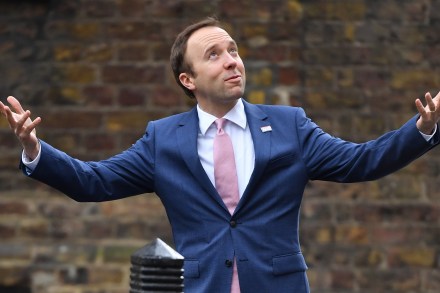
Matt Hancock has not, we can agree, made it his business to lighten the public mood during the pandemic. That lugubrious face was designed by nature for a downbeat message. Who can forget his injunction to 'hug carefully' and responsibly as lockdown eased? (Before that, his regulations meant no one got within hugging distance of anyone.) He would, he said, be hugging his parents outside: 'I’m really looking forward to hugging you, dad, but we’ll probably do it outside and keep the ventilation going: hands, face and space'. Well!

Can the EU save Italy?

From our UK edition

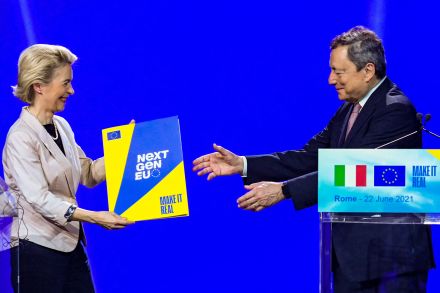
There’s been a lot of hype around the green light given by the European Commission yesterday to Italy’s recovery plan. But let’s break it down: the final headline numbers are €68.9 billion in EU grants by the year 2026 and €123 billion in loans. If you take the grant component, and divide it over the six-year duration, you arrive at an average of 0.6-0.7 per cent of Italy’s 2019 GDP each year. It is front-loaded, and it’s by no means a modest sum. What’s harder to accept however, is folding in the loan component to arrive at some giant fake headline number. The whole point of this exercise is not to produce a classic fiscal boost, but fiscally-assisted structural reforms.

What can Britain learn from Israel on ending lockdown?

From our UK edition

Israel has been the world’s whole-country experiment to establish how, and how fast, Covid vaccination can return life to normal (as much as life is ever normal in a country where there is constant tension over the rights and future of Palestinians). I am in Jerusalem, trying to understand the implications for stability in Israel and peace in the Middle East of a new government where prime minister Naftali Bennett is opposed to any kind of Palestinian state, and the alternate PM Yair Lapid passionately believes a two-state solution is the only answer.

Covid restrictions are taking a terrible toll on our schoolchildren

From our UK edition

In some senses, life in Britain is slowly returning to normal. Thousands of people gathered to watch Royal Ascot last week. Next week is Wimbledon, where 15,000 fans will pack into centre court to watch the finals. Meanwhile at Euro 2021, up to 65,000 people are expected to attend the tournament's climax at Wembley. It’s wonderful to see these sporting events back. However, it is deeply troubling that this ‘can do’ attitude doesn't seem to apply to events holding equivalent significance in children’s lives. The end of what has been a historically troubled school year is upon us.

Prepare for the EU’s ‘Hamilton moment’

From our UK edition

The EU may boast a common currency like any other state (even if nearly a third of its 27 members do not use it). It may also have, through its regulatory jurisdiction over banks and financial services, a vast say in the running of the financial system throughout the bloc: powers at least comparable to those of a federal government such as that in Canada or Australia. But there is one thing the EU has not yet managed to get: a unified tax system.  Any attempt seriously to impinge on national tax laws still requires unanimity among member states. This irks Euro-federalists.  One reason is that it draws the centre into unseemly squabbles.

Is Covid really to blame for HS2’s runaway costs?

From our UK edition

Covid has doomed the public finances — not just because the cost of mitigating it has been high in itself but because it has normalised high public spending. When you have just allocated £37 billion to Test and Trace and spend £54 billion on the furlough scheme, a £106 billion high-speed railway to Manchester and Leeds looks relatively good value — at least taxpayers will have something lasting for their money. And who would even notice if the budget for that railway quietly crept up by a further £1.7 billion? That is exactly what has happened today. The construction costs of the first phase of the railway, from London to Birmingham, have apparently been increased by social distancing.

What’s the real reason Israel’s vaccines were rejected by Palestinians?

From our UK edition

Sipping an iced coffee in a Tel Aviv café this week, it felt like it was 2018 again. Nobody wears a face mask, tables are close together and there’s no hand gel in sight. Very few people one meets even talk about Covid-19. Though a tiny increase in the occurrence of the Indian variant has been noted in recent days, Israel is rightly proud of its vaccination and mass immunity success. It is therefore surprising that Israel’s offer to advance over one million Pfizer vaccines to the Palestinians has been rejected by the Palestinian Authority only hours after they initially accepted the deal. Many countries are still grappling with the ethical dilemma of when to offer their own supply of vaccines abroad to help others; few are expecting such offers to be rejected.

How Russia lurched from vaccine victory to Covid crisis

From our UK edition

Russia made headlines last August when it triumphantly unveiled its pioneering coronavirus vaccine, Sputnik V. But now, nearly a year on, it has a more dubious claim to fame – as the anti-vax capital of the world. For months now, sparkling clean pop-up clinics offering jabs to the public, with no appointment needed, have been open for business in shopping centres and food halls across the country. With three domestic formulas approved and millions of vials in reserve, there is no shortage of doses for anyone who wants one. And yet, Russians just aren't signing up.  New data from research giant Morning Consult, based on 75,000 weekly interviews with people across the globe, has found the nation has the highest level of vaccine scepticism of anywhere surveyed.

Ministers need to start bracing Britain for the third wave

From our UK edition

The third wave of Covid-19 may now be no more deadly than a typical wave of influenza (thanks to vaccines) but be in no doubt: the rise in cases is real, likely to continue for some time and may dwarf the second wave. It may still be safe to unlock against this backdrop, but this (very different) scenario would need properly explained, with self-isolation rules rewritten. The facts have changed, but the argument has not (yet) changed. We've been tracking the emergence of the India/Delta variant on The Spectator's data hub. The below is a summary of the likely direction of travel. It has taken the UK from having the lowest Covid case levels in Europe to having the highest in just a few weeks - with much more still to come.