Covid-19

It’s time to cancel the school holidays

From our UK edition

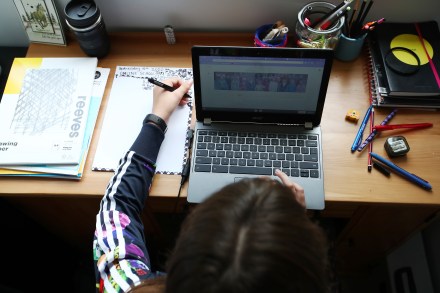
It seems that a quarter of A level-students preparing to go to university haven’t been set any work by teachers. So… what does that tell you about the rest of them, the ones who aren’t the focus of teacher attention? Perhaps all over the country, there is a frenzy of education going on. It just hasn’t happened very much in my vicinity. Except, from what I can gather, from people with children in private schools. I do know of teachers who’ve heroically gone out of their way to teach, set work and mark it (it takes more time marking online) but it’s by no means the norm. How about the summer holidays lasting a month rather than six weeks, to take some account of the time lost?
Sweden tames its ‘R number’ without lockdown

From our UK edition

Sweden has been the world’s Covid-19 outlier, pursuing social distancing but rejecting mandatory lockdown. Schools, bars and restaurants are open – albeit with strong voluntary social distancing compliance and streets that often look almost as empty as Britain’s. Has this been enough? Sweden’s public health agency has now published a study of its R number, a metric which the UK is using to judge the success of the lockdown. The UK objective is to push R below one, by which it means it wants the number of new cases to fall. Last week, the UK’s R number was estimated at 0.8 (± 0.2 points), a figure described as an achievement of lockdown. But Sweden’s reading is 0.85, with a smaller error margin of ±0.02pts.

What British bureaucrats can learn from German efficiency

From our UK edition

We have often heard over the past weeks how Germany's impressive testing capacity has proven central to combating the coronavirus at such speed. But equally impressive is the speed at which its state and federal governments have reacted financially to save the economy. Like some of the UK's support schemes, Germany has provided various aid packages or Soforthilfe to businesses large and small. Unlike the UK, however, Germany has already managed to pay out billions of euros to those in need. For the self-employed and small businesses with up to ten workers, this has essentially meant free money arriving in their bank accounts within 24 hours of applying, for which they complete only a short online form with their name and tax ID with hardly any further checks.

The problem with immunity passports

From our UK edition

Could we see 'immunity passports' in Britain? Ministers are reportedly discussing them as a route out of lockdown. According to today’s Guardian, the UK tech firm Onfido is in discussion with ministers about creating a ‘digital certificate’ that would be issued to those who have already been infected with coronavirus – who are presumably more immune – so they could return to some resemblance of normal life, including heading back into work.

Covid deaths – direct and indirect – will now be over 45,000

From our UK edition

This week, the government has published a better measure of Covid-19 deaths by widening it out from hospital deaths to all settings. But what about those who have died without having had a test? Does the ‘improved’ estimate go far enough?  I think the simple answer is no. The mortality data is rising at a rate that suggests many more are dying who have not been tested. But there are ways of estimating and, as the former head of health analysis at the ONS, I have conducted my own study.  As of Wednesday 29 April, my figure is 45,290 deaths linked to Covid-19 in Great Britain. This is far higher than the 26,097 issued by the Government that day. Let me explain how I arrive at my estimate.

Why Covid cuts are off the cards

From our UK edition

How will the UK recover after lockdown? Although social distancing is expected to continue for months, talk has turned to how the government will deal with its coronavirus debts. The Treasury is seeking to raise £180 billion over the next three months to meet its pledges – putting the UK on course to see its budget deficit rise to a level never seen before in peacetime. Some estimates put borrowing this financial year at over £300 billion, far outpacing the years following the financial crash. This has led a number of public figures to predict a return to the Cameron and Osborne era with mass cuts in the years ahead.

I’m imposing a one-woman trade embargo on China

From our UK edition

Without making any efforts in that direction, I now know all about a certain telecom firm’s future business plans. My neighbours are working from home, loudly, with their kitchen windows open. I want to scream: ‘I can’t turn my ears off, and I don’t have a mute function!’ Call me old-fashioned, but if they continue to corporate grandstand at the tops of their voices during laptop conference calls without specifically telling me that everything I’m hearing is off the record, then I’m treating them as primary source material. ‘Guys, that’s confidential. Our ears only,’ one of them keeps shouting through her kitchen window. Why not close the window, as a first step to keeping this company’s logistical secrets secret?

Why shouldn’t Cummings attend SAGE?

From our UK edition

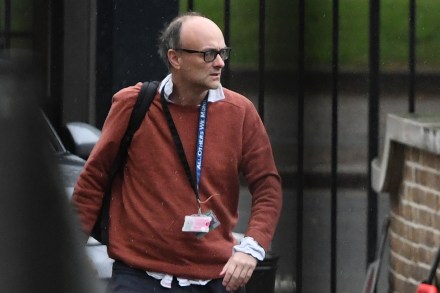
One of the key committees advising the government is SAGE — the Scientific Advisory Group on Emergencies. At the weekend, there was a rumpus after the Guardian reported that Dominic Cummings had been present for some of its meetings; though given the enormity of what was being discussed there would have been problems if no one from Downing Street was at these meetings. Last night, Bloomberg reported on the SAGE meeting of 18 March. Alex Morales and Suzi Ring wrote that Dominic Cummings had at that meeting raised questions, including asking ‘why a lockdown was not being imposed sooner’.

Ten lessons we’ve learned from the lockdown so far

From our UK edition

Yep, the end is in sight, courtesy of other countries organising the practicalities for the return to some sort of normal life – shopping and schooling, as in Germany. That means Britain will, like it or not, be playing catchup sooner rather than later. And when this oddly dreamlike existence is over, it’s going to feel like that bit of the Sleeping Beauty when the court wakes up after its hundred year sleep, yawning and blinking and eyeing each other rather shyly. It’s partly the warm weather; being obliged to stay away from work when it’s sunny, with quite a lot of your wages paid by the government (if like me you’re on furlough), has given these weeks an unreal quality.

Our impatience will end the lockdown

From our UK edition

At the farm shop this morning there was a chap panic-buying a large metal and plaster flamingo. It was the last one in stock and he looked very pleased with himself. I wondered if he had a few score more at home, hoarded in the attic. And then his long-suffering wife saying, when he arrived home: “Did you get the milk and chopped tomatoes?” And him replying with excitement: “No, but I managed to get another one of THESE, love...” As I mentioned in my column this week, the government will be a fait accompli to the ending of lockdown. The glorious silence of two weeks ago is already a fading memory.

Britain can’t rely on a vaccine to ease lockdown restrictions

From our UK edition

Six weeks ago Britain stood as a bit of an outlier among western countries in that our government seemed set to manage, rather than suppress, coronavirus. It rejected the idea that it was pursuing ‘herd immunity,’ but seemed to do just that. Now we stand out for a different reason: we are the only country which appears to be committing itself to remain in lockdown, or close approximation thereof, until a vaccine arrives. In much of Europe, lockdown restrictions are tentatively being relaxed as infection rates and death rates fall. Here, ministers tell us it is far too early for that sort of thing – we will need restrictions on our lives, in one form or another, until we have a vaccine available. Is that a plausible strategy?

Chinese diplomat’s Covid-19 PR exercise backfires

From our UK edition

As countries around the world try to work out a way to live with coronavirus, there's a growing hostility towards China. In order to remedy any such thoughts, this week Beijing sent the Chinese embassy's second in command to face something unheard of in her homeland – public scrutiny. Chen Wen, a London-based diplomat for the totalitarian state, took the BBC's World at One programme on Friday to defend the Chinese Communist record on Covid-19. During the extensive interview, she declared that when it come to the global pandemic, which originated from China, the world should 'appreciate' the efforts of the Chinese state rather than criticising its failings.

How the lockdown is making domestic abuse worse

From our UK edition

For years, ministers from successive governments have conducted drills for all kinds of pandemic scenarios. But they never imagined a lockdown. It’s a new tool, and its implications — and side effects — have never been properly tested. So no one really thought about the effect it would have on something like domestic abuse. Before the lockdown, it was estimated that two women a week were killed by their current or former partners. But that was when they could move freely. On Friday, the Metropolitan Police announced they had made 4,000 domestic abuse arrests in the last six weeks, with calls about abuse rising by around a third over that time. The number of charges and cautions has risen by about 24 per cent on this time last year. And this is just in London.

Why are people taking Trump’s disinfectant comments seriously?

From our UK edition

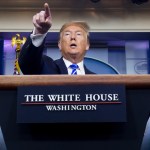
Every time you think Donald Trump has lost his talent for making people’s heads explode, he somehow excels himself. His latest? Telling Americans that injecting disinfectant and shining UV light could cure Covid-19 patients. You’ll have seen the clip already, everybody has, but it is worth watching again: https://twitter.com/QuickTake/status/1253623556308717570?ref_src=twsrc%5Etfw Trump voters don’t necessarily take Trump all that seriously This was a Trumpian masterpiece. I particularly enjoyed the way he turned to the experts for validation, while his mouth trotted out the peculiar ideas.

If austerity is off the table, how do we pay for Covid-19 costs?

From our UK edition

What is the true cost of Covid-19? No one knows – yet. But it’s not going to be cheap. The Treasury has revised its borrowing plans for May to July up to £180 billion, four times what it planned to raise and over £20 billion more than it planned to borrow all year. So how are we going to pay for all this spending? Policies at the heart of the government’s Covid-19 response, like the furlough scheme, are surpassing all estimations for uptake, and have been granted a limitless price tag by the Chancellor through to the end of June at least.

Could the Covid crash spark another Arab Spring?

From our UK edition

They said we were going to uncouple from the Middle East. Barack Obama, they said, was going to pivot to Asia. Donald Trump was, finally, going to get the United States the hell out of there. Intellectually, politically and, most importantly of all, militarily, we were going to put this most vexatious of regions behind us. It was, they assured us, a new day. They were wrong. Obama was drawn back in by his desire to strike a nuclear deal with Iran. Trump talked a good isolationist game but then droned Qasem Soleimani in Baghdad. Now we are in the midst of a coronavirus-induced oil crash. Now the Middle East squats in our living rooms once more. Now, it seems, the bad times are here again. On Monday the price of oil hit $0.

Hancock struggles to answer questions on testing and quarantine

From our UK edition

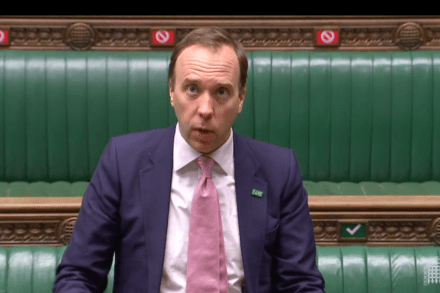
Matt Hancock has the air of a student who, having boasted about how great their final dissertation will be, has just realised that they have days to research and write the whole thing. When asked if he is going to meet his target of 100,000 daily tests for coronavirus by the end of the month, the Health Secretary continues to insist that he will, while struggling to explain how.  He gave a statement in the new hybrid Commons this afternoon in which he was repeatedly questioned both by MPs who were in the Chamber and those on video link about what was going wrong with the testing target. He struggled to give any answer beyond that the government was steadily increasing capacity and that the UK was one of the first countries in the world to develop a test.

Why ministers are reluctant to change face mask guidance

From our UK edition

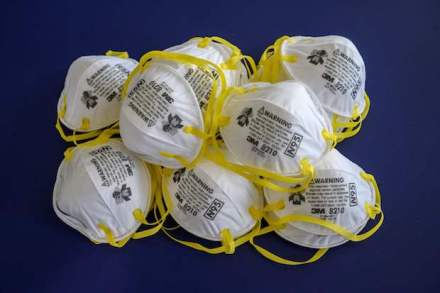
'Will the public be asked to wear face masks in public?' This is a topic of debate today for the government’s SAGE committee of scientific advisers. Although the government dismissed the idea early on in the coronavirus pandemic, many other countries have since changed their own advice in support of them (read Dr John Lee's analysis of the medical evidence here). Chief scientific adviser Patrick Vallance has recently suggested they could play a role in stemming infection: The evidence on masks is much more persuasive for masks stopping you giving it to somebody than it is for preventing you catching it. We have a review ongoing at the moment on the evidence around masks.

Have we reached the peak?

From our UK edition

At the risk of breaching lockdown etiquette, I feel it would be remiss not to mention that the stats on Covid-19 infections, hospital admissions and deaths have been stable or falling for around a fortnight. Since 5 April, there have been many more tests for coronavirus carried out, but numbers testing positive have been falling, which is significant. Also, today's reported deaths of 449 are considerably fewer than half the peak of 10 days ago – and although we all know the daily reported total of deaths is less than the actual total, and that there is often a dip after a weekend, that trend is like-for-like, so it is relevant.

Covid-19 business loans aren’t yet working

From our UK edition

Last week’s report from the Office for Budget Responsibility made waves with its latest economic scenario, estimating a 35 per cent collapse in GDP in the second quarter of the year. But could even that dire prediction have been too optimistic? While the downturn was estimated by the OBR to be sharp, so too was the economy bounce-back, creating a V-shaped recovery and quick economic improvement. But internal Treasury assessments revealed by the Times today predict a U-shape recovery: a longer, more painful return to the status quo. In both scenarios, the millions made unemployed by the Covid-19 lockdown take longer to return to work than the economy does to technically recover.